Sociology
Interview with Frank Snowden: How Pandemics Change History
Frank Snowden, a Yale professor, does not view pandemics as random events but as revelations of the structural vulnerabilities of societies. He argues that combating disease requires a fundamental shift in our view of humanity and global cooperation.
How Pandemics Change History
Interview[1] by Isaac Chotiner[2], staff writer for The New Yorker, with Frank M. Snowden[3], professor of history at Yale[4]
March 4, 2020
Translated by Ali Kazemian, Zahra Shoushtari, and Negin Nejadali
Edited by Yaser Mirdamadi[5]
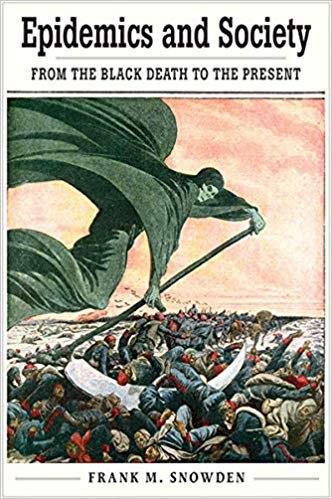
Frank M. Snowden, professor emeritus of history and the history of medicine at Yale University, in his new book "Epidemics[6] and Society: From the Black Death to the Present" examines the ways in which disease outbreaks have affected politics, crushed revolutions, and intensified racial and economic discrimination. Pandemics have also transformed the societies in which they emerged by affecting personal relationships, the work of artists and intellectuals, and natural or built environments. Snowden's approach also seeks to explain the ways in which social structures paved the way for the outbreak of diseases on a massive scale, spreading across countries and continents. He writes, "Epidemics are not random events that afflict societies suddenly and without warning. Quite the contrary, each society has its own particular vulnerabilities. To study that society, we must understand its structure, its standard of living, and its political priorities."
Last Friday, I spoke with Snowden by phone, as reports about the COVID-19 pandemic were causing markets around the world to slump, and governments were joining hands to prepare, to varying degrees, for an even worse situation. In this conversation, which has been edited for length and clarity, we discussed such matters as restrictive travel policies during a pandemic, how inhumane responses to disease have transformed states, and how artists cope with high mortality rates.
***
I want to begin the conversation with an important question. In general, in what ways do pandemics transform the modern world?
+ One way to answer this question is to address how I became interested in this subject. Two things, in fact, became clear to me. The first is that pandemics are a category of diseases that, like a mirror, reveal human reality to humankind. That is, these diseases clearly have a comprehensive impact on our relationship with morality, death, and our lives. Pandemics are also a mirror reflecting our relationship with our environment, whether the built environment or the natural environment that reacts to us. These types of diseases show us the moral relationships we have with one another as human beings; something we are witnessing today.
This is one of the important messages that the World Health Organization consistently conveys. A central part of preparedness for these events is that we humans must realize that in this matter we are all in it together; anything that affects one person anywhere in the world will, in fact, affect everyone everywhere. Therefore, we are willy-nilly part of a single human species; we must think this way, rather than thinking in terms of divisions based on race, ethnicity, economic status, and so on.
I have long studied this subject. I have long thought that pandemics create serious philosophical, religious, and ethical challenges. I believe pandemics have, to some extent, altered the course of history, because they have inevitably driven human beings to reflect on the great questions. For instance, the outbreak of the plague caused the relationship between humanity and God to be called entirely into question. How can such events occur if a wise and omniscient God exists? Who can bear the torture of so many children?
Pandemics also had a dramatic impact on the economy. The plague killed half the population of continents, thus having a very significant effect on the advent of the Industrial Revolution or on slavery and serfdom. As we see today, pandemics have had an enormous impact on social and political stability, determined the outcomes of wars, and perhaps at times even played a role in starting them. Hence, I think one could say there is no aspect of human life that pandemics have not turned upside down.
In your book, do you aim to conclude that our way of confronting pandemics has often stemmed more from our religious, ancestral, or racial views than from a response arising from our humanity, and that these modes of confrontation have, in a way, revealed human flaws, or did you have a different purpose?
+ I wanted to reach two conclusions. I think there is a two-way causal chain at work here. Diseases do not affect societies randomly and haphazardly. These diseases are patterned events, because microbes spread selectively among human-made ecological niches. Those niches largely reveal who we are. For example, during the Industrial Revolution, our preoccupation as human beings was really with what was happening to workers and the poor, and the conditions in which the most vulnerable people lived.
Cholera and tuberculosis in today's world move along fault lines created by poverty and inequality. Moreover, our human way of confronting these fault lines deepens them, as when we apparently deem these fault lines correct and acceptable, or at least inevitable, and acquiesce to them, these fault lines deepen. But the reality is that the shape of our confrontation depends greatly on our values and commitments, and also on our sense that we are part of the human race and not smaller units.
Bruce Aylward,[7] the World Health Organization official in China, was asked a question very similar to yours at the end of his mission and upon his return to Geneva. He said that if we want to prepare for this problem now or in the future, the major thing that must happen is a fundamental change in our mindset. We must think that we, as a human species, must cooperate with one another to organize ourselves to care for each other and realize that among us, the health of the most vulnerable people in society is the determining factor for the health of us all. If we are not ready to do this, we will never be prepared to face the devastating challenges of our humanity.
Well, that is a very vague idea, because I don't think we are about to experience such a change in human thinking.
+ (Laughs) I didn't mean to suggest I am very optimistic, but I believe this is what needs to happen. Humanity also has a dark side, and that happens to be the interesting part of the story. What choice will we make? How do we react when faced with this problem? I don't think our reaction is predetermined. A human moral drama is unfolding before our eyes.
This idea that there is a connection between our response to diseases and their outbreaks is more or less of the same kind as biblical sayings.
I completely agree. At the biblical level, such a thing exists and has shaped a large part of our moral dos and don'ts. I believe this is a major part of the history of epidemic diseases.
Before our discussion gets any darker, let me ask a better question.
+ You are right, I apologize that my discussion is veering into dark areas. My daughters always object to this.
Are there specific pandemics in response to which an inspiring point about humanity has been observed?
+ Of course there are. I think when I said that a pandemic holds up a mirror to us, I did not mean that this mirror only shows us the negative side of humanity, but rather this mirror also shows the heroic side of humanity. A very good example of this is Doctors Without Borders in the Ebola crisis. These doctors knowingly risked their own lives and futures, without any personal gain or expectation. They did this solely out of their commitment to defending human lives and the health of the world's most vulnerable people. Doctors Without Borders does this every day in various parts of the world and is even grappling with this issue in China right now.
I believe this is an example of what brings the best human qualities to light. Important novels have been written about these events. Events that influence our literature and culture. I am thinking specifically of an important novel about the plague, the novel "The Betrothed"[8], by the Italian writer Alessandro Manzoni[9]. This novel recounts the story of Cardinal Borromeo,[10] the Archbishop of Milan; someone who put his life on the line and went to the plague hospitals to care for the poorest and most ill people of his city.
What points do you have to make regarding world leaders or systems that had a positive encounter? Or about the emergence of positive political changes after the outbreak of a pandemic?
+ There are certainly points to be made. For instance, I am thinking specifically of the end of slavery in the New World. More than anything else, it was yellow fever[11] that brought about the end of slavery and the success of the Haitian people's revolt and Toussaint Louverture[12]. When Napoleon sent a massive fleet to Haiti to re-establish slavery, the slave revolt succeeded because the bodies of African slaves possessed an immunity that the white Europeans of Napoleon's army lacked. This ultimately led to Haitian independence.
Also, if one looks at the matter from an American perspective, this was what led to Napoleon's decision to abandon the expansion of French power in the New World. Hence, in 1803, Napoleon agreed with Thomas Jefferson[13] on the Louisiana Purchase[14], and the size of the United States doubled.
To look at the issue from another perspective, to what extent have these diseases been closely intertwined with political repression, or served as a pretext for political repression?
+ I think pandemics have always been viewed as part of the machinery of political repression. I believe the nineteenth century was a terrible era, not only because of insurrection but also because of political repression. Consider, for example, the massacres following the 1848 revolution in France, especially in Paris, or after the Paris Commune[15]. Part of the reason for this extraordinarily brutal and bloody repression was that those in command perceived the working classes as dangerous not just politically, but medically as well. The working classes had the capacity to expose the entire society to a health catastrophe at any moment. I think this is truly part of the metaphor of the "dangerous classes," and I believe it contributed, for instance, to the inhuman event of the 1871 massacre after the fall of the Paris Commune.
What is your view on China's response to the coronavirus?
+ That is a very interesting question. I believe it is a question we need to think about seriously and at length, because it has many truly complex aspects. The first case is the coercive methods the Chinese employed on the twenty-third of January; when they declared a sanitary cordon, a kind of complete quarantine of geographical areas and communities with borders controlled by soldiers and police. In this case, in Wuhan, a city of about 11 million people, and then Hubei Province[16], which has a population of nearly 60 million. They decided to impose strict measures.
This decision reminds us of plague measures, measures that have been repeated time and again, for instance, in the Ebola pandemic. The problem with the sanitary cordon is that it is a crude method; it acts like a sledgehammer. Quarantine is applied too late and shatters the essential element of public health, which is information. One could say that people threatened with the imposition of strict quarantine do not cooperate with the authorities. As a result, the authorities no longer understand what is happening around them, people travel by plane, and the pandemic spreads. I was very surprised when I saw the Chinese government's initial response. This measure differed from public health norms, norms that have developed greatly since the time of the plague and emphasize the detection of sick individuals, followed by tracing and isolating them.
So I was afraid and expected the worst. But I believe the government gradually changed course. Anyone could see that, over time, the Chinese became very meticulous about data collection and strove to engage the public to heal the damage inflicted in the early days. I think there was more than one type of confrontation in this story. The Chinese measures were neither entirely good nor entirely bad.
I also cannot quite come to terms with the World Health Organization's reaction — which praised China's measures as an extraordinary public health action. This stance frightens me. Does this stance mean that other governments and countries that possess the same powerful force should adopt a policy of quarantine? That is, the same method that was used for Ebola in West Africa and was not effective. This terrifies me. I do not think the Chinese quarantine is the main lesson. I think the main lesson is rather a more nuanced approach. That the quarantine was probably not so successful in China either, and that is why Xi Jinping, surprisingly, contrary to the World Health Organization, tends to say that mistakes were made and they had to change course. They must learn from their mistakes. I think this is something China was capable of doing.
Interesting, you said earlier that the World Health Organization, or at least its members, appealed to people to awaken their common humanity, yet at the same time you say they also praised a response that was, at least initially, inhumane.
+ Yes. I'm not justifying it, but I can say I understand why the WHO praised China; because it would be disastrous to ignore the largest member of the World Health Assembly, a country that is in the middle of this extraordinary crisis. So I understand why that happened. At the same time, there is a great emphasis on complete honesty, providing evidence, data-driven communication and methods, and realistic, scientific approaches in the realm of public health, which China was not observing in the early stages of its response. But it gradually began to pay attention to them.
If we go back a little, regarding how artists have reacted to pandemics, are there many examples?
+ I think one of the things I've learned about pandemics is that, as I understand it, every disease is like a human being. Every disease is unique and different from the others. Pandemics are not merely similar causes of death; it depends on the nature of each one, and how societies and artists react to it; or it depends on how many people they kill, whether they kill people in a torturous way, whether they kill children and young people, leave behind orphans, and whether they are familiar diseases or have come from abroad.
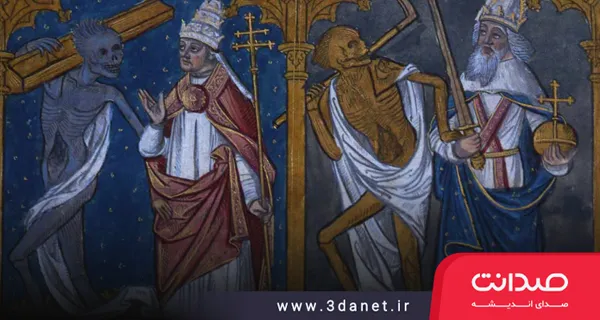
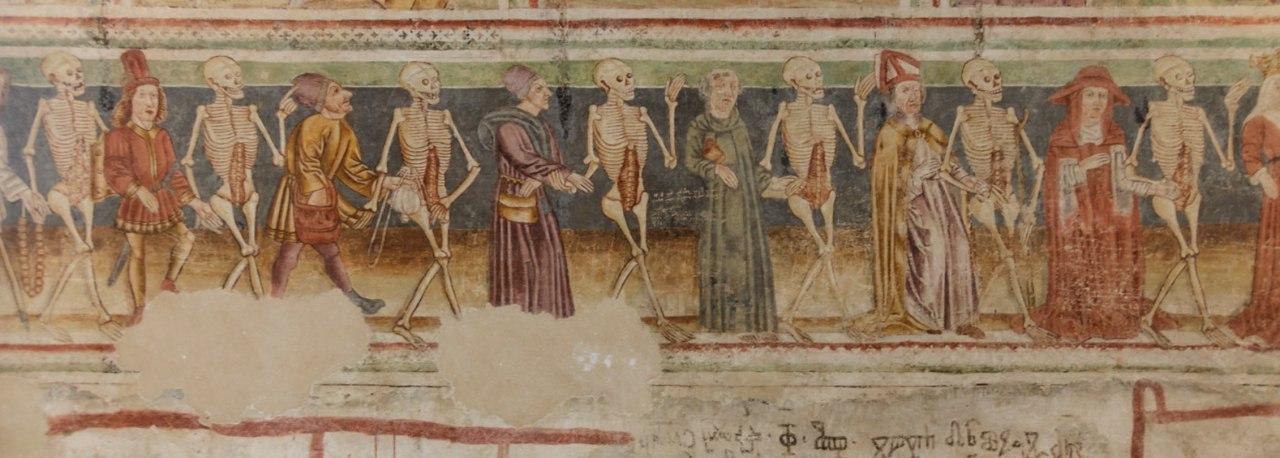
The case of the plague is one that reminds us of the problems associated with mortality and sudden death. Artists reacted to this disease, especially in Europe. In Catholic countries, the main fabric of this reaction was to see the plague as a reminder that life is short and transient. Much attention is directed to the idea of sudden death, as for example in the artistic allegory of the Dance of Death[17] everyone suddenly falls to the ground of death like autumn leaves. And of course, the motifs of the hourglass, bones, and vanity are used: "Vanity of vanities, all is vanity, saith the Preacher." There is this strong sense regarding pandemics. There is also a strong sense of appealing to the saints to ward off and remedy the plague, saints whose mention is widespread. This sense is seen across Europe: flagellant sects, motifs related to sudden death, repentance, and the idea that you should put your affairs and your soul in order before the plague uproots you. This had an upheaving effect on the iconography of European art.
You can even see it in the twentieth century with Ingmar Bergman's extraordinary film, The Seventh Seal.[18] In this film, the plague is a metaphor for what Bergman was worried about in 1957: nuclear war. By considering the plague, you can see all the things I talked about in this film, including the Dance of Death with which the film ends. You will see paintings of the Grim Reaper[19] which are truly an example of the enduring nature of the artistic response to death.
Other diseases provoke different reactions. One can talk about tuberculosis and how, during the Romantic era in the nineteenth century, there was a very different understanding of this disease. This one is very strange, because for me, tuberculosis is one of the most painful and horrific ways to die, where the individual ultimately suffers respiratory agony. Despite this, on the other hand, you see this painful death on stage with prima donna opera singers who are considered beautiful, in a glorious image. Or "Uncle Tom's Cabin," which is not only about slavery, but also about tuberculosis.
Why was tuberculosis portrayed so gloriously?
+ I want to say something that I hope will bring a smile to your face, but I would also be pleased if I have given you a definitive answer. Humans are funny creatures, aren't they? Not everything people do is understandable, but well... the plague was a disease that affected everyone. I think this is very key. It was the end of the world, the final reckoning, the apocalypse. But regarding tuberculosis, people had a perception that was not correct. They thought—as the medical approach of the early nineteenth century had taught them—that it was the disease of the chosen, the disease of artists, the disease of the beautiful, the disease of the cultivated, and that tuberculosis made people much more beautiful, so much so that afterward, the fashion industry turned ladies into consumptive creatures. You see the painting by Toulouse-Lautrec[20] in which a lady with an appearance suffering from anorexia applies rice powder to her face to look pale, like a consumptive person. The Pre-Raphaelites[21] actually married models who were consumptive. Victor Hugo's friends told him that he had a major problem in his stature as a writer, which was that he was not consumptive. Therefore, he would not become a truly successful writer.
Arthur C. Jacobson[22], the American thinker and writer who wrote about culture, believed that America in the late nineteenth century, when the recovery from tuberculosis began, would face a crisis in art, science, and culture, because after this, there would no longer be as many elites as there were during the time of tuberculosis.
That is astonishing.
+ I am not a reactionary regarding human science, but sciences sometimes have hidden layers, and this is one of the hidden layers of the microbiology of disease. Microbiology, in fact, caused the stigmatization of the poor. Microbiologists insisted that tuberculosis was not the disease of the beautiful but the disease of the ugly, the poor, and the filthy. Here, all interpretations change. If you look at André Gide's "The Immoralist"[23], in the early twentieth century, he refers to his tuberculosis as the most disgusting and nauseating thing that could have happened. The idea of the beautiful disease disappeared forever, and tuberculosis was never viewed that way again.
We are almost at the end of the interview: we might see a reaction to a pandemic that is a combination of tragedy and comedy. A few days ago, we saw a number of health officials gather at the White House and decide to thank Trump and also talk about what is happening. Do you know any fascinating stories in history about mad kings or legislators who have dealt with pandemics very poorly, or perhaps in a tragicomic way?
+ Well, yes. I am not sure it is a very funny thing, but I think Napoleon's reaction to the diseases that were destroying his rule was tragic and, like a bitter satire, ridiculous. Napoleon did not value the lives of his soldiers. That is how he could speak of the outbreak of yellow fever in the West Indies as if it were a personal insult.
I think this is something we might witness again; something you might be able to laugh at, and perhaps in history, if we look back, it will be seen more as a comedy. But I do not think what is going to happen in the coming year, considering this particular pandemic in the United States, is funny at all. That we have officials in the White House who say, "This is nothing more than a cold, and it is under our control," while, as far as I can see, they have nothing under control and have placed the responsibility on the people themselves, while not even believing in science, is not funny at all.
Pandemic and self-centeredness are two things that humanity will never succeed in overcoming.
+ I agree with you on that.
.
.
[1] https://www.newyorker.com/news/q-and-a/how-pandemics-change-history
[2] Isaac Chotiner
[3] Frank M. Snowden
[4] Yale university
[5] We are grateful to our esteemed friends Javad Heydari and Omid Hamedani for the points and nuances they raised regarding this translation.
[6] In this translation, the equivalent “بیماری عالمگیر” has been used for Pandemics, and “بیماری همهگیر” for Epidemics.
[7] Bruce Aylward
[8] The Betrothed
[9] Alessandro Manzoni
[10] Cardinal Borromeo
[11] Yellow Fever
[12] Toussaint Louverture (General and leader of the Haitian Revolution)
[13] Thomas Jefferson
[14] Louisiana
[15] The radical socialist government that was in power for about two months in 1871
[16] Hubei
[17] Danse macabre
[18] The seventh seal
[19] Grim Reaper
[20] Toulouse Lautrec
[21] Pre-Raphaelites
[22] Arthur C. Jacobson
[23] The immoralist
.
.



Discussion2 comments
بیماریهای عالمگیر به وضوح ثابت کردند که بشر هنوز حتی به یک درصد از علوم بیکران هستی تسلط ندارد
این بیماریهای عالم گیر( آینه ایی) هستند که به انسانها نشان دهند, ای انسان این قدر به خودت و به دانش و تواناییهای محدودِ خودت,مغرور نشو.