اندیشهفلسفهخردگفتگوحکمتمعناپرسشفرهنگ
Sociology
The Expenditures of Adolescents
Peer pressure and marketing push teenagers into a consumerist race where yesterday’s luxuries have become today’s basic needs. Resisting this tide and its imposed standards demands courage and an iron will.
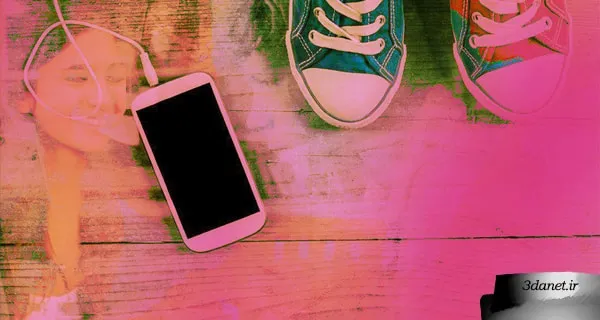
Introduction: The social pressures of the modern world and the struggle for acceptance within peer groups compel adolescents to participate in an endless competition over the consumption of goods, a competition that increasingly raises household consumption expenditures. This article examines the causes of the changing consumption culture among the new generation of adolescents.[1]
The Office for National Statistics, in its latest release of the "Household Expenditure Survey" in Britain, has reported on the current budget structure of a typical family: what people living together under one roof spend money on, and who pays for what? According to this report, a "typical adolescent" in Britain spends over £1,000 annually on mobile phones, MP3 players, and downloads, £240 on haircuts, and £300 on trainers. These are not the only common expenses; to calculate the total budget of adolescents, one must also consider money for cinema tickets, nightclubs, and clothing. A typical adolescent thinks that for a proper, indeed "normal" life, and for acceptance among peers and gaining their respect, they need other things too: things like a mobile phone, promptly upgraded to the "new and improved" version and updated with the latest ringtones, a laptop, a television and DVD player in their own room, some musical instruments and music lessons, and so on. Overall, according to the report, the lifestyle of a typical adolescent costs £9,000 annually. Adjusted for inflation, this figure is 12 times the amount a typical adolescent spent 30 years ago.
To understand these figures and take a stance, we must consider two further points. The first point: compared to when statistical calculations began, adolescents now start spending money from a much younger age—and this age is still declining. For example, an educational charity recently found in a study that seven-year-olds not only want to have a mobile phone but also desire these phones to have fashionable ringtones and the latest games.
The second point: adolescents of the 1970s, like their present-day successors, were fascinated, captivated, and mesmerized by the wonders of console games, Walkmans, or cinema films; but in that era, all these desired items (perhaps with the exception of cinema tickets) were relatively much more expensive and, therefore, compared to the more advanced current versions, fewer people had access to them. These desired items were considered luxury, dream goods, not basic necessities, and their possession was regarded as a sign of great fortune, not a legitimate expectation, right, or duty. Now that these desired items are cheaper, their prices are temptingly reduced and deceptively accessible, acquiring them has become a normal part of the "natural" and ordinary life of "everyone" who "is worth their salt," and their possession is no longer an exceptional and extraordinary event to be celebrated, remembered, and for which to thank God or good luck. The unexpected but inevitable consequence of this is the disappearance of the emotional bond with these possessions: what truly matters is the moment of acquisition and not lasting companionship. Half of adolescents' mobile phones are lost, and trainers, shortly after being bought, lose their appeal and end up in the bin. Things go out of fashion as quickly as they come into it. Amid the mass of items rapidly acquired and discarded, rarely does anything become "a source of pride and cherished"; and if it does, it is sure to quickly fall out of favor. What must always be kept alive is style, not the accessories; and this style demands that its accompanying accessories be replaced at an accelerating pace.
The thoughtful letter of Giacomo Segantini, one of my Italian readers, prompted me to re-examine the world of adolescents. He wrote: "The reality of my life is completely different. I consume as little as possible because I have no money. This situation has not frustrated me but has accustomed me to ignoring marketing messages." I have no reason to doubt Giacomo's sincerity and can only admire his willpower, even if a large part of this strength stems from the pressure of necessity. Giacomo Segantini, by choice or by compulsion, is swimming against the current (a powerful current). A great number of other young men and women, just like him, "have no money" to afford the expenses of a lifestyle that many consider a matter of (social) death or (social) life. Many are considered "unsuccessful" or "failed" consumers, incapable or defeated, but this situation does not make them happy, and they would not choose it if they could. "Marketing messages" are ubiquitous and annoyingly insistent and cunning; yet their most astonishing power stems from the fact that their peer "audience" ("ordinary adolescents") listens to them with fear mixed with respect and tries, as much as they can (and beyond their means), to obey their dictates and commands. Therefore, we must not only become accustomed to "ignoring" commercial advertisements but, above all, we must become accustomed to "ignoring" the perhaps less annoying but certainly more effective pressure of those around us and disregarding the pressure of standards that those around us strive to conform to and expect their associates to do the same. Ignoring, disregarding, and overcoming social pressure requires great courage. It demands nerves of steel and a strong character; indeed, a very strong character whose cultivation, nurturing, and preservation, despite all difficulties, is not easy.
Thirty years ago, only a select few, very determined and courageous individuals, patiently saved up to buy a personal computer or tickets to films by their favorite directors or actors. But in recent years, only a select few, very determined and resilient, have refrained from going into debt to buy the latest MP3 players and download the newest songs. Giacomo Segantini could be one of these special and not very numerous individuals, and I suspect that being special has not come easily to him; being special must often have been painful and sometimes even humiliating, and surrendering to the wave has a financial cost. Swimming against the current also has a cost; in this case, the cost is not financial but heavier and more damaging. In one of my letters, I wrote that fate determines the options, but choosing among them depends on one's own character. Considering Segantini's choices, it must be said that his character is worthy of praise and respect.
I was moved by Giacomo's emphasis that "not thinking about the future" is impossible. Considering the date of his letter (a few months after the recent credit crunch and the collapse of job markets), it seems that this time, Giacomo is rejoining the ranks of the vast majority of his peers. It appears that life amidst the dizzying, exciting, and breathtaking whirl of new goods and thrills, which until recently was considered eternal, is grinding to a halt; although its pace has slowed and will likely limp along for a while. Giacomo Segantini rightly says that "not a few dozen but hundreds of thousands" of young people stepping into the adult world with him face a challenge they had no conception of six months ago and certainly lacked the necessary skills to confront. They had learned to cope with an abundance of options and opportunities; but now they must quickly learn how to live in a world afflicted by a scarcity of options and opportunities. Is there a job for me? If there is, what kind of job is it? What must I do to obtain it? Several possible jobs can be mentioned, but no one can guarantee that these jobs will still exist, and remain long enough for us to acquire the necessary skills for them.
I would be delighted if Giacomo could, as he says, join the ranks of the “young sociologists.” But I must warn him (and anyone else who entertains such a thought) that joining these particular ranks will not make his life any easier. Given his personality, it might add to his anxieties and diminish what little peace of mind he has left. For as a sociologist, he will discover time and again in his professional life that “people only learn what is of use to their ancestors. To live rightly is something that can only be taught to the dead”—these are the words of Fernando Pessoa, whom many consider the author of “one of the most important texts of the modern world.”
.
.
The Expenditures of Adolescents
Author: Zygmunt Bauman
Translator: Erfan Sabeti
[1] This article is a translation of the following work:
Zygmunt Bauman (2010)’ Teenager spending’ in 44 Letters from the Liquid Modern World, Polity, pp.42-45.
.
.




Discussion0 comments
No comments yet; let yours be the first voice.