Philosophy
Consumerism and Moral Numbness
Bauman sees the spread of consumerism as the principal cause of moral numbness in modern societies, where human relationships, like consumer goods, have become replaceable and devoid of long-term commitment, pushing society toward moral exemption.
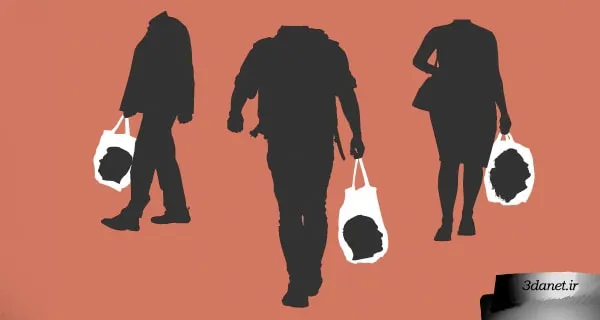
It seems that in the contemporary world, individuals have become largely indifferent to moral values and, in Bauman's terms, numb. He considers the main cause of this numbness to be the prevalence of consumerism in modern societies, and warns of its serious dangers.
Politics is not the only part of multifaceted human activity afflicted by "moral numbness." It can even be considered a collateral casualty, rather than the source and origin, of a pervasive and all-consuming blight. Politics is the art of the possible, and therefore any particular socio-cultural space creates its own unique politics, making the creation of other types of politics difficult and their efficacy even more so. Our liquid modern space is no exception to this rule.
When we use the concept of "moral numbness" to refer to apathy, disregard, indifference, or even calmness and cold-bloodedness towards the sufferings and problems of others (a prime example being Pontius Pilate's "washing of hands"),[1] "numbness" has a metaphorical meaning; this word originally belongs to the realm of physical and corporeal phenomena – its primary meaning is the malfunction of certain sensory organs, whether sight, hearing, smell, or touch, leading to an inability to perceive a stimulus that would, under "normal" conditions, produce an image, sound, impression, and the like.
Sometimes this physical and corporeal numbness is desirable and is artificially induced with the help of analgesics, resorted to as a temporary measure during surgery or in the event of a transient or incurable, extremely painful physical disorder; the goal is never to render the body immune to pain "forever." Physicians consider permanent numbness troublesome: after all, pain is an important weapon through which the body defends itself against potentially horrific threats; pain warns us to seek treatment before it is too late. If pain does not warn in time that something is wrong and intervention is needed, the patient will delay treatment to such an extent that their illness may become incurable (the most horrific physical disorders, which are very difficult to treat, are those that are not painful in their early stages, precisely when they are treatable and possibly curable). Nevertheless, permanent numbness (i.e., long-term consumption of anesthetic and analgesic drugs against pain) does not seem obviously unpleasant at first glance, let alone threatening. It must be admitted that the promise of eternal liberation from pain, and immunity from all its future manifestations, is a temptation that only a few can resist. But the least that can be said is that liberation from pain has its advantages and disadvantages ... Liberation from pain prevents discomfort and, for a short time, reduces potentially severe suffering, but this may also be a trap that ensnares its "satisfied consumers."
When we apply the concept of "numbness" not to corporeal and physical phenomena but to relationships between humans, and thus with the adjective "moral," we forget that pain is a kind of warning, a kind of alert, and a kind of preventive measure. If we do not realize in time that human solidarity and the durability of human society have developed a flaw and do not seek to remedy it, the situation will worsen. In other words, we ignore or downplay the danger to such an extent that human interactions become superficial, cursory, loose, and unstable, and as a result, these interactions can no longer be considered a potential factor for collective self-preservation. Indeed, this is the very essence of the process called "individualization" (this process can be summarized in the phrase that is on everyone's lips these days: "I need more space," meaning I want to be rid of the company of others and their intrusions). The process of "individualization" does not necessarily have an "immoral" intent, but it leads to a situation where there is no need for, or more importantly, no room for, moral evaluation and oversight.
Today's relationships between individuals are called "pure" – that is, carefree, free of unconditional obligations, and therefore without determining one's fate or mortgaging the future. The sole basis and the only reason for continuing the relationship is mutual satisfaction with it. The emergence and prevalence of "pure relationships" has often been considered a great step towards individual "emancipation" (this emancipation has, willy-nilly, been conceived as freedom from the limitations and constraints arising from commitment to others). But what makes such an interpretation controversial is the concept of "mutuality," because in this particular case, speaking of such a concept is a kind of baseless exaggeration. The simultaneous satisfaction of both parties in a relationship is not necessarily equivalent to "mutuality": it only means that each of the two parties is satisfied "at the same time." What prevents this relationship from being truly mutual is the awareness that ending the relationship is a unilateral, one-sided decision (this awareness is sometimes a source of comfort and at other times a cause of anxiety and worry). The main distinguishing feature of "networks" – a term used these days in place of the outdated and apparently obsolete ideas of "community" and "association" – is precisely this right of "unilateral" termination. Unlike communities, networks are created individually, and individually reorganized, or dismantled. The durability and survival of networks depends solely on the unstable will and desire of the individual. But in any relationship, there are "two" people ... The morally "numb" individual (that is, someone who is capable and willing to ignore the well-being of the other) takes back with the same hand that gives, and is simultaneously the subject and object of moral numbness. "Pure relationships" speak not of mutual emancipation but of mutual moral numbness. In this case, Levinas's "dyad" is no longer the origin of ethics, and instead becomes the agent of liquid modern "moral exemption," which complements and at the same time replaces the solid modern bureaucratic moral exemption (moral exemption meaning the exclusion of matters from the realm of moral evaluation).
Liquid modern moral exemption follows the model of the consumer-commodity relationship, and its effectiveness depends on the adaptation of this model to human relations. We consumers seek out and buy a commodity to satisfy our desires and needs, but we do not swear eternal loyalty to this commodity, and we continue to use it only as long as it meets our expectations – or until we encounter another commodity that promises to satisfy the same desires better than the previous one. All consumer goods, including so-called "durable" goods, are completely replaceable and disposable; in consumer culture – that is, a culture inspired by and oriented towards consumption – the more the pleasure derived from "owning" objects of consumption exceeds the pleasure derived from "using" them, the shorter the time gap between buying and discarding becomes. The faster these objects satisfy us (and therefore remain desirable for a shorter time), the shorter their lifespan of use and the more frequent their abandonment and disposal. The consumerist attitude may help turn the wheels of the economy, but it throws a wrench in the wheels of ethics.
Of course, this is not the only affliction that has befallen ethical actions in the liquid modern space. Because the calculation of profit and loss can never quell the unspoken but intense and irrepressible pressures of the moral impulse, indifference to moral dictates and disregard for the responsibility arising from (in Levinas's words) "the face of the other" leads to bitterness, that is, what we call "pangs of conscience" or "moral scruples." It is here that consumerist proposals once again rush to our rescue: one can atone for the sin of moral failure with gifts from shops, because the act of buying is presented as a moral act, despite its truly selfish and self-centered temptations and motives. Consequently, by exploiting the moral impulses arising from the fault and transgression it itself has caused and encouraged, consumer culture turns all shops and service establishments into a pharmacy full of sedatives and anesthetics, drugs meant to soothe or completely suppress moral, not physical, pains.
As the scope and intensity of moral failure increase, the demand for analgesics grows incessantly, and the consumption of moral sedatives turns into an addiction. Consequently, the artificially induced moral numbness becomes a kind of compulsion or "second nature": a permanent and almost ubiquitous state – and thus moral pain is deprived of its useful role as a warner, an alerter, and an activator. Moral pain is suppressed before it can truly become a source of anxiety and concern, and as a result, the network of human bonds, which has a moral fabric, becomes increasingly loose and fragile and disintegrates. Now that citizens have learned to seek solutions to their problems and troubles in consumer markets, politics may (or rather is prompted and ultimately compelled to) count people primarily as "consumers" and, at a distant second, as "citizens"; and to redefine consumer enthusiasm as a civic virtue, and consumer activity as the fulfillment of the primary civic duty.
Translation: Erfan Sabeti
.
.
Zygmunt Bauman is a Polish philosopher and theorist of "liquid modernity." What you have read is a translation of this writing of his:
Zygmunt Bauman and Leonidas Donskis, Moral Blindness: The Loss of Sensitivity and Liquid Modernity, Polity Press, 2013, pp. 12-16.
.
.
[۱] According to the "Bible," Pontius Pilate, the Roman governor of Judea, before the eyes of the Jews who demanded the execution of Jesus, asked for water and washed his hands to show that he did not want the blood of Christ on his hands. [M.]
.
.





Discussion1 comments
مصرف گرایی نیز همانند بیحسی اخلاقی، معلول هست باید بدنبال علل دیگری بود