اندیشهفلسفهخردگفتگوحکمتمعناپرسشفرهنگ
Sociology
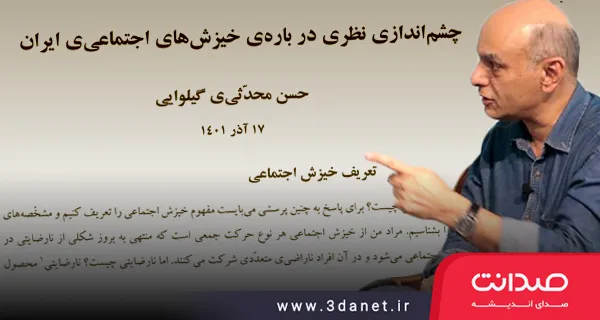
Insaf News interview with Hassan Mohaddesi: You have placed the people in an inhumane situation
Hassan Mohaddesi discusses unprecedented institutional shifts in Iran: the exit of media and the economy from religious domination and the declining credibility of religious functionaries. He describes the people as “hero-seeking yet responsibility-averse,” seeing this not as collapse but as new paths forged by the young.
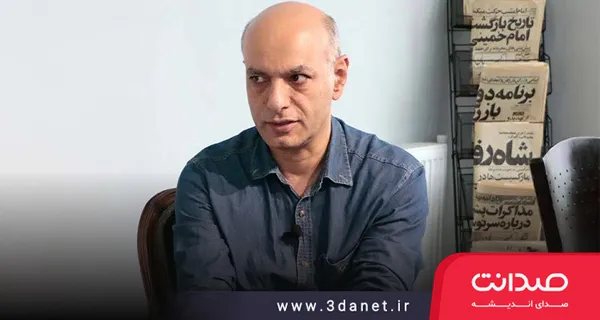
A hero-seeking people devoid of responsibility facing an unresponsive, bloated government!
Interview by Insaf News with Hassan Mohaddesi, September 2022
Watch the full video of this interview on YouTube | Aparat
Insaf News: Hassan Mohaddesi, a sociologist and university professor, stating that "our people are largely hero-seeking and devoid of responsibility," said: This is a major and serious flaw, and until we resolve it, we will have an unresponsive and bloated government and a weak and frail civil society. This is a serious historical predicament that we must eventually resolve one day.
In a conversation with Abbas Naimi Jourshari, a sociologist and member of the analytical section of Insaf News, in the ninth dialogue within the series of sociologists' conversations about the future of Iran, Mr. Mohaddesi says regarding the current state of developments in Iranian society: The developments in Iran are unprecedented and can shape Iran's tomorrow. Social institutions are very long-lasting and slow to change, and they only transform at specific historical junctures and as a result of the accumulation of a set of changes. I think this is now happening in a serious way, and we are witnessing these transformations in several institutions. One of the institutions that has undergone fundamental change in Iran is the institution of communication. The institution of communication is one of the foundational institutions in any society. The advent of new media has created a great transformation in Iran and has removed the knowledge system from under the domination of religion and the state. Personal media have become very widespread, and every individual can be a source of data, information, and news production. Communication has been freed from the constraints of forces such as religious and political forces, and this helps the knowledge system to break free from the monopoly of religious and political agents. This is a very, very significant event that is unparalleled in the history of Iran. We can now say that the institution of communication is in challenge with religious and political agents.
He further added: We are seeing this happen with some other institutions as well. The institution of the economy has, to a considerable extent, emerged from under the domination of the institution of religion. Economic agents no longer largely derive their behavioral rules from the institution of religion. Whereas in the past, there was a very, very strong bond between the clergy and the bazaar, but now when we talk to economic agents, we see that someone wanting to make a transaction no longer cares much about whether the transaction and its money are religiously lawful or not, and acts based on market rules. Similarly, the institution of the family is also undergoing a fundamental transformation. The conventional family has faced a serious crisis and is not being reproduced, and new forms of family have been born and are being born. This institution, too, no longer necessarily follows the models provided by religion.
Major subterranean transformations that we do not pay attention to
Stating that "these are very large subterranean transformations that we may not pay attention to, but they have great consequences," Mohaddesi said: Similarly, the social status and credibility that religious knowledge and religious agents had in society have, after these few decades, faced a social crisis. Our research shows that today, a significant portion of our people no longer believe in the political role of religion and no longer accept the totalitarian claims that seek to guide, control, and direct all dimensions of society. Religious knowledge, known as jurisprudence, which has been the most important knowledge in Islamic history, and likewise the jurists and muftis, who were the most important cultural force in Islamic societies, are now, in practical terms, seriously losing their power and credibility. This is another fundamental transformation: the institution of religion, which has always been the dominant, highly influential institution and the institution of institutions in Iran's history, is in serious retreat and is becoming an institution alongside other institutions. Religious agents have severely fallen from the position of a reference group and are no longer in that position, and artistic agents have gained far more credibility than them, and thus the reference group in society has changed. This matter is a great transformation and is completely unprecedented in Iran's history.
Regarding the institution of monarchy in Iranian society, he said: On the other hand, with the 1979 Revolution we set aside the institution of monarchy, although its remnants still exist and it struggles to return and has some potential, but for the time being, the institution of monarchy—which, under the institution of politics, was a very important historical institution that dominated Iran for centuries, and the further back we go, we had monarchy and its related political culture based on an idea like “divine glory” (farr-e izadi) and that “the sultan is the shadow of God on earth”—has also faced a fundamental challenge.
A multifaceted institutional transformation unprecedented in Iran’s history
Continuing this part of his analysis, the sociologist added: The institution of art has undergone transformation and is emerging from under the dominance of the institutions of religion and politics. Artistic agents have attained relatively high economic power and can operate independently of the two aforementioned institutions, form organizations, have intra-institutional associations, enter into communications at the global level, achieve successes, and become an important and influential social force. For example, in the environmental sphere, an actor opposes the Miyankaleh petrochemical plant, and this very opposition provokes many reactions among political agents in Mazandaran and becomes the starting point for an important movement; or in the political sphere, filmmakers issue a statement, and that statement becomes influential, political action is taken, and their voice is loud. Or, for instance, a musician stands against a jurist’s fatwa regarding the prohibition of women’s voices; Mr. Pirniakan’s objection to Ayatollah Makarem Shirazi’s fatwa is unprecedented in the history of Islamic societies. These are very important symbolic aspects and can show that we are undergoing serious transformations in these institutions. I believe that present-day Iran is going through a multifaceted institutional transformation, and this is unprecedented in Iran’s history.
Regarding the term “collapse,” Mohaddesi says: I do not agree with such terms, because in the minds of analysts who are conservative and have specific models in mind as accepted models, anything that happens outside of that is called anomie, collapse, normlessness, and so on. They have a specific, fixed model that they accept, and they consider anything other than that as negative. I think Iranians are trying out new experiences in various realms and traversing new paths. This can create a kind of plurality in various realms and is not necessarily negative. That traditional conception that everyone must follow the traditional path collapses in the modern world.
The sociologist named the youth as the primary carriers of change and said: When old forms of meeting needs and ways of life become crisis-ridden, the first group that becomes carriers of change are those who are not socialized as in the past, and we see this mostly in the youth. For example, we can see the first experiences of so-called “white” marriage among university students or young people migrating to metropolises. First, due to the lack of possibility to repeat life based on the old experience, they tried out new patterns, and gradually, out of these very trials, new patterns take shape.
Shariati single-handedly challenged the seminary
In response to a question about the state of religious intellectualism from its beginnings to today, the university professor says: I see religious intellectualism as part of the process of modernization. The very emergence of religious intellectualism is a product of the modernization of Iranian society. In other words, in the religious sphere, there were previously traditional religious agents, among whom there was a limited diversity, but religious intellectualism took shape in contemporary Iran’s encounter with the modern world. In fact, traditional religious agents were incapable of answering certain issues that existed in the realm of religion, and there were questions and issues for which religious intellectualism was born to answer. As a result, the religious sphere itself was divided into two forces: the traditional religious agents, the clergy, and the religious intellectuals. Religious intellectuals are a product of the modern era and have a connection with the modern educational institution called the university, while traditional religious agents are connected with the traditional institution called the seminary. Therefore, a division occurred within the religious sphere, two forces were created, and these two forces entered into a challenge with each other, reaching a point where Shariati, as one of the important religious intellectuals, single-handedly challenged the seminary.
He continued: We cannot say the project of religious intellectualism is over, because religion is still a social force, and forces within the religious sphere can continue their activities, but its influence has diminished because the social force of religion itself is seriously weakening. The religious agent must only strive to hold his ground and say, “I am here too, and look at me too!” Religious agents are now using the existing political potential, but if you imagine the day after religious rule, when this political force is no longer behind them and they have lost all political power and funding, then they will have to speak to the people and say, I am here too and I have things to say. Even now, many of my clerical friends report that we see all kinds of harassment in the streets. We must talk to the cleric who travels on the bus, metro, taxi, and in the city and ask how people treat you? Otherwise, the story of those clerics who sit in a closed space and a bulletproof car and have no contact with the people is different.
Ethical secularism is negative from the perspective of religious agents, but …
In response to the concern that “given the current conditions and the weakening of the institution of religion, society becomes more unethical,” Mohaddesi said: We are facing another phenomenon called “ethical secularism.” When we engage with many interlocutors in research, they say, “We separate ethics from religion.” Ordinary people say this, not ethical theorists. Ordinary people say in very simple language, “Let us be human,” “Let us have humanity,” “Let us not harm one another,” “Let us not interfere in each other’s affairs,” “Let us be good human beings.” They say it in this simple language, and we translate this in theory as “ethical secularism.” This is what is happening, and we cannot necessarily say it is negative. Of course, from the perspective of religious agents, it is negative because it loses its religious backing, and ethics is becoming secular.
Referring to the dire economic situation, this sociologist said: Over long periods, the economic situation has been in crisis, and as a result, people’s quality of life has greatly declined; immense pressure is placed on individuals, and for those responsible for providing for their own lives and the lives of others, it is impossible to meet basic life needs, or meeting them has become very difficult. Consequently, individuals must endure extraordinary psychological pressure. This unfavorable economic situation, which worsens day by day, has now reached a point where individuals, in order to meet basic life needs such as food, clothing, housing, health, and children’s education—the most elementary needs of an Iranian human being—and this manner of administering society has made meeting them problematic, endure immense pressures over long periods. As a result, they suffer psychologically and experience crises, and they have also declined morally. In any society and any historical period you examine, wherever the economic situation is bad, look at the state of ethics. In Islamic culture, too, we have many hadiths and narrations such as “If poverty enters through one door, faith exits through another,” and similar expressions.
You have placed the people in an inhumane situation
Expressing that “I am astonished by some people’s perceptions of society,” he said: Suicide, homicide, psychological disintegration, and so on should not be attributed to the notion that society has become more unethical. Could one expect otherwise?! You should not attribute it to the idea that our people have suffered a moral crisis. You, the authorities, failed to administer society properly and placed the people in an inhumane situation, yet you expect them to behave civilly and ethically; this expectation is wrong. The authorities sit in a comfortable place where everything is provided for them, and the children of political officials are abroad enjoying its benefits, yet they expect our wretched youth not to become entangled in addiction, violence, theft, and misconduct. How can one have such an expectation?!
This sociologist called the current situation a "situation of explosive discontent" and said: These very crimes, suicides, and homicides are part of this same situation and indicate that the state of discontent is in an explosive phase; we will have numerous social uprisings. I think if conditions return, and the management of society and the economy improves, we will gradually move past these issues.
Our people are largely hero-seeking and lacking in responsibility
At the end of this conversation, Hassan Mohaddesi critiqued society and said: Let me use this opportunity to offer a critique of our people and our culture; we lack civic organizations in our culture. Our people are largely hero-seeking and lacking in responsibility, and they tend to want a group to step forward, play the role of the hero, and become martyrs. For this reason, our history is full of martyrs, but the people themselves are unwilling to bear costs and do not join civic organizations. The people must emerge from being passive, isolated particles; we have a people who are passive, isolated particles who grumble and wait for heroes to come and transform the world. The important duty of the elites is first to be involved in organizations themselves and play a role in them, and then to emphasize that each and every one of us, the people, should join organizations, each of us roll up our sleeves to the best of our ability, build a collective, and within those collectives be able to reduce the problems of that same collective and create a kind of hope, even on a small scale. If we have these organizations, we can at least, in this situation where we have an unresponsive and irresponsible system, lift a part of the existing burden. This is a great and serious flaw, and until we resolve this, I think we will have a bloated government and a weak civil society; this is a serious historical predicament that we must finally resolve one day.
Discussion4 comments
با عرض سلام دربارۀ نقدی که جناب حسن محدثی به مردم وارد میدانند سوالی و نکته ای به ذهنم رسید: اگر خود حاکمیت اجازه ندهد چنین نهادهائی پا بگیرد و به انحاء و دلایل مختلف آنها را متلاشی کند چه باید کرد؟ فی المثل خیریه اما علی را ببینیم. یا حتی یک نهاد بسیار قدیمی و کلاسیک در ایران مثل نهاد درویشان و صوفیان. مثل دراویش گنابادی مثلا که فعالیتهای آنها را محدود ساختند و با خشونت با آنها برخورد کردند. نهادی که به گواهی گذشته اش نهادی غیر سیاسی و صلح طلب است. ممنون میشوم استاد محدثی پاسخ بدهند.
منظورتون همونایی هستن که ملت رو با ماشی زیر کردن و تیکه تیکه کردن؟؟؟؟ نهاد مدنی؟؟!!!
گفتگوی بسیار جالبی است.باید ملت در نهادهای مدنی جایگاه پیدا کنند تا بتوانند حاکمیت استبدادی را از مردم دور کنند و نهاد های مدنی در جامعه رشد پیدا کند تا بتوانند آزادی و حاکمیت مشروع را به دست آورند.حاکمیت باید مشروعیت داشته باشد تا نهاد های مدنی جایگاه اصیل خود را داشته باشند و استبداد بر جامعه حاکمیت نیابد.
سلام سوال من از آقای محدثی این است که شما برای عوامل درونی افراد چه سهمی قائلید یعنی مدعی هستید تمام خشونت ها و بزهکاریها ناشی از محیط نا مساعد است یعنی یک نفر هم در این شرایط بحرانی از روی خباثت درونی دست به بزه کاری نمی زند تا جایی که من اطلاع دارم بروز هر عمل و رفتار از انسان تابع شرایط درونی - روانشناختی - محیط نا مناسب اقتصادی و عوامل جامعه شناختی است ترکیبی از عوامل در اقدامات و انگیزه های بزهکاران نقش دارد نمی توان تک بعدی به آن نگاه کرد این رویکرد کاملن از بزهکاران سلب مسئولیت انسانی می کند خواهشمندم استاد پاسخ دهند