Philosophy
Instead of Holiday Greetings
Nowruz greetings have become hollow slogans and the celebration is drained of meaning; yet this tradition is rooted in surviving winter and hoping for life. An essay on re-reading the concepts of repetition and time to find a liberating possibility within the tradition.
For me, the Nowruz holiday has no particular meaning beyond gifts, time off, rest, and catching up on overdue tasks. The predicament I faced every year, however, was the holiday greetings. We know that each year at the start of the new year, Iranians send many congratulatory messages to one another. The majority of these messages contain wishes for happiness and prosperity in the coming year. Each year, with a brief reply, I tried not to leave the kindness of friends, acquaintances, and relatives unanswered, while at the same time it seemed to me that, aside from the expression of kindness and friendship, these messages themselves contain no particular meaning. Why should we congratulate each other on Nowruz? What auspicious event has occurred? A few years ago, by chance, I was stranded in the last days of Esfand in one of the forest cabins in the Alborz highlands. The cold was life-sapping; it was impossible to leave the cabin and therefore to procure food. The wood-burning stove only warmed the area within a one-meter radius around itself. Procuring firewood was also an ordeal. Due to the extreme cold, even sleep was impossible. There was no running water. We had to melt snow in a pot on the stove. Because of our weakness in predicting the harsh conditions, our supplies were insufficient for living in that situation. After several nights of severe cold, which I cannot now begin to describe, one morning upon waking, I felt less frozen and desiccated. When I stepped out of the cabin, the sun was in the sky, some of the snow had melted, and the air had become slightly warmer and greener. Yes, spring had arrived, and we had been saved. If at that moment someone had congratulated me on the arrival of spring, I would have felt that congratulation with all my being. I consider such a congratulation meaningful, and I guessed that when the people of this region congratulated each other on Nowruz years and centuries ago, they were in fact celebrating their survival. There is an expression in cold regions that measures age not by years, but by winters. For example, "So-and-so has seen 50 winters." In this sense, spring is hope, life, and warmth. Without the hope of spring, enduring winter is very difficult. But do we understand this meaning today? Do we, with this safe and guaranteed mode of living, have any understanding at all of Nowruz and its life-giving meaning? For us, Nowruz is nothing but a formal date on the calendar, and at best, the arrival of the spring season indicates the time to turn off the radiators and gas heaters. That being the case, it seems the process of holiday congratulation, without its constitutive elements and its cultural and biological roots, has today become a superficial and shallow ceremony that not only conveys no meaning, but also abandons everyone amidst a mass of beautiful and meaningless sentences; the vast majority of Nowruz greetings are nothing but sloganistic wishes: a year without this and full of that, which, although a kind of effort to express kindness and affection can be seen in them, are so drowned in the futile and meaningless relations of the dominant culture that they possess no positive or constructive aspect. Wishes that are just words (and talk, of course, is cheap and empty air: ponder for a moment the meaninglessness of the phrase "May your Nowruz be victorious") and messages that have become substitutes for expressing devotion and friendship and are mostly reproduced (copy-pasted) on a wide scale. Today, Nowruz has become part of a mass cultural process aimed at promoting superficiality and tedious gatherings. While expressing friendship and affection toward those who have sent me New Year's greetings, I must announce with great regret that, at least in its current appearance and form, I have no hope for Nowruz and consider it one of those cultural traditions that, like other ceremonies related to death, birth, marriage, etc., have become so formal and emptied of meaning that they serve only to fulfill a duty. Nowruz had meaning for people at a time when it was based, above all, on self-preservation and the survival of the species. But today, when those implications and reasons no longer exist, it seems that preserving this custom itself has merely become another part of the baseless ceremonies that, under the conservative and reactionary pretext of "preserving customs and traditions," are meant to constantly reproduce us and our way of life, and are practically nothing but ways to maintain the status quo. Is the Nowruz holiday, as promoted by conservatives, traditionalists, and antiquarians, devoid of any liberating element? Perhaps the answer to this question is yes, but let us not give up on the last attempt: the last attempt to salvage a cultural possibility.
There is something in the Nowruz holiday that is, at first glance, entirely counter-revolutionary: repetition. Repetition is the favorite concept of conservatives. For them, the very fact that something is repeated every year makes it valuable in itself. Nowruz is the festival of repetition; this repetition was first borrowed from nature and then, through its ossification, turned into a conservative ritual. Simply put, something is repeated, and we humans, precisely because of our desire for survival and the preservation of the species, celebrate this very repetition. Nature marks time; it gets cold and then warm, and cold again and warm again, and we celebrate precisely this endless repetition. But this same concept of repetition, which is seemingly a non-Hegelian concept, possesses a kind of radicality that might be able to save it. Nature as absolute repetition is a reminder of a conception of time that has had no place in the culture of the people of this planet for several centuries: mythical time is cyclical time. Everything repeats and repeats again: from eternity to eternity. From a mythical perspective, time, and consequently history, contrary to our modern understanding, is not linear but cyclical. History has neither a beginning nor an end, because "nothing comes from nothing," and for this reason, there is no time in which a world does not exist, nor will there be a time when the world is annihilated. The world repeats perpetually (the theory of the cyclic universe). The Abrahamic civilizational tradition (Christian-Islamic) stands against this repetitive time and proposes a linear conception of time that has a beginning (Creation), a key moment (the birth of Christ or the Hijra of the Prophet of Islam, etc.), and an end (the Day of Judgment: the apocalypse). The modern physics conception of time also recounts precisely this same Abrahamic conception, albeit in a secularized form: it merely substitutes the "Big Bang" for Creation, the "now" for the key moment, and "de-teleologizes" the end of history. The emphasis on the repetition of time is, in a way, a return to earlier myths. In this sense, repetition is a kind of regression. But can this repetition be understood in a sense that is not conservative and reactionary, but progressive and revolutionary? The two rival linear and cyclical theories can be intermingled. I do not intend here to explain the theoretical and philosophical foundations of this intermingling (I have previously explained the discussion of the "spirality of Hegelian time" in detail in other texts). But in a very simple expression, this intermingling can be shown by combining the two shapes of the "circle" and the "line." The result emerges in Hegel's philosophy: time as a spiral. Imagine a progressive and divergent spiral that, the further it continues, the more it moves away from the center. In this spiral, everything is both repeated and not repeated. In fact, every point is a repetition of a point that was repeated 360 degrees before, but this time on a higher level. This intermingling of Abrahamic-Greek time becomes possible in Hegel's philosophy. Now let us return to the main discussion.
In this sense, the holiday is repetition and is not repetition. The conservative approach that seeks to appropriate nature as absolute repetition, and has turned Nowruz into a merely formal ceremony, has no aim other than to castrate the radical and revolutionary dimension latent within it. This nationalist-reactionary current has, of course, been victorious to this day and has managed to reduce the holiday to a set of uncritical festivities and joys, holidays, eidi, haft-sin, spring cleaning, new clothes, travel, and so on. This current, which had previously appropriated the very process of nature's action, now seeks to seize and distort its critical implications. It is truly worth asking ourselves: what in us becomes new during Nowruz? Let us look at ourselves a little: clothes, homes, and manifestations of this sort. Now we must ask: what exactly is it that does not become new at all and always stagnates and repeats itself: ourselves, our way of life, and our culture. In contrast, if we seek to revive the possibilities inherent in Nowruz, instead of surrendering to the vicious cycle of repetitive congratulations and wishes or expressing meaningless propositions, we must emphasize repetition itself in the course of progression, or in Hegelian terms, "identity in difference." And instead of conventional festivities and joys, we must focus on "spiral time" itself as a form of encounter with Being that is meant to sweep through everything, precisely everything of ours, and instead of trying to reduce Nowruz to repetition and the rigid preservation of "ancient past customs," we must, with a critical stance toward our own culture, even reconstruct Nowruz itself anew. Consequently, the target of this note's critique is not "renewal" itself, but its reduction to dusting and dredging the most superficial realms of individual life and its transformation into a set of costly actions solely for collective bodily comfort. "Becoming new" in its current form is not "becoming new" at all, and amidst all these formal visits and gatherings, it has not revived and will not create any collective ideal. In the current situation, having a new day has stalled and stagnated in something like having new clothes, or things of that sort. What turns Nowruz into a liberating possibility is precisely this possibility of constructing "the new," within a general situation that can simultaneously elevate this event to the most important possibility for cultural transformation. Consequently, the goal is not to disparage traditional relations, but precisely to recover the historical dignity of Nowruz as "the most important possibility for our comprehensive encounter with the new"; a possibility that today, due to being conflated with superficial renewals, is suppressed and repressed. And the final question is: what turns the circle into a spiral and repetition into transcendence? The answer is "negation in the course of preservation" or "transcendence in the course of immanence." It is our critical stance and encounter that causes us to transform every repetition into something beyond repetition. Do we dare to do this? Can we, instead of surrendering to tedious relations, challenge them, not to negate them, but to revive and save them? Do we truly have the capacity to pay this cost? The displeasure of my friends and acquaintances with this very text is perhaps the least cost that must be paid for this critical encounter. We must ask ourselves: are we truly seeking a "new day" (Nowruz), or under this name, are we still seeking to preserve and repeat the "ancient day"? If we have the courage and capacity for this encounter, then we can take pride in ourselves, our culture, and our dynamic world, and perhaps only then would such a Nowruz warrant congratulations: but not of the kind of tedious congratulations and beautiful, charming conventional messages, but a congratulation that would practically be nothing other than a form of political action and critical self-reflection on culture, civilization, and humanity.
.
.
Instead of Holiday Greetings
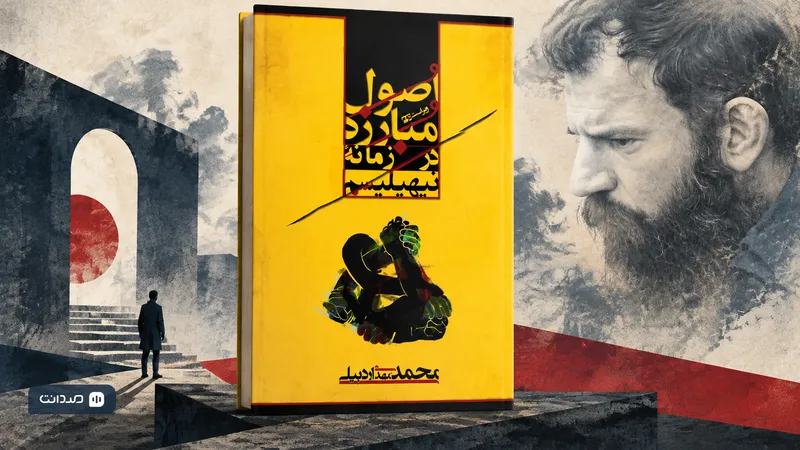
Author: Mohammad Mehdi Ardebili
.
.

Discussion13 comments
با سلام به دوستان چه خوب است که هم دیگر را در فضایی مودبانه نقد میکنیم اگر در پایان سال خودرا در محک نقد بسنجیم و نگرشی جدید در سال نو فرا روی خود بگذاریم واقعا عید حای تبریک دارد
سلام دوستان گرامی. نکته ای را قابل بیان دانستم و آن اینکه برپا داشتن مراسم هایی که به گذشته و تاریخ یک ملت و نیز یک گستره ی فرهنگی باز میگردد الزاما تنها نباید به دیده ی تکرار مکررات به آنها نگریسته شود.هر ملتی در این دنیا چنین مراسم هایی را هر ساله برگذار کرده و بیشتر از هر چیز هویت و پیشینه ی خویش را به خود و نیز به دیگر هم میهنان خود یاد آوری میکنند. آنها به هم یادآوری میکنند که به هر حال دارای ریشه ای هستند و باید از این پیوند پیشینه ای استفاده کنند و همبستگی بین خود را محکم تر نمایند تا بتوانند آینده ی کشور خود و حتی آینده ی فردی و خانوادگیشان را به سوی پیشرفت و بهبودی سوق دهند. مصداق های آن هم زیاد است کشور هایی نظیر چین، روسیه ، آمریکا و هم چنین بریتانیا ، ژاپن ، فرانسه و آلمان هر ساله از این دست جشن های ملی در راستای قدرتمند تر کردن کشورشان و نیز متحد کردن هر چه بیشتر ملتشان بهره میبرند. پاینده و شادکام باشید.
نویسندهٔ متن گویا تصور کرده است تبریک گفتن به معنای جشن گرفتن است. مثلاً پرسیده است: «چرا ما باید نوروز را به همدیگر تبریک بگوییم؟ مگر چه اتفاق مبارکی افتاده است؟» اما تبریک گفتن به معنای خجستگی و برکت خواستن است. مردم ابتدای سال به یگدیگر تبریک میگویند، بعنی برای دیگری آرزوی روز و روزگاری شاد و موفق و مساعد میکنند. اگر توجیهی که ایشان آوردهاند که مردم قدیم بعد از موفقیت در گذراندن زمستان آن را جشن میگرفتند صحیح باشد باید این رسم و این تبریکگفتن تنها در مناقطق سردسیر ایران برقرار میبود و مناطق گرمسیر احتمالاً بعد از توانایی در گذراندن تابستان به یکدیگر «تبریک» میگفتند. همین نکته در دیگر فرهنگهای جهان ـ اعم از مناطق سردسیر و گرمسیر ــ هم هست که برای یکدیگر در آغاز سال خوشی آرزو میکنند، نه اینکه زندهماندنشان را جشن بگیرند. تحلیل فلسفی هر پدیدهای شاید خوب باشد، اما شرط اولش داشتن دادههای درست است.
ـ زندگی تکرار مکررات است ـ مانند گردش چرخ اما اتومبیل دیگر همان جایی که بود ، نیست ـ به ته دره رفته ـ ته دره ، لب دره یا به منزلی از منزل های زندگی
به نظر می رسه نه فقط این آیین بلکه بسیاری از آداب و سنن دینی و ملی و جهانی یکی از پرکاربردترین ابزار ها برای رفع فقط روزمرگیست و شاید نباید توقعی غیز این از آن داشت .
نویسنده ی محترم پیش بینی کرده بود باید هزینه ی طرح نظرش را بدهد !
با سلام برای بعضی ها سال نو وعید واقعا عید است برای کارمندان که وقتی سال نو شود حقوقشان زیاد میشود و عیدی میگیرندو بیست روز تعطیل میشند و به مسافرت میروند برای اجاره بگیران کسانی که مغازه یا خانه اجاره میدهند با آمدن عید بر مبلغ اجاره می افزایند برای بعضی مغازه داران مثل پوشاک و کفش که واقعا عید است اما برای قشر زحمت کش کشاورز و دامدار و کارگر که باید با آمدن عید اجناس و مایحتاج را گرانتر بخرند واگر خانه اجاره کردند بیشتر بدهند چه عیدی چه تبریکی! این رسم و رسومات مال قدیم بوده ایکاش سفره اش جمع میشد
مقاله ی دردمندانه ای بود . بشدت موافق نظر استاد هستم . زندگی مان با تمامی زوایای مدرن یا باستانی اش ، شده یک مشت کلیشه و مارا تبدیل کرده به موجوداتی ناخودآگاه از خود و دیگری که مدام در حال تکرار اعمال هستیم...
اگر نویسنده هگل را هم به کجیِ نوروز فهم کرده باشد، نیمه دوم نوشته هم علی رغم افه هگلی بی فایده است.
چرا همیشه به جای نقد به نیش و کنایه های بی ارزش پناه می بریم. امروز دیگر دوران این حرفهای کیلویی گذشته است جناب مجید.
دیدگاه مترقیانه ای در خصوص نوروز ارائه شده است. به نظرم شاید تفکیک کارکردهای شخصی نوروز در مقابل کارکردهای اجتماعی بتواند جنبه های تکرار شوندگی و بی معنایی نوروز را دو سطح متفاوت وروشن تر بحث کند. برای مثال کارکرد هویت بخشی جمعی نوروز در طول تاریخ تکراری بودن ان را کاملا توجیه میکند.
به نظر میرسد که خود نوبیسنده هم هنوز معنای واقعی نوروز و بهار را بدرستی درک نکرده؛ به نازیباترین شکل ممکن آن را وصف کرده اند. بهتر است بیشتر در وصف و حال نوروز در آثار بزرگان مطالعه نمایند. مضاف براین که تهی بودن تبریکات صرفا تعارفی ما دلیلی بر بیمعنایی و بیهودگی جشن گرفتن آغاز بهار نیست! و خلط مبحث نبایست کرد.
دقیقا دیدگاه های شما وضعیت امروزی را رقم زده است، نو شدن طبیعت و بهار هیچ مفهومی ندارد اگر قرار است انسان در بوی تعفن راکد گونه اش بماند.