Philosophy
Introducing Issue 145 of Ettela'at-e Hekmat va Ma'refat: A Dossier on Spiritual Health
Issue 145 of the monthly Ettela'at-e Hekmat va Ma'refat, titled 'A Dossier on Spiritual Health,' devotes seven essays to the ontological and theological dimensions of health. These essays analyze the relationship between religion and spirituality in fostering well-being.
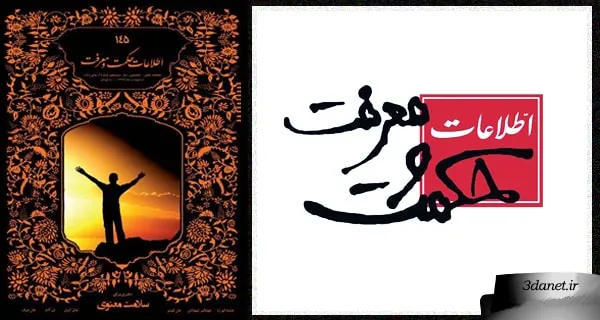
Introducing Issue 145
Ettela'at-e Hekmat va Ma'refat Monthly
Titled "A Dossier on Spiritual Health"
The dossier in this issue comprises seven articles, and other pieces have been published in the Literature and Art, Thought and Opinion, Books, and Report sections.
In part of the editorial note for Issue 145, Alireza Rezayat writes: "Based on the definitions of the concept of health and well-being presented today at the global level, particularly in the Charter of the United Nations and by the World Health Organization, physical health is one dimension of health alongside mental health, social health, and spiritual health. The approach considered in most research in this field is the holistic approach. In this approach, health must be viewed as a coherent and interconnected whole. From this perspective, health provides the ground for an inclination toward spirituality and meaning, and at the same time, spiritualism, as a mechanism, can be influential in creating, maintaining, and expanding health and well-being in all dimensions, including physical, mental, social, cultural, political, and even religiousness."
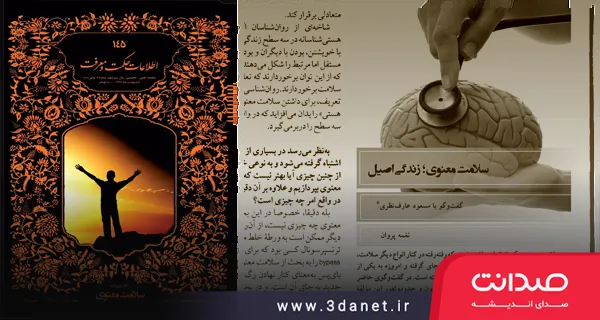
The first article in this issue's dossier is an interview titled "The Authentic Life; Spiritual Health," conducted by Naghmeh Parvan with Dr. Masoud Aref Nazari, a specialist in transpersonal psychoanalysis, in which the ontological, ethical, social, and theological dimensions of this type of health are discussed.
John Fisher, a scholar in the field of spiritual health, in the second article of this dossier, titled "The Nature and Assessment of Spiritual Health," seeks to present a model for this two-part concept. In this article, translated by Ali Akhlaghi, while defining spirituality and its four dimensions, he addresses the challenges that spiritual health faces in the field of global health.
"Conceptual and Theological Considerations in Defining Health and Its Related Concepts" is the third article in the spiritual health dossier, authored by Mark J. Hanson and translated into Persian by Mitra Sarhadi.
Hisham Abu-Raiya and his colleagues, in the fourth article of this dossier, "Difficulties and Solutions of Religion in Relation to Spiritual Challenges and Spiritual Health," translated by Elham Sadeghi, mention four religious factors as potential buffers that can be an indicator for creating personal peace and a sense of happiness, as well as a solution for relieving stress and anxiety.
The fifth piece is an article by Corina Cosma, translated by Masoumeh Zohdi Zirak, titled "Religion and Medicine or the Spiritual Dimension of Healing," which emphasizes the benefits of complementary healthcare and health resulting from religiosity, which is directly related to disease control and life expectancy.
The sixth article is titled "Theological Perspectives and the Interconnection of Religion and Meaning in the Field of Health and Well-being," authored by Ulrich Körtner and translated by Alireza Rezayat. While pointing to the two-dimensional nature of the human being, namely the material and spiritual dimensions, the article discusses the mutual influence of these two and believes that this mutual influence has, in fact, been the threshold for the entry of spirituality into the field of medicine in both the ancient and modern eras.
The seventh and final article of this month's dossier is a piece by Asghar Eftekhari titled "Spiritual Mechanisms of Spiritual Health." While defining spirituality, its dimensions, and its relationship with health, he addresses the spiritual requirements and necessities of spiritual health and mentions seven mechanisms that are influential in the better realization of spiritual health and well-being.
In the Literature and Art section this month, we review three articles, which are: "What is Cinema?" by Noël Carroll, translated by Sheida Moazzami; "Prison Poems" by Heydar Eivazi; and "An Introduction to the History of Modern Aesthetics" by Paul Guyer, translated by Seyed Javad Fenderski.
The Thought and Opinion section of this issue contains two articles: "Comparative Religion and Mysticism" by Enshallah Rahmati; and "Faith" by John Hick, translated by Latifeh Abbaszadeh.
The two final sections of this monthly are the Book and Report sections: Contemporary Iranian Ghazali Scholars (1), Seyyed Masoud Razavi; Book Review, Discussion, and Introduction, Monireh Panjtani; Baudelaire According to Shayegan; A Study of Gol o Morgh in Iranian Painting; Gol o Morgh: A Window onto Iranian Aesthetics / An Interview with Jahangir Shahdadi.
The 145th issue of Ettela'at-e Hekmat va Ma'refat was made available to enthusiasts in Ordibehesht 1397 (April–May 2018), titled "Hafez and World Culture," under the editorship and managing directorship of Enshallah Rahmati, priced at 5,000 Tomans.
.
.
Email Address: ehvm86gmail.com
Telegram Channel: t.me/Doostanehekmatmarefat
.
.
Discussion0 comments
No comments yet; let yours be the first voice.