Philosophy
Introducing Issue 156 of Ettela'at-e Hekmat va Ma'refat
Issue 156 of Ettela'at-e Hekmat va Ma'refat, themed 'German Phenomenology: Heidegger' and guest-edited by Monireh Panjtani, features seven articles, reflections and opinions, a report, a book review, and a text on the walking stick.

Issue 156 of the journal Ettela'at-e Hekmat va Ma'refat, titled
In this three-part text, inspired by Heidegger's philosophical thoughts on the fundamental aspects of Dasein, I have written a brief introduction and, in the process, once again recalled the reasons for the formation of the phenomenology series in the journal "Ettela'at-e Hekmat va Ma'refat." In the following, with reference to Heidegger's phenomenological philosophy, I have made a detour to the articles previously published in these issues. The final part is dedicated to the content of this issue, where I have written a little about each article, the reason for its inclusion in this collection, and its connection to the previous issues.[1]
Monireh Panjtani[2]
********
A Steadfast Hand-Support
"Questioning as a seeking needs prior guidance from that which is sought."[3]
We were walking along the forest path, mixing the soft mud with fallen leaves, mosses, and lichens. The wind was busy blending the color of the sky into the green of the forest, and its subtle movements stirred a mysterious turmoil beneath our skin. The colors, the texture of the leaves and tree trunks, the slipperiness, sharpness, smoothness, and hardness of the boulders, the sound of the river, the chiaroscuro, the fragrances and scents transported us from one state[4] to another; from tangled and transparent memories to wishes and yearnings. With the walking stick in my hand, I disturbed the silence of the earth and said:
- What a good companion this walking stick is! Look at the confidence we have that it keeps us safe from slipping on the mud.
- It is so. Every time I see our walking sticks, I think of walking, whether it's the beach, the forest, or the mountain. It seems I understand this tool more properly in the context of walking.
I smiled and said:
- Especially the sweet, difficult, and undulating walks.
And I continued:
- What a variety of walking sticks we have tested over the years! From natural reeds, from thin and rough branches, to walking sticks thoughtfully designed for hiking. Truly, they are faithful supports.[5] We made them ourselves, but what a dense distinctiveness they have acquired. Sometimes I think we should use the walking stick less on rocky and slippery paths; perhaps out of habit, our trust in our own feet and hands might diminish.
- You mentioned dense distinctiveness! What truly is a walking stick? Do you think that when we ask about the whatness of a walking stick, who asks, where, and how will yield different answers?
I knew I had to be careful with my train of thought, because many times, haste in answering not only deprived me of the taste of tinkering with objects and their names but also tangled the thread of the conversation. I also remembered that during our "mindful" walks, we had not inquired about the walking stick, and this recollection also astonished me. I said:
- To be honest, if you had asked how proficient I am at using a walking stick, I would have answered more quickly. Now I even fear that I might become so engrossed in your question and want to look at the walking stick for the first time that I become one with the mud.
- You wouldn't mind that!
- I know I don't have a good track record with slipping, falling, and getting up.
We laughed, but I felt the walking stick, which until this question had been one with my hand, was now insistently asserting itself and waiting for an answer. I said:
- Wait, let me see what my understanding of the walking stick depends on. I suppose at this moment I can call myself this: the walking-stick-bearing human.
- What are other names for this tool?
- Cane!
- Think more. You have more words up your sleeve.
- Dastvar!
- That's it. Calling it Dastvar brings you closer to it, and it to you, than 'walking stick' does.
- It seems it is not otherwise! Even when the walking sticks lie languidly under the pale light of the sun on the porch, still, when I look at them, they remind me of a blend of mountain and forest and sea, a blend of colors and scents, and above all, our
From the narrative of the dialogue above and then its correspondence with the aspects of Dasein in Heidegger according to Dreyfus's classification, my intention is to, within the limits of these lines, while showing the intertwinement of philosophizing and questioning and the paths from which questions come and to which they go, once again put this matter to question: if philosophy does not flow into the subtle layers of our lives, if it does not become interwoven with our individual and social life, what use is it? It is in the course of these ways of thinking that we understand that
This issue comprises seven articles. “My Way into Phenomenology” is the first essay in this collection, by Martin Heidegger and translated into Persian by Abdollah Amini. In this brief article, Heidegger attempts to show how Husserl’s Logical Investigations was able to arrive at the project of the “question of being” and its development in Being and Time. Heidegger’s path in this text is such that he first highlights the role of the Logical Investigations in his central questions, stating that studying this work led to the re-formation of the question of being for him, which differed from the influences Brentano had previously exerted on him. Heidegger goes on to touch upon the ambiguities of Husserl’s phenomenology, especially in its psychological and Cartesian aspects. In the final paragraph of this piece, Heidegger asks about the place of phenomenology in his own time, and his answer is that even if the era of phenomenological philosophy has now come to an end, “phenomenology in its authentic essence is not a school but the possibility of thinking.”[30] Regardless of the important content of this article, which is mainly devoted to the influences of the Logical Investigations on Heidegger’s path in phenomenology, the philosopher’s own account is a compelling read. Due to its significance in tracing Husserl’s footprint in Heidegger’s phenomenology, this brief article has been placed in this collection and serves as a bridge to the previous issue’s articles on Husserl.
The second article, titled “A Reflection on the Husserlian Foundations of Heidegger’s Phenomenology” by Shams al-Moluk Mostafavi[31], addresses Heidegger’s indebtedness to Husserl’s phenomenology in somewhat greater detail. In addition, the author deals with the difference between the phenomenology of these two philosophers, under the headings of existential phenomenology versus the phenomenology of consciousness, and Dasein versus the subject of consciousness, as well as phenomenology in the later Heidegger, that is, the period when Heidegger pays special attention to art and poetry. One of the most engaging sections of the article is the temporality of Dasein in place of time-consciousness.
The third piece, titled “In Search of Intentionality with Heidegger” by Taylor Kalasko and translated by Naser Momeni, is the third article. As the title suggests, the author’s concern is an analysis of intentionality[32] in Heidegger’s phenomenology; however, since Heidegger’s phenomenology differs fundamentally from Husserl’s, both philosophers’ interpretations of intentionality, while similar, also exhibit prominent differences. In this article, Kalasko begins with the meaning of intentionality for Heidegger, addresses its methodological problems, and finally elaborates somewhat on Heidegger’s efforts to find a methodological solution. In this critical article, besides showing the turning points of the Husserlian and Heideggerian differences, Kalasko holds the view that Heidegger was not successful in this regard.
“What is the Method of Phenomenological Research from Heidegger’s Perspective?” is the fourth article in this issue, by Zahra Shokrani. In this article, she inquires into the phenomenological method as “a way of researching, or a mode of looking at the world and living in it.” After explaining various interpretations of “phenomenology,” Shokrani addresses the importance of analyzing the phenomenological method as a method of philosophizing and highlights the inescapable component of phenomenology, namely the “phenomenology of phenomenology.” Then, by asking about the starting point of phenomenological research, she points to how this path begins. She also deals with the origin of the term phenomenology, and in this process, briefly explains the difference between “phenomenon” and “pragma,” and specifically addresses the multiple determinations of the phenomenon based on Heidegger’s lectures in the book History of the Concept of Time. Finally, she summarizes the phenomenological method as Heidegger employed it in his research. The author’s step-by-step effort to pursue her article’s question and to enlist Heidegger as her interlocutor is accompanied by methodological attractions.
The fifth article, by Mehdi Sahebkar[33], is titled “A Critical Commentary on Heidegger’s Interpretation of Kant in The Basic Problems of Phenomenology.” By rereading sections of the first chapter of the first part of The Basic Problems of Phenomenology, he explains how this section contributed to the “misreading”[34] of Kant. Sahebkar explicates this issue in three layers. He holds the view that in his interpretation of Kant, Heidegger equates “Being” with “reality/actuality,” which leads to a mistaken interpretation of the categories of modality. In a second step, referring to Descartes, Heidegger provides an account of “objective presence/thinghood relative to an objective presence” that causes a differentiation between the Cartesian and Kantian doctrines of this interpretation. In the third step, Heidegger points to a view of Kant’s concerning Being, according to which Being is interpreted as equivalent to perception. In this critical article, the author attempts to show that these three layers rest upon unverified assumptions, and that Kant did not defend them either. Drawing on what he has learned from Heidegger himself, in addition to clarifying Kant’s meaning of Being, Sahebkar explains that the section Heidegger chose for his interpretation of Kant was not suitable, and that Kant does not consider Being and perception to be coextensive. The author has organized his article into three sections: the meaning of the ontological proof and its Kantian negation, the de-ontologization of Kant in Heidegger’s reading, and a conclusion. Sahebkar has undertaken a layering of Heidegger’s interpretation of Kant with theoretical and linguistic precision, and in the concluding section, he speaks of Heidegger’s turn away from his interpretation of Kant regarding Being.
The sixth article, titled “Martin Heidegger’s Phenomenological Analysis of Place[35]: Supplementary Phenomenological Analyses,” translated by Reyhaneh Heydari, is an introduction that Dan Zahavi[36] wrote for the Persian translation of the book The Routledge Handbook of Phenomenology. Zahavi is primarily concerned with phenomenology’s connection to everyday experience and its application outside the core and conventional domain of philosophy, in other fields such as psychology, anthropology, educational sciences, architecture, and art. His focus in this text is on Heidegger’s analysis of place and phenomena related to place and architectural space, which, in his interpretation, may have been overlooked in some other philosophies. This article mainly addresses the important connection between Dasein, phenomenological place, as well as the question of Being and the issue of embodiment; in the final section, it looks at Heidegger’s positions with a slightly more critical eye.
The final article, titled “Nishida under the Umbrella of Heidegger’s Phenomenology,” is by Mohammad Asghari and deals with the influence of Heidegger’s phenomenology on Nishida Kitaro[37], the founder of the Kyoto School. Nishida acted as a bridge for the entry of Western philosophy, especially the philosophy of Husserl and Heidegger, into Japan. In his article, Asghari first provides an account of the historical process of philosophy’s entry into Japan, and in the second part, he addresses the similarities and Nishida’s influences from Heidegger. In the second part of the article, by highlighting Heidegger’s position that philosophy is essentially Western, he poses the question of how two completely different philosophers can be gathered under one umbrella. To answer this question, the author addresses the philosophical similarities between the two and Nishida’s influences from Heidegger, especially regarding the concept of nothingness, and finally, he also makes a reference to Nishida’s critical view of Heidegger’s philosophy. This article traces the expansion of phenomenology beyond the borders of Europe.
Finally, as is customary in previous issues, it is necessary to mention a few points:
- In this issue as well, I have preserved the translators’ and authors’ choice of equivalents for the main terms of Heidegger’s phenomenology[38] and even the transcription of names, due to the lack of collective agreement on their translation and standardization[39].
- In selecting the articles and their topics, we proceeded step by step with the collaborators of this issue, based on the central problems of Heidegger's phenomenology and its relation to previous volumes. The modest means of the articles in this collection in terms of selection and choice are my responsibility, and the illumination of the articles regarding the volume's title is indebted to the compassionate and responsible companionship of the authors and translators who, over the course of more than a year[40], patiently responded to my messages and letters at all stages of the work.
- I still hope that, going forward and for future volumes, more specialists and enthusiasts will assist us in publishing this collection.
[1] To avoid prolonging the editor's note unduly, I have placed the remaining points in the endnotes.
[3] Paragraph 2 of the introduction to the book Being and Time, which has been translated in the book The Question of Being (1399). (Full bibliographic details: The Question of Being: A Translation and Commentary on the Introduction to Martin Heidegger's Being and Time (1399), translated and researched by Seyed Mohammad Reza Hosseini Beheshti, Zeinab Ansari Najafabadi, Tehran: Elmi, p. 6). Siavash Jamadi translates the line of paragraph 2 as follows:
[15] Attunement, which Ezzatollah Fooladvand has translated as damsazi (attunement) and has also rendered literally as meaning "becoming harmonized" and "becoming in tune."
[16] Articulation; "Everything is always arranged in such a way as to create a context for the interconnection of things in their functioning together. In order for someone to use a specific piece of equipment, the various parts must be interconnected. The human being always articulates the world. In the sense that it opens the world up from its joints. When we use a certain tool, we master this articulation." (Ibid., p. 433). In this conversation, Dreyfus emphasizes that this characteristic of Dasein is discourse and, for Heidegger, is more fundamental than language. In Dreyfus's interpretation, to better understand it, one can use the term articulated.
[17] Being-in-a-situation
[18] Ibid., p. 435.
[19] Spiegelberg, Herbert (2013), The Phenomenological Movement: A Historical Introduction, translated by Masoud Olya, Tehran: Minouye Kherad, p. 552
[20] Ibid., p. 423.
[21] Issue 152.
[22] Autumn 2019, Year 14, Issue 4, pp. 4-6.
[24] The titles of the articles in Issue 147, entitled "The Nature and Background of the Formation of the Phenomenological Movement (1)," are: "The Phenomenological Concept of the Phenomenon" (Mohammad Javad Safian), "Phenomenology as a Way of Thinking and Inquiry" (Marzieh Piravi Vanak), "Phenomenology as First Philosophy" (Ali Nejat Gholami), "The First Contexts of the Emergence of Phenomenology, the Relationship between Appearance and Being" (Mehdi Sahebkar), "Phenomenology: Translation of the Entry 'Phenomenology' from the Historical Dictionary of Philosophy under the direction of Joachim Ritter" (Hamed Saffarian), "The Method of Phenomenology" (Joel Smith / Maryam Khodadadi), "Husserl's View on First Philosophy" (Robert Sokolowski / Mohsen Saber).
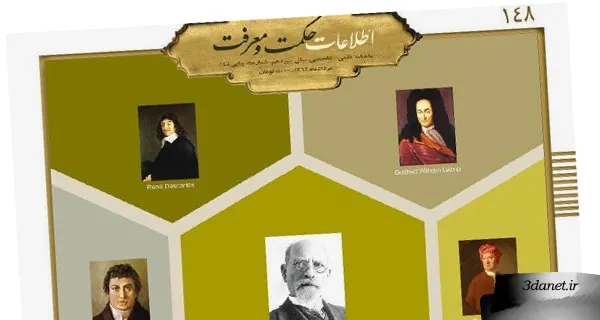
[25] The titles of the articles in Issue 148, entitled "The Nature and Background of the Formation of Phenomenology (2)," are: "The Backgrounds of the Formation of Phenomenology from Descartes to Husserl" (A Conversation with Parviz Zia Shahabi, Monireh Panjtani), "Descartes and the Phenomenological Tradition" (Wayne M. Martin / Morteza Nouri), "The Leibnizian Aspect of Husserl's Phenomenology" (Alexandru Giuculescu / Seyed Mohammad Ali Shamkhi), "Phenomenology and British Empiricism" (Richard T. Murphy / Alireza Hassanpour), "Fichte and Phenomenology" (Tom Rockmore / Seyed Masoud Hosseini), "Hegel's Method of Phenomenology" (Mohammad Mehdi Ardebili), "A Reflection on Fragments of Hegel's Phenomenology of Spirit in the Relation between Philosophy and Knowledge" (Meysam Sefidkhosh).
[26] "Husserl's Legacy" (Richard Marshall in conversation with Dan Zahavi, translated by Ali Peyman), "The Place of Reduction and Intentionality in Husserl's Phenomenology" (Shamsolmolouk Mostafavi), "Renewal, Its Problem and Method" (Edmund Husserl, Mohsen Saber), "How to Analyze Immediate Experience: Hintikka, Husserl, and the Idea of Phenomenology" (Søren Overgaard, Mohammad Hadi Hajibiglou), "The Distinctive Foundations of External Perception in Husserl's Views" (Mehdi Sahebkar), "Several Issues in the Relationship between Phenomenology and Critical Theory" (David Rasmussen, Seyed Mohammad Ali Shamkhi), "The Possibility of German Phenomenology" (Ali Nejat Gholami).
[27] The subsequent issues of the phenomenology series that are in the research proposal and which I hope will be published are: French Phenomenology, Phenomenology of Art, Phenomenology of Literature, Phenomenology of Ethics, Phenomenology in the Fields of Empirical Sciences and Humanities, and finally, "We and Phenomenology," which will address the critique and pathology of the state of translation, authorship, and research in Iran in the field of phenomenology.
[28] I have written about this matter in the editorial of two previous issues of this publication, and in the endnotes, I referred to some of the research conducted under the title of phenomenology in Iran.
[29] This classification is also specifically indebted to Spiegelberg in the first volume of The Phenomenological Movement: A Historical Introduction (1392).
[30] From the text of the article "My Way into Phenomenology," translated by Abdollah Amini.
[31] In the journal Ettela'at-e Hekmat va Ma'refat, we had another article titled "The Place of Reduction and Intentionality in Husserl's Phenomenology" (Autumn 1398, Vol. 14, No. 4, pp. 13-18); also, a conversation with him was published in this journal under the title "The Phenomenological Movement" (Mordad 1394, Vol. 10, No. 5, pp. 12-18).
[32] Roy-avaregi (directedness) and heys-e eltefati (intentionality) are the translator's choices, which have been left untouched in the article and its title.
[33] Two other articles by this author have been published in previous issues: "The Distinctive Foundations of External Perception in Husserl's Views" (Autumn 1398, Vol. 14, No. 4, pp. 33-39), "The First Contexts of the Emergence of Phenomenology: The Relationship between Appearance and Being" (Tir 1397, Vol. 13, No. 4, pp. 20-27).
[34] According to the author's expression.
[35] In three issues, we also discussed the phenomenology of place: the titles of the issues of Ettela'at-e Hekmat va Ma'refat magazine dedicated to the subject of phenomenology are: Issues 112 and 113 (Mordad and Shahrivar 1394), and Issue 132 (Farvardin 96) with the title "Philosophy of Architecture: Phenomenology of Place 1-2-3".
[36] As mentioned in the endnotes, in Issue 152 of Ettela'at-e Hekmat va Ma'refat, a conversation with Dan Zahavi titled "Husserl's Legacy," translated by Ali Peyman (Zarei), was published (Autumn 1398, Vol. 14, No. 4).
[37] A 20th-century Japanese philosopher.
[38] For example: existence/being, reduction, intentionality, directedness.
[39] The schema of the issue "We and Phenomenology" is that we can, to the best of our ability, reflect on this controversial subject by soliciting opinions from expert translators in this field.
[40] Some of the contributors to this issue have been responding to my letters and messages since 1396 and have spared no effort in their cooperation. I am grateful to all of them.
.
.

Issue 156 of Ettela'at-e Hekmat va Ma'refat, the special Autumn 1399 issue titled "German Phenomenology: Heidegger," with Enshallah Rahmati as publisher and editor-in-chief, is available to those interested for 15,000 Tomans.
PDF of the Editorial
Email address: ehvm86gmail.com
Telegram channel: t.me/Doostanehekmatmarefat
.
.





Discussion2 comments
این شماره رو از کجا میشه تهیه کرد؟
عرض ادب و احترام تصویری به انتهای مطلب اضافه شد، علاقهمندان میتوانند با تلفنهای داخل تصویر تماس بگیرند و شمارهای رو که میخواهند سفارش دهند.