Philosophy
Issue 152 of Ettela'at-e Hekmat va Ma'refat: “German Phenomenology: Edmund Husserl”
The 152nd issue of the quarterly Ettela'at-e Hekmat va Ma'refat has been published under the title 'German Phenomenology: Edmund Husserl.' This issue is the third instalment in a series on phenomenology, focusing on Husserl, the concept of intentionality, and its relationship to critical theory.

The 152nd issue of the quarterly Ettela'at-e Hekmat va Ma'refat, titled “German Phenomenology: Edmund Husserl” and guest-edited by Monireh Panjtani, has been published. German Phenomenology is the third issue in the phenomenology series published in Ettela'at-e Hekmat va Ma'refat. The first two issues, published in Tir and Mordad 1397 (June–August 2018) under the title “The Nature and Formative Contexts of the Phenomenological Movement,” addressed the foundations and origins of this movement. This issue is dedicated to German phenomenology, with a focus on Husserl. There will be another issue on German phenomenology concerning Heidegger.
The first article, titled “Husserl’s Legacy,” is Richard Marshall’s interview with Dan Zahavi, phenomenologist and professor of philosophy at the Universities of Copenhagen and Oxford, translated into Persian by Ali Peyman (Zarei). In his conversation with Zahavi, Marshall has sought, in addition to defining phenomenology and its core concepts, to address whether Husserlian phenomenology is transcendental or a psychological project, as well as what metaphysical findings, consequences, implications, and commitments Husserl’s phenomenology has entailed. “The Place of Reduction and Intentionality in Husserl’s Phenomenology,” by Shamsolmolouk Mostafavi, is the second article in this section, and it explicates the two concepts of reduction and intentionality as the central concepts of Husserl’s phenomenology and their place within Husserl’s overall philosophy.
The third piece, titled “Renewal: Its Problem and Method,” is the first of five articles Husserl wrote for the Japanese journal Kaizo between 1922 and 1924. His primary concern in these articles is the problem of the crisis of European culture, and a kind of transcendental phenomenology of culture is developed within them.
The fourth piece, “How to Analyze Immediate Experience: Hintikka, Husserl, and the Idea of Phenomenology,” is an article by Søren Overgaard, translated by Mohammad Hadi Hajibiglou. Overgaard attempts to show that Jaakko Hintikka’s misinterpretation of some of the most important aspects of Husserl’s phenomenology has distanced him from his ultimate goal of establishing a fruitful rapprochement and convergence between analytic and continental philosophy, and if we are to approach the realization of such a goal, Hintikka’s misinterpretation must be corrected.
The fifth piece, titled “The Distinctive Foundations of Outer Perception in Husserl’s Views,” is by Mehdi Sahebkar, which explicates the meaning of a phenomenological theory of perception from the perspective of Husserl’s phenomenology.
The seventh piece is the article “Some Problems Concerning the Relation between Phenomenology and Critical Theory,” by David Rasmussen, translated by Seyyed Mohammad Ali Shamkhi. In this article, Rasmussen attempts, based on the attention these two schools of thought pay to socio-historical phenomena, to establish a relationship and affinity between phenomenology—according to its twentieth-century narrative—and critical theory—from Marx to the Frankfurt School—and to demonstrate the constitutive role of these phenomena in human reflections.
The eighth and final article of this issue, titled “The Possibility of German Phenomenology,” is a piece by Alinejat Gholami. In this article, based on the question of the possibility of German phenomenology, he attempts to introduce “German phenomenology” in its two main orientations.
The Thought and Opinion section features three articles with the following titles:
Moral Philosophy and the Institution of Ethics, by Enshallah Rahmati, edited by Somayyeh Erfan. A Philosophical-Psychological Reflection on “Altruism” and “Cultural Autism,” with an Analysis of the Film “Parviz,” written by Nima Afrasiabi Mystical Psychology, by Mohammad Reza Changiz
The Report section contains a piece on “Peace,” compiled and edited by Sasan Yaghmai.
In the Book section, guest-edited by Monireh Panjtani, we read:
Book Review, Interview, and Introduction / Monireh Panjtani The Theory of Knowledge in the Teachings of Three Prominent Phenomenologists The Theory of Knowledge in Phenomenology / Interview with Farzad Jaber al-Ansar Introducing The School of Life Books New Publications / Sasan Yaghmai
.
.
German Phenomenology: Edmund Husserl
Monireh Panjtani (Editor of the Phenomenology Series)
monire.panjatni@gmail.com
German Phenomenology is the third issue in the Phenomenology series published in Ettela'at-e Hekmat va Ma'refat magazine. The first two issues, published in Tir and Mordad 1397 (June–August 2018) under the title “The Nature and Formative Contexts of the Phenomenological Movement,” addressed the foundations and origins of this movement. This issue is dedicated to German Phenomenology, with a focus on Husserl. German Phenomenology will have another issue on Heidegger. But before I report on this issue, I would like to write once more about the reasons and motives behind my concern for the formation of this series, by referring to the story of Sartre’s introduction to phenomenology. In what follows, I will also briefly recount the philosophical life of Husserl, as the founder of this movement, and in the final section, I will provide a report on the articles in this issue.
The Challenge of an Object Called an Apple
The story of Jean-Paul Sartre’s1 introduction to phenomenology, regardless of whether it is real or fabricated, is one of those captivating café tales that I wish to recount in order to once again allude to the formation of the Phenomenology series in Ettela'at-e Hekmat va Ma'refat magazine.2 The narrator of the memory is Simone de Beauvoir,3 and the story concerns a day in early 1932-33 when she, along with Sartre and their other friend Raymond Aron,4 were gathered at the Bec-de-Gaz café in Paris.5 Aron had brought news for his friends of a German philosophy that no longer began with conventional abstract principles or theories, but went straight to life itself, just as humans experience it moment by moment. That is, it set aside puzzles such as “whether objects are real or how we can have certain knowledge about objects” (Bakewell, 16, 1395).6 Aron tells Sartre, meaning, “If you are a phenomenologist, you can talk about this cocktail and make philosophy out of it!” (ibid., p. 17). According to de Beauvoir, this sentence of Aron’s so astonished Sartre that he rushed to a bookstore and bought the only available book on phenomenology,7 a slim volume by Emmanuel Levinas,8 and began reading it while walking. This was Sartre’s first encounter with phenomenology, and of course, afterward, he went to Berlin so that, after studying the works of phenomenologists in German, he could formulate his own philosophy more precisely and coherently, and we know he did not return empty-handed. But what is the connection between the story of Aron and Sartre and the Phenomenology series in Hekmat va Ma'refat magazine? About three years ago, when I was thinking about a research project on the nature of phenomenology and occasionally discussing its details with friends, one friend tried to make me realize that I should “forget about this series and instead devote your energy and focus to a series on analytic philosophy. His argument was that we have dealt with continental philosophy enough, and perhaps the root of many problems in Iranian language and thought lies in giving excessive weight to continental philosophy.” Regardless of the concern and claim of this philosophically-minded friend of mine, our conversation occupied my mind for a long time, and irrespective of my own interests and concerns, I constantly thought about the various aspects of his view. However, at the very beginning of the project and the search for sources on phenomenology,9 as well as finding researchers and translators in this field, my conclusion about Persian sources, especially authored works—with the exception of a few important and prominent ones—was that “phenomenology” as a historical-philosophical movement is not as well-known in the Persian language as some believe, and it seems—probably and perhaps—that such a misunderstanding, in most cases, stems from the frequent use of the term phenomenology in various disciplines other than philosophy. Phenomenology began as a movement in philosophy but quickly made its way into other domains; yet it is quite possible that at times, nothing remains of it but a shared word. So it is not out of place to say that the cliché-ification of “phenomenology” through its frequent use has not only failed to help clarify the meaning of this term or the understanding of this movement, but has in many instances added to its ambiguity.10
Nevertheless, the first two volumes of this series were published with the help of several specialists and translators. With all the preliminaries I mentioned, my idea was that to understand phenomenology, we must begin with its roots and origins.11 For this reason, the first two issues, titled The Nature and Background of the Formation of Phenomenology, examined this subject from Plato to Hegel, and also focused on the main themes of Husserl's and Heidegger's phenomenology, to the extent possible and appropriate for the journal.12 After the publication of those two issues, one day another friend who studied philosophy said to me in a meeting: "I wanted to thank you and your colleagues for the phenomenology series, but I also had a criticism, which is: why have you made the subject so complicated? Why have you gone so far back in history?13 To be honest, my expectation was that when I read the articles in this series, I would quickly understand what phenomenology is and what it is useful for, and more importantly, understand how to use it in research."14 He immediately picked up an apple from the fruit bowl on the table and said: "For example, to understand if I wanted to phenomenologize this apple, how should I proceed and what method should I adopt?" Just as Aron had told Sartre that with phenomenology you can philosophize about this very apricot cocktail on the table, unfortunately, I could neither say such a thing about this series, nor did I know of a book that could serve as a guide so that my friend, by following a few instructions and steps, could ultimately phenomenologize the apple on the table. Nevertheless, I was not so surprised by his expectation, because with a quick, cursory internet search, I found numerous articles about phenomenology, either bearing the name of phenomenology or using the phenomenological method, especially in other disciplines such as educational sciences, medicine, and art, and it became clear to me that some researchers indeed approach or use phenomenology with such an intention. Of course, phenomenology is also this and has such applications, but the issue is how posterior such a use of phenomenology is to a precise understanding of it, how and under what conditions this understanding and comprehension can be achieved, and how the assessment and validity of such research is possible. All of this complicates the matter so much that it seems we have no choice but to seek a precise and unapologetic understanding of phenomenology by referring to its source and origins; and this path cannot be traversed except through the study of primary sources, works that explain and elucidate them, and also works written with the aim of critiquing this movement. The story of Sartre shows that the initial enthusiasm for getting acquainted with phenomenology and making philosophy out of an apricot cocktail! (or an apple in my friend's example), led him to Berlin for specialized study, and reading one or two books on phenomenology did not satisfy him. This introduction is for those friends who consider the question of the nature of phenomenology unimportant, useless, or excessively clichéd and repetitive. Also, the purpose of this narrative and repeated reference is an effort to find and invite other interested specialists who agree with me about further effort with a coherent, structured, and purposeful program for understanding and comprehending phenomenology within its historical heart and context.15
The German Stage of the Movement16: The Pure Phenomenology of Edmund Husserl17
Herbert Spiegelberg18 holds the view regarding Husserl that his philosophy is not confined to phenomenology; “for it was only around Husserl’s fortieth year that his philosophical thinking took shape as the conception of phenomenology. Nevertheless, the fact remains that the central figure in the course of the phenomenological movement was, and still is, Edmund Husserl. Therefore, an examination of his phenomenology must stand at the heart of this historiography of the phenomenological movement.”19 (Spiegelberg, 1392, 141). He distinguishes six periods in the course of Husserl’s philosophy: 1- “The pre-phenomenological period,” which includes the critique of psychologism and the idea of pure logic. 2- “The beginnings of phenomenology as the subjective correlate of pure logic,” which focuses on four themes: the discussion of meaning, the theory of universals (essences), the intentional20 nature of consciousness, and phenomenological intuition. In these two stages, Husserl is primarily engaged in reconstructing a kind of pure logic. 3- “The formation of phenomenology as first philosophy.” From 1901 onward, by rejecting Brentano’s definition of phenomenology, which was largely based on a psychological structure, a major transformation occurred in Husserl’s phenomenology, and he defined phenomenology as the investigation of the essential structures of the acts and contents of consciousness, “an investigation that had to be based on the intuitive apprehension of the essences of phenomena, the essences of ‘things,’ and not on mere empirical generalization.” (p. 192) 4- “The rise of the phenomenological movement and the beginning of transcendental phenomenology.” In the fourth period, self-givenness21 and phenomenological reduction22 are two key concepts in Husserl’s philosophy throughout his works. 5- “The preparation of a system of transcendental phenomenology”; a period in which Husserl, through lectures, lecture courses, and manuscripts, apparently sought to formulate and present a philosophy with a systematic and structured outline; although his wish was not practically realized. 6- “The final beginning” is the name Spiegelberg gives to the last period of Husserl’s life and describes it as highly creative. A period in which he had set aside the project of formulating a system of transcendental phenomenology, but instead, the result was the publication of the first two parts and the completion of the third part of a new introduction to transcendental philosophy in the form of The Crisis of European Sciences and Transcendental Phenomenology23. In this period, Husserl paid more attention to the “philosophy of history” for his transcendental phenomenology, and the most recurrent theme of this period of his philosophical life was the idea of the life-world24. (Spiegelberg, 1392, pp. 138-247)
Articles of the Special Issue on German Phenomenology: Husserl
This issue comprises three authored articles and four translations. The first piece, entitled “The Legacy of Husserl,” is a conversation that Richard Marshall25 conducted with Dan Zahavi26, a phenomenologist and professor of philosophy at the Universities of Copenhagen and Oxford, and translated into Persian by Ali Peyman (Zarei)27. Zahavi’s expertise lies in phenomenology, philosophy of mind, and cognitive science, and he pays particular attention to the phenomenology of Edmund Husserl. In the conversation with Zahavi, Marshall has sought, in addition to defining phenomenology and its main concepts, to address the question of whether Husserl’s phenomenology is transcendental or a psychological project, as well as what metaphysical findings, results, consequences, and requirements Husserl’s phenomenology has entailed. Zahavi also discusses facticity and intersubjective sharing in Husserl’s transcendental idealism and its difference from Heidegger, Sartre, and Merleau-Ponty, and expresses some points about the self, the relation between temporality and selfhood, and also makes a reference to phenomenologists’ views on empathy28.
The second piece, entitled “The Place of Reduction and Intentionality in Husserl’s Phenomenology,” is an article by Shams al-Moluk Mostafavi. In this article, the author attempts to explicate the two concepts of reduction and intentionality as the main concepts of Husserl’s phenomenology and to clarify their place within Husserl’s overall philosophy. In addition to this, Mostafavi also deals with concepts such as epoché, noema, noesis, and meaning (eidos).
The third piece, titled “Renewal: Its Problem and Method,” is the first of five articles Husserl wrote for the Japanese journal Kaizo between 1922 and 1924. His primary concern in these articles is the problem of the crisis of European culture. In writing them, he sought, in fact, to develop a kind of transcendental phenomenology of culture that could provide the ground for the recovery of rationality in its Greek sense within European culture. These five articles, along with eleven supplementary notes, were published in volume 27 of Husserliana. Among Husserl’s works, the Kaizo articles are significant in several respects, as they are very important sources for understanding the phenomenology of culture, value, and ethics from Husserl’s perspective. This article has been translated into Persian by Mohsen Saber.
The fourth piece, titled “How to Analyze Immediate Experience: Hintikka, Husserl, and the Idea of Phenomenology,” is an article by Søren Overgaard29, translated by Mohammad Hadi Haji Biglou. Overgaard specializes in phenomenology, philosophy of mind, and the problem of perception. Among his interests is also reconciling analytic and continental philosophy. In this article, Overgaard attempts to show that Jaakko Hintikka’s30 misinterpretation of some of the most important aspects of Husserl’s phenomenology has distanced him from his ultimate goal of establishing a beneficial proximity and convergence between analytic and continental philosophy, and if we are to approach the realization of such a goal, Hintikka’s misinterpretation must be corrected. Overgaard holds the view that Hintikka’s most obvious misunderstanding of Husserl’s phenomenology is evident in his interpretation of immediate experience, which ultimately leads to his incorrect understanding of concepts such as epoché and phenomenological reduction. Overgaard, who is familiar with ordinary language philosophies, opposes Hintikka’s Kantian interpretation of Husserl because a form of the Kantian thing-in-itself is still present in his interpretation, and he holds the view that the immediate experience from which Husserl wishes to begin is this very everyday experience of objects. The reason for including this article in the collection of articles on Husserl’s phenomenology is the various readings of his philosophy, as well as the consequences and outcomes of his phenomenology.
The fifth piece, titled “The Distinctive Foundations of External Perception in Husserl’s Views,” is by Mehdi Sahebkar. In this article, he attempts to explain the meaning of a phenomenological theory of perception from the perspective of Husserl’s phenomenology. The author’s focus in the article is to show that Husserl, as the founder of the phenomenological movement, not only founded phenomenology in the general sense but also shaped a comprehensive theory of perception. A theory the author has called “the phenomenology of perception from a Husserlian perspective” and seeks to demonstrate the possibility of proposing such a theory from Husserl’s viewpoint.
The seventh piece is an article titled “Several Problems in the Relationship between Phenomenology and Critical Theory” by David Rasmussen, translated into Persian by Seyed Mohammad Ali Shamkhi. In this article, Rasmussen attempts, based on the attention these two schools of thought pay to historical-social phenomena, to establish a relationship and affinity between phenomenology, according to its twentieth-century narrative, and critical theory—from Marx to the Frankfurt School—and to show the constitutive role of these phenomena in human reflections. He believes that revealing the affinity between phenomenology and critical theory, under the rubric of social theory, exposes the necessity of revising phenomenology’s orientation. In this article, the author uses the term “critical theory” in relation to Marx and theorists indebted to his theoretical legacy, and refers to phenomenology within the framework of the thought of Husserl and his followers. Rasmussen’s main question is whether a relationship exists between phenomenology and critical theory. He examines this relationship in two parts: historical and epistemological. The importance of this article and its inclusion in this collection lies in the fact that the author makes repeated references to Husserl and holds the view that phenomenology, in its initial formulation by Husserl, did not engage itself with the questions of social theory. This article can also be read as an examination of some of the results and consequences of Husserl’s phenomenology in the realm of historical-social phenomena.
The eighth and final article of this issue, titled “The Possibility of German Phenomenology,” is a piece by Ali-Nejat Gholami. In this article, based on the question of the possibility of German phenomenology, he attempts to introduce “German phenomenology” in its two main orientations, which are: a) the Husserlian orientation, which transcends phenomenology’s belonging to a particular world, and b) the Heideggerian orientation, which holds to the worldliness of phenomenology. The article consists of two main sections, titled Husserl’s Worldless Phenomenology and Heidegger’s In-the-World Phenomenology. The article “The Possibility of German Phenomenology” serves as an introduction to the next special issue, titled “German Phenomenology: Heidegger.”
In closing, I find it necessary to mention one point. As with previous issues, I have preserved the orthography and choice of equivalents of the translators and authors, and have refrained from standardizing them. As I also stated in the editorial of issue 148, the most important reason for this decision is the lack of collective agreement on the choice of equivalents and the translation of key terms and concepts related to phenomenology, as well as the absence of articles in which translators in this field have articulated their reasons for preferring their own equivalents. What I encountered was mostly the insistence of translators and authors on the equivalents they had used in their texts. The plan and program of the “We and Phenomenology” issue is to be able to reflect on this controversial topic by soliciting the opinions of expert translators in this field. I hope that with the cooperation and support of specialists and enthusiasts, the publication of this series will continue.31
.
.
1 Jean-Paul Sartre (1905-1980)
2 In the editorials of issues 147 and 148, titled “The Nature and Background of the Formation of the Phenomenological Movement,” I addressed the importance of this topic and the reasons for forming this series in Ettela'at-e Hekmat va Ma'refat magazine, but to clear up some ambiguities, I have also touched upon this topic in this issue.
3 Simone de Beauvoir (1908-1986)
5 I have taken this anecdote from the book At the Existentialist Café by Sarah Bakewell, translated by Houshmand Dehghan (Payam-e Emrooz Publications, 2016).
6 Bakewell, Sarah (2016), At the Existentialist Café, translated by Houshmand Dehghan, Tehran: Payam-e Emrooz.
7 The Theory of Intuition in Husserl’s Phenomenology
8 Emmanuel Levinas (1906-1995)
9 Most enthusiasts of phenomenology are also familiar with very good and important sources whose names are linked with valuable authors, translators, and researchers such as Abdolkarim Rashidian, Masoud Olya, Siavash Jamadi, and many, many other names. Individuals who not only introduced phenomenology to Persian speakers but also translated or authored very important sources.
10 I have written about this matter in the editorial of the two previous issues of this series, and in the endnotes, I referred to some of the research conducted under the title of phenomenology in Iran.
11 Prior to these two volumes, we discussed the phenomenology of place in three issues. The titles of the issues dedicated to phenomenology in Ettela'at-e Hekmat va Ma'refat magazine on the subject of phenomenology are: issues 112 and 113 (August and September 2015), and issue 132 (April 2017) titled “Philosophy of Architecture: Phenomenology of Place 1-2-3,” and issues 147 and 148 (July and August 2018) titled: The Nature and Background of the Formation of Phenomenology 1 & 2.
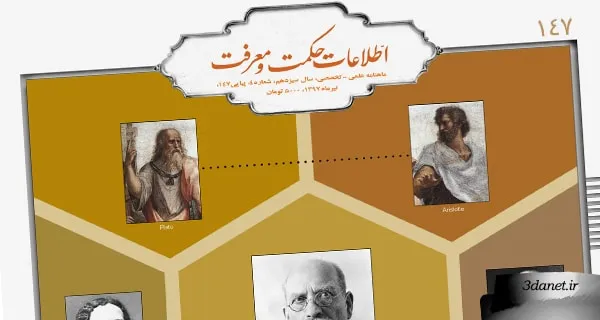
12 The titles of the articles in Issue 147, entitled “The Nature and Background of the Formation of the Phenomenological Movement (1),” are as follows: The Phenomenological Concept of the Phenomenon (Mohammad Javad Safian), Phenomenology as a Way of Thinking and Inquiry (Marzieh Piravi Vanak), Phenomenology as First Philosophy (Ali Nejat Gholami), The Earliest Backgrounds of the Emergence of Phenomenology, The Relation between Emergence and Being (Mehdi Sahebkar), Phenomenology: Translation of the Entry “Phenomenology” from the Historical Dictionary of Philosophy under the direction of Joachim Ritter (Hamed Saffarian), The Method of Phenomenology (Joel Smith / Maryam Khodadadi), Husserl’s View on First Philosophy (Robert Sokolowski / Mohsen Saber).
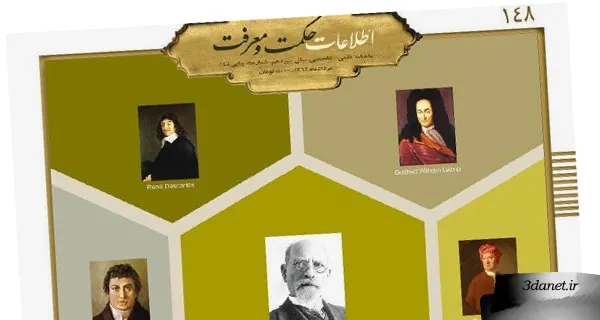
The titles of the articles in Issue 148, entitled “The Nature and Background of the Formation of Phenomenology (2),” are as follows: The Backgrounds of the Formation of Phenomenology from Descartes to Husserl (A Conversation with Parviz Zia Shahabi, Monireh Panjtani), Descartes and the Phenomenological Tradition (Wayne M. Martin / Morteza Nouri), The Leibnizian Aspect of Husserl’s Phenomenology (Alexandru Giuculescu / Seyed Mohammad Ali Shamkhi), Phenomenology and British Empiricism (Richard T. Murphy / Alireza Hassanpour), Fichte and Phenomenology (Tom Rockmore / Seyed Masoud Hosseini), Hegel’s Phenomenological Method (Mohammad Mehdi Ardebili), A Pause on Fragments of Hegel’s Phenomenology of Spirit Concerning the Relation of Philosophy and Knowledge (Meysam Sefidkhosh).
13 To provide evidence for my claim that such research and reading must inevitably be conducted within a historical context, I can refer to the book The Theory of Knowledge in Phenomenology by Henry Pietersma, translated by Farzad Jaber al-Ansar (Kargadan Publishing – 2019). I should also add that in the book section of Issue 148, in the article “An Introduction to Phenomenology,” I reviewed five books centered on phenomenology. The book section of this issue is also dedicated to a review of the book The Theory of Knowledge in Phenomenology: Husserl, Heidegger, Merleau-Ponty.
14 For example, I truly doubt that such a book exists, or that such a desire could be fulfilled simply by reading a few articles. Even the entry Phenomenology in the Stanford Encyclopedia of Philosophy, which is written for those who are supposed to become acquainted with this subject, is not very illuminating and is even vague and general in parts.
15 For the continuation of this series, I have found specialists, though their number is admittedly small. I also lost the collaboration of some others due to their work commitments or other obligations. Nevertheless, I hope that more specialists will accompany us going forward.
16 In this section, I have attempted, with the help of Herbert Spiegelberg, to present a brief account of Husserl’s philosophical life.
18 Herbert Spiegelberg (1904-1990)
19 Spiegelberg, Herbert (2013, second edition), The Phenomenological Movement: A Historical Introduction, translated by Masoud Olya, Tehran: Minouye Kherad
23 The Crisis of European Sciences and Transcendental Phenomenology
27 In this text, the academic titles of the authors and translators have been omitted, but they appear at the end of each article as is customary.
31 The subsequent issues from the phenomenology series that are present in the research proposal and which I hope will be published are: German Phenomenology: Heidegger, French Phenomenology, Phenomenology of Art, Phenomenology of Literature, Phenomenology of Ethics, Phenomenology in the Realm of the Empirical Sciences and the Humanities, and finally, "We and Phenomenology," which addresses the critique and pathology of the state of translation, authorship, and research in the field of phenomenology in Iran.
.
.
Issue 152 of the quarterly Ettela'at-e Hekmat va Ma'refat has been published, with Anshallah Rahmati as the managing editor, priced at 15,000 Tomans.
.
.
Email address: ehvm86gmail.com
Telegram channel: t.me/Doostanehekmatmarefat
.
.




Discussion0 comments
No comments yet; let yours be the first voice.