Literature
Introducing Tightrope Walker by Sasan Habibvand
The Tightrope Walker by Sasan Habibvand is an inward journey toward joy and freedom. Blending Eastern and Western philosophy and mysticism, the book traces the roots of suffering to 'self-loss' and society's false beliefs, and sees self-knowledge as the path to liberation.
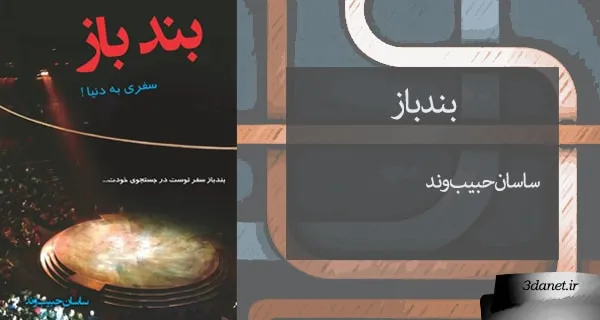
About the Book
"Tightrope Walker" is an unprecedented journey into one's own world, a journey that gives birth to a fresh perspective on oneself and on life within the reader. Tightrope Walker seeks to attain inner happiness and freedom in the shadow of growth and awareness. The core of the story consists of dialogues between a teacher and a student, in which discussions and questions about the fundamental concepts of life are raised. Among them: "Who am I?" "What is good and evil?" and "What causes human existence to suffer from pain and hatred?" Alongside this, other events occur in the course of the story that are largely symbolic and meaningful. The book "Tightrope Walker" attempts to trace the roots of how human suffering is born, from birth to adulthood, and to show its causes and effects. The book's discussions begin with the issue of society's improper relationship with the individual and then move on to the subject of imposing false values and beliefs on the human psyche. First, examples of false values are introduced and analyzed, then it is shown how the imposition of these contradictory beliefs leads to the birth of a phenomenon called "self-loss." Then the complications of this issue, which include fear, hatred, self-deception, envy, anger, and so on, are examined one by one, and the predicaments arising from them are depicted. The book has endeavored, for the first time, to take the insight of self-knowledge out of the state of a collection of scattered topics and to organize self-knowledge as an organic and systematic cognitive discipline. One of the rare attractions of this work is the intimate fusion of two atmospheres: the modern West and the ancient East, in the shadow of a universal and human concern, which is the search for one's own truth and authenticity. In this book, the sciences, philosophy, and mysticism of East and West are used to search for truth. In particular, the mystical views of Rumi, along with several captivating stories from the Masnavi, hold a special place in the book. The book "Tightrope Walker" can be considered a new, contemporary reinterpretation of Rumi's message. The book sees the path to human liberation from the dead end of suffering and self-loss in realizing false beliefs and attaining intellectual and inner freedom. Because the topics of the book "Tightrope Walker" are more or less novel for an audience unfamiliar with self-knowledge discussions, in addition to an illuminating introduction, a thematic-descriptive table of contents has been designed for the book so that the reader can grasp the book's content at first glance.
.
.
The novel "Tightrope Walker" was published this week by "Sepid o Siah" Publications and released to the market. Those interested can contact the publisher for purchase at the following addresses: Kh. Enqelab. Kh. 12 Farvardin. K Behesht-e Ayin, P 19, Ground Floor
۶۶۴۹۶۴۱۰ ۶۶۴۹۵۲۸۰ ۶۶۹۶۲۴۵۶
In the continuation of this introduction, after a look at the book's table of contents, we will present you with excerpts from several chapters of the book. At the end, we will have a brief acquaintance with the author.
.
.
Table of Contents
Chapter One: Vertigo
(In the first chapter, we begin our journey with a beautiful story from the Masnavi and address the issue of society's effort to control the individual)
The Donkey Went (a story from the Masnavi)
From Reality to Interpretation
Chapter Two: The Secret of Survival
(In the second chapter, we go to the historical and biological roots of the issue. Then we see society's tricks for making humans obedient.)
"False Language"
"Label"
Chapter Three: Once Upon a Time
(In the third chapter, we see what pressures contradictory values exert on our existence.)
Confused Interpretations
The Politics of the Stick and the Donkey!
"Superman"
Sunglasses
Chapter Four: The Sufferings of the Mask
(In Chapter Four we witness the birth of a phenomenon called the "external self" and its problems within our being. Then we see the reactions of the human psyche to this imposed entity.)
A destination for not arriving!
The mind and the burden of identity
The "external self" and internal mechanisms
Fear
Anger
Envy
Pride
Self-deception
Identification
Blame
Chapter Five: The Office
(In Chapter Five we learn the techniques of inculcating the "external self" or ego as an alien identity)
The tale of the clay-eater (from the Masnavi)
Comparison
Humiliation
Praise and flattery
The story of the slaves
Chapter Six: The Circus
(In this chapter we see what difficulties the birth of the "ego" within us imposes upon our soul.)
The reed's lament
Conflict
Lack of self-confidence
Outward-rootedness
Projection
In pursuit of a mirage
On the back of a runaway horse
Chapter Seven: The Easy Chair
(Finally, we place the "self" under the magnifying glass of our curious gaze and examine the way to escape the clutches of the ego)
Who am I?
Opium
What is truth?
And this is the end of our journey. And perhaps this ending is the beginning of a wondrous path toward happiness....
The reason people do not attain liberation is that their thoughts are constantly preoccupied with the outer world and they are unaware of their inner world; the inner world that is their entire world.
Foreword
After years of searching, knocking on every door, and traversing a thousand untrodden paths, I finally understood that the water was in the jug and the beloved was at home! And you can sense for yourselves how great this discovery was. A revolution in perspective, in looking at oneself and at the world. In pursuit of genuine happiness and peace—not the counterfeit kind—I realized that the root of most pains and sorrows lies within my own self. I finally understood what Rumi meant when he warned: "Know the path of pleasure to be from within, not from without." I discovered that to attain happiness and peace, instead of chasing after a mirage, one must know the self and uproot suffering from within. And this book is an attempt to know the self and what transpires within our being. Here, I share with you everything I have found so far on this wondrous path. It was suggested that I name this book "From Sleep to Awakening" or "From Captivity to Liberation," but I saw that this name is, in truth, the name of this path, not the name of this book. Self-awareness is a path whose traveler awakens from a long nightmare and opens their eyes to a world full of joy and beauty.
Here, in the form of a familiar story, we want to find clear and convincing answers to our most important questions. And we will see that the key to answering the most fundamental questions of life is truly knowing the self. Who am I? What is truth? And what is the meaning of life? What is the "ego" and where is the root of human hatred and enmity? Is there a path to liberation and lasting happiness? Most importantly, we want to see how one can be freed from stubborn inner conflicts and live in joy and ease? If you are also interested in what I have said, I invite you to read the preface.
Preface
Relief from inner sufferings is a concern that has always been with humanity. But what primarily motivated the writing of this book was the observation that human problems and sufferings do not appear to be independent, separate phenomena; rather, they all seem to be symptoms of one fundamental problem. In other words, the human being has one principal problem, and all other problems are its secondary, inevitable consequences. And it is clear that to solve any problem, one must find the root and dry it up; otherwise, being preoccupied with the secondary branches while neglecting the main root will yield little benefit beyond going around in circles. I have called this fundamental root "self-loss." As we will demonstrate, self-loss is a highly painful phenomenon that is largely imposed upon the human being by society, and as long as the relationship between society and the individual—and indeed the individual's relationship with themselves—remains unhealthy and exploitative, the emergence of this phenomenon and its sufferings is inevitable. But in summary, there are several points that constitute the main objectives of this book:
The first point is the perspective and the manner of expressing the problem. An organic explanation of the phenomenon of the "self" and a systematic analysis of its symptoms is a method whose absence has been felt in the literature of self-knowledge. And of course, this book has tried to express all of this in the form of a simple story. In works published so far, much emphasis has been placed on the necessity of knowing the "self" and the "ego," but it is surprising that, except in rare instances, the nature of the "self" or "ego" has been less examined and remains ambiguous. Everyone has said: to attain peace, "know thyself," but few have tried to show what the "self" is and what its substance is. The book you hold in your hands has endeavored to answer this question.
Here, we witness firsthand the birth of a phenomenon called the ego or the "external I" within the human being as a living organism. We see the reactions of the human existence to this imposed phenomenon and observe how spiritual sufferings and their individual and social consequences manifest. Here, along with the characters of the story, we discover great and important things and become exhilarated by our discovery. For this purpose, we step into the inner world of a human being and accompany them on a journey through life. We watch them from the moment of their appearance in the world and see society's behavior toward this newcomer. We witness how their beliefs and feelings are formed and see how their sorrows are born. We see how the irreplaceable opportunity of their life turns into suffering and anxiety. And finally, we will try to find a path to freedom and liberation for them and return them to their happy, carefree world. And this human being is ourselves.
This book can also be considered an introduction to self-knowledge, as it raises the major topics of self-knowledge and briefly explains each one. I have called this method "rational self-knowledge" because its foundation is rational thinking and the expansion of awareness regarding oneself and the surrounding world. Among these topics are subjects such as the "ego," the "self" or "I," "happiness," "inner freedom," "conditioning," "ignorance," and "contradiction." The aim has been that in this text, the main subjects of self-knowledge are explained not as scattered and unrelated discussions, but in a logical and interconnected order, and in this way, the insight of self-knowledge is presented and proposed, as much as possible, as a coherent intellectual system. It is hoped that enthusiasts who ask themselves, "What is self-knowledge?" will find a clear answer to their question by reading this book.
In the dialogues of this book, we become acquainted with Eastern mysticism, particularly Rumi. But one should not imagine that our aim is to understand a specific mystical system, school, or individual. Likewise, we also delve into modern sciences such as psychology, linguistics, and biology, yet our goal is not to comprehend these sciences. We have a very important and fundamental question in life, and to find its answer, we draw upon any saying that offers us insight and vision. That question is,
For a while he was dazed. He stared at the shadows that were running hurriedly... He remembered. They were the shadows of Hans and Daniel, rapidly moving away. Hans's punch had stunned him for a few moments. Daniel had also delivered a couple of solid kicks to his back and side. Now they were fleeing in panic. Several parts of his body ached. Including his head, stomach, and especially his side. For a moment he felt his nose running. He put his hand under his nose and wiped it. A bloodstain had smeared on his hand. He took a handkerchief from his pocket, wiped his nose, and only then noticed that three people had surrounded him. Their tall figures were just like the three rough apartment buildings that had sprouted up one after another like three giant mushrooms around the park next to their house last year and cast a shadow over it.
The first person to start talking was Steve the butcher. Steve glanced at the path Hans and Daniel had taken and then grumbled in a thin voice that didn't suit his fat, bulky frame at all: What a clumsy kid! Who just stands there like a dummy waiting to get beaten up?! If it were my son Mike, he would have really taught them a lesson!
The next shadow to start talking was Mrs. Grant, the neighborhood's old seamstress. Mrs. Grant, adjusting her large round glasses on her thin, slender nose, said in a sympathetic tone: Don't say that, sir! On the contrary, I think he's a very well-mannered and decent boy who doesn't get into fights. Well done, young man! Fighting is not a good thing at all.
Joe the carpenter, in front of whose shop the fight scene had taken place, seemed to have the final word. With a pencil behind his ear and his long blue apron making his figure look taller, he scratched his head, stepped a little forward, and said: But in my opinion, all three of these kids are wild and ill-mannered. If I were their parents, I would give all of them a good thrashing so they wouldn't fight anymore.
With the final verdict announced, the three tall shadows moved away from above Peter and each went toward their own shop. Peter got up. He dusted off his clothes. He straightened his shirt and trousers and went to sit on a ledge by the street. He was lost in thought. He remembered that for the first time, he had decided to stand up to Hans and Daniel's bullying. They always made fun of Peter's short height at school. They called him "Shorty." Many times they also laughed at his father's old car. They said Peter's father was a pilot! They had nicknamed him: Captain Jalopy! This time Peter couldn't take it anymore. He didn't know how it happened that on the way to school, he suddenly decided to get back at them. Of course, he had also aimed a couple of punches at Daniel's chin, which, although fortunately Mrs. Grant hadn't seen them, still cooled his heart a little... He was still lost in these memories when he felt something gently land on his shoulder. When he turned his head, the penetrating and kind gaze of his teacher Tom intertwined with his own....
Chapter Five: Office
The gentle morning breeze had mingled the scent of the rain-soaked forest with the melody of the seabirds' songs. The sun had more or less risen from behind the multicolored clouds of white, yellow, red, and purple, blending the coolness of the morning with the warmth of its summer sunshine. The blue sea, how boundless it was and how alluring! The dance of the successive waves, in that eerie dawn atmosphere, seemed to silently and quietly call one toward the mysterious sea. The sound of boat engines starting up one by one and setting off on the sea waves announced the presence of civilized and inventive man in the heart of wild nature.
Today, at Tom's suggestion, they had met early in the morning. Tom said the atmosphere of dawn has a strange allure and beauty. Peter helped Tom gather the remains of the breakfast they had eaten together. He put the toast basket, the butter and honey dish, and the juice glasses on a tray and took them to the kitchen. A few minutes later, they were sitting again on either side of the table in the front yard. Peter was thinking: How is it that people pay so little attention to such important things?! Most of their talk is about buying household goods, the weather, the new model of some car, or someone's birthday party and the recipe for some soup. He remembered what Tom had said in class: "The greatness of every person lies in the greatness of the concerns they have in life"...
- Well Peter, today we want to see by what means society injects an imposed identity into the human psyche.
- Injecting identity! How interesting! By the way, last night I saw a film about the occupation of Europe during World War II. I was reminded of what you said about conformity and racism.
- That's right. But I have another point on the same subject, which I actually want to use to start today's discussion.
- What point?
- I've called it "The Office."
- The Office?
- Yes. The point we want to make is that to keep a person obedient, it isn't necessary for someone to force them to obey in every situation. Instead, society installs an "office" or bureau in the person's mind so that, under the command of this office, they always obey orders, even in solitude and privacy. This "office" is nothing other than the very value-based personality or ego that the individual has come to believe is who they are. The foundation of this "office" is laid when society bombards the child's mind with: you are such-and-such and you must be so-and-so.
Peter said: This subject is just like the story in last night's film.
Tom replied: Yes, colonial powers often, instead of a direct attack, send representatives such as an army, soldiers, a head of state, missionaries, and so on to the colonized lands. These representatives then bring that country under control through various means, including violence, cunning, or propaganda. In this way, the resources and energies of that country are easily plundered and sent to the dominant country.
- Just like a leech that attaches itself to a person and sucks their blood to feed.
- Exactly! Society does something similar to people through indoctrination. And those leeches are the thoughts inside our own heads. We must cast them out to be at ease.
- Wow! I remember you saying in class that governments usually treat people the same way people treat each other.
- Yes, that's right. The matter can also be looked at from this perspective. Do you remember I also said that the outer world is a reflection of the inner world?
- Yeah, I won't forget you saying that.
Tom nodded and said: Society, by creating fear and hope in a person's mind—fear of humiliation and hope for praise—turns the inside of their head into an "occupation headquarters." A person's captivity often happens in such a way that the individual themselves is unaware of it. They might even grow fond of it!
Peter laughed involuntarily and said: That one is really funny! So you could say the "outer self" is society's representative inside our heads.
- Absolutely right. Of course, being outer is not limited solely to identity; the outer human being fundamentally lives in a world of imposed beliefs and opinions.
The Story of the Mud-Eating Man
- Say, Tom, with the things we've read, a question comes to mind.
- What question?
- Why, despite all this suffering and pressure, aren't people aware of this unfit situation?
- That's a very good question...
Tom's sentence was not yet finished when Judy came and sat down beside Tom's chair and, wagging her tail, stared at Tom. Tom said: Oh, I'm sorry Judy, you're hungry!
Then he turned to Peter and said: Excuse me Peter, I have to go get Judy's food... I've written a note on this subject, if you'd like to read it while I'm gone.
Peter said: Of course. Thanks.
Tom, while searching the index, said: The general cause of the problem is, of course, habituation. It's habit that prevents a person from clearly feeling what a scorching calamity they are caught in... Aha! Found it. Here.
Tom opened a page of the notebook and handed it to Peter, then got up and went inside the house. Peter took the notebook and read:
... The reason a person does not realize what profound joy and ease this imposed world has deprived them of is severalfold: first, because of the long-term indoctrination of the environment. A person grows up for many years under a bombardment of suggestion and propaganda, and this kind of life, despite all its sufferings and conflicts, appears normal to their eyes.
Second, because of the pervasiveness of the issue. The interpretive and evaluative mindset has established a cultural and psychological system in society and has created numerous institutions, large and small, that play an active role in producing and maintaining this system. Culture, language, tradition, education, and so on are all founded upon or influenced by interpretive values. These systems, in turn, play a role in preserving the evaluative culture and perpetuate it.
The third reason is becoming accustomed to this inner torment. A person suffers from an old wound that they have lived with for years and years. This very chronicity of pain has caused the suffering of captivity to become "numb" within them. Another reason, of course, is that we silence our pain by clinging to counterfeit pleasures. We soothe our sufferings with superficial pleasures like the approval of this or that person, the acquisition of wealth, and physical pleasures. As Rumi says, the taste of honey and nectar has left our palate, and we have become accustomed to "eating clay."
At that moment, Tom returned with Judy's food bowl.
Peter turned to Tom and said: Eating clay! That's an interesting term.
Tom, placing the food dish in front of Judy, said: Yeah. It relates to one of the stories in the Masnavi. It's called: "The Tale of the Clay-Eater."
Peter, handing the notebook back to Tom, said: Thanks. Could you tell it?
Tom took the notebook and said: Of course. Rumi says: In ancient times, there was a man who, from childhood, had been fed clay instead of food. He had become accustomed to eating clay and loved it. One day, the clay-eater went to a perfumer's shop to buy sugar. The man asked the shopkeeper to bring him a certain amount of sugar. The perfumer placed a half-man weight on the scale and went to the back room—or storeroom—to get the sugar for the man. Meanwhile, the customer noticed that the scale weight was made of clay. So as soon as the perfumer went to the back room, he began to eat from the clay weight. While doing so, he kept praying, "God, God," that the shopkeeper would return later so he could eat more clay. At the same time, the shopkeeper saw from a distance that the foolish man was eating the clay weight. But since the more he ate from the weight, the less sugar he was supposed to receive, the clever perfumer cheerfully feigned ignorance and delayed as long as he could so the customer would eat more clay and take away less sugar.
Peter, whose smile showed he was listening with pleasure, said: That's a very interesting story.
Tom replied: Yes, this story depicts our habituation to a shallow life contaminated with suffering. Well, in summary, it can be said that the most important tools for instilling self-loss are comparison, blame, humiliation, and praise, which we will briefly examine here.
- I had never looked at things like humiliation or reproach as tools before.
A. Comparison
Tom adjusted his glasses on his face. Peter poured himself a glass of water and drank some of it. After a few moments, Tom began to speak: We said earlier that comparing people is not a correct method, because every human being is a unique entity in whose emergence and formation hundreds of historical, geographical, cultural, genetic, familial, and environmental factors have played a role. Therefore, having an expectation of sameness or "being like someone else" is fundamentally an unreasonable and unjustified expectation...
Peter remembered his twin cousins Sam and Ben, who were almost nothing alike. Sam was a blunt, talkative boy who loved outings, sports, and group activities. While Ben was quiet and a bit shy and preferred to sit at home or in the park and play music or chess. He thought to himself: If Aunt Nancy constantly compared Sam to Ben and expected him to also be a quiet child who always sits alone practicing music or watching films, what a hell the world would become for poor Sam.
Peter said: I was thinking about what you said, that if people take away words, they won't see anything more than a single reality.
- That's right. We said that for the growth of every human being's capabilities, one must look at them as they are. When I expect my child to recite poetry or play an instrument like their classmate, my standard is the classmate's abilities, not my own child's. In this comparison, I pay no attention to my own child's characteristics. Of course, one must be aware that today, now that childhood has passed, the first person we do this to is ourselves! Right now, comparing ourselves with others prevents us from seeing our own talents. One of the factors in human stagnation is the desire to be someone else.
B. Blame
- Well, now let's move on to blame, that is, the mother of human suffering.
Judy was lying silently, nestled beside Tom. Peter said: Judy, it seems you're interested in this talk too!
Tom smiled and continued: As we said, blame is in fact the first sprout of a destructive phenomenon that we call the
- Yes, the subject we're considering is precisely this mistaken notion. Let's ask ourselves, what really is this personality that is wounded by a single insult and soars to the heavens with a single praise? What use is this phenomenon to us, other than anxiety and captivity in the clutches of the arbitrary judgments of this person or that?
- Why did people invent humiliation? What was their goal?
- That's a good question. When, for example, I say to you, "You are a worthless person," the truth is that because I feel weak compared to you, I want to diminish you with a humiliating word to soothe my own feeling of powerlessness. That is, because I feel "inferior," I want to "pull you down" by insulting you, and thereby alleviate my own petty suffering. Can you think of any other reason for humiliation?
Peter thought for a moment. Then he said: But behind humiliation and insult lies a feeling of hatred and enmity.
- Look, Peter, let's not deviate from the main subject. Fundamentally, the word "humiliation" means "to make small." This itself shows that I am admitting you are greater, which is why I try to make you small. Otherwise, does it make sense to make something small that is already small?
- I don't think so..
- Of course, if we look closely, society's entire behavior toward the individual is a vast and all-encompassing humiliation. From childhood, society sacrifices people's thoughts and feelings under the knife of self-defeat. They inculcate in the individual that what matters is not you, but the values you carry. One marvels at those who chant slogans of fighting political and military violence, while within the human being, repression and violence against the self is a normal and ongoing affair.
Peter said: How interesting!
- What are you saying?
- The words! When a person pays attention to words, what interesting things become clear to them. For instance, this very word humiliation. I had only thought of its superficial meaning until now. But now I see what a deep meaning humiliation can have.
T. Praise and Commendation
Tom glanced at his watch. It was six-thirty in the evening. The sun was slowly going down. He said: Alright, if you agree, let's read the last discussion and finish today's court session.
- Court?!
Tom smiled and said: Yes, well, this is a kind of court, isn't it? On our journey, we are discussing and deliberating about the things we see. Then we issue a verdict on what is good, what is bad. That means it's a court, right?
- So the meaning of another thing has also become clear: court!
Tom laughed: Yes. Well, do you agree to put the last section to deliberation as well?
- Of course. What is the subject about?
- About praise and admiration.
- Go ahead.
- Look, whether I tell my child, "You are an embarrassment," or "I am proud of you," I have valued their existence according to my own taste. For example, let's consider this so-called "I am proud of you." What is the meaning of this sentence, anyway? Is it anything other than that you, as a tool for my showing off, have done your job well? So, in my child's education, competition, or any other activity, I am thinking of my own reputation and pride, not their growth.
- So the cause of pride is also a spiritual need.
- Precisely. Pride is another invention of the cunning mind to escape the suffering of emptiness. Pride is a kind of self-deception that the mind employs to flee from the suffering of inferiority.
.
.
That day, Sally asked Peter about the topics he had discussed with Tom.
- Tom's words are very interesting to me. I'd like to be part of your discussion this time. Peter, would you like to invite Tom for lunch one day?
- Great! Why not? Which day?
- Um... I'm free next Monday. If Tom agrees, I'll invite him to have lunch with us. What do you think?
- Couldn't be better! Thanks, Mom!
Peter said this and jumped up and kissed his mother. Sally laughed and kissed Peter back.
Seeing this scene, Suzy got excited and clapped her hands with joy and repeated: That'll be great
.
.
About the Author:
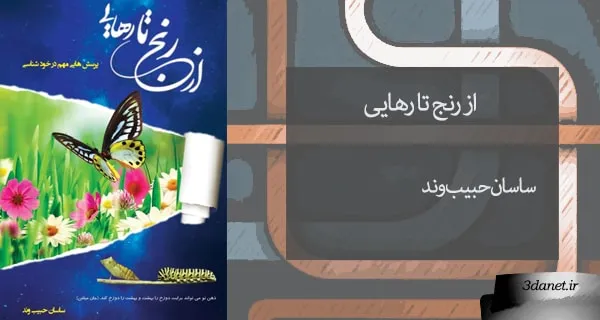
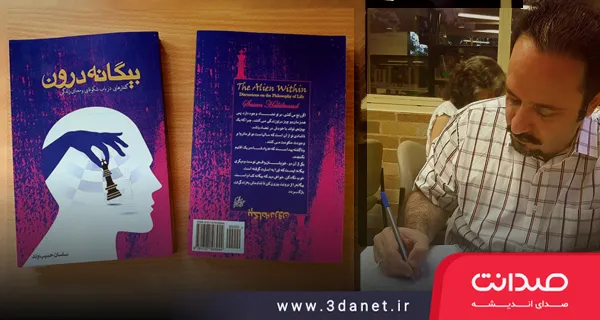
Sasan Habibvand is an instructor, writer, and researcher in the two fields of psychology and self-knowledge. He completed his master's degree in English at Allameh Tabataba'i University in Tehran and, alongside other activities, has worked for many years as an English instructor and translator. He is currently pursuing a PhD in Philosophy and Mysticism at Western Sydney University in Australia. Habibvand has spent nearly twenty years of his life researching the fields of linguistics, culture, and psychology, and his particular area of interest is self-knowledge. In his research, he strives to illuminate the connection between culture and the human developmental environment with self-confidence and happiness, and by increasing understanding of human issues, to help, to the best of his ability, in untangling intellectual, emotional, and behavioral problems. The theory of "Rationalist Self-Knowledge," first introduced in his books, is the result of this very effort. Among the rare characteristics of this researcher's working method is the integration of the precision of modern sciences with the depth of the mystical perspective. He endeavors, with the help of sciences such as sociology and psychology on one hand, and mystical and philosophical insight on the other, to open a path toward a happy and flourishing life. Sasan Habibvand's other work is titled "From Suffering to Liberation," which is an attempt to answer some of the most important concerns of human beings in knowing themselves, the meaning of life, and liberation from inner conflicts.
.
.
Links to the Works of Sasan Habibvand:
Tightrope Walker
https://www.amazon.com/Bandbaz-Safari-be-Donya-Persian/dp/1522968296
From Suffering to Liberation
https://www.amazon.com/s/ref=nb_sb_noss?url=search-alias%3Dstripbooks&field-keywords=Az+ranj+ta+Rahayi
.
.
Tightrope Walker (A Journey into the World)
Sasan Habibvand
Bibliographic Details of the Work
Book Title: Tightrope Walker, A Journey into the World
Author: Sasan Habibvand
sasan.habibvand@yahoo.com
telegram.me/sasanhabibvand
First Edition: Sydney, Australia - Spring 2015
Second Edition: Amazon Website - January 2016
Cover Design: Mohammad Pak
ISBN: 978-1522784425
Number of Pages: 346
Price: 19 US Dollars
Link for Access and Online Purchase:
Bandbaz (Safari be Donya)
https://www.amazon.com/Bandbaz-Safari-be-Donya-Persian/dp/1522968296
.
Purchase in Iran
To obtain the book, contact "Sepid o Siah" Publications:
Enghelab Ave., 12 Farvardin St., Behesht-e Ayin Alley, No. 19, Ground Floor
۶۶۴۹۶۴۱۰ ۶۶۴۹۵۲۸۰ ۶۶۹۶۲۴۵۶
.
.
Related Content:
Introducing the book "From Suffering to Liberation" by Sasan Habibvand
.
.


Discussion7 comments
ضمن ارج نهادن به زحمات جناب حبیب وند در خلق اثر حاضر ، باید بگم تهیه کتاب مذکور برای اغلب مردم ما گران محسوب می شود ، در صورت امکان تخفیف بدهند
مژده به علاقمندان: رمان "بندباز" در ایران منتشر شد! برای تهیه کتاب لطفا با نشر ''سپید و سیاه'' تماس بگیرید: خ. انقلاب. خ. ۱۲ فروردین. ک بهشت آیین، پ ۱۹، ط. همکف ۶۶۴۹۶۴۱۰ ۶۶۴۹۵۲۸۰ ۶۶۹۶۲۴۵۶
با سلام و احترام چقدر خوب است که جناب حبیب وند با نشر جیحون که ناشر تخصصی در آثار روانشناسی و خودشناسی است هماهنگ کنند تا آثار ایشان در ایران هم به فروش برسد و تهیه اش برای ما آسان و مقدور باشد!
سلام و سپاس از پیشنهاد شما، خوشبختانه پروسه چاپ کتاب ها در ایران شروع شده و کتاب ها بزودی به بازار کتاب راه خواهند یافت. به محض انتشار، خبر آن را از طریق همین سایت به آگاهی همه علاقمندان خواهیم رساند. ارادتمند، حبیب وند
دوستان خوب سایت صدا نت سلام. از استقبال و علاقه شما عزیزان بسیار سپاسگزارم. در حال حاضر تهیه آثار فقط بصورت اینترنتی ممکن هست ولی با یک ناشر در حال عقد قرارداد هستیم و هر دوی کتاب ها بزودی در ایران هم روانه بازار خواهد شد. ارادتمند ساسان حبیب وند
سلام میخواستم بدونم که سایت آمازون برای ایرانیهای داخل ایران هم قابلیت خرید کردن داره؟ چه جوری میتونم این کتاب رو از این سایت تهیه کنم؟
سلام. لطفا راهنمایی بفرمائید راهی دیگر بجز خرید از آمازون وجود ندارد؟