اندیشهفلسفهخردگفتگوحکمتمعناپرسشفرهنگ
Sociology
Lecture by Keramatollah Rasekh: “Changing Social Structure in Iran: Community and Society”
Iran's social structure is predominantly characterized by communal (Gemeinschaft) features. Drawing on sociological thought, Keramatollah Rasekh uses the distinction between community and society as the basis for his analysis, examining the transformation of social structures through the lens of theorists such as Tönnies and Durkheim.
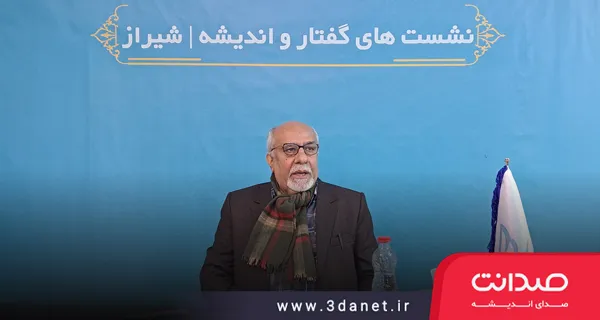
Lecture by Keramatollah Rasekh: “Changing Social Structure in Iran: Community and Society”
The 73rd session of the Goftar va Andisheh (Discourse and Thought) series of meetings, Azar 1402
Listen to the audio of this lecture on Anchor | Spotify | Castbox
Download the audio of this lecture directly
.
.

The lecture “Changing Social Structure in Iran: Community and Society” is based on the following article:
.
Keramatollah Rasekh, Retired Associate Professor of Sociology, Islamic Azad University, Shiraz
The Communal Structure of Iranian Society: Theoretical Foundations
Introduction
This article is built upon two fundamental assumptions. The first assumption is a fundamental distinction between two social structures: communal[1] and societal[2]. The second assumption is that the social structure in Iran predominantly possesses communal characteristics. The science of sociology is familiar with the distinction between communal and societal structures, although this distinction has sometimes been expressed using various themes.
Ferdinand Tönnies, the German sociologist, explicitly names this distinction in his work of the same title, Community and Society. Like many of his compatriot sociologists and philosophers, he sympathizes with the communal structure. Tönnies is concerned about the inevitable retreat of traditional life forms of the communal structure in the face of the progressive process of industrialization and modernization. This work, in fact, contains Tönnies’s pathology of his own era, the era of the marginalization of community and the flourishing of society. He believes that community cannot be analyzed on the same level as society, because community is not constructed according to a plan like society, but rather grows in a natural historical process. The scientific analysis of community differs from that of society, because society is built with a will oriented toward reason, whereas community takes shape in a natural process; therefore, the structure of society, unlike community, is artificial.[3] This distinction is important because it emphasizes the role of rationality in the process of building society, so building society is conditional upon the growth of a certain degree of rationality, or at least a specific interpretation of rationality. This distinction can be used to explore the communal structure in Iranian society,
Auguste Comte, the founder of sociology, expressed this distinction in a different language. He distinguishes three types of conceptual structures from one another: theological, metaphysical, and positive. By these three concepts, he refers to three mental and intellectual periods corresponding to the social structure in the history of the West: antiquity, the Middle Ages, and the modern age. In fact, he explains the evolution from a society with a communal structure to a society with a societal structure in three stages. Comte considers this evolution inevitable. He imagines the basis of thought and life in positive society, by which he means societal society, to be reason and logic,[4] whereas emotion and feeling determine the content of the communal structure.
Karl Marx, like many German philosophers and sociologists, including Ferdinand Tönnies, is concerned about community and worried about the calculative nature of human relations in the structure of society, or what he calls bourgeois capitalist relations. He seeks to revive a society with a communal structure, yet one suited to the modern age. The communist community must replace capitalist and bourgeois society. The transformation of a societal society into a form of communal society is difficult; consequently, Marx's dream of establishing a communist communal society appears to possess the idealistic and imaginary characteristics of Thomas More's dream-like (utopian) society.[5] In any case, Marx's theoretical approach provides us with a suitable tool for analyzing a society with communal characteristics, such as Iran.
Herbert Spencer distinguishes two types of society from one another: the military and the industrial society. The military society is the medieval community that is transformed into industrial society. The military society is a human aggregate in which
"the army is nothing but the mobilized people, and the people in peacetime are nothing but the army at rest."[6]
Industrial societies, unlike military societies, possess a great deal of internal differentiation. The nature of industrial society is determined by the voluntary cooperation of the society's members, while the duty of the state is to realize the will of the citizens. The economic form of industrial society is determined in the free market. Social status in this type of social structure, unlike in military societies, is achieved and not ascribed. Commerce and diplomacy are the axis of public life in industrial society, whereas militarism is the basis of life in the military community.[7] Spencer attributes characteristics to the military society that can be used to study the communal society in Iran.[8]
Vilfredo Pareto explains all social structures within a communal structure using his theory of elites. In this framework, humans are individuals who are under the influence of past social, economic, political, and historical factors. He calls these influential factors residues[9], which are ever-present and influence the human mind and behavior. Humans use various derivations[10] to explain these enduring characteristics. Elites in various eras are tasked with providing the appropriate justification. Through this function, elites assume positions of power. They seize and circulate power. Ordinary people are the foot soldiers of the elites. This theory is called the circulation of elites. A considerable part of the characteristics that Pareto attributes to the entirety of human society throughout history are, in fact, features of communal structures. Such features are abundantly seen in communal structures like Iran.[11]
Émile Durkheim, the French sociologist, considers social cohesion to be the fundamental condition of any human collectivity. He distinguishes between two types of solidarity: mechanical and organic. These two types of solidarity are seen in two social structures: community and society. Durkheim's question is this: How can social cohesion in the societal structure be explained given the growth of individuality in this type of structure? Durkheim's answer is the form of the division of labor in this type of structure. Ancient societies were composed of small, separate units. In such societies, a strong collective consciousness exists, and similarities cause solidarity, or in Durkheim's words, mechanical solidarity, among individuals. When the content of individual consciousness consists solely of collective consciousness, the solidarity arising from similarities in production reaches its highest level, such that they agree even in details. In such a situation, individuality is something close to zero.[12] Therefore, the simpler the social structure, the more religious the culture, and consequently, the weaker the individuality and the stronger the collective consciousness. Modern societies, unlike simple societies, possess large domains with differentiated functions. In such societies, the division of labor causes the formation of a network of mutual interdependence, or in Durkheim's words, organic solidarity. The more individuality grows among the members of a society, the less they can be integrated using a single collective consciousness. Collective consciousness in such societies is divided into a set of normative and functional rules. These rules have their own specific moral nature. Therefore, functional differentiations lead to moral differentiations. In Durkheim's view, this is evidence of the connection between the division of labor, solidarity, and morality.[13] The mode of the division of labor, according to Durkheim, is influenced by social and ecological factors such as population growth, its concentration, urbanization, and the construction of transportation and communication routes. Durkheim held the view that increased competition in a situation of population growth and limited resources causes the division of functions and the specialization of occupations. Humans inevitably become dependent on one another. The mutual social dependence resulting from the division of labor causes the formation of a type of social connection that is the basis of organic solidarity and social cohesion in modern society.[14] Durkheim has extensive studies on religion in primitive and communal societies and explorations regarding the structure of modern society, which can be used to examine the distinction between society and community, but we will forgo them for now; therefore, we are dealing with two types of structures, communal and societal, with two types of division of labor, two types of social solidarity, two types of individuality, two types of collective consciousness, two types of social structure (simple and complex), two types of religious culture, two types of morality, two types of social connection, and other clear distinctions.
Georg Simmel, the German sociologist, did not directly address the distinction between society and community, but with the concept of sociation,[15] he played an undeniable role in the study of social structures. Sociologists in the United States of America translated the concept of sociation as socialization[16] into English, and through this, one of the most important keywords of sociology was born. What is meant by socialization or sociation is the process of an individual's familiarization with social norms and values in life. Norms and values differ in communal and societal structures; consequently, Simmel's sociology can be used to explore the distinction between these two structures. The importance of Simmel's sociology for studying these two types of structures becomes more apparent when we note that Simmel defines sociology as the science of the processes and forms of reciprocal influence; undoubtedly, the processes and forms of reciprocal influence differ in these two types of structures. The form[17] of reciprocal influence, from Simmel's perspective, is of particular importance to sociology, to the extent that Simmel's sociology is called formal sociology or the sociology of forms[18] — or, in a literally incorrect Persian translation, official sociology. What Simmel means by formal sociology is, in fact, the sociology of relations[19] or the sociology of the form of social relations, which has no connection to the concept of official or unofficial. If we pay attention to the details of Simmel's sociology, especially categories such as "cultural tragedy" and his social pathology of modern society, we realize to what extent this sociology is important for establishing sociology as a science and for the sociology of the distinction between the two structures of society and community. This brief reference here suffices to show that the form of social relations in a society with a communal structure differs from that in a societal structure, and arises from different influences and effects in two types of interaction, which lead to two types of social forms: communal and societal.[20]
Max Weber must be considered the sociologist of the sociology of social relations in advanced industrial societies, and consequently, of societal relations. Max Weber's name is linked with categories such as rationalization or rationality, the capitalist system, Protestantism, the Protestant ethic, the spirit of capitalism, bureaucracy, and other concepts. These categories are the identifying features of the societal social structure. These concepts can be used to understand the social system opposite the societal system, the communal social structure, although Max Weber himself used the concept of communalization with a different meaning. Max Weber's works are, in fact, the social and economic history of the formation of the global capitalist economic system, in the course of which the cosmopolitan bourgeoisie class and the citizen of the world were formed, a class to which Marx Weber considered himself to belong. Weber saw a connection between the capitalist system and the Protestant religion; he considered religions to be the great organizing systems for the majority of the world's people, and regarded one of the religions as the driving engine of the progress of the victors of the West and industrial capitalism. His study of religions was to prove the hypothesis that there is a connection between the secular and Protestant view of the Christian religion and the mental state of the new Western capitalism. Max Weber, like many other sociologists of his homeland such as Marx, Tönnies, and Simmel, paid attention to the destructive aspect of the process of rationalization. Contrary to the perception of some liberal critics who seek to completely appropriate him, he was not merely a sociologist of the new global capitalist system, but, like Marx, a sociologist of the societal social structure. He used categories such as dehumanization, reification, depersonalization[21] and disenchantment[22] to critique these relations.
This aspect of Max Weber’s sociology makes him attractive for the sociology of communal structures in Middle Eastern societies, including Iran. His ambivalent, dual view of this process and his emphasis on the rationalization of irrationality and the irrationalization of rationality made him a theorist for understanding social relations within communal structures. Furthermore, Max Weber used the two concepts of communalization[23], whose basis is a consciousness of belonging rooted in feeling and tradition, as opposed to sociation[24], whose characteristic is a balance of interests based on a means-end relationship.[25] Of course, Weber did not derive these concepts from psychological-anthropological foundations, as Tönnies did. He used sociological foundations for this distinction, which gives us a freer hand in classifying the structural characteristics of these two types of structures. With this point, he concluded that sociation can even be the result of communalization.[26] American sociologists such as Charles Horton Cooley, George Herbert Mead, Robert Park, Talcott Parsons, and others used this interpretation of Weber, blended it with Georg Simmel’s theory of sociation and formal sociology, and arrived at social psychology and theories such as primary groups and secondary groups.[27]
Talcott Parsons can perhaps be defined as the pure example of a sociologist of societal social structure. His structural functionalist approach is, in fact, a theoretical attempt to explain how this system functions. His systems approach and his presentation of the AGIL scheme[28] are also a theoretical endeavor to delineate the biological, social, political, and cultural components influencing human action within the framework of the societal system. Parsons begins his first major work, The Structure of Social Action, by posing the problem of order. Using analytical realism,[29] he explains order as arising from the existence of shared social values and norms. Norms are a series of regulations and rules with intersubjective validity. Of course, by proposing the voluntaristic theory of action,[30] Parsons claimed that despite human action being carried out under the influence of norms, humans possess volition in performing action, and thus he arrived at the general theory of action.[31] Order within this framework is seen in close connection with the three subsystems of human action: the social system, the personality system, and the cultural system.[32] In other words, personality, social, and cultural factors influence human action. By proposing the AGIL scheme, Parsons added a fourth system, the behavioral organism[33] or “behavioral system,” to the three systems existing in the structure of social action. By proposing the theory of pattern variables[34] and distinguishing between the two structures of society and community, Talcott Parsons took a fundamental step in understanding modern society. He distinguished five contrasting pairs of action orientation in the two types of society from one another: the orientation of universalism, achievement, specificity, affective neutrality, and self-orientation in society, as opposed to the orientation of particularism, ascription, diffuseness, affectivity, and collectivity-orientation in community. This means that the actor in society performs action oriented toward rules, achieved status, a differentiated orientation according to the actor’s specific status, without emotional orientation, and with regard to their own interests, whereas the actor in community has a general orientation toward the collective, their status in the community is determined by ascription, they have an undifferentiated and diffuse orientation, their action has an emotional orientation, and they perform action largely under the influence of the collective. These are the same distinctions that Ferdinand Tönnies attributed to society and community.[35] Parsons thus provides us with an abstract scheme for distinguishing communal from societal structure.[36]
Robert K. Merton continued the work of Talcott Parsons. Parsons, through a creative synthesis of European theories, especially the theoretical approaches of Émile Durkheim, Max Weber, and Vilfredo Pareto, formulated the voluntaristic theory of social action.[37] Robert K. Merton came to Harvard at the encouragement of Sorokin, but was drawn toward Parsons. Most of Merton's scholarly work was devoted to explaining the various types of structures that determine the decision-making patterns of actors. Merton also wrote articles on anomie, the sociology of knowledge, or the function of political institutions and groups, all within this same framework. Merton moved beyond the effort to formulate a grand narrative in the style of Marx, Weber, and Parsons, arriving at theories of the middle range. Of course, Merton did not completely reject Parsons's comprehensive and all-encompassing system, but in his view, the general functionalist postulates of Parsons had fundamental flaws. He believed that if we accept such an approach to society, this acceptance will lead to the acceptance of the postulate of the functional unity of society, according to which society is a social body that, without its functional parts, is like a human body without an appendix. In clear opposition to this theory, Merton arrived at the functional and, at the same time, dysfunctional aspects of social institutions.[38] Alongside the concept of dysfunction, Merton also used the concept of functional equivalents[39] to express this theme. He believed that cultural and social patterns have functional equivalents. For example, a horseshoe nailed to a stable door as a talisman to ward off the evil eye for a villager might have the same function as fire insurance. In this way, Merton, using the approach of middle-range theories, constructed a flexible tool of functional analysis with which the structural reasons for order as well as disorder, socio-cultural differentiations and conflicts, fundamental values, and also existing deviations in the whole society could be analyzed. In Merton's view, a lack of consensus always exists in society; consequently, efforts are always made to resolve them. Reforms and changes are clear examples of such efforts. According to Merton, social actors are always grappling with disequilibrium, uncertainty, imposed expectations, and constraint in their decision-making. Merton believed that human action may lead to unanticipated consequences.[40] For instance, a revolution is carried out to establish equality, but it may result in inequality. The concept of unanticipated consequences can also be explained using the concept of manifest functions.[41] If manifest functions are not realized, it is possible that latent functions[42] become operative, which the actors in no way anticipated in the outcomes of their own actions. Merton goes a step further and emphasizes that latent functions and their analysis are the principal task of sociology, because they direct our attention toward broad areas of theoretical inquiry that yield sociological enlightenment. Merton points to another point that is important for sociological analysis, and that is the distinction between subjective states[43] and objective consequences. For example, a person who marries does so with motivations that are not identical to the social functions of marriage and family formation for society. Merton's categories, such as functional equivalents, manifest and latent functions, or unanticipated consequences, can be used to examine the distinction between the two structures of society and community, such that in communal structures, functional equivalents take the place of primary functions. For example, in Iran, the government does not adopt long-term water policies; the people pray for rain.
Shmuel Eisenstadt inclined toward cultural studies. In his studies, he arrived at a different understanding of tradition and concluded that pre-modern societies cannot be distinguished from modern societies merely by the index of being traditional. Symbolic conceptions of indices are a better criterion for this distinction. From this perspective, modernity itself is a great tradition with its own specific symbolic principles.[44] The existing socialism in the former Soviet Union and China also belongs to the great tradition of modernism.[45] Social transformations, from his viewpoint, are better understood by studying the mutual relationship between symbolic orientations and social structures. For example, Shiite symbols are related to the social structure in the Safavid era. He examined this relationship in the book *Revolution and the Transformation of Societies*. [46] Eisenstadt, with the book *The Political Systems of Empires*, examined the relationship between political transformations and history. He concluded that, contrary to Max Weber's view, traditional legitimacy does not conflict with new organizational forms. He believed that this process can be seen in the political systems of developing countries after the colonial era,[47] which emerge from new organizational forms within the core of traditional structures; it suffices to note the existence of new organizational forms alongside traditional legitimacy in the political structure of the Islamic Republic of Iran and communist China. Therefore, tradition is not in conflict with organizational modernization. Of course, the relationship between tradition and politics in the modern age differs from that in traditional empires; while in traditional empires, politics enjoyed autonomy in the shadow of tradition and was to a large extent dependent on tradition, in modern societies, tradition is placed under the tutelage of the political sphere. [48] To understand his point, it suffices to note how, in the Islamic Republic over the past four decades, traditional religion has been placed under the tutelage of the political. Eisenstadt also explained revolutions and great social transformations in the context of the relationship between tradition and the political sphere in the Axial Age. Accordingly, religions are the product of heterodox movements. The established religion supports interests and concerns that are incompatible with the interests of another group; a heterodox group demands freedom, equality, and justice, by which they actually mean the freedom to propagate their own views and equality with the followers of the established religion. A heterodox movement forms and, in some cases, prevails and triumphs, and a new religion takes shape. If the new religion becomes established, a new heterodoxy forms within its core. Heterodox movements usually appear with slogans such as justice, freedom, and equality, by which they mean fair treatment by the established religion and being considered free and equal with the dominant religion.
The modern movement is also a heterodox movement against the established religion. Modernity, in this interpretation, is the emergence of the potential for heterodoxy existing in Axial civilizations. Karl Jaspers believes that the great world religions were formed between the eighth and second centuries BCE.[49] He refers to this six-century era as the Axial Age and the religions that formed during this period as Axial religions. According to Eisenstadt, the revolutions and transformations of the modern age are also the result of increased tension within Axial religions, for example, the conflict between Catholics and Protestants in the early sixteenth century CE, expressing the new idea of the world's constructability.[50] The conception of humanity in the Middle Ages was that the world takes shape through events and the will of a supernatural force. The idea that humans can build their own world emerged in the modern age. With the triumph of the idea of the world's constructability, humanity became responsible for fulfilling a task previously attributed to God. In this way, humanity becomes responsible for building paradise on earth, a responsibility that, before the modern age, was left to God.
In this way and on this basis, the demands of heterodox movements—such as the call for freedom, equality, and justice in the modern era—became the principal symbolic tenets for building the new world. The construction of the new world began in specific centers; states assumed responsibility for building these centers, and thus the political sphere became the main arena for the active reconstruction of the social world. In the course of this transformation, coercion acquired an ideological character and collective identities took on a political nature, thereby making political affairs the axis of conflicts and struggles. To better understand the matter, in Iran, Shia Islam and the clergy assumed a political character, and in this process, political religion took shape. The Hezbollahi movement in Iran and the Taliban in Afghanistan can, on this basis, be considered modern movements, because these movements possess worldly and perhaps heterodox elements—in Eisenstadt’s understanding—compared to the principles of Islam. This development, contrary to what many imagine, is, as Eisenstadt has shown, only possible in modern society. Eisenstadt arrived at Max Weber’s theory that the modern movement emerged from the womb of heterodox religious movements, but he did not accept Weber’s theory regarding the exclusivity of these developments to the West. Weber’s question was: why did the modern age not take shape in non-European civilizations? Eisenstadt, contrary to Weber, asks: why did non-European civilizations also join the current of modernism?
He posed this question by accepting the assumption that, contrary to Weber’s view, there is not one single type of modernism, namely the Western one. There are multiple types of modernism. The type of modernism is determined by the indicators of social and political foundations in each society; therefore, the question is: what characteristics does modernism possess in non-Western societies? Eisenstadt believes that these societies created their own specific modernities, and thus we are dealing with multiple modernities. Eisenstadt’s theory of multiple modernities is precisely designed to answer this question. This theory deeply doubts the validity of classical modern theories. Eisenstadt believes in the diversity of modernization processes even within European societies. He sought to demonstrate this diversity by studying class systems, the formation of political centers, symbols of collective identity, and social protest movements in Europe, the United States of America, Latin America, China, and Japan.[51]
The reason for the formation of different modernities is the existence of different fundamental structures within the heart of civilizations. The political revolutions in the Russian and Chinese empires are, for this very reason, fundamentally different from their European counterparts. The same can be said about India. The orientation system in India is otherworldly, while this same country possesses structural and symbolic elements similar to pluralistic civilizations in the West. The democratic system in this country was born from the womb of a completely different system, namely the caste system.[52] Another different example is Japan. Japan is a pre-Axial Age civilization with its own specific characteristics, in other words, it has a God-Emperor.[53] The pre-Axial Age symbolic orientations can still be seen today in the institutions of Japanese society; the codes of primordial identity still live on in Japan; protest movements are of little significance in this society; and civil society and the public sphere, in the Western sense, are not seen in this society.[54] This diversity among systems is also observed even within the systems themselves, such that we witness diverse patterns of orientation within Axial and non-Axial civilizations that increasingly compete with one another.[55] Eisenstadt, on this basis, also assesses fundamentalism in Judaism, Christianity, and Islam as belonging to the category of modern movements and believes that these movements are transformed heterodox and utopian movements of the Axial monotheistic religions.
Eisenstadt concluded that the modern era is influenced by two components: totalitarian and repressive cultural and political elements on the one hand, and the component of pluralism and libertarianism on the other. Thus, the history of modernism has been shaped in the continuous tension between these two tendencies, a tension that may lead to barbarism, as seen in fascism and communism, each of which are versions of modernization; therefore, the modern age possesses the potential for barbarism.[56] Jewish, Christian, and especially Islamic fundamentalist protest movements have been able to connect the totalitarian and repressive elements of the modern age with the universalistic and activist aspects of modernity and use them against traditional forms of life as well as pluralistic interpretations of the modern.[57] Eisenstadt provides us with a powerful theoretical apparatus for distinguishing the two structures of societal and communal and for analyzing Iran's events over the past four decades. He shows that, contrary to the belief of many, new organizational structures do not conflict with traditional and religious legitimacy.
[1] Communitive Society/Gemeinschaft
[2] Societal society/Gesellschaft
[3] Tönnies, 1991: 73-147
[4] Michael Bock, in: Kessler, Vol. 1, 1394: 25-40
[5] Ralf Dahrendorf, in: Kessler, Vol. 1, 1394: 41-56
[6] Spencer, H. 1887: 48, 142, 143
[7] Michael Kunczik, in: Kessler, Vol. 1, 1394: 62
[8] Michael Kunczik, in: Kessler, Vol. 1, 1394: 57-72
[9] residues/Residuen
[10] Derivations/Ableitungen
[11] Maurizio Bach, in: Kessler, Vol. 1, 1394: 73-89
[12] Durkheim, E. 1988: 82, 181f.
[13] Durkheim, E. 1988: 471
[14] Hans-Peter Müller, in: Kessler, Vol. 1, 1394: 127-146
[15] Vergesellschaftung
[16] socialization
[17] form/Form
[18] formal Sociology/formale Soziologie
[19] relationship sociology/Beziehungssoziologie
[20] Birgitta Nedelmann, in: Kessler, Vol. 1, 1394: 105-125
[21] Impersonalization/Verunpersönlichung
[22] Soulless/Entseelung
[23] Communitization/Vergemeinschaftung
[24] Socialization/Vergesellschaftung
[25] Weber, M. 1980: 29-31, 311
[26] Cornelius Biegel, in: Kessler, Vol. 1, 1394: 100
[27] Dirk Kessler, in: Kessler, Vol. 1, 1394: 166-184
[28] AGIL-Schema
[29] Analytical Realism/Analytischer Realismus
[30] Voluntarism/Voluntarismus
[31] Parsons, T. 1951;Parsons/Shils, 1951: 45-275
[32] Parsons, T./Shils, E.A. 1951:110-230.
[33] behavioral organism/Verhaltensorganismus
[34] pattern variables
[35] Parsons, T. 1951: III-V; 1967:192-219; Parsons/Shils, 1951:76-91.
[36] Richard Münch, in: Kessler, Vol. 2, 17-39
[37] Voluntaristische Theorie des sozialen Handelns
[38] Dysfunction/Dysfunktion
[39] Functional Equivalence/Funktional Äquivalenz
[40] Unanticipated consequences/ Unerwartete Folgen
[41] manifest functions/Manisfester Funktionen
[42] latent functions/Latente Funktionen
[43] subjective disposition/Subjektive Disposition
[44] Eisenstadt, 1979: 227
[45] Eisenstadt/Azmon, 1977
[46] Smith, D. 1991: 17-21
[47] Eisenstadt, 1963: 4
[48] Eisenstadt, 1963: 370f
[49] Jaspers, 1363
[50] Eisenstadt, 1988: 47-74
[51] Eisenstadt/Roniger/Seligman, 1987: 7-23; Eisenstadt 2003: 701-722
[52] Eisenstadt, 2003: 781-830
[53] Eisenstadt, 1996: 264-277
[54] Eisenstadt, 2000a: 110-173
[55] Eisenstadt, 2000b: 24
[56] Eisenstadt 2003: 561-571
[57] Eisenstadt, 1998: 80
.
.


Discussion0 comments
No comments yet; let yours be the first voice.