Political Science
A Session on the Introduction and Discussion of the Book Orientalism and Orientalism in Iran
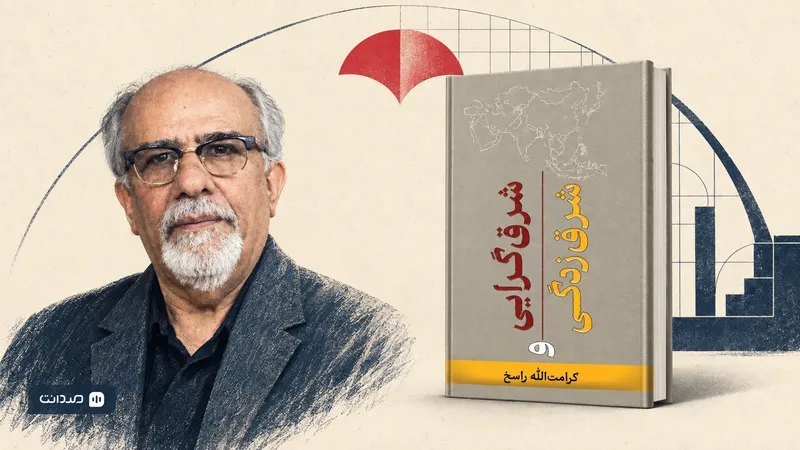
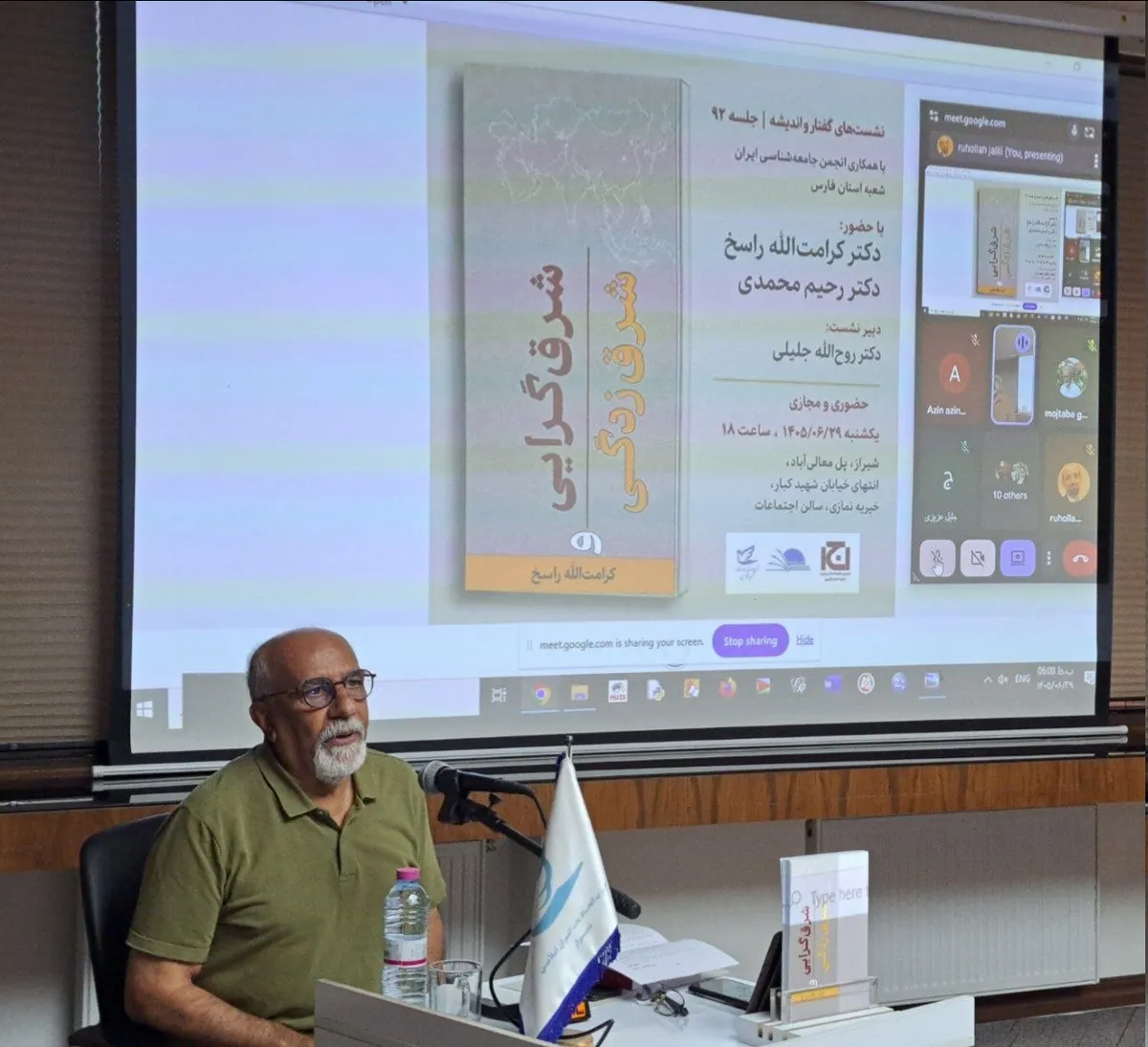
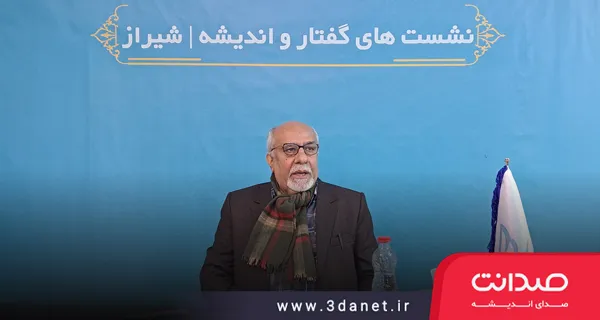
At the 92nd session of “Guftar va Andisheh” in Shiraz, the book Orientalism and Orientalism in Iran by Karamatollah Rasekh was introduced and discussed. In this session, the author examined the social and political roots of Orientalism in Iran by drawing on the distinction between “community” (jamaat) and “society” (jame‘eh), while Rahim Mohammadi explored the historical genealogy of the concept of the East and the book’s conceptual questions.
Report on the Session Introducing and Discussing the Book Orientalism and Orientalism in Iran
At the 92nd session of “Guftar va Andisheh” in Shiraz, the book Orientalism and Orientalism in Iran by Karamatollah Rasekh was introduced and discussed. In this session, Rasekh sought to explain the theoretical framework of the book by drawing on the distinction between two social structures, “community” (*jamaat*) and “society” (*jame‘eh*), and to show how Orientalism in Iran has transformed from a historical tendency into an ideological and political construct. Rahim Mohammadi, head of the Sociology of Iran Group at the Iranian Sociological Association, then examined the historical emergence of the concept of the East in Iranian consciousness, the achievements of the book, and some of its conceptual questions. The session concluded with the author’s responses and questions from the audience.
A Book Continuing the Theory of Community and Society
At the beginning of the session, the moderator said that Orientalism and Orientalism in Iran can be regarded as a continuation and expansion of an idea that Rasekh had previously formulated in his book Community and Society. The main concern of the new book is the analysis of the political and social agency of the petty bourgeoisie in developing societies, with a focus on Iran. Within this framework, development is understood as a transition from a communal social structure to a societal structure: a transition from predominantly premodern relations based on primary attachments to arrangements in which citizenship, law, individual rights, and modern institutions play a central role.
Rasekh began his remarks with the concept of “social structure.” According to him, classical sociologists, from Marx and Weber to Durkheim and Spencer, analyzed society structurally even when they did not use the term “social structure” in its later sense. However, the dominance of positivist philosophy in the nineteenth century led social realities to be understood in the same way as physical and objective realities; as Auguste Comte initially chose the title “social physics” for sociology.
Alongside this tradition, Rasekh has drawn on Georg Simmel’s sociology of relations. Rather than viewing society merely as an independent external reality, Simmel considers relations between individuals and various forms of social grouping as the subject of study. From this perspective, the family, workplace, an ethnic or religious minority, and even human society can be studied according to the types of relations within them. Using this approach, Rasekh considers community and society not merely abstract labels, but two different forms of social relations.
He also referred to the concept of “configuration” in the works of Norbert Elias and explained it through the example of a football team: a collection of outstanding players does not necessarily create a successful team, because the quality of the whole depends on the relationships among its parts. Likewise, understanding a social structure is incomplete without examining the types of relations, dependencies, and arrangements of forces within it.
Citizen and Resident in Two Social Structures
The first important distinction in Rasekh’s framework is the difference between the “citizen” in society and the “resident” in community. The citizen possesses political and social agency, the right to self-determination, and equality before the law. In a communal structure, the individual is less a rights-bearing citizen and more a resident living within a particular territory, whose relationship with political power is not organized on the basis of equal citizenship rights.
The second distinction concerns the “public sphere.” Referring to the importance of this concept in sociology and the works of Jürgen Habermas, Rasekh argued that the public sphere can be more revealing for understanding social groups than some class or stratification-based divisions. For example, one can speak of the public sphere of the clergy or the public sphere of intellectuals, even though the members of each group may not be economically or socially homogeneous.
According to Rasekh’s analysis, Iran’s public sphere before the Revolution, particularly from the 1340s onward (1960s), was largely under the influence of the petty bourgeoisie, and intellectuals represented it socially. At the same time, he believes that in recent decades, despite the economic weakening of the middle class, this class has gradually gained a stronger presence in Iran’s public sphere. Rasekh considered some political and social events of recent decades as signs of this class’s agency and said that the decisive question for Iran’s future is whether the middle class will be able to make its demands effective in the public sphere through peaceful means and social cooperation.
Primary Identities and the Difficulty of Forming a Nation-State
From Rasekh’s perspective, the position of primary identities also distinguishes community from society. He placed five identities—racial, ethnic, linguistic, religious, and sectarian—in this category. In a communal structure, individuals often define themselves first through one of these attachments and only afterward arrive at civic identity; whereas in modern society, citizenship comes first and primary attachments are redefined within its framework.
This difference also extends to political structures. The nation-state rests on the existence of a defined territory and citizens who possess the right to self-determination, while free parties can compete over programs and social interests and, when necessary, form coalitions to govern the country. In a communal structure, because of the dominance of ethnic, religious, linguistic, or personal loyalties, the formation of a nation-state and independent parties becomes difficult. Organizations bearing the name of parties may also serve concentrated authority or networks of loyalty rather than expressing organized civic demands.
Rasekh also mentioned private property and human rights as two other differences. In his view, property in modern society enjoys a specific legal and cultural foundation, and human rights are the product of a particular conception of humanity that emerged through Western intellectual, scientific, and political transformations. In a communal structure, the absence or weakness of these foundations means that an individual’s life and rights are not protected to the same extent as the status of a citizen in a law-governed society.
From Historical Orientalism to Ideological Orientalism
After explaining these premises, Rasekh turned to the central distinction of the book. According to him, “Orientalism” and “Orientalism in Iran” are two separate but related concepts. Orientalism in Iran has a historical background and emerged from encounters with the military, technological, and political superiority of the West. He traced the clear beginnings of this tendency to the reign of Mohammad Shah Qajar and the premiership of Haji Mirza Aghasi. Initiatives such as attention to agriculture, qanat construction, and efforts to manufacture weapons can be seen as part of a search for an indigenous path to reducing dependence on Western powers. Rasekh emphasized that common historical narratives have often mocked Mohammad Shah and Mirza Aghasi without critically examining the underlying logic of these programs.
According to his account, Orientalism during the Naseri period went beyond a natural and defensive form and acquired a political character. At this stage, the opposition between “us” and “the West” became more explicit. By the late nineteenth century, two new forces had emerged in the public sphere: the “public intellectual,” for which Rasekh considers Mirza Malkom Khan a representative figure, and the “public cleric,” represented prominently by Jamal al-Din al-Afghani. Despite their intellectual differences, these two forces became active in politics and moved closer to one another on a social foundation rooted in the petty bourgeoisie. Rasekh regarded the Tobacco Protest and the Constitutional Revolution as consequences of this convergence and believes that the alliance between public intellectuals and public clerics continued in later developments in Iran.
“Orientalism in Iran” (*Sharqzadegi*) in Rasekh’s formulation represents a different stage. At this stage, attachment to the East and resistance to the West become an ideological, dogmatic, and doctrinal construct. He considered the works of Jalal Al-e Ahmad, Ehsan Naraghi, and Dariush Shayegan, despite their significant differences in language and intellectual foundations, as examples of this formulation. In Rasekh’s view, books such as Westoxication, In the Service and Betrayal of Intellectuals, What He Had Himself, and Asia in Opposition to the West played a role in shaping the public sphere of the petty bourgeoisie. In this reading, the return to the self and the emphasis on Eastern authenticity sometimes went beyond a specific critique of the West and became a general opposition to the achievements of modernity.
On this basis, Rasekh does not regard Orientalism in Iran merely as a cultural preference or an interest in the East; he sees it as a form of political and social agency that has influenced decisions and developments in contemporary Iran. In response to criticism regarding the lack of concrete examples in the book, he said that publishing limitations prevented the inclusion of some cases and then, as his own view, identified the occupation of the U.S. embassy, the continuation of the Iran-Iraq War, and the trajectory of the nuclear dispute as areas in which the costs of this mode of thinking should be examined.
Constructivist Historiography in a Communal Structure
One of the most debated parts of Rasekh’s remarks concerned “constructivist historiography.” He described this type of historiography as a feature of communal societies: a situation in which historical narratives, rather than being continuously tested against documents and objective realities, serve the identity-based and political needs of groups. Referring to the instability of governments from the death of Naser al-Din Shah to the rise of Reza Shah, as well as the frequent changes of cabinets between 1320 and 1332 (1941–1953), Rasekh argued that some established narratives about the Constitutional Revolution, the 1299 coup, and the 28 Mordad 1332 events require reconsideration.
During the question-and-answer session, he continued this discussion and said that historiography has been one of the tools used by intellectuals in Third World societies to influence the public sphere. Rasekh considered partisan historical narratives an example of this issue and assessed Ervand Abrahamian’s interpretation of contemporary Iranian history as influenced by the perspective of the Tudeh Party. These remarks were presented at the session as the author’s position and interpretation and became one of the main topics of discussion with the participants.
The Historical Genealogy of the Concept of the East in Rahim Mohammadi’s Remarks
Rahim Mohammadi considered the book significant because it removes the concepts of “East,” “Orientalism,” and “Orientalism in Iran” from everyday, political, and journalistic usage and turns them into subjects of sociological reflection. To complement the discussion of the book, he sought to explain the historical genealogy of the formation of the East as a collective identity.
Mohammadi said that the word “Orient” has ancient roots in the Latin and Roman worlds, and that the East in the European imagination was associated with the Silk Road, spices, sunlight, legends, and distant lands. With the Renaissance, the Enlightenment, and the emergence of modern rationality, Europeans’ understanding of themselves and the world changed. Travel accounts by explorers, ambassadors, merchants, and Christian missionaries gradually produced a body of knowledge about Iran, the Ottoman Empire, and other Eastern lands. From Mohammadi’s perspective, before the formation of this perspective, the people of these lands primarily understood themselves as Muslims, Iranians, Shiites, or subjects of a dynasty, not as members of a collective identity called “the East” in opposition to “the West.”
He traced the turning point in Iranian awareness of this distinction to the fall of Isfahan and its long-term consequences. Political instability after the fall of the Safavids and the gradual comparison of Iran’s condition with European powers created a context in which “the European community” entered Iranian texts as an important Other. Mohammadi referred to the writings of Hazin Lahiji, Tuhfat al-Alam by Mir Abd al-Latif Shushtari, and the travelogue of Abu Taleb London. Each of these works, in different ways, represented the abilities and order of Europeans in contrast to Iran’s disorder and weakness.
According to Mohammadi, Iranians’ encounter with modernity first expanded through India and later with Tabriz and the Caucasus as centers. The famous conversation attributed to Abbas Mirza with Joubert, Napoleon’s envoy, is an example of posing the question of backwardness: how is it that although the sun rises earlier in the East, the West has surpassed the East? This question shows that “the East” was no longer merely a geographical direction but had become a concept for historical comparison and the measurement of power.
Mohammadi described early Qajar-era Orientalism as a reaction in which Iranians, when confronted with Western progress, turned to the glory and achievements of their own past. This reaction gradually created the grounds for resistance to the West and then resistance to modernity. In his analysis, at the next stage “Orientalism in Iran” emerged as a conscious and political discourse through concepts such as the return to the self and “what one had within oneself.” At this stage, the label “Westernized” also became a tool for criticizing intellectual rivals.
Mohammadi’s Conceptual Critique and Rasekh’s Response
Alongside his positive assessment, Mohammadi raised a question about the use of the concept of “petty bourgeoisie” in the book. If Iranian society, according to Ferdinand Tönnies’s model, is still dominated by a communal structure and modern classes have not fully formed within it, the use of concepts such as bourgeoisie and petty bourgeoisie may face theoretical difficulties. In other words, if Iran’s entry into modernity remains questionable, how can a class belonging to a modern structure be considered the main agent of transformations?
He also suggested distinguishing between “enlightenment-oriented intellectualism” (*monavar al-fekri*) and “intellectualism” (*roshanfekri*). In Mohammadi’s view, enlightenment-oriented intellectualism, represented by figures such as Fath-Ali Akhundzadeh, had a more direct connection with Enlightenment thought, whereas later Iranian intellectualism was strongly influenced by socialist and Marxist currents. In the continuation of this transformation, some intellectuals entered into alliances with the clergy, and the concept of Westoxication, in the works of Ahmad Fardid and Jalal Al-e Ahmad, was used to criticize the legacy of enlightenment-oriented intellectualism.
For future editions of the book, Mohammadi offered three suggestions: correcting typographical and editorial errors, including Solar Hijri or Lunar Hijri dates alongside Gregorian dates, and adding historical and empirical examples to abstract discussions. Rasekh acknowledged the importance of concrete examples and explained that publishing limitations influenced the selection and presentation of examples. He also emphasized that the framework of his book is not identical with Edward Said’s conception of Orientalism and that he distinguishes between Orientalism, Orientalism in Iran, and East-oriented ideological discourse.
In response to another question about the petty bourgeoisie, Rasekh said that his intended definition is not Marx and Lenin’s purely economic definition based on relations to the means of production. He understands the petty bourgeoisie as a social group with political agency that has become a social base for movements and authoritarian governments in many developing countries. Regarding the public sphere, he explained that after Habermas this concept acquired broader applications and in his book refers to a sphere in which public clerics and public intellectuals, relying on the social base of the petty bourgeoisie, gained political and cultural influence.
The Prospects of Iran’s Social Transformation
In concluding his remarks, Rasekh spoke of the expansion of an indigenous middle class in the decades after the Revolution. In his view, the development of education, communication, and resources in small cities and villages has brought parts of society into new forms of relations and created new agents of social change. The central question is whether this force can achieve lasting political and social agency and transform the public sphere through peaceful means.
From this perspective, Orientalism and Orientalism in Iran is not merely a study of the history of a concept. The book seeks to explain the connection between social structures, groups carrying ideas, historical narratives, and political action. The discussion at the session also showed that this formulation has the potential to open new questions about Iran’s intellectual and social history, while requiring further debate about the boundaries of concepts such as community, class, public sphere, and modernity.
The session introducing and discussing Orientalism and Orientalism in Iran was held with remarks by Karamatollah Rasekh, critique and elaboration by Rahim Mohammadi, and questions from the audience. This program was part of the “Guftar va Andisheh” series of sessions, held in cooperation with the Fars branch of the Iranian Sociological Association.
Discussion0 comments
No comments yet; let yours be the first voice.