Philosophy
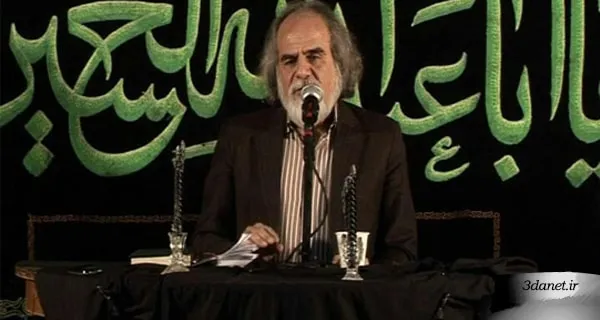
Lecture: “Hussein ibn Ali, Saint and Moral Hero” by Mostafa Malekian
A moral saint is one who embodies love, and a hero is one whom fear does not deter from duty—Husayn ibn Ali and Ali ibn Abi Talib exemplify these titles. A report on Mostafa Malekian’s lecture on the three meanings of these concepts and the obstacles of Karbala.
In this lecture, Professor Malekian first notes that saints exist in all religions and denominations, and that his discussion concerns the saint and the hero from an ethical, not a religious or denominational, standpoint, before proceeding to define the ethical saint and the ethical hero. According to his definition, an ethical saint is someone whom love for something does not prevent from performing an ethical act, and an ethical hero is someone whom fear does not prevent from performing an ethical act. The ethical saint and hero can have three instances: first, someone who, in circumstances where people ordinarily shirk their ethical duties (out of love or out of fear), performs their ethical duties despite being constantly afflicted by that love or fear. Second, someone who, in circumstances where people ordinarily shirk their ethical duties (out of love or out of fear), performs their ethical duties, but unlike the first case, fear and love have been extinguished within them, and they undertake that duty without the fear and love that people ordinarily have. Third, someone who acts beyond and in excess of their ethical duty, and loves and fears do not cause them to fail to act beyond their duty.
In Malekian's view, Hussein ibn Ali, based on the summary information available to us about his life, and likewise Ali ibn Abi Talib, are considered ethical saints and heroes.
.
.
2 Problems in Speaking about the Karbala Event:
First, most of what we have heard about the Karbala event are things that did not happen, and anyone who wishes to speak on this subject must make their primary effort to negate these accounts. Second, throughout the history of Shi'ism, and especially in the last four hundred years, the name of Hussein ibn Ali has been so exploited that a speaker wishing to address this topic always sees many emotional barriers between themselves and their audience, and these emotional barriers have increased since the revolution. From an ethical standpoint, we can consider Hussein ibn Ali as someone who is a saint and a hero. The difference in the meaning of ethical saint according to the traditional narrative and moral philosophers The word saint in religious contexts has a meaning according to which, in Shi'i Islam, the Imams, and in Sunni Islam, many of the Companions, are considered saints. This religious and denominational meaning is not what I intend, and I am not speaking from the perspective that Hussein ibn Ali is a saint in the Shi'i denomination. Rather, I mean saint in the sense used by moral philosophers, and the same applies to the word hero. Ethically speaking, an individual is considered a saint when love cannot obstruct their path, and is considered a hero when fear cannot obstruct their path.
Three Meanings of the Ethical Saint and Hero:
The First Meaning of Saint:
A saint in the first sense is someone whom the attachments and loves that prevent the general public from performing their duty do not prevent from performing their duty, and who performs the duty despite all difficulties. For example, a young woman who spends her youth caring for her father, forgoing marriage, is considered a saint. Because young women in this age group, due to the many attractions of love for a life partner, having children, and so on, are less able to accept spending their youth on their father. In most cases, young women neglect caring for their father and marry. Now, in such circumstances, when a young woman, fully aware that her father's illness is such that it will consume all her youth and deprive her of the opportunity for marriage, or at least a successful marriage, undertakes the care of her father, we call her a saint. The important factor in the first meaning of saint is that the individual does this despite their inner inclinations. That is, this young woman inwardly has the desire for marriage, a shared life, and motherhood, yet while these desires are active, she sets them aside and cares for her father.
The First Meaning of the Ethical Hero:
Alongside this moral saint in the first sense, there is also the moral hero. A hero is someone who performs their moral duty despite their fear and anxiety. They know that if they carry out their duty, they might be imprisoned and tortured, and they are afraid of that. Yet, despite all the vivid and active fears that have taken root in their soul, they perform their moral duty. An example of the moral hero in literature is the doctor in the novel *The Plague*, who, despite his fear of contracting the plague, does not leave the city. This is the first meaning of the saint and the moral hero.
The Second Meaning of the Saint and the Moral Hero
The saint in the second sense is one who not only does not forsake their moral duty because of affections, but gradually extinguishes the flames of affection within themselves and prevents the continued activity of that inner feeling, whereas in the first sense, the affections remain active. In the first type, those affections flow continuously, but in this second type, the individual thinks that the continuation of this flow of affection could hinder the continuation of their path; therefore, through inner control and resolve, they work to gradually eliminate this feeling so it does not prevent them from living morally. Similarly, the moral hero gradually eliminates fear within themselves through inner exercises and austerities. Preferring the First or Second Meaning of the Saint and Moral Hero Which of these two meanings is more valuable? Let me explain with an example: suppose you and your friend are walking and encounter a poor person. You easily, without any fear or dread within you, give him 1,000 tomans, but your friend, with a thousand struggles and efforts, manages to overcome their own soul and give money to the poor person, assuming, of course, that all other conditions of the individuals are equal. Now, is the act of the first person, who gives money to the beggar without any inner struggle, more valuable, or that of the one who, despite a great battle with their soul, manages to overcome it and give money to the beggar? Answering this question simplifies the answer to the value of the first or second saint. Aristotle believed that the second hero and saint are more valuable than the first hero and saint, and that in addition to performing the moral act, they also possess moral virtue. However, many other moral philosophers disagree with this view.
The Third Meaning of the Saint and the Moral Hero
In the third sense, the moral saint is someone who acts beyond and in excess of their moral duty, and affections cannot lead them to a point where they merely fulfill their duty. For example, if on a battlefield a group sees a grenade about to explode and everyone is in danger, and someone, despite the danger posed by the grenade, throws themselves upon it so that others are safe from harm, this individual has acted beyond duty. This act is considered supererogatory because we do not rebuke others for not having done this and not having thrown themselves on the grenade. The Superiority of the Third Meaning of the Hero and Moral Saint over Meanings 1 and 2 The third meaning of the saint and hero is more valuable than the first and second meanings, and if we accept what scholars of ethics say about the superiority of the supererogatory type, it is not at all comparable to merely fulfilling a duty. Many of the actions performed by His Holiness Amir (Imam Ali) were instances of supererogatory acts.
An Example of the Act of the Saint and Moral Hero in the Conduct of Imam Ali
For example, when His Holiness hears that Uthman ibn Hunayf participated in a feast of the wealthy, in that letter of rebuke to Uthman, he raises points that can in no way be said to have been merely his moral duty. In this letter, the face of a hero and saint is precisely depicted. He says everyone knows that if I wanted, I could drink nothing but pure, refined honey, provide for myself no bread but that made from the kernel of husked wheat, and prepare no garment for myself but pure silk, but it is impossible for the desires of my soul to overcome me. He emphasizes that the desires of the soul do not overcome me to such an extent that my gaze at a table ever falls upon a more delicious food, because I consider it probable that in the Hijaz and Yamamah there are those who may never recall a memory of being full (who are always hungry), and I consider it probable that there are those who have no hope of returning home at night with a loaf of bread. His Holiness emphasizes how can I sleep with a full stomach while I consider it probable that near me there are those whose livers burn from thirst or whose stomachs burn from hunger ... If you pay attention, these are supererogatory acts. These are depictions of acting beyond the call of duty.
Applying the Saint and Moral Hero to Hussein ibn Ali
Despite the fact that much of what has been recounted about the Karbala event did not occur, based on the amount we are certain of, it can be said that Hussein ibn Ali is both a saint and a moral hero.
What must we do to become a saint and moral hero?
Those who wish to attain such a state reach it not through rationality, but through spirituality. This has two dimensions:
First, one must believe that the system of the universe is a moral system; that is, existence is such that for every action I perform, depending on whether it is right or wrong, existence perceives this rightness or wrongness and reacts to it. Second, we must believe that although we appear separate from one another, we are all one being, and therefore any good or evil we do, we have done to ourselves.
.
.
Audio File of the Lecture
PDF of the Lecture Summary
PDF of the Full Lecture Text
.
.
This lecture was delivered on 24 March 2002 (coinciding with the eve of Tasu'a of Muharram 1423 AH) at the conference "New Interpretations of Ashura."
.
.


Discussion1 comments
1- نباید فرمایشات حضرت امام حسین(ع) را کنار گذاشته و حرفهای خود را به آن حضرت بچسبانیم. 2-اخلاق دربسیاری از مسایل راه حلی نشان نمی دهد مانند معیار های مالکیت و حدود آن. 3- بدون اعتقاد وارجاع به اصول دین از جمله توحید و معاد ،سخن گفتن از معنویت و وظیفه ، ناقص، بدون پشتوانه نظری، و بدون ضمانت عملی است.