Philosophy
Talks by Ali Sahebi and Mostafa Malekian at the Conference on Spirituality in Our Time
In a talk titled “Spirituality in Our Time,” Mostafa Malekian critiques the contradiction between rationality and dogmatic adherence, and argues that rationality and spirituality are reconcilable. Unlike religion, spirituality looks to no external authority and must seek help from the deepest layers of one’s own being.
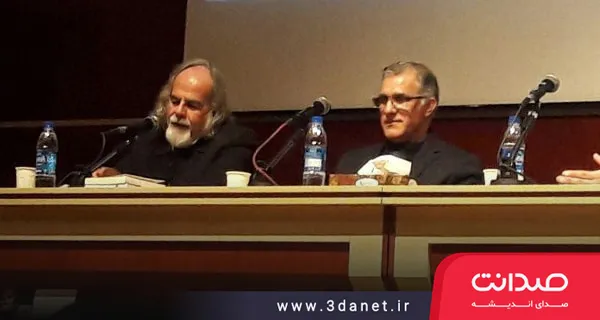
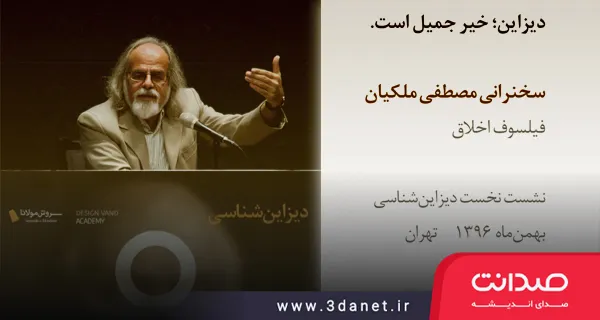
The Soroush-e Mowlana Institute held a conference entitled “Spirituality in Our Time” on February 18, 2017. At this gathering, Mostafa Malekian delivered a lecture titled “The Compatibility or Incompatibility of Rationality and Spirituality,” and Ali Sahebi gave a talk titled “Spirituality, Resilience, and Mental Health.”
Text of Mostafa Malekian’s Lecture, Entitled “The Compatibility or Incompatibility of Rationality and Spirituality”
From the year 2000 onward, I abandoned the project of religious intellectualism. My greatest criticism of religious intellectualism was that intellectualism is constituted by rationality, and religiosity is constituted by deference, and rationality is incompatible with deference. I claimed a kind of paradoxicality in the concept of religious intellectualism because I saw it. The gist of the matter is that if we want to be intellectuals, we must uphold rationality. From the time intellectualism emerged in Germany, and in the French, Russian, and English intellectual traditions—which are the great intellectual traditions—their common feature is that the intellectual must be a guardian of human rationality.
Whether the intellectual is someone whose own thought is enlightened, or someone who enlightens the thought of others, the intended meaning is illumination by the lamp of reason. Intellectuals, from the very emergence of this phenomenon in the eighteenth century, have always been representatives of rationality. On the other hand, in religious practice and religiosity, there is always deference; that is, one cannot be called religious unless one defers to a person or persons, meaning one accepts the word of that person or persons because it is their word, and does not question that word. For example, a Buddhist believes that one must accept every word of the Buddha; if one were to reason about each and every word of the Buddha, one would no longer be a Buddhist but a philosopher. They consider the Buddha’s words to be the final word. They say, “I accept the Buddha’s word.” A Muslim accepts the word of God in the Quran or the word of the Prophet in the Quran or Hadith without question. The form and shape of the speech of a deferential person, in word and deed, is “A is B because so-and-so said that A is B.” If you do not have deference, you are not deferring to any religion. The project of religious intellectualism is afflicted with an internal contradiction. For the sake of intellectualism, it must have reasoning, and for the sake of religiosity, it must contain deference, and combining rationalism and deferentialism is combining contradictories, or at least combining contraries. Instead of this project, after some developments, I proposed the discussion of rationality and spirituality. That is, spiritual intellectualism: for the sake of intellectualism, rationality is in it, and it is accompanied by spirituality. Here, this question may arise: is there no incompatibility between rationality and spirituality? There might also be a paradoxicality between these two, and their combination might be impossible. I must show that these two are compatible. This is the subject of my talk today.
Today, I want to focus on a specific aspect of this subject. First, the meaning of these two words must be clarified. By rationality, I mean following reasoning and nothing else. Accepting a statement solely based on the strength of the evidence for that statement, not based on who the speaker is. Rationality here is theoretical rationality, and its implication is that one’s commitment and attachment to a statement should be proportionate to the evidence that exists in its favor. The stronger the evidence adduced in favor of a statement, the greater your commitment and attachment should become. That is, I possess theoretical rationality when I make the degree of my attachment and commitment to a belief proportionate, in a real mathematical proportion, to the strength of the evidence that has been adduced in favor of that statement. Rationality means that my rejection or acceptance, or my affirmation or negation, or my confirmation or denial, or my impugning or rectifying, or my abrogation or correction, or my strengthening or weakening—that is, each of these seven actions—toward a belief is based on the evidence that has been adduced for or against that statement.
What does spirituality mean? A person is spiritual when, first of all, they do not consider the entire universe to be confined to what the laws of physics, chemistry, and biology express. If someone believes that the whole universe is limited to the realities elucidated by the laws of physics, chemistry, and biology, this person will not have spirituality. They are not a criminal, but they are not spiritual. Spirituality means considering the universe to be vaster than the natural world. The second point is that a spiritual person is someone who is not satisfied with their current state, but always believes that they can become better than they are now, and more importantly, that they must become so. One should not be content with one's current state and believe that one has reached where one ought to be. The spiritual person is in pursuit of their own personal well-being and believes they must be better than they are, and therefore I am in search of a better state. I do not consider the existing state desirable, and my entire life is a passage from the undesirable existing state to the desirable non-existent state. I have said this before in lectures, and now I want to expand on it.
Spirituality can be defined in various ways, and here I am defining it mostly in contrast to religion, and the reason is the point I mentioned at the beginning of my remarks, because the discussion was that religiosity is incompatible with rationality, while spirituality is compatible with rationality. I am defining the description of spirituality in opposition to religion and in comparison with religion, and of course there are other ways; for example, Dr. Sahebi examined spirituality with psychological and psychotherapeutic components. Spirituality is a phenomenon that can be viewed from different aspects and perspectives. A major difference between spirituality and religion is that the religious person, by virtue of being religious, expects help and assistance from a being outside themselves. They have pinned their hope on a being outside themselves. If I am an ordinary religious person, meaning I live according to the sacred texts of the world's religions, I believe in a being in the world referred to by various terms—Allah, God, Yahweh, Heavenly Father—who is other than me, whom I am not and who is not me, and of course, any help reaches me from Him, and my expectation is from a being outside me. Spirituality is exactly the opposite of this statement. Seek from yourself whatever you desire; you are it. There is no being outside of you. A name has been given to your own self, and you and I imagine that the bearer of that name and the entity denoted by that name is a being outside us. O you who are the transcript of the divine letter. O you who are the mirror of the royal beauty. Outside of you, there is nothing that exists in the world. Seek from yourself whatever you desire, for you are it.
Seeking from oneself means I have a rescuer who is myself, whether the rescuer in the realm of action or in the realm of thought. Whoever stretches their hand toward God must stretch their hand toward themselves. They must seek from themselves whatever they want. That self is not one's body, mind, or ego, but something that in depth psychology, figures like Jung and others refer to as the deepest depth of one's being. My body is not the deepest depth of me, nor is my mind or ego; rather, it is something else. In every issue and problem, all trust, reliance, and dependence must be on it. If your dependence, trust, and reliance are on any being other than that, according to the spiritual conception of the world, you have gone astray. That deepest depth of being was sometimes referred to by mystics as the spirit, sometimes as the soul of the world, sometimes as existence. In reality, within each of us there is a body, a mind, and an ego that are specific to that person and do not possess the potency to be trusted and relied upon. If we go deeper, there is something in me called the spirit that is not specific to me. This spirit, meaning the deepest depth of my being, is one with the deepest depth of every human being and every existent. Religions have called this God. Our dependence, trust, reliance, and confidence must be on that. The body, mind, and ego are in need of the spirit. One must pass beyond these three to reach the spirit, so that all the disorders I have in body, mind, and ego may be healed through it. I seek from myself to be healed; both the patient and the physician are myself. A saying is attributed to Imam Ali: "Do you suppose you are a small body, while the greatest world is folded within you?" You think you are a small being, while the greatest world is enfolded within you. "Your remedy is within you, but you do not see..." Both your remedy is from you and your pain is from you, and you do not know. If I realize that the only redresser of myself is myself—but a self that every human being shares in that depth—the result is that, firstly, I must not look to anything outside myself in any respect, neither in solving a problem nor in removing a difficulty.
Secondly, I must not trust and rely solely on these three exclusive realms of my own. In the fourth realm, all of us are friends and acquaintances, and beyond that, in the precise sense of the word, all of us are one in that realm. With this view, in addition to all my focus being on myself, there is another consequence: I feel a sense of oneness with you. I feel that I should not establish a connection with you, but rather I must discover the connection that already exists. The connection I had and was unaware of until now, I must become aware of. You and I are one, and the whole of existence is a single being. We are one with that single being. Naturally, we are also one with each other.
The third point is that if I want to realize this oneness, I must weaken, indeed efface, every kind of egotism and ego (in a specific sense) and every kind of self-centeredness within me. As long as, relying on my body, my mind, or my self, I consider myself not only distinct but superior, I will not reach that fourth realm. I must pass through these three defiles—body, mind, and self—to discover that we are all one being. Ego—in one sense of the word, since it has multiple meanings in psychology and psychotherapy—means identifying myself with body, mind, and self, and thereby claiming superiority over the other. Reaching the fourth realm occurs when I no longer feel oneness with my body, mind, and self. In that case, I no longer even consider myself distinct from you, let alone superior. This is interpreted as the negation of egotism and self-centeredness, and today it is also called the weakening and diminishing of the ego. When this happens, if judgment occurs, it is not from the perspective of my own ego but from the perspective of the whole of existence. For example, if I am sensitive to heat, I look from my own perspective and want the doors and windows opened, and if you are sensitive to cold, you look from your own perspective and want the doors and windows closed. Whereas, if I reach the point where I see everything from a universal perspective, my judgments are not based on the degree of benefit or pleasure that accrues to me. As long as we dwell in this ego—that is, as long as we feel oneness with our body, mind, and self—we see everything from the perspective of benefit or pleasure, or both. The weaker my egotism becomes, the more universal my judgments become; thus I can arrive at judgments that have two characteristics: first, they are closer to reality, and second, they place me in greater harmony with my fellow human beings. Human beings feel a shared destiny because they share a common nature. In this case, the first effect is that you do not believe in a personal, anthropomorphic God, whereas religions mostly believe in a personal, anthropomorphic God. They say, "That is a cloud... that is a human being... that is a stone, and they are not God; there is a being in existence that is God and is none of those." In this view, the galaxy, the wood, and the human being, while being themselves, are also God. The first difference of this belief is that there is no particular entity called God—not that God does not exist, but that there is no particular entity called God; that is, existence is filled by one being, which can be called God, the Soul of the World, the Real, Spirit, the Ultimate Reality, the Truth of Truths. When this is so, that being has no relation or connection with one group that differs from its relation with another group. This is another difference between spirituality and religions. The religious, whether they say so or not, believe that God's relationship with the religious is different from His relationship with the non-religious. Within that religion, too, God's connection with the denomination we follow is a connection He does not have with other denominations. In a famous novel, it was said, "When I say religion, I mean Christianity. When I say Christianity, I mean Protestant Christianity, and then I mean the Anglican Church of England, and then I mean the church of which I am the pastor." Spirituality removes all boundary-drawing, because when all of existence is God, God's kinship with you is no greater than His kinship with me. Spirituality breaks down boundaries in a way that religions not only fail to do but actively create boundaries. In religions, the believer and the unbeliever are treated differently. In spirituality, by passing through these three obstacles, we must realize our own divinity. The spiritual path is a method by which, after practical traversal and practical commitment to it, the human being unaware of his own divinity becomes aware of his own divinity. The human being unaware of unity and oneness with other humans becomes aware of his oneness with others. If a human being cannot transcend himself, how can we pass through these three? We must know that our body, mind, and self are our possessions. Our true self is the spirit. I am spirit and possess a body; I am spirit and possess a self and a mind. These are my possessions, not my self. If they are my possessions, then I should treat them as possessions. If someone took your house and gave you a better house, you would welcome it. If someone took away an ignorant teacher and gave you a knowledgeable teacher, you would welcome it. If it were so, and you took beliefs from me and gave me beliefs in accordance with reality, I would welcome it. If you took inappropriate feelings, emotions, and passions from me and gave me appropriate feelings and emotions, I would welcome it; and if you took my unreasonable desires and gave me reasonable desires in their place, I would welcome it. Because I believe these three realms are part of my possessions, and it is good for possessions to be taken and for something better to be given to me. The reason we resist beliefs
and feelings and desires is that we consider them to be ourselves.The conflicts between you and me lie here: you want to adopt a belief, and I do not; with this outlook, reconciliation between us is achieved. Our conflicts, alignments, and factionalisms stem from this. Religions have not only failed to eliminate boundaries but, almost as history testifies, have created the greatest boundaries between human beings. A researcher has recently written a book titled “Why Do Politicians and Clerics Separate Good People?” Politicians and religious figures cause separation for the sake of their interests. If it were not for politics and religion, we would have no boundary-making. Spirituality removes boundaries. It says we are one, and it says whatever benefit I bring to you, I have brought to myself, and whatever harm I inflict on you, I have inflicted on myself. This meaning is found in the Quran: “Lahā mā kasabat wa ʿalayhā mā iktasabat”—whoever does good, does it to himself, and whoever does evil, does it to himself.
The final conclusion is that since God has no kinship with anyone, everyone can be in direct and personal contact with Him. Spirituality is a personal and unmediated connection with that which we call the soul of the world, God, existence, or whatever it is called. I do not need retinue and pomp to connect with Him. Religions depict God as a king surrounded by numerous buildings and chamberlains. A mystic said, “How long will you say, ‘So-and-so narrated to me from so-and-so, from so-and-so’? I say, ‘My heart narrated to me from my Lord.’” That is, I have a direct, personal, and unmediated connection. I myself can directly contact the very truth of my own being. Everyone’s sacred scripture and everyone’s spiritual guide come from within themselves. Everyone’s teachings must emanate from within themselves. What I want theoretically and practically must emanate from within me. We do not need a constant intermediary. Everyone can have a direct connection with God.
In religion, rationality is impaired in two ways: one in terms of process, the other in terms of product. In spirituality, there is neither a processual conflict nor a product-based conflict. The processual conflict was that there is a flawed process in religion, which is that “A is B” because a certain person said A is B. In spirituality, the truth of a statement does not lie in the fact that a certain person said it, so it is true. Therefore, when I say we do not need to practice dogmatic adherence, it does not mean we close our ears to every word. We also need the teachings and doctrines of the founders of religions and sects, mystics, sages, empirical scientists, historians, artists, and even logicians and mathematicians. But it means that I hear their words, then I refer to the scales of my reason and see which of them I should accept. Not that I accept it because a specific person said it.
In terms of product, because the sacred scriptures contain the sciences and knowledge of their own eras, accepting them now conflicts with the latest achievements of the sciences and humanities. Every religious person, when referring to the sacred texts of religions and sects—since each was written in a specific temporal, spatial, and situational context—is under the influence of the knowledge of that time, and if I want to remain religious, I must hold something to be true while the latest achievements of human sciences and knowledge say something else. Reconciling these two is reconciling opposites or contradictories. The latest human sciences and knowledge, for example, do not say that every living being has a male and female, or that it is a bony seed around which flesh later forms. The next problem is that sacred texts were written under the influence of the sciences and knowledge of their time, and today we have reached solutions and remedies where reconciling revealed data and human findings is impossible. Sacred texts have made statements about physics, chemistry, biology, psychology, and so on that the latest human sciences and knowledge do not permit me to accept. Reconciling intellectualism and religiosity, in terms of the products of reason and religion, is impossible. In spirituality, there is no sacred text to which we must be bound. There are other aspects as well. I mentioned two aspects: there is no process called dogmatic adherence, and there are no revealed products.
I must say two things. These remarks are not meant to discredit religion; it is merely a comparison of why religion is incompatible with rationality while spirituality is compatible. If someone does not wish to be rational, that is fine. Abu al-Ala al-Ma'arri says: I have seen two groups of people in life: the faithful without reason, and the reasonable without faith. One can choose not to be bound by reason, but if you are religious, do not claim rationality. The second point is that spirituality and rationality overlap both in terms of doctrine—that is, theoretical matters—and method—that is, practical matters. A spiritual person shares some teachings with the religious and also shares some practical rules. But the difference is this: the religious person says, I undertake all these theoretical teachings and practical methods to prove my servitude to God. The spiritual person says, I undertake all these theoretical teachings and practical instructions to discover my own divinity. I want to realize that I have been God.
A second definition I have given of mystical wayfaring is that it is a method for distinguishing between myself and my knowledge. Before that, a person considers their possessions to be themselves. Possessions come and go, and their coming and going does not disturb me. For instance, if your face wrinkles or your memory weakens, you imagine these are yourself, but I am seated above them. We never feel regret over worn-out clothes, yet we feel regret over things that are, like clothes, our possessions. Spirituality makes me accepting of whatever comes to pass, secondly creates unity with you, and thirdly unites all of us with God, eliminating the distance between us and one another, and between us and God. *
.
.
Audio of Mostafa Malekian's lecture at the Spirituality in Our Time Conference titled The Compatibility or Incompatibility of Rationality and Spirituality
Audio of Ali Sahebi's lecture at the Spirituality in Our Time Conference titled Spirituality, Resilience, and Mental Health
.
.
The Spirituality in Our Time Conference
19 February 2017
Tehran Hall of Culture and Art
Organized by the Soroush Mowlana Institute
Transcription of Mostafa Malekian's lecture: Farzaneh Dashti
.
.



.webp)
Discussion0 comments
No comments yet; let yours be the first voice.