Philosophy
Lectures on the Book Dream, Metaphor and the Language of Religion by Amir Maziar
The dreamlike nature of revelatory experiences and the metaphorical character of religious language are the central themes of the lecture series collected in Dream, Metaphor, and the Language of Religion—a perspective traceable from al-Farabi and Avicenna to Soroush that offers a way to understand religious texts and resolve the conflict between reason and tradition.
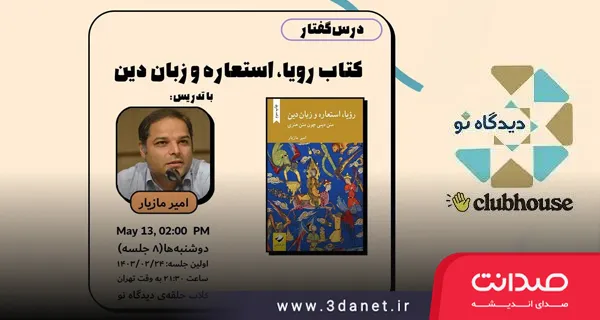
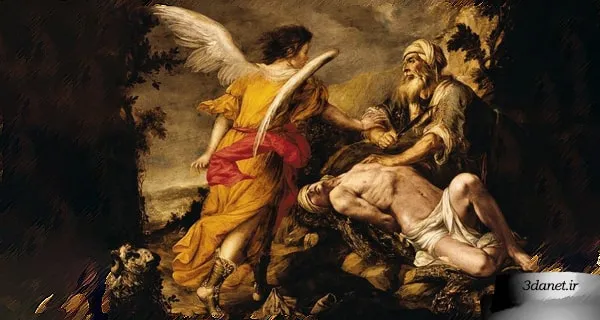
The book taught in the lecture series on *Dream, Metaphor and the Language of Religion* is devoted to describing, explaining, and evaluating the theory that religious and revelatory experiences are dream-like in nature; a theory we may consider the theory of revelation in Islamic philosophy. This theory has three main claims or core aspects: 1- Religious and revelatory experiences are of the kind of dream-vision and occur through the same mechanism as the occurrence of dreams; 2- What is perceived in these experiences is in the specific language of dreams and has a special nature, different from our ordinary perceptual experiences, and if this experience is put into language and turned into text, it will have a special language; 3- For the correct understanding and interpretation of dream-like perceptions and the texts resulting from them, one must engage in the interpretation and allegorical exegesis of these dreams and their resulting texts. Muslim philosophers held that the dream-like nature of revelatory experiences in no way contradicts their status as disclosive, guiding, and sacred, and provides the best way to solve problems such as understanding how God speaks and the conflicts between rational knowledge and revelatory texts. The theory of revelation of Muslim philosophers has been proposed again in recent years and has been a subject of discussion and dialogue.
.
.
Session One
Download the audio of this session
Monday, May 13, 2024
In this session, I gave a brief explanation about the book *Dream, Metaphor and the Language of Religion* and its main sections. Then, to understand the theory of revelation according to Farabi and Ibn Sina, I referred to the background of the problem of "God's speech" in the early Islamic centuries and among the theologians, and listed the philosophical and theological problems that existed in attributing "uttered and heard speech" to God or any other incorporeal being.
My presentation is about fifty minutes, followed by a question and answer section.
.
.
Session Two
Download the audio of this session
Monday, May 20, 2024
In the second session, I spoke about Farabi's theory of revelation and his solution to the problem of God's speech. From Farabi's perspective, the revelatory experience was a dream-like experience. The imaginative faculty of the soul, in dreams, imagines the intelligible truths derived from the higher realms of existence through the act of imitation or representation, and in the prophet's soul—and not outside it—the uttered and heard revelation or the vision of the angel takes shape. In this process, the prophet's soul is not passive and plays an active role in imaginative imitations. In this discussion, I briefly enumerated the theological, epistemological, and psychological pillars of this view and referred to its place among Islamic philosophers.
The first hour or so of the file is the presentation of the discussion, and the rest is question and answer.
.
.
Session Three
Download the audio of this session
Monday, May 27, 2024
In this session, I addressed the views of Farabi and Ibn Sina on the "language of religion." The role of the imaginative faculty in the formation of the revelatory experience also affects the content of this experience and makes it imaginative. That is, revelation is the imaginative translation of rational truths. Science and philosophy provide a rational account of reality, and religion provides an imaginative one. From the perspective of Farabi and Ibn Sina, this is the reason for the conflicts that exist between philosophy and religion. The importance and benefit of imaginative speech is that, unlike philosophy, it is comprehensible to the general public and also highly effective upon them. The goal of religion is to address the general public to bring about a practical transformation in them, and imaginative speech achieves such a goal, even though it is not a realistic account of the truth.
.
.
Session Four
Download the audio of this session
Monday, June 3, 2024
In this session, I discussed the series of articles "Prophetic Dreams" by Abdolkarim Soroush, which constitutes the fifth chapter of the book *Dream, Metaphor and the Language of Religion*. In the introduction to the discussion, it was noted that the main axis of the theory of prophetic dreams is the proposal of a theory about the language of religion, and the metaphysical question of how revelation occurs is placed in parentheses. In this theory, the language of religion is "dreamlike," and we encounter various kinds of experiences and reports that are as if of the nature of dreaming. This theory, as mentioned in the text of the articles, bears many similarities to the views of Muslim philosophers, with the difference that it sees the essence of dreamlike language in its being metaphorical, and interprets being metaphorical not on an Aristotelian basis but based on the views of new theorists of metaphor such as Davidson, which constitutes a serious difference from the previous perspective. Metaphor in the new view is untranslatable and has a cognitive and epistemic dimension. These aspects of the theory of prophetic dreams have received less attention from critics.
.
.
Session Five
Download the audio of this session
Monday, June 10, 2024
In this session, metaphor and its theories were discussed. First, the pillars of Aristotle's theory of metaphor were explained, and then new, non-Aristotelian views on metaphor were pointed out. There is a fundamental difference between these two different conceptions of the function and place of metaphor in language: Do metaphors have a merely aesthetic and decorative role in language, or can they also have a cognitive role? Is metaphorical language translatable, and can it be rendered into non-metaphorical language, or is such a thing impossible? And finally, the point was addressed of what result linking metaphorical language to religious text yields.
.
.
Session Six
Download the audio of this session
Monday, June 17, 2024
In this session, I addressed the questions that the view of the religious text being metaphorical faces, and in the first step, the clarification of the meaning of the Quranic text being metaphorical. The Quran contains a collection of narratives gathered around a focal narrative: the narrative of a personal, anthropomorphic God who created the world, enters into dialogue with humans, intervenes in the history of the world, and determines its destiny. It was explained that this focal narrative should not be considered a philosophical picture of the world; rather, this narrative has a story-based foundation. The theology of the Quran should not be reduced to philosophical cosmology. Of course, the story here is considered a kind of metaphorical encounter with the truth of the world. Fundamentally, a philosophical conception of Quranic theology falls into the error of anachronism and creates a distorted understanding of religious texts.
.
.
Session Seven
Download the audio of this session
Monday, June 24, 2024
In this session, further clarification of the concept of the religious text being metaphorical was addressed: why the entirety of the text should be considered metaphorical, rather than considering a part of the text as metaphorical and accepting that the text has various parts and some parts of it are non-metaphorical. I divided the text of the Quran into four sections: theology, history, acts of worship, and laws, and spoke about why all these sections in the Quran have a metaphorical aspect, the meaning of their being metaphorical, and how to interpret them.
.
.
Session Eight
Download the audio of this session
Monday, July 1, 2024
In this session, which was the final session of this course, I discussed the topic of how, if we consider the religious text to be a metaphorical text, we can confront the two difficult problems of the epistemic authority and historical reliability of the Quran. The problem of the Quran's epistemic authority, in an approach that considers Quranic propositions to be of the same kind as scientific and philosophical propositions, with the difference that they were transmitted through revelation, encounters insoluble difficulties, but by seeing the text as metaphorical, a way out of these problems becomes possible. Here, the text of the Quran is a text like enduring literary and artistic texts. In the same way that we find the Shahnameh or the Masnavi authoritative, we can also encounter the religious text and test it in the same manner. The problem of historical reliability here is subject to the same ruling. The same encounter that has taken place in history with texts such as those of Homer, Ferdowsi, Rumi, Khayyam, or Hafez can be applied here as well. Here, we are confronted with the text itself and its effect, and the sole criterion for its validity is that this text "speaks for itself."
.
.

Discussion0 comments
No comments yet; let yours be the first voice.