Philosophy
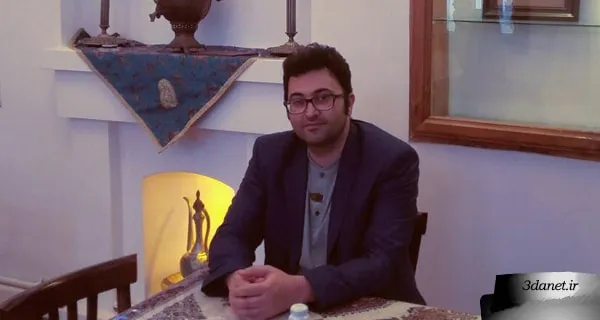
Lectures on the Epistemology of Religious Belief by Mostafa Malekian
Religious phenomena are divided into five categories—experiences, beliefs, emotions, actions, and social products—and can be studied through three approaches: theological, therapeutic, and epistemological. A report on Mostafa Malekian's lecture series.

Audio and text of the lectures on the Epistemology of Religious Belief; delivered by Mostafa Malekian at Tarbiat Modares University in the years 2005 to 2006
Types of Approaches to Religious Phenomena
It seems that concerning religion, or the religious phenomenon in general, one can have three types of approaches. The epistemology of religion falls within a part of one of these three approaches. Before addressing these three approaches, the types of religious phenomena will be discussed.
Types of Religious Phenomena
When referring to the religious phenomena themselves, the question arises as to what religious phenomena are, or in other words, what set of matters together constitute religion. To answer this question of what religious phenomena are, numerous classifications have been offered so far; but in my opinion, one of these classifications, which is fivefold, is more defensible than the others:
1. Religious Experiences:
I do not favor the term religious experiences; but since it has become common, I use it, otherwise, in my view, we should translate (Religious experience) as religious states. One should not think that when we say religious experience, we mean an ecstasy or trance in which God is experienced; rather, the state of repentance, or even a state as a result of which an individual abandons their faith and comes to believe in another faith, can in a sense be called a religious experience.
2. Religious Doctrines or Beliefs:
After all, there is no one who is religious and yet does not hold a number of beliefs that they have acquired by virtue of their religiosity; for example, I also believe that two plus two equals four, but this has nothing to do with my being a Muslim; however, the fact that, because of being a Muslim, I have beliefs that I would not have if I were a Marxist or a Buddhist gives rise to religious beliefs in me.
3. Religious Feelings and Emotions:
These two words, in my view, are subtly different; but for our discussion, the difference is not significant. Because you are a Muslim, you have feelings and emotions that you would not have if you were a Christian; that is, your zeal, fervor, or compassion is aroused here towards things towards which it would not be aroused if you were a Christian. In some religions, an effort is made for these feelings and emotions to move towards extinction, and in others, they are stirred; but in general, there is no religion in which the religious person does not have feelings and emotions.
4. Religious Actions:
Because of our religiosity, we perform deeds or actions that we would not perform if we were not religious.
Types of Religious Actions
Religious actions themselves are divided into two very broad categories, which are quite different from each other:
A. Ritual-Ceremonial Actions: A part of the actions we perform are the ritual-ceremonial actions (ritual actions) of religion; acts such as prayer, fasting, and pilgrimage in Islam, or the Eucharist in Christianity.
B. Ethical Actions: Religiously speaking, we perform certain ethical actions and refrain from others.
Differences and Commonalities of Religions in Religious Actions
On the whole, the differences among religions in the ethical part are far fewer than in the ritual part. In ethics, religions are very close to one another, and one might even say that in most cases they coincide, but in rites and rituals, they are very different from one another.
5. Social Products of Religion
So far, the points mentioned have pertained to an individual believer; that is, a religious individual may, to a greater or lesser extent, possess religious experiences, beliefs, feelings and emotions, and/or actions. However, when an individual possesses these things, they also manifest certain effects and consequences—effects and consequences that are, in a sense, enduring. These effects and consequences are called the social products of religion. These products are none of the four aforementioned matters; rather, they are the effects of those matters. In other words, they are phenomena that emanate from religious individuals.
Types of Social Products of Religion
The social products of religion can, in fact, be divided into two parts:
Theological products: The body of works and writings of religious scholars, such as philosophers, mystics, or jurists, has a theoretical or theological aspect.
Practical products: Religious architecture and painting, religious calligraphy, religious storytelling, and religious arts in general have a practical aspect. Religious crafts and techniques also fall into this group; likewise, religious politics, religious economics, religious law, and so on.
Three Approaches to Religious Phenomena
Now we must address the issue that religious phenomena can be studied through three approaches:
The theological approach.
The first characteristic of this approach is that its ultimate goal is the defense of the truth of a specific religion; in other words, this approach is monistic or exclusivist, not pluralistic. Our theologians adopt this approach in defending religious beliefs. In Christianity, other approaches also exist. In the theological approach, the individual seeks to demonstrate that only their religion is true. In this approach, the theoretical or realistic aspect usually predominates over the practical or pragmatic aspect; that is, the theologian seeks to convince minds of its truth.
The Difference Between Pragmatic and Realistic Methodology
The methodology of the pragmatic aspect differs from the realistic aspect; for example, in the pragmatic aspect, the discussion is no longer about truth, but about the practical aspect (for instance, do we need the Quran in the modern age?).
Meanings of Truth
Of course, truth itself has two meanings: a) Being true, being veracious, corresponding to reality (general sense). b) Being from the Truth, having a divine origin, being from God (specific sense).
The Therapeutic Approach.
In this approach, religious phenomena are studied to demonstrate that, for mental and social health, religiosity is better than non-religiosity. This perspective, without reference to any specific religion and through extra-religious research, outlines the characteristics of a healthy individual; for example, a healthy individual should possess tranquility instead of anxiety, agitation, and apprehension.
Psychological Components of a Healthy Person
One of the psychological components of a healthy individual is possessing tranquility. Other components, in order, include happiness and the absence of sorrow, hope, inner contentment and the absence of inner conflict and strife, and meaningfulness of life. Of course, some add other characteristics to these as well.
Characteristics of a Healthy Society
On the other hand, it also lists the characteristics of a healthy society: a healthy society is one in which order, security, justice, freedom, welfare, and trust exist. All of these characteristics must be understood in an extra-religious manner. That is, the characteristics of a healthy individual and society have been identified through research independent of religion. Now, one comes and says that, through the study of phenomena, they have understood that with practical and theoretical commitment to religion, these characteristics of a healthy individual and society are better realized than without commitment to religion. Ultimately, it invites human beings to accept religion so that their individual and collective problems may be healed.
Characteristics of the Therapeutic Approach
Firstly, the practical aspect of this approach predominates over its theoretical aspect, and it is not at all concerned with truth, veracity, correspondence, or lack of correspondence with reality. On the whole, it says, for example, that if you accept life after death, you will have a more tranquil psyche and a healthier life; now, whether God and the afterlife actually exist in the world or not, what matters is that by accepting these matters you attain mental health. Secondly, a pluralistic aspect usually prevails in this approach; that is, this approach does not focus on a specific religion; it does not say, come and become a Twelver Shi‘i Muslim devoted to Jamkaran, because in this approach, those therapeutic and mental-health effects are achieved in the very act of “being religious,” and it makes no difference whether you are a follower of Hinduism, Islam, Christianity, or so on. In this approach, someone might pay more attention to one particular religion, but they never confine the therapeutic effects exclusively to that religion; for instance, they might say that those therapeutic effects are found more and better in this religion than in another, but those who deal with this approach never find within themselves the power to negate a specific religion. Their emphasis is mostly on the common aspects of religions that provide these characteristics of mental and social health, not on the differing aspects. Suppose in Islam we have a practice called prayer (salat), and in Christianity we have a practice called the Eucharist. These two practices have many differences, but they also share a similarity which, according to proponents of this theory, causes both to bring about mental health. They refer to this similarity as (contemplation-meditation-concentration-reflection). What is important is that, firstly, for moments you become focused and free from external matters; secondly, you focus on a center that you consider stronger than yourself. In the therapeutic approach, many comparative studies have been carried out: between Buddhism and Christianity, Hinduism and Christianity, Islam and Christianity, Islam and Hinduism.
3- The Scientific Approach.
It is sometimes called the study of religion, and sometimes the phrase scientific study of religion is used for it. In contemporary Persian, some also use the term “religious studies” (din-pazhuhi) for it.
The Great European Scholars of Religion
In the late nineteenth century, two of the great European scholars of religion founded the scientific study of religion. The first is an individual named Max Müller, who was a German-born Briton and is recognized as the greatest figure of this third approach and at the same time its founder. Müller is the same person under whose supervision a 50-volume collection was published in English, in which all the sacred texts of Eastern religions were translated into English. There is also another individual, a Dutch Christian clergyman named Mr. Cornelis Petrus Tiele. He was a Christian theologian but turned to the scientific study of religion.
Characteristics of the Scientific Approach to Religion
The scientific approach to religion, firstly, resembles the theological perspective in one respect, which is that, like the theological perspective, the theoretical aspect predominates in it; but the difference is that in the theological perspective, theoretical work is done to defend a specific religion and denomination, whereas here, theoretical work is done for the pursuit of truth. There is no attachment to any specific religion or denomination. In this approach, the discussion is about whether religion is defensible in theory and in practice. This defensibility holds true for both practical and theoretical matters. Here, in both practical and theoretical matters, we carry out theoretical study; that is, if I reach the conclusion that religion makes a person prone to feelings of guilt and that feelings of guilt are bad for mental health, I have in fact addressed a practical aspect of religion, but I have actually engaged in a theoretical discussion. Or, the theoretical aspects of religion might be addressed; for example, it might be said that religion claims God exists or that there is life after death, whereas this is not the case. Of course, it is not that all those who adopt the scientific approach reach these conclusions; rather, someone might reach a conclusion that is also useful to theologians, and someone might reach a conclusion that shatters the answers of theologians.
Various Branches of the Scientific Approach
This approach has several branches:
Psychology of Religion
Sociology of religion
History of religions
Comparative religion
Anthropology of religion.
Philosophy of religion
There is consensus on these six, but some have said that additional branches should be added, for example, phenomenology of religion should be a new branch. According to these individuals, the phenomenology of religion cannot be reduced to any of the six aforementioned branches. On the other hand, some have opposed this view and have said that the phenomenology of religion is reducible to the sociology of religion and the psychology of religion; part of it pertains to the sociology of religion and another part pertains to the psychology of religion.
Philosophy of Religion
Here we set aside the other branches and turn to the philosophy of religion. The philosophy of religion is a branch of philosophy, and for this reason its method is philosophical; that is, if you make a statement in the philosophy of religion, its refutation and confirmation, strengthening and weakening, and rejection and acceptance must all be carried out based on philosophical methodology, because the philosophy of religion is a branch of philosophy. In the philosophy of religion, any philosophical discussion about religion is conducted from a scholarly perspective. There are very diverse religious claims, and if we wish to adopt a philosophical approach toward them and ascertain whether these claims are false or true, we have entered the field of the philosophy of religion.
Religious Claims
Religious claims consist of:
1_ Ontological claims
2_ Epistemological claims
3_ Cosmological claims
4_ Theological claims. (Here the meaning is not "theological" in that sense, but rather matters that are said about God.)
5_ Anthropological claims
6_ Axiological claims, meaning religion has put forward a series of statements about good, bad, right, wrong, ought, ought not, duty, responsibility, virtue, and vice. These concepts are called axiological concepts.
7_ Deontological claims. What is meant by these duties is what to do and what not to do, how to be and how not to be.
In my view, the claims of religion can be divided into these seven types. The only place where I myself have some doubt about its applicability is ontological claims. Whether religion truly has ontological claims or not has been a matter of some discussion. Now, considering the claims that have been put forward, the philosophy of religion can engage in rational discussion about all of the seven aforementioned items and see whether these claims are true or not.
Religious Epistemology
Now we come to religious epistemology. Religious epistemology is a part of the philosophy of religion that examines the epistemological claims of religion. Of course, if it were called the epistemology of religion, it would be better, but in any case, it has been named religious epistemology, and we will use this same expression.
Two distinct parts in religious epistemology
Now, this religious epistemology, which is a branch of philosophy and whose method is solely a philosophical method, seems to be divisible into two important parts:
1_ Epistemology of religious experience
2_ Epistemology of religious belief (religious faith)
If we can recount the most important issues of these two parts, it seems that would be sufficient for the first session.
Epistemology of Religious Experience
But regarding the epistemology of religious experience, it seems that in this branch of religious epistemology there are four important discussions.
1. Does religious experience have cognitive content as well?
The first discussion is whether religious experience has cognitive content as well, or only emotional and affective content? No one has claimed that it lacks emotional and affective content; rather, the debate is over whether, in addition to affective and emotional content, it also has cognitive content or not. Example: What is the difference between when I look at the scene before me and when I become angry because of an insult directed at me? Both are mental states and neither is physical. But the difference is that if I become angry because of an insult directed at me, I feel an anger within, but through this inner anger I cannot discover any reality. Therefore, only a mental state has arisen in me, without my becoming aware of anything by means of that mental state. But when I look at a scene, of course, just as I had knowledge of my anger, here too I have knowledge of my own seeing, but in addition to that I have attained new knowledge; for instance, I understood that there are several chairs in this room, and it has two windows and one door, and so on. This means that here there is also a dimension of representing reality. That is, a reality external to me has also been discovered. Now the debate is over whether religious experience also has a cognitive dimension or not? For example, regarding a prophet or the founder of a religion and creed who has a religious experience, there is no doubt that intense feelings and emotions arise in him; matters such as ecstasy and rapture indicate the intensity of feelings and emotions. Ecstasy means the individual is carried away from himself, and rapture means he becomes connected to something else. Now, when he comes to his senses and reports that state, is he merely reporting his inner states, or has something also been disclosed to him?
2. The influence of hereditary and environmental factors on religious experience
The second discussion is whether the content of religious experience—assuming it also has cognitive content—is influenced by hereditary and environmental factors or not? Every subject of religious experience, like a prophet, has a series of genetic and hereditary characteristics. A specific IQ, a specific memory, a specific speed of transmission, a specific face, a specific height, and so on. Also, the said prophet had an educational environment, both within the family and in other environments, which also influenced him. In addition to these two, his age is also influential. I was one way at twenty years old, and now at fifty I am another way. There is also a fourth thing, which is psychological type. Some are extroverted and some are introverted, some are active and some are passive. Now, does this set of things that have influenced this prophet affect the content of his religious experience or not? Or is it that when a person enters religious experience, he is cut off from all these causes and factors?
Two important views on the influence of hereditary and environmental factors
It is here that among those who work in the philosophy of religion and the philosophy of mysticism, there are two very important views:
A. The view of constructivism. According to this view, no religious experience is without context. That is, the characteristics of the subject of the experience themselves ultimately affect the content of the experience. In other words, the hereditary and experiential background of the subject of the experience is influential on the content of the experience. In our era, the greatest constructivist among philosophers of mysticism and philosophers of religion is an individual named Steven Katz. He is also considered a very important and authoritative philosopher. He wrote two very important articles, about which many books, treatises, and articles were written in rejection, acceptance, or critique.
B. Non-constructivism. According to this view, religious experience is detached from the person's characteristics; that is, the Buddha, who lived over two thousand years before our Prophet, and our Prophet, despite having very great differences in terms of time, place, background, temperament, and upbringing, when they enter religious experience, are no different from one another; that is, the Buddha in the state of religious experience is like our Prophet in the state of religious experience. Because those characteristics have no influence on the content of the religious experience.
3- Religious Experience and the Support of Religious Beliefs
The third discussion is whether religious experience can serve as a support for religious belief or not. That is, is it possible for some religious experiences to justify some religious beliefs? For example, an individual might say, "I believe in the Resurrection because I have had a particular religious experience." Many people throughout history have used their own mystical unveilings and intuitions as a support for their religious belief. Is it epistemically possible to use religious experience as a support for religious belief? Or must the supports for religious beliefs be sought elsewhere?
4- Religious Experience and the Scope of its Epistemological Authority
The fourth discussion is: for whom does religious experience have authority? Of course, what is meant here is epistemological authority. Does religious experience have authority only for the individual who has the experience, or can I, who am not the subject of the experience, also make use of your religious experience? There is no doubt that ordinary experiences have no authority for others; for example, if I feel a sensation of hunger within myself, it has authority for me, and I can believe based on it that I am hungry. But can you say, "I believe Malekian is hungry because he himself feels hunger"? Some might say that the hunger you experience is only justified for you. But others have no right to believe that you are hungry based on the fact that you feel hunger. Of course, the feeling of hunger does not bear much resemblance to religious experience, and their only similarity is that both are personal or, in the terminology of the ancients, knowledge by presence. Now, is my knowledge by presence valid for you or not? And does the knowledge by presence of a prophet in the unveiling and intuition that occurred to him have epistemological authority only for himself, or does it have epistemological authority for others as well?
Religious Experience and the Interpretation of Religious Experience
In the previous section, I was discussing whether the content of religious experience is also influenced by hereditary or environmental factors. If you were paying attention, I was saying there that the content of the religious experience itself is what is meant; but now, the same issue can be raised regarding the "interpretation" of religious experience. In this case, no one doubts that the interpretation of religious experience is certainly influenced by hereditary and environmental factors. That is, the discussion so far has been about whether the very thing I find in religious experience is influenced by these factors or not; but here, there is no doubt that if I want to put my findings into the mold of words or the mind, I will be influenced by my environment. In other words, as soon as the mind and concept on one hand, and language and words on the other, come into play, these two are then definitely influenced by hereditary and environmental factors. I want to make this point that the discussion of experience must be separated from the discussion of interpretation. Example:
Suppose that from childhood I have been taught that a person feels hungry when their stomach is empty of food. You, too, have been taught from childhood that you feel hungry when someone in a corner of the world is in the throes of death. These two teachings have no effect whatsoever on my feeling of hunger or yours; that is, when you become hungry, you feel hunger. When I become hungry, I also feel hunger. But when we want to express this feeling in the form of words and statements, one attributes it to the emptying of the stomach and the other to the death throes of an individual in some corner of the world. If you pay close attention, that knowledge by presence of hunger is not influenced by hereditary and environmental factors; that is, as long as we consider the knowledge by presence itself, it is not universal, but when we begin to interpret and explain it, we then come under influence. For example, as you know, before William Harvey, no one knew that blood circulates within the body. Before him, if someone had a headache, they would not attribute it to the pressure of blood circulation, but today, since we have gained knowledge of this matter from Harvey onward, when we get a headache, we attribute it to the increased pressure of blood circulation toward the head. Today I believe in blood circulation, but I do not have knowledge by presence of it; rather, I only have knowledge by presence of the headache. But the interpretation I derive from knowledge by presence is influenced by environment, education, upbringing, culture, and so on. Just as you, who are a Muslim, if in a mystical unveiling or in a dream or vision you see a majestic lady, dignified, perfect, graceful, and beautiful, afterwards, when you emerge from your unveiling, you say that you were in the presence of Lady Zahra (peace be upon her). If you saw this same lady with these same attributes, and yet were a Christian, you would claim that you were in the presence of the Virgin Mary. It is not written on that person's forehead that she is Mary or Zahra. The person who interprets the experience, because they have been taught from the beginning that the most majestic, most beautiful, most perfect, most graceful, most knowledgeable, and best woman in the world is Lady Zahra, says to themselves, well, one cannot conceive of anyone better than her; therefore, I have seen Lady Zahra. The one who is a Christian has been told that the best woman in the world is the Virgin Mary, so they conclude that they have seen the Virgin Mary. Another example: Do you think that when Ibn Arabi said that he had seen Shiites in the form of pigs in his dream, it was written on the pigs' foreheads that they were Shiites? No, it is not so. Rather, he was raised in an environment where he was told that the worst creatures on earth are the Rafidites. Ibn Arabi came to believe this, and even after he became the "Greatest Master," he still held this belief, and when he sees swine and pigs in a dream, he says, is there anything worse than the Shiites? So surely these must have been the Shiites whom I have seen in the form of pigs. Now, if this Muhyiddin ibn Arabi, instead of being Ibn Arabi, were Sayyid Haydar Amuli and observed these same swine, he would probably say that he had observed a bunch of Wahhabis or Nasibis in this form.
The Epistemology of Religious Belief
Up to this point, the discussion has been about the epistemology of religious experience. But there is a second part in religious epistemology, which is called the epistemology of religious belief. What can be said about religious beliefs?
Religious Beliefs: From Proof to Reasonableness
Regarding discussions related to religious belief, three periods can be distinguished from one another.
1_ Until the epistemological problems of the last century arose, everyone's discussion was about proving or negating religious claims. One group said that religious beliefs could be proven with demonstration, that is, proving that God, life after death, and so on exist. On the other hand, opponents sought to negate these claims, and the intent of both sides was demonstrative proof and negation.
2_ When the epistemological problems of the present century arose, it was said: what does proof even mean? Leaving aside religious claims, even with regard to claims far clearer than them, one cannot use the word proof; and if proof has any application, it is only in logic and mathematics, and in other areas one cannot speak of proof. It was at this point that, instead of discussing proof and disproof, the discussion shifted to justification and lack of justification. Are religious beliefs justified?
3_ But gradually, the discussion of justification also descended, and ultimately arrived at the question of whether these beliefs are fundamentally reasonable or not. Hence, now the rationality or irrationality of religious beliefs is the subject of discussion.
The discussion of the proof and disproof, justification or lack of justification, and rationality or irrationality of religious beliefs is the most important discussion in the epistemology of religious belief. But apart from this discussion, other matters are also raised in the epistemology of religious belief. Two further points remain here that I must speak about. One is explaining how these three differ from one another, and the second is that there are other issues in the epistemology of religious belief which, although not as important as these three issues, are nonetheless raised. Which I will present to you in the next session, if I live long enough.
.
.
Lectures on the Epistemology of Religious Belief
.
Session One of the Lectures on the Epistemology of Religious Belief
Audio from server: First | Second | Third Text from server: First | Second
Session Two of the Lectures on the Epistemology of Religious Belief
Audio from server: First | Second Text from server: First | Second
Session Three of the Lectures on the Epistemology of Religious Belief
Audio from server: First | Second | Third Text from server: First | Second
Fourth Session of the Lectures on the Epistemology of Religious Belief
Audio from server: First | Second | Third Text from server: First | Second
Fifth Session of the Lectures on the Epistemology of Religious Belief
Audio from server: First | Second | Third Text from server: First | Second
Sixth Session of the Lectures on the Epistemology of Religious Belief
Audio from server: First | Second | Third Text from server: First | Second
Seventh Session of the Lectures on the Epistemology of Religious Belief
Audio from server: First | Second | Third Text from server: First | Second
Eighth Session of the Lectures on the Epistemology of Religious Belief
Audio from server: First | Second | Third Text from server: First | Second
Ninth Session of the Lectures on the Epistemology of Religious Belief
Audio from server: First | Second | Third Text from server: First | Second
Complete Text of All Sessions in One PDF File
Audio of All Sessions in One RAR File
.
.




Discussion5 comments
با درود خدمت شما- اگر امکان داشته باشد تمام فایل ها در یک فایل زیپ قرار دهید. با مهر
درود بر شما. خیلی خیلی سپاسگزارم از زحمات شما. جز تشکر و قدردانی کار دیگری از بنده و امثال من ساخته نیست.سپاس
با سلام لطفا ً فایل متنی ِ کامل ِ تهیه شده برای این درسگفتار را که شامل هر 9 جلسه به همراه فهرست می شود را هم قرار دهید. سپاس از شما
لطفا فایل های pdf را با شماره صفحه بگذارید. اینطور برای پیرینت قابل استفاده میشن.
رضا جان خسته نباشید امکان پذیر هست که کل این درسگفتار در یک فایل زیپ هم قرار داده بشه؟ بامهر و ارادت..سامان