Religion
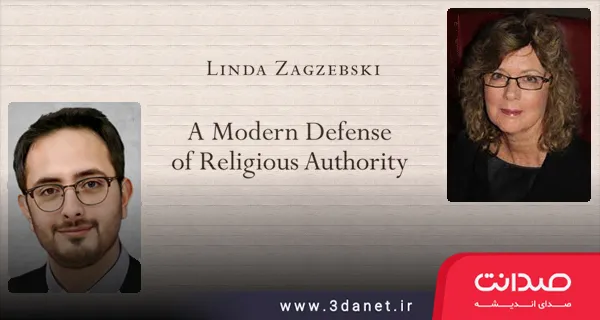
Linda Zagzebski's Article 'Epistemic Authority of Religious Belief'
The epistemic authority of religious belief is often viewed with suspicion because it conflicts with self-reliance. Zagzebski critiques both extreme and moderate epistemic egoism, examining challenges such as widespread religious disagreement and the natural desire for truth.

Authority in action (or moral and political authority) and authority in belief (or epistemic authority) are two important types of authority. Of these two types of authority, only authority in action is discussed and examined in moral philosophy and political philosophy. Even epistemologists refrain from addressing the subject of authority in belief (or epistemic authority). The failure to address the subject of epistemic authority is largely due to a kind of suspicion toward this concept, which itself stems from the apparent incompatibility of the concept of authority with the concept of autonomy. From an external, non-religious perspective, a person has no reasonable justification for accepting the epistemic authority of religion. In her book Epistemic Authority, Zagzebski attempts to defend this type of authority. In this article, which is a chapter from the same book, we become acquainted in detail with her view on the epistemic permissibility of religious authority.
Epistemic Authority of Religious Belief*
Summarized and translated by: Ali Kalani Tehrani**
and Naeimeh Pourmohammadi***
1- Epistemic Egoism in Religious Belief
Religious authority has a broad and complex structure across time and place, and just as it encompasses beliefs, it also includes actions. Furthermore, religion has characteristics that cause some individuals to deny religious authority and to accept some forms of egoism regarding religious beliefs. Many philosophers thought that the validity of autonomy permits, and indeed necessitates, epistemic egoism in the moral domain. Although religious beliefs are not connected to the autonomy that moral beliefs are said to possess, they share other characteristics with moral beliefs that have led some philosophers to deny the existence of religious authority. The most obvious characteristic is the existence of widespread religious disagreement. Patrick Hurley considers this claim as a reason for denying religious authority. In Hurley's view, there are some domains in which no one can practically be considered an authority. These domains include politics, ethics, and religion. For example, if someone gives as a reason for the immorality of abortion that a specific philosopher or religious leader has said so, this argument would be weak regardless of the merits of the authority. There are many questions about the existence of a common, rationally acceptable basis upon which authority is founded. Hurley denies authority based on a lack of consensus—the absence of agreed-upon beliefs.
Hurley considers the number of people who reach a consensus to be valid. Pointing out that many people disagree with many others is of no use unless the credibility of a belief increases or decreases with the number of believers. This is an a priori reason for considering both groups credible; both those who believe something and those who do not believe it. Because the number of people in both groups is large. To consider the lack of general religious consensus a problem, we must assume the invalidity of the egoistic position, and this itself presupposes a kind of belief in arguments based on common consent. Nevertheless, epistemic egoism is so common that it requires special attention. In what follows, we will address the issue of how the argument against epistemic egoism is applied in the domain of religion.
According to extreme religious epistemic egoism, the fact that another person holds a belief provides me with no reason to believe the object of that person's belief myself. If someone wants to convince me to believe A, they must show me that A follows from the beliefs and rules of reasoning that I have accepted.
1- 1- Extreme Epistemic Egoism in the Realm of Religion
The fact that another person holds a certain religious belief never gives me a reason to believe it. I should not believe that God exists unless I have an argument that uses premises I myself accept. I should accept particular religious beliefs only if they meet this same condition for all the teachings of that religion.
It is highly doubtful that any religion can meet all these conditions. In the view of some extreme religious egoists, theism meets these conditions, and in the view of others, it is atheism that succeeds in satisfying them. Meanwhile, there are still others who accept neither the arguments for theism nor those for atheism. They are drawn toward agnosticism. Examples of extreme religious egoism abound, especially in contemporary philosophy.
1-2. Moderate Epistemic Egoism in the Realm of Religion
The fact that another person holds a certain religious belief is a reason for me to believe it, but only if I have evidence that the source is trustworthy. John Locke is a moderate epistemic egoist (standard religious epistemic egoist) regarding belief in Christianity. Locke defines revelation as a form of communication from God, and faith as the acceptance of beliefs based on the word of God. Locke says that, given the miracles Christ performed, we have good evidence that the Gospel is a communication from God. He considers the miracles of the prophets to be a sign proving that their message was from God. In Locke's view, believing in every single doctrine of Christianity, as extreme egoism would require, does not entail a demonstrative proof of the contents of revelation; rather, reason judges whether something is revelation or not, in the sense of whether it is trustworthy. Locke considers it rational to believe in revelation, even when the content of the revelation is improbable. He says it is to be expected that revelation concerns matters we independently judge to be improbable, for revelation deals with matters beyond our faculties; for instance, that the angels rebelled against God is beyond the reach of our faculties. The argument I presented earlier against epistemic egoism also applies to epistemic egoism in the domain of religion. I assumed that the natural desire for truth extends to the desire for truth in religious matters. Does such a desire exist? Of course, this depends on the questions a person wants to answer. Truths about religious matters are probably among the most important truths we can obtain. If God exists, that would be an important thing to know. The same point applies to many other questions that religion attempts to answer, questions such as the origin of the universe or life after death. Many of us think that answering these questions is both desirable and possible. Of course, one might think that these answers are not desirable, and if they are desirable, they are unattainable, or one might think that even if these answers appear attainable at first glance, the reasonable disagreement that exists in religion precludes attaining them. But the fact is that if they conscientiously believe that there are many people who conscientiously believe that answering these questions is both desirable and possible, they have an a priori reason to think so.
If we suppose that the desire to attain truth in religious matters is fulfillable, we must also trust in the competence of our faculties for such a task. It is true that our faculties do not seem to be as well-suited for understanding religious matters as they are for understanding the physical world, but greater desirability and attractiveness compensate for the more difficult access. Aristotle said that there is as much satisfaction in the slightest understanding of celestial matters as there is in the complete understanding of worldly subjects; “a glimpse of the beloved is far more pleasurable than a precise look at other things.” In Aristotle's view, the desirability of understanding celestial matters is such that even a small degree of knowledge and understanding of them is worth the effort. I see no reason to reject the assumption that religious truths are among our desirable truths and that we believe these truths are to some extent accessible to us. With these assumptions, the reason previously given against epistemic egoism also applies to religious epistemic egoism. When I am conscientious, I want to believe that other individuals also, like me, desire religious truths and possess the same general faculties that I have for reaching religious truths. I have argued that the same general trust I have in my own faculties, before I have any evidence of their trustworthiness, should be extended to everyone who has been revealed to me through conscience to be like me. There is no reason to suppose that people who hold beliefs with religious content (whether for or against) are using faculties that I lack. If there were persons with special religious faculties and abilities, this would give us further reason to reject epistemic egoism in the religious domain. But in the absence of a reason to think that I am someone who possesses special religious faculties that others lack, I should trust the beliefs of others in the religious domain just as I trust my own faculties in the realm of religious beliefs.
2- Epistemic Universalism in the Realm of Religion
The principle of epistemic trust in others commits us to trusting others on two levels. A kind of general trust in their faculties because they have the same faculties I have, and a kind of particular self-reflective trust in other persons whom I know, with conscience in view, to be conscientious. It is better to address general trust. Given that I must have a kind of presumption in favor of my own faculties without any evidence or proof, if through a way I trust I come to believe that other individuals have the same general faculties I have, I must have the same general presumption in favor of their faculties. This means there is an epistemic presumption in favor of the truth of the deliverances of others' faculties unless proven otherwise through another application of my own faculties. This is what can be called epistemic universalism.
The fact that another person holds a particular religious belief provides me with a priori reason to believe it. Epistemic universalism supports the validity of beliefs based on common consent. The most important historical example of the argument from common consent is the argument from general agreement for belief in God. In classical philosophy, this argument exists in a work by Seneca and Cicero's dialogue on the nature of the gods. Both Seneca and Cicero thought that belief in gods was universal. Today this belief is not universal, but it has certainly been widespread and common. In any case, the argument from consent does not require the universality of a belief. The lack of universality is only a problem insofar as not only are there a large number of people who believe in God, but there are also a vast number of people who do not believe in God. If the number of people who have accepted a proposition counts, then the number of people who have not accepted that same proposition also counts.
According to Zagzebski, the issue of independence is related to arguments based on common consent. If millions of people believe in God because their belief was acquired through testimony, the large number of believers does not carry as much weight as it would if those beliefs had been arrived at independently. Most people who believe in God acquire their belief early in life through the testimony of their parents or other adults. It is highly doubtful that beliefs children acquire from adults carry more weight than the beliefs the adults themselves have arrived at; therefore, we perhaps should not consider the beliefs of children as valid in an argument based on common consent. Nevertheless, I do attach importance to the number of theistic beliefs held by adults who initially acquired their beliefs based on testimony, because, in addition to there being nothing that defeats their belief, there is also a defeasible reason to trust their trust. Moreover, there are many beliefs in God that have been arrived at independently, and these beliefs exist in societies very distant from one another; societies that either had no influence on each other or whose influence on each other was very slight. We must conclude that this is an epistemic presumption in favor of belief in God. It is a fact that another person's belief in God gives each of us a defeasible reason to believe. The fact that millions of people have a belief strengthens the reason for that belief, and the fact that many of these millions arrived at their belief independently strengthens the reason further. The commitment to self-trust entails that the fact that many people across the world at all times have believed in a divine being provides all of us with a prima facie reason to believe in a divine being.
The fact that the consistency of self-trust leads to trusting others expresses a form of the traditional argument from common consent in favor of theism. We can formulate it as follows:
The Argument from Common Consent or General Agreement Based on the Concept of Self-Trust
1- I should generally have an attitude of self-trust toward my epistemic faculties. This trust is both natural and, through philosophical reflection, shown to be rational. 2- An attitude of epistemic self-trust commits me to an attitude of epistemic trust in the faculties of other human beings. 3- Therefore, the fact that another person has a belief provides me with a prima facie reason to believe it myself. 4- Other things being equal, the fact that many people have a certain belief strengthens my prima facie reason for believing it. If the beliefs were arrived at independently, the reason becomes stronger. 5- The fact that others believe in God provides me with a prima facie reason to believe that God exists. The fact that millions of people, constituting a very large majority, believe in God, or have believed in times past that God exists, strengthens my prima facie reason to believe in God myself, even if it is thought that many of these beliefs were adopted from others; I have reason to trust the belief of those whose belief I trust was adopted from persons they trusted. That is, I have reason to trust their trust.Atheists can offer a similar argument, because the fact that there are many people who do not believe in God provides a prima facie reason for not believing in God. If the number of people who believe is greater than those who do not believe, under the conditions I have described, the prima facie reason for believing is stronger than the prima facie reason for not believing.
اما استدلالی كه در اینجا ارائه شده است مورد خاصی از استدلال مبتنی بر وفاق عام است که با استدلال مبتنی بر وفاق عام سنتی تفاوت دارد. استدلال جدید، استدلال از راه بهترین تبیین (argument to the best explanation) نیست. در شكل سنتی آن استدلال، داده معینی وجود دارد که نیازمند تبیین است؛ یعنی این واقعیت كه افراد بسیاری در نقاط بسیاری از جهان به خدا باور دارند. مسئله این است كه آیا بهترین تبیین از این داده این است كه این باور صادق است؟ تبیینهای متفاوت از این داده، از منظر داور بیطرف در مقابل هم سنجیده میشود. بین اعتماد داور به راهی كه درباره ارزیابی تبیینهای بدیل دادهها میپیماید و اعتماد داور به اشخاصی كه ارزیابی میكند، هیچ ارتباطی فرض گرفته نمیشود. چه بهتر كه داور از سیارهای دیگر باشد. در مقابل، آن شكل از استدلالی كه من از آن حمایت میكنم اعتماد به باورهای دیگران را به اعتماد به خویشتن پیوند میدهد. این به سبب اعتماد به خویشتنی است كه ما را متعهد میسازد اعتباری پیشینی برای باور شخص دیگری قائل شویم، و زمانی كه باور، باور شایعی باشد این اعتبار بیشتر میشود.
استدلال به سود باور به خدا، كه ما آن را از باورهای دیگر افراد به دست آوردیم، ممكن است به شكست بینجامد. مخصوصاً زمانی كه وظیفهنشناسی و بیوجدانی بعضی از كسانی كه دارای باور هستند بر ما معلوم شود، یا اینكه ضعف و نازل بودن قوای آنها بر ما معلوم شود. اما آیا دلیلی وجود دارد كه گمان كنیم باور به خدا بیشتر در میان افرادی كه وجدان کمتری دارند یا دارای قوای نازل و ضعیف هستند وجود دارد؟ ادعای مشهور هیوم آن است كه باور به معجزات معمولاً در میان افراد بیسواد و بیتمدن رایج است. به طور مشابه، برخی ملحدان به لحاظ عقلی فرهیخته ادعا كردهاند كه الحاد در میان افراد به لحاظ عقلی فرهیخته در كشورهای غربی نمایان است، و برخی ادعا كردهاند كه باور دینی رابطه منفی با هوش (تلازم معكوس) دارد. بنابراین، آنها گمان میکنند كه بتوانند از سر وجدان ویژگی یا خاصیتی برای شخص باوركننده مشخص كنند كه باوری كه از آن ویژگی به دست میآید از نظر هوشی قابل اعتماد و از نظر عقلی دارای پختگی است، و افرادی كه در طول تاریخ، دینباور بودهاند فاقد این ویژگی بودهاند. در این صورت آنها باید به ویژگی حقیقتزایی این ویژگی بیش از ویژگی حقیقتزایی حاصل از وجدان دیگران اعتماد كنند.
معترضی كه میگوید خداباوری تلازم معكوس با هوشمندی یا فرهیختگی دارد، دلیلی نظری در رد استدلال مبتنی بر وفاق عام ارائه میكند، و بدون شك این استدلال را به عنوان موردی نظری به نفع خداناباوری تفسیر میكند، اما شكل استدلالی كه من ارائه كردم بر پایه دلایلی مبتنی بر عقل عملی بود. شخصی كه درگیر خودكاوی از سر وجدان شده است با اعتماد عمومی به همه انسانهای دیگر، و اعتماد به مقدار زیادی از تجربههای شخصی، اعتماد به اشخاص خاص، و اعتماد به باورهای بسیاری شروع میکند كه پیشتر تأمل و خودكاوی را درباره آنها از سر گذرانده است.
قسمتی از آنچه در اینجا استدلال كردم این است كه پروژه خودكاوی (project of self-reflection) نشان میدهد كه دیگران در این طرح به ما كمك میكنند، و اینكه تكتك افراد یك جامعه در پروژهای مشترك برای تطبیق دادن حالتهای ما با تأمل از سر وجدان تلاش میكنند و اینگونه یك جماعت را شكل میدهند. آنچه ما با دیگران مشتركیم مهم و معنادار است و باید آن را بسیار جدی گرفت. اما تعجبی ندارد كه چون افراد دیگر تجربههای متفاوتی داشتهاند، محتوای مفهومی (ذهنی) مشترك از باور خداپرستانه بیش از حد مبهم است. وفاق عمومی، نمیتواند ادعاهای الاهیاتی خاص درباره خداوند، حتی یگانگی خدا را، اثبات کند. اگرچه این صفت مقبولیت گستردهتری نسبت به صفتهای سنتی دیگری چون تشخص، قدرت مطلق و خیر مطلق دارد. آنچه از این توافق گسترده میتوانیم به دست بیاوریم به تعبیر ارسطو «نیمنگاه» است. مردم در جهان، توصیفات متفاوتی از شیئی كه دیدهاند ارائه میدهند. اما اجماع دارند بر اینكه نوعی نگاه اجمالی به چیزهای مهم وجود دارد. شاید ابهام در تصور خدا استدلال مبتنی بر وفاق عام را برای بعضی افراد غیرجذاب كند، اما من در این نکته با ارسطو موافقم که حتی نیمنگاهی به محبوب بسی ارزشمندتر از نگاهی كامل و دقیق به اشیای كماهمیت است.
3- Belief in Divine Testimony
3- 1- Faith and Believers
Epistemic egoists do not take up a belief from another person unless they have a theoretical defense in favor of that belief, which is either a direct defense or a defense of the trustworthiness of that source. The extreme egoist chooses the former, and the criteria-based or moderate egoist chooses the latter. According to the extreme egoist, taking up a belief from Scripture or religious tradition is in no way justified. In the sense that a belief is not justified because it is taken from Scripture or religious tradition, and if a belief is justified, it is because of the use of the person's own faculties, which has been justified in some way by using the person's own faculties. The fact that the same belief appears in Scripture and tradition has nothing to do with the justification of the belief. The moderate egoist may take up their belief from Scripture, tradition, or some kind of authority, but they weigh the evidence of the source's trustworthiness in relevant domains, and the evidence and proof are independent of the source's testimony.
Locke thought that faith could be defined in a way consistent with epistemic egoism and a model of testimony based on evidence. As I mentioned above, Locke considered faith to be the assent to something based on the testimony of God, in which the evidence of miracles is proof that its source is divine and therefore trustworthy. I think Locke is right that faith is tied to belief based on testimony, and therefore the rationality of faith depends on the rationality of belief based on testimony. But it seems to me that the "evidence model of testimony" that Locke uses prevents him from being able to explain an important part of faith.
Suppose I believe that there is sufficient evidence for a proposition in Scripture, because I have judged that the source is trustworthy. My believing the content of the proposition may be rational, but the identity of the source is not important in this model. It is not necessary that the source be God. It could be a trustworthy demon. If your goal is to receive information, this statement is true, but I think revelation is not limited to receiving information; and even a set of theoretical reasons for religious faith will not be sufficient. Because faith is something more than a kind of cognitive state. The trust relationship between the person and God explains the non-epistemic part of religious faith. A believing person may have good practical reasons for believing the doctrines of revealed religion, whether or not they have sufficient theoretical reasons.
In the "trust model of testimony" that I have previously advocated, testimony is a kind of request that the receiving person may accept. The rationality of acceptance based on trust requires practical reasons, because theoretical reasons regarding the rationality of trust are neither necessary nor sufficient. Trust itself provides a practical reason for believing the testimony. Since trust is a relatively non-cognitive state, the conclusion follows that states which are partly non-epistemic can provide a person with epistemic reasons for belief. The way trust functions as a kind of epistemic reason is not only one of its attractive features, but is also very important and vital for understanding how faith can be rational.
God has taken responsibility for the truth of X for me and all those who were intended by Him to receive revelation. God intends for me to have faith in Him and acknowledges that we, all who are recipients of revelation, place epistemic trust in Him by believing in Him. So, in this model of faith, religious faith is believing God. The basis of faith is trust in God, which provides us with a practical reason from the first-person perspective to believe what God tells us. Just as the trust model describes ordinary cases of testimony, the testifying person is responsible for justifying the content of the belief, and the recipient is responsible for having the appropriate trust to accept the testimony. Faith is justified in the same way that our other mental states are justified, that is, by emerging successfully from the test of self-reflection arising from conscience.
There are many different ways in which trust can provide a suitable practical reason for believing in God's testimony. For some people, trust in divine testimony is based on other practical reasons, such as religious experience or a sense of admiration for the message of the Holy Book. For others, trust is based on the judgment arising from conscience that if they trust, they will acquire more important and true beliefs than if they obtain a belief independently. Believing a person who speaks to me regularly, or a person who has written a book or sent me an email, is not very mysterious or enigmatic, but belief in God requires a theory of revelation that explains how this communication can succeed. There are several accounts and reports of revelation that are compatible with the picture of faith expressed here. There are three models of revelation, all of which intend to explain how something can be conveyed by God at a specific moment in time to a large number of people over long periods, and in diverse and wide-ranging circumstances, such that this communication is successful in providing a state of faith that includes reasonable belief.
3- 2- Models of Revelation
A religious community develops across time and space. If the community seeks to survive beyond the lifetime of its first members, it must form a structure to preserve and transmit the practices that introduce it to members of the community in distant lands and future times. Since a community is like a person, just as it has a future, it also has a past and a memory. Tradition is the memory of a community. In most major religions, a structure of authority has a component of tradition that it employs to safeguard the faith as it develops. Epistemic authority in the realm of religion is intertwined with moral knowledge, practical authority, the cultivation of emotions, and generally more with the nurturing of a particular type of worldview. In Judaism, Christianity, and Islam, the Holy Scriptures are considered an important part of tradition. All three religions possess extensive oral traditions, with differing degrees of authority. Traditions are also embedded within religious practice, with its system of transmission and its structures of authority.
These three religions share the commonality that they were revealed to by God in the past, and a vital part of faith practice within them is the transmission of revelation. However, there are different models in these religions regarding what is transmitted, how it is transmitted, and the type of authority structure necessary for correct transmission.
According to one model, the transmission of tradition is reducible to a chain of testimony. What justifies belief in the tradition that has been transmitted is a connection to what occurred at the beginning, for example, Moses' experience on Mount Sinai, the Apostles' experience of Jesus Christ, or the revelation of Muhammad (peace be upon him and his family), and whatever happened at the beginning is understood as direct communication with God, the experience of which has been transmitted to the present time through oral or written testimony. In the chain model, the unbrokenness of the chain and the accuracy of transmission are vital. This model assumes that what was at the point of origin remains in the process of transmission. Revelation in this model is fragile and vulnerable, because since it is always passed from hand to hand, it carries the risk of being lost and distorted. In this model, no one can be as justified in the belief obtained through the mechanism of tradition as the person who had the divine communication at the beginning of the chain, because the initial person is the closest to the source of revelation and possesses the most complete and accurate knowledge. Given that we are at a great temporal distance from the beginning of the chain, the most important thing we can do is to study the ancient sources more deeply, or perhaps discover old books that were lost at some points in this long chain.
This model, without adding elements, is incapable of explaining the transmission of religious tradition. If we only receive testimony from afar about the prophets' connection with God, why does it matter to us that what a man named Abraham said was true, or that Moses had a religious experience before a burning bush? If what tradition transmits is a kind of reconstruction of someone's experience in very distant times, it is difficult to regard it as anything more than historical scrutiny, and to consider their written texts as anything more than cultural artifacts of antiquity. The chain of testimony adds nothing to tradition that would pertain to religious belief, unless the content of the testimony is relevant to the recipients of the testimony in the future. In families, there are stories about events in the past that are passed down from generation to generation, and these stories are relevant to future members of the family because they are about their family. The future generation cares about the stories because they were a family before the stories were told, and they will still be a family after the stories are forgotten. Similarly, revelation is defined by the religious group in which it is employed. No one cares whether the experience of Moses' conversation with God is second-hand or thousandth-hand, unless Moses is part of us. What makes him part of us is that the purpose of the divine message, of which Moses was the recipient, includes people in future times as well.
The second model of tradition focuses more on the experience of the recipients than on the original experience. According to this model, what is transmitted in tradition is the Holy Scripture, but the Scripture speaks directly and immediately to its readers and listeners and requires no interpretive tradition or authority for its exposition and preservation. The goal of this tradition is to make possible a first-hand experience of the divine realm for the present and future members of the group. In the Christian narrative of this model, the Holy Spirit acts upon the believing person, who is the reader or listener of the Gospel, and by grace brings them into faith. As Augustine said, faith is rational because of the action of God's grace that unites the individual with Himself, and not because there are reasons showing that the transmission process of the Catholic Church from the original revelatory event is reliable. A Jewish version of this model can also be found in Martin Buber's influential scheme of the relationship between God and man in the book I and Thou (Buber, 2000).
This model minimizes the function of tradition in the flawless preservation of the past, whereas the first model maximized this function. It is unlikely that many existing religious communities would choose a pure version of either model, and these two models are not contradictory. But distinguishing them is important because epistemic justification has different explanations in these two models. For example, a consequence of the second model is that scholars who seek the historical Jesus in their research or analyze the earliest Gospel texts have missed the main point that tradition is transmitting. From the perspective of adherents of the second model, research about the historical Jesus, or the historical Moses, or the historical Muhammad (PBUH), only makes sense within the chain model of tradition. But it is the continuous action of the Holy Spirit that justifies an individual's faith in the twenty-first century, in the same way it justified the faith of one of the Apostles. This model does not need to deny that the Apostles' experience of Jesus was more immediate, and therefore clearer and more detailed, than that of modern-day worshippers. The main point in tradition is the realization of faith, and Christian faith in the twenty-first century can be as precise as the faith of the Apostles in the first century.
There are also other models in which tradition is not only not a second-hand experience, but is not even a chain of first-hand experiences. James Kugel, in describing the Jewish tradition, has claimed that the idea of the Bible emerged in the era of the ancient interpreters of the Bible. What has been transmitted from the interpreters who lived in the late biblical period is not, in principle, what was written, hence it is not the second-hand experience of Moses and the other prophets, but rather a tradition that transmits and deepens each generation's understanding of the definitive oral tradition provided by the ancient interpreters.
Therefore, from Kugel's perspective, the Jewish tradition is a process of transmission from an ancient oral tradition, and consequently possesses some features of the chain model, but it is neither a process of transmission from a primal experience or a primal text, nor the transmission of something that gives contemporary Jews a first-hand experience of God.
The Jewish tradition is not the only one that, in the practical model, achieved perfection through a process of oral transmission in past times and subsequently reached the present. In Christianity, there are many models of the process of tradition transmission and its role in the faith of the individual believer. The first model is the chain model, whose origin lies in the writing of the biblical text. In this model, revelation is contained entirely in the original text, and its authoritative transmission is guided by the Holy Spirit. I have already referred to the Christian version of the second model, in which the process of transmission from Scripture is a situation through which the Holy Spirit creates faith as a first-hand (cognitive, affective, and volitional) connection with God. There are also versions of the model based on the Jewish tradition within the Christian tradition. The Catholic Church has always placed great importance on oral tradition.
In Rabbinic Judaism, there are two Torahs: the Written Torah (the Pentateuch) and traditions of its interpretation and proper application that have been transmitted orally. Similarly, the doctrine of the Catholic Church is that revelation includes both Scripture and Tradition, some of which has been transmitted orally under the guidance of the Holy Spirit, or was transmitted in times past. Among Jews, in addition to the interpretation of Scripture, there is the Oral Torah, which includes prayers, blessings for certain occasions and places, penal laws, matters related to marriage and divorce, descriptions of Temple rituals, and so on. Similarly, the Apostolic Tradition, as identified by Catholic Christians, consists of rites related to the liturgy, practices of prayer and worship in the church, laws and regulations for the clergy, practical guidance such as the obligation to participate in the Eucharist on Sunday, and laws related to marriage, etc.
Tradition must develop and accommodate gradual change, because what is handed down (tradition) is not limited to a product like a text or the process of making a product, but is a way of life in relationship with God. This way of life encompasses specific beliefs about God and human beings and the relationship between them, and also possesses affective, attitudinal, and ritual characteristics. These characteristics express religious truths in simple, external ways so that ordinary people can participate in them. Tradition requires a structure that determines responsibility for the authenticity of the tradition being handed down, and this structure is part of the tradition. In Syria and parts of Asia Minor, before the canonical books of Christianity were complete, a hierarchy consisting of a bishop and a body of priests and deacons, along with teaching authority and an established leader, was in place. By the third quarter of the second century, every individual church about which we have information, with the exception of the church in Alexandria, had a single bishop. This tradition continued in the Catholic Church, but it is unlikely that most Catholics have thought much about the precise history of the universal acceptance of the episcopal hierarchy, because what they trust is tradition, and they expect this tradition to be gradually perfected. But my point is not to advocate for a particular interpretation within a specific tradition. The aim of this project is: Is the acceptance of authority, however it is understood within a tradition, justified within that tradition?
As I have previously argued, distrust of religious authority and its disappearance in some societies is often interpreted as a logical consequence of the rise of the value of autonomy. If I have been correct in my earlier defense of the justifiability of presumptions of authority, authority in a community is justified by conscientious commitments to self-reflection. If I conscientiously judge that by accepting the authority of the Church, I am more likely to come to believe what God has revealed than if I were to try independently to arrive at what God has revealed, then I am justified in forming my beliefs on the basis of authority. Likewise, if I conscientiously judge that by forming a belief on the basis of the Church's authority, I am more likely to arrive at a belief that will better satisfy the demands of my conscientious self-reflection in the future than if I were to try independently to arrive at such a belief, that belief is justified. Religious authority is justified in the same way that any epistemic authority can be justified. Epistemic authority is justified by principles arising from the conscientious reflection of self-conscious beings.
4- Conscientious Belief and Religious Authority
Trust in a community is an expression of the virtue of intellectual humility. Once we know that others are like us, rejecting epistemic egoism is a conscientious act. Once we know that others are epistemically superior to us, accepting epistemic authority is a conscientious act. Trusting a community that has existed for hundreds of years is more conscientious than trusting a community contemporary with me, and far more conscientious than trusting myself alone. If tradition, as G. K. Chesterton says, is the democracy of the dead, then ignoring it is a form of egoism on the part of our contemporaries. Of course, there are some domains in which the beliefs of contemporary experts are far more reliable than beliefs based on authority in past times. Progress in these domains involves not only the accumulation of knowledge, but also the replacement and substitution of former beliefs with new ones. This is reasonable in science, because we know that if the individuals who were members of the scientific community were alive today, they would trust contemporary experts more than themselves. But there are many domains where this is not the case. The domains of religion and ethics, and probably aesthetics, are not like this. I do not deny progress in these domains, but here progress resembles the progress of a single person's knowledge and understanding over the course of a lifetime. Pascal says that the whole succession of human beings throughout the centuries should be considered as a single man who is always present and continually learning. As Pascal understands human history, we contemporary humans have chosen a stage of human understanding, along with a kind of memory and future. We can change, but when we change we must be aware that we are responsible to the individuals who will be members of the community in the future not to deprive them of their past.
The same point holds true for a community extended over time. The members of a community living at one time are like the individual life of a single person. Through participation in the community, members have an extended past and future. The community is a kind of extended self, so trusting it is a kind of extension of self-trust. I can choose to no longer be part of the community, but this is done out of conscientious duty when one has already changed in such a way that, as a result, the beliefs of that community no longer satisfy the condition of conscientious self-reflection compared to the beliefs one would personally acquire. But in some cases, membership in the community may have become a deep part of the individual's self. For such a member, the community's beliefs will almost certainly pass the test of conscientious self-reflection. Because they have already passed it, from the time the member has engaged in self-reflection.
We have two natural tendencies regarding ourselves: one is the tendency for our states to correspond to their objects, and the other is for our states to correspond with one another. Our ultimate measure for the first tendency is the second tendency. If the rules a person uses to determine truth are limited to specific epistemic rules, it is very difficult in some domains to say whether that person's community, the person themselves, or other communities perform better in attaining truth and reality. For example, trusting that a particular religious tradition places a person in the best position to obtain truth depends in part on trusting that the tradition encompasses the highest conception of the human spirit in relation to God. But if we think this way, a person must have non-epistemic trust in the tradition and will need to ascertain that the body of the tradition's teachings will satisfy the demands of conscientious reflection.
The Justification Hypothesis of Epistemic Authority in the Religious Domain: The epistemic authority of my religious community is justified by a judgment arising from my conscience, if, by believing what "we" believe, the outcome passes the test of conscientious self-examination better than if I were to try to acquire belief in a way independent of "us."
By generalizing this hypothesis, we can show how the practical authority of a religious community is justified in the same way as epistemic authority. I propose the following general hypothesis:
The authority of my religious community is justified for me if I conscientiously judge that if I join a community, follow its directives, and believe its teachings, the outcome better preserves my conscientious self-examination compared to a state where I try to discover what I should believe and what I should do independently of "us."
There are other versions of this hypothesis that do not refer to "us," but rather to a community one might become part of. My general argument is easily applied in these cases. I might join a community not because I already identified with it, but because I conscientiously predicted that I would identify with it in the future. There are other natural desires whose fulfillment is better achieved through participation in a community based on wisdom than through one's own efforts. These desires include the desire to know and the desire to do good, the desire to acquire not only knowledge but also understanding, the desire to learn patterns of life and practical principles that lead to a more coherent self, the desire to be surrounded by grace and beauty, and so on. The authority of a community can be justified by this conscientious judgment that the probability of fulfilling these desires is greater through participation in the community.
John Henry Newman said that holiness is the true measure of a church. In describing his gradual movement toward the Catholic faith, he said he believed that the Church of Rome offers us the freest perception of awe, mystery, compassion, reverence, and sincerity. The justification he offered for joining this community was that it helped him to have not only appropriate beliefs but also appropriate and consistent feelings. In this book, I have claimed that all persons share the same goal: fulfilling natural desires, the desire to have feelings and emotions that correspond to their objects, the desire to have knowledge and understanding. Some individuals added another goal: to be holy. Authority for a person is justified by the person's own judgment that the authority of another person or their community helps them achieve their goals. Nothing I have stated here implies that authority is justified only in this way. Rather, my intention is to show that the rejection of authority on the basis of its incompatibility with self-governance is grievously mistaken. Authority can meet the demands of modern philosophers who expect the authority of another person to be justified by deriving it from one's own authority.
In my view, the argument of this section shows that a reorientation in the epistemology of religion is needed. I believe that, in discussions concerning the rationality of religious belief, too much attention has been paid to first-hand experience. In many cases, I can trust tradition more than my own experience. Given that we reasonably acquire our beliefs from others, or based on the experience of others, the structure of the process by which these beliefs are disseminated within a community and perpetuated through the future life of the community requires epistemological models. The chain model is insufficient to explain why we should trust the experience of Moses or the Apostles—reports that have likely been distorted in various ways over many centuries. I attempt to offer a rule of justification that sets aside the chain model, although the belief that the chain is fundamentally accurate can be one of the beliefs of the tradition, and a person can be justified in believing it.
An explanation of religious faith is not possible, and on the evidentialist view of testimony, it is very difficult to justify. This view forces us either to redefine faith as a belief based on a certain kind of evidence, as Locke did, or to say that faith is irrational, based on emotions, and has nothing to do with epistemic justification. I have argued in favor of the rationality of emotions and feelings such as trust, and defended the justification of acquiring beliefs from others who are trustworthy. In my view, relationships based on trust can be very deep, and can serve as a foundation for transmitting the insights of the wisest individuals among us. With this view of the religious community, authority serves to cultivate insights and safeguard the faith into the future. But I have also argued that authority helps to improve the "self." In this sense, there is always a way to reveal religious autocracy. Religious authority may not meet the demands of self-examination arising from conscience. If religious authority meets these demands, no one should object, and if it does not, the members of the community themselves should object to the religious authority.
.
.
* The bibliographic details of this work are as follows:
Linda Trinkaus Zagzebski (2012). “Religious Authority”, in: Epistemic Authority: A Theory of Trust, Authority, and Autonomy in Belief, Oxford University Press, pp. 181-203.
** PhD candidate in Philosophy of Religion, Islamic Azad University, Science and Research Branch.
*** Assistant Professor, Department of Philosophy of Religion, University of Religions and Denominations.
.
.





Discussion0 comments
No comments yet; let yours be the first voice.