اندیشهفلسفهخردگفتگوحکمتمعناپرسشفرهنگ
Economic Sciences
Luxury Goods and the Illusion of Value
In society, the value of goods is determined not by their utility but by social prestige and the display of wealth. The consumption of luxury goods serves as a means of gaining respect and class distinction, overshadowing even standards of beauty and efficiency.
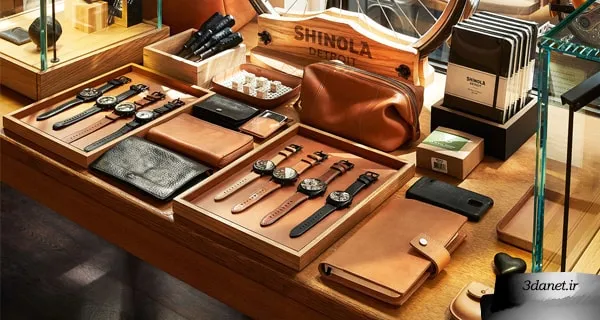
With the generalization of the signs of value, beauty, and renown of goods, other goods, however functional, will have little value in comparison and will not be considered beautiful; this is also one of the reasons for the creation of fashion, norms that contradict the concept of beauty and the utility of goods and are favored solely based on a psychological effect.
In today's world, the accepted standards of consumption in society or the class to which a person belongs determine their standard of living; this standard is shaped by the level of consumption and the individual's understanding of public norms, because, based on habit, a person shapes their lifestyle according to these norms. This means that people, out of fear of social disrespect, conform to public norms at greater expense, and the general public also deems it expedient to accept and apply these norms. Usually, the consumer's motivation is to adapt to convention and minimize criticism from others as much as possible. Each individual's way of thinking about life and their understanding of it also affects their other perceptions, of what is good and what is bad; in fact, it must be accepted that economic interests are also inseparable from the totality of human biological thought.
The consumption of goods and the expenditure of money on certain specific goods has a direct relationship with the law of respectability and prestige, and this relationship expresses economic values and, of course, is not related to pecuniary emulation;[1] pecuniary emulation, which influences all religious sentiments, truth, the sense of beauty, and the sense of usefulness. In such a society, the effort to display private property and wealth increases prestige; under these conditions, individuals who acquire great wealth through transgression are usually shielded from disgrace and scandal due to this very prestige and are not questioned.
If we were to differentiate goods based on human need, we would have to classify them based on utility, but the actual conditions in society are not like this.
The utility of goods is categorized based on their beauty and costliness. Let me clarify this with a few examples; the usefulness and function of a silver spoon and an ordinary spoon are identical, but what differentiates them in the consumer's view is the ostentation of its costliness. Another example is carpets; the difference between a hand-woven and a machine-made carpet lies not in beauty, not in quality, and not in performance, but solely in the greater amount of work and time wasted on the hand-woven carpet, which creates the difference in value. The machine-made carpet may even be better in terms of quality, but the psychological impact of advertising and the law of social prestige creates more value for the handmade product; here, value is not created based on utility, because the higher-quality and more functional good has less value due to social influences; this satisfies the consumer's sense of conspicuous waste, an ostentation built upon the equations of consumption, social prestige, and the waste of time.
Another example of this could be works of art; a copied painting may be completely identical to the original painting, and certainly, the two are identical in terms of aesthetics and artistic analysis, but when an expert, after some time of examination, concludes that one of the two is a copy, their value suddenly changes completely; the reason for this is that our satisfaction and pleasure have diminished, and this satisfaction has a direct relationship with social ostentation, the standards of which were discussed at the outset; therefore, some goods are produced solely for the purpose of social display and pretension.
In some cases, the scarcity of a good creates its value; this scarcity is a source of pride, because the individual has access to something from which the general public is excluded. Mostly, these are ornamental goods, jewelry, and the like, which have no practical use and serve only a pretentious and display-oriented purpose. For example, antiques, pictorial rugs, and goods of this kind are bought and used solely for display and the gratification of an inner sense.
Meanwhile, for the consumption of some goods, their utility is what matters. Such goods usually belong to the individual's private sphere and lack a pretentious character; kitchenware, underwear, certain foodstuffs, and household effects are among these goods. The commercial value of these goods is directly proportional to their utility; in other words, the amount the consumer pays corresponds to the services the good renders to the individual, and in this regard, other factors such as social approbation, ostentation, and environmental factors have no influence on it. Since most people consume such goods in their private sphere, their price and durability hold greater value.
With the popularization of the signs of a good's value, beauty, and renown, other goods, however practical, will have little value in comparison and will not be considered beautiful; this is also one of the reasons for the creation of fashion—norms that contradict the concept of beauty and the utility of a good and are favored solely on the basis of a psychological effect.
This issue can also be clearly observed in the keeping of animals. In principle, the price of animals that have no practical aspect is higher than that of animals used for subsistence purposes. Non-practical animals are employed solely for economic ostentation; for instance, the price of a dog, chicken, sheep, and so on, is lower than that of ornamental birds and thoroughbred horses, even though the cost of keeping the former is sometimes higher than that of the latter group, because, in the individual's view, the latter group of animals brings renown and pride and is classified at a high level of wealth.
Given that the majority of money-earning individuals in society are men, their wives are also regarded as a kind of credit-conferring good; the consumption patterns of these women should display their minimal labor, and the manifestation of their artistic values and beauty is considered a symbol of luxury for their men. Therefore, when marrying, this class thinks of criteria beyond the needs of a couple for living. Of course, today, with some women entering the upper economic class, the husbands of these women must also play such a role, even if their art, beauty, and knowledge have no practical use in their shared life; for example, among these spouses, knowing painting, a foreign language, music, and the like is a source of pride (even to the slight degree that the individual cannot make use of it), and this matter has become so vulgarized that even the act of attending educational classes is considered a value. This stratum is the same class of society that values the use of handicrafts—goods that are difficult to make and, despite their utility, bring social prestige to this group. The more difficult a good is to make, even if a substitute exists, the more valuable its use is for the upper economic class of society; as much as possible, time, labor, and energy must be expended to make a good (time and labor that other classes of society must provide) for it to be considered valuable to them.
Within this classification, individuals in such a society strive to demonstrate their upward movement on the ladder of different classes by displaying the values of that class. The middle class of society, finding itself free from the need to secure biological necessities, tries with continuous effort to reach the affluent class, an effort accompanied by the squandering of time, body, soul, and quality of life. From the middle class's perspective, this ruin is a cost that must be paid to reach the upper class, a cost that, at every step, increases the wealth of the superior class and practically makes it more unattainable. Being influenced by advertisements and social dictates imposed by the upper class, which itself owns the culture-shaping conglomerates, seizes the agency of the middle class, a class from which it is expected, instead of passivity, to hold the reins of change and thought. A process that should be examined by the middle class:
-Does the cost I pay hold the value of the purchased good?
-Is the purchased good something I need, or does it provide the conditions for climbing the social classes?
-Is the quality of handmade items necessarily lower than that of machine-made items, or does their social prestige influence my purchase?
-Does the brand of the purchased good cause me social boasting?
Answering these questions can change an individual's purposefulness and approach to this subject.
.
.
References:
۱- The Theory of the Leisure Class (Thorstein Veblen), translated by Farhang Ershad
.
.
Are our purchases necessarily in line with our needs?
Luxury Goods and the Illusion of Value
Author: Amir Soltanzadeh
.
.






Discussion4 comments
هرچند محتواي مقاله ناروا نيست اما لحن نگارنده غرضورزانه است و انگار تمايل دارد كه ارزشمند بودن كالاهاي لوكس و نظام مصرفيشان را انكار كند. در پاسخ كافيست كه به كالا هاي لوكس و اعتباري كه ايجاد ميكنند به مثابه انگيزه اي براي فعاليت و كار و توليد در جامعه نگريسته شود و همچنين به مثابه قراردادي كه مرز افراد موفق و ناموفق را هويت مي بخشد. و از منظري ديگر مي توان نظام كالاهاي لوكس را بهترين مسير براي گردش سرمايه از طبقه مرفه به طبقه كارگران توليد كننده اين كالاها و در نتيجه متعادل سازي اختلاف طبقاتي دانست.
نقل است یک بار هنگامی که سقراط در بازار آتن بود گفت، چقدر چیزها هست که من به آن ها احتیاج ندارم! سپاس
نوشته ای بسیار جالب و تاثیر گذار بود . از دید نویسنه و نحوه نارش مقاله بسیار لذت بردم و ممنون از شما مدیر محتورم بابت باز نشر کردن این مقاله ارزشمند از کابران وب سایتتان هستم که هر از چند گاهی مطالبتان را دنبال میکنم منتظر مطالب مفید دیگرتون هستم
بسیاری از نظرات درج شده در این مقاله کاملا درست و دارای مصادیق فراوانی در جامعه است. فقط یک نکته، در خرید و استفاده از کالاهایی که توسط صنعتگران سنتی ساخته شده است، حس مسئولیت اجتماعی هم دخیل است. کمک به اقتصاد ملی و صنایع دستی سنتی مسءولیت مهمی است.