Religion
Majid Zamani's Article 'Phenomenal Conceptions of Two Epistemic Subjects: Heydari-Vakili'
Defending Heydari's theory of 'the permissibility of devotional commitment' against Vakili's critique, Majid Zamani poses epistemological questions to explain how, under certain conditions, religious adherents may hold justified beliefs that lead to salvation.
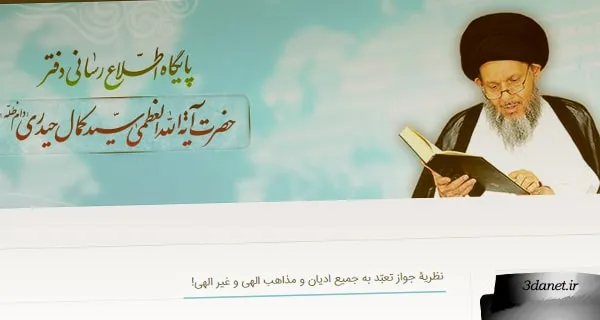
Yaser Mirdamadi: Hujjat al-Islam Majid Zamani, a researcher in philosophy and a graduate of the advanced jurisprudence (kharij) classes of Ayatollah Seyyed Kamal Heydari, defends his teacher's theory, known as the "Theory of the Permissibility of Adhering to All Religions and Denominations" (Jawaz-e Ta'abbud), in this article. In defending Ayatollah Seyyed Kamal Heydari's theory, he poses fundamental epistemological questions to its critics. These epistemological questions, regardless of Majid Zamani's specific discussion in this article, are valuable in their own right. An important point in understanding the theory of the "Permissibility of Adhering" is that this theory does not claim that "everyone is justified in whatever belief they hold." Such a view is clearly relativistic, and although it has had and continues to have proponents among philosophers past and present (from ancient Greece to the present day), the theory of the "Permissibility of Adhering" is not a relativistic theory. The theory of the "Permissibility of Adhering" also does not lead to "truth pluralism," because it does not claim that all religions and denominations are equally (or indeed) true. The quintessence of the theory of the "Permissibility of Adhering," however, is that although in the realm of "reality" (thubut) perhaps only one religion or denomination is closer to the truth (correspondence with reality) than others, in the realm of "justification" (ithbat), the thoughtful followers of any religion and denomination may have reasons in favor of their religious and denominational belief that render their belief justified (though not necessarily true) for themselves, under certain conditions. Such justification, under certain conditions, is excusable for the followers of those religions and denominations, and before a Just and Wise God, it brings at least some degrees of salvation for those who possess that justification. In defending the theory of the "Permissibility of Adhering" against criticisms, Majid Zamani argues, in particular, that the theory of the "Permissibility of Adhering" is close to the school of thought known as "virtue epistemology." This article is worth reading for those interested in modern theology (kalam-e jadid), philosophy of religion, philosophical theology, developments in contemporary Shi'i thought, and modern Islam in general.
From their perspective, their words became diverse, One gave it the name 'dal,' the other 'alif.' Rumi Some time ago, Mohammad Hassan Vakili, in a multi-part lecture, criticized and examined the epistemological theory of the permissibility of adhering to all nations and creeds (Jawaz-e Ta'abbud be Jami'-e Melal va Nehal) of Seyyed Kamal Heydari. A friend, out of kindness and affection, transcribed his audio files and, after converting them into a text file, requested that I mention my epistemological observations regarding his statements. Although this Masnavi was delayed for a while, I finally found some peace of mind and was able to fulfill their request and analyze and examine Vakili's statements in detail. Now, having clarified the occasion of this writing, we proceed to the main discussion with an analytical method.
As an introduction and following a logical progression, before any discussion begins, it is necessary for both parties to clarify their epistemological foundations, for without adopting an epistemological approach, the possibility of any foundational evaluation is negated, since the foundation logically precedes the superstructure. For this reason, it seems necessary first to briefly point out those epistemic prerequisites that will be useful in clarifying, explaining, and judging the positions of both parties, and then to proceed, in a chain-like fashion, to evaluate and analyze the criticisms leveled by Vakili against the epistemic theory of the permissibility of adhering to all nations and creeds.
Epistemic Prerequisites:
I will point to 12 epistemological points related to the core of Vakili's critique:
One: Vakili must clarify his view on truth, meaning he must specify, first, whether he is in pursuit of truth or merely, as an intra-religious theologian, seeks to defend the beliefs of a particular nation or sect, and that too with a specific reading he has formed of its texts? And second, whether he recognizes a distinction between the search for truth and the nature of truth, or not? In other words, does he recognize the distinction between an individual who is a seeker of truth and an individual who holds the nature and image he has in mind of truth, with that specific image he has formed in his mind and taken for truth, or not?
Two: Vakili must specify whether, in his critique and examination of Kamal Heydari's epistemic views, he seeks to examine Heydari's epistemic objects or merely the experiences that Heydari himself has formed of epistemic objects? It should be noted that adopting and examining each of these two positions necessitates its own specific method of critique. Adopting the first approach requires following the epistemological method, and the second, the phenomenological method.
Three: Vakili must clarify whether, in his epistemological examinations, he adheres to the epistemic basis of the internal approach or the external approach? To explain, these two epistemic approaches stand in opposition to each other. Proponents of the external approach look from the outside at a specific belief or a specific system of beliefs and consider the belief solely in terms of its truth value, but adherents of the internal approach hold the view that without a serious and reflective effort to understand the mental frameworks of the person who holds a particular belief, none of his beliefs can be evaluated. In the internal approach, one cannot simply rely on facts that are assumed to be known to conclude the correspondence or lack thereof, and consequently the truth or falsehood, of that belief.(1)
Four: Vakili must specify whether, in evaluating an individual's beliefs, he relies solely on the content of the beliefs themselves, or believes in a collection of mentalities, emotions, feelings, attachments, various types of presuppositions, etc., in the formation of an individual's beliefs?
Five: If we consider Vakili and Heydari as two epistemic subjects and treat their epistemic views impartially merely as epistemic objects, then both Vakili and Heydari must explain whether they are among those agents who seek and draw near to the truth, or whether they consider themselves possessors of the truth? That is, both must explicitly and without any ambiguity declare whether they recognize the distinction between truth as possession and truth as approximation, or not? As is evident from Heydari's positions in his numerous lectures, he has explicitly declared on several occasions that he is an agent seeking to draw near to the truth, and has repeatedly stated the phrase: "Truth is in no one's pocket." It would be good for Vakili to also describe his epistemic view on this matter.
Six: Vakili must clarify whether his epistemic presupposition is that: truth is simple, or whether he believes truth has multiple dimensions, degrees, aspects, layers, angles, numerous and intertwined manifestations, etc.? And fundamentally, on the path to possessing or attaining (depending on which category of epistemic agents he belongs to, as we pointed out in point five) the truth, does he believe in ambiguity and complexity, or not?(2)
Seven: Vakili must specify whether he considers the mind, as naive realist philosophers/crude realists/most Muslim philosophers suppose, to be merely a passive mirror that, without any intervention or alteration, shows exactly and without any deficiency whatever is placed before it, or whether, on the contrary, it is active and intervenes in perception and cognition? (3)
Eight: It is incumbent upon Vakili to clarify whether the single truth has only a single image or can have multiple images? Is only one image of the single truth imprinted on the human mind, or can there be different interpretations, readings, explanations, and theories, and consequently multiple images of the truth?
(4)
نه: وکیلی باید مشخص کند که آیا نصوص دینی را صرفا به یک شکل می توان فهمید و فهم واحدی از آن نصوص وجود دارد و این فهم صرفا در اختیار ایشان و تابعان شان است یا آنکه امکان ارائه یِ فهم های متعدد از نصوص دینی را می پذیرد؟ باید تبیین نماید که فهم ما از نصوص دینی واحد است یا متعدد؟ قرائت و برداشت و استنباط و اجتهاد از نصوص یکی است یا چندتا؟
ده: وکیلی باید ایضاح نماید که در پذیرفتن نظرات دیگران چه ملاک و معیاری را مدنظر قرار می دهد؟ تبعیت از دلیل و بینه و شواهد برایشان ملاک است یا همینکه سلف از علمای ما مطلبی را گفته باشند ایشان می پذیرند؟ (این سلف می تواند سلف از فقها یا فیلسوفان یا عارفان نیز باشد). اگر فردی مطلبی را از گذشتگان بپذیرد بدون آنکه دلیل موجه ای در تایید آن مطلب وجود داشته باشد و یا از سلف فقها،فیلسوفان یا عارفان مدعایِ غیرمدللی را در تایید نظرات خود نقل کند چنین فردی به جای تبعیت از دلیل مقلِّدِ سلف شده است.
یازده:وکیلی باید مشخص کند در مبنایِ معرفتیی مدنظرشان فرآیند را مورد توجه قرار می دهد یا فرآورده را؟ اگر فرآورده یِ حاصل از معرفت را معیار می داند باید تبیین نماید که آیا این فرآورده ای که از منظرِ ایشان حق تلقی می گردد تفاوتی دارد که از چه فرآیندی حاصل شده است و در آن چه هنجارهای اخلاقی،معرفتی و مصلحتی حاکم شده است؟ و اگر می خواهد همانندِ فیلسوفانِ فضیلت گرا به فرآیند اهمیت دهد اکنون وکیلی باید به سوال دیگری پاسخ دهد که اگر فردی در مسیر فرآیندی که طی می کند قرینه گرا باشد و بر مبنایِ قرائنِ مدنظراش به فرآورده ای خلاف فرآورده یِ مدنظر وکیلی برسد، چنین فرآورده ای اولا اخلاقی است یا خیر؟ و ثانیا آیا وکیلی چنین فرآورده ای را می پذیرد یا آنکه تنها فرآورده ی مورد پذیرش برای ایشان فقط و فقط همان فرآورده ی ِخاصی است که برایِ شان به عنوانِ حقیقت تلقی شده است؟
دوازده: وکیلی باید مشخص کند که آیا مباحث معرفت شناسی را مقدم و پیش زمینه یِ مسائل فقهی می داند یا آنکه معتقد است فقیه باید تکلیف این مسائل را نیز در فقه مشخص نماید؟ یعنی آیا اتخاذ رویکرد معرفتی برای فقیهان مقدم بر استنباطات فقهی شان است یا آنکه توأمان با استنباطات شان باید مسائل معرفتی را نیز از دل نصوص بیرون بکشند؟ و اساسا آیا فقیه بدون مبنای معرفت شناسانه می تواند به استنباط بپردازد؟ (در اصل اتخاذ مبنا تفاوتی نمی کند که این مبنا مدلل باشد یا غیرمدلل، عوامانه باشد یا علمی و... سخن بر سر امکان یا عدم امکان استنباط بدون باور به یک رویکرد معرفت شناسانه خاص است)
سیزده: وکیلی باید مشخص کند که به تمایز میان وجوب فقهی، وجوب اخلاقی و وجوب معرفت شناسی قائل است یا خیر و ناظر به نکته دوازدهم ایضاح نماید که اولا آیا وجوب معرفتی را مقدم بر وجوب فقهی می داند یا خیر؟ و ثانیا مشخص کند که آیا همگام با اشعری ها وجوب فقهی را بر وجوب اخلاقی مقدم می داند و یا با قائل شدن به حسن و قبح عقلی به تقدم وجوب اخلاقی بر وجوب فقهی باور دارد؟ (5)
اکنون وقت آن رسیده است که اجمالا بند بند بیانات وکیلی را بررسی تحلیلی نماییم.
وکیلی در قسمت اول بیانات اش درصدد است به صورت مختصر (به تعبیر ایشان چند کلمه ای) نظریه معرفتی جواز تعبد حیدری را تبیین کند. این تبیین وی حداقل با پنج جدی روبرو است. ابتدا به نقص ها اشاره خواهم کرد و سپس به برداشت خود از این نظریه اشاره ای اجمالی می نمایم.
نقص های تبیین وکیلی:Vakili's inattention to the difference between the certitude (qat‘) intended by Heydari and the certainty (yaqīn) that Vakili refers to in his statements. The certitude intended by Heydari is neither logical certitude nor jurisprudential (uṣūlī) certitude with the conditions commonly upheld by the uṣūlīs; rather, it is a certitude that concerns the process of belief formation, governed by epistemic norms based on the ethics of belief that rule over this process. (See the analysis and examination of the fifth part of Vakili's statements) Vakili's failure to distinguish between jurisprudential and legal obligation (wujūb) and epistemic obligation (See the analysis and examination of the second part of Vakili's statements) The incorrect explication of the epistemic norm intended by Heydari/evidentialism that governs the process of belief formation. (See the analysis and examination of the fifth part of Vakili's statements) In his explication, Vakili has, firstly, taken certitude (qat‘) and certainty (yaqīn) to have the same meaning (See the analysis and examination of the fifth part of Vakili's statements); and secondly, by 'reason' (dalīl) he has intended the conventional meaning, whereas Heydari's intended meaning of reason is that justified, defensible reason which governs the process of belief formation—that is, it can be considered equivalent to the very evidence (qarīna) spoken of in the ethics of belief; and thirdly, Vakili has imagined that the reason emphasized by Heydari is the path to attaining certainty, saying: "because he has acted based on his certitude and followed his certainty, a certainty he arrived at through reason." That is, Vakili has an interpretation oriented towards the resulting product and has understood that this product must be certainty based on reason, whereas Heydari's discourse concerns the process of belief formation, and along this process, he considers reason/evidence to govern the process of belief, not that the belief is based on reason. In other words, in the process-oriented interpretation, reason is not the premise and path to attaining certainty (as Vakili has intended), but rather governs the stages of belief formation. Vakili says that Heydari's theory of the permissibility of devotional adherence (jawāz-i ta‘abbud) is based on an epistemological view regarding religious knowledge, namely that no human being can consider any issue as absolute, one-hundred-percent truth, and whatever we point to might be false. This claim of Vakili's is completely wrong. The epistemic theory of the permissibility of devotional adherence pertains to the realm of demonstration (ithbāt), not the realm of reality (thubūt), and absolutely no mention is made in this theory of truth and falsehood. (See the analysis and examination of the fifth part of Vakili's statements)
Now the time has come to briefly allude, in several interconnected paragraphs, to my own understanding and interpretation of the epistemic theory of the permissibility of devotional adherence to all nations and sects. It is necessary to mention that this is a new formulation of the theory, presented for the first time based on the virtue-epistemological foundations that Kamāl Heydari believes in:
What is important in this epistemic theory of Heydari's is the process of belief formation. Heydari is a virtue epistemologist who looks at the process rather than the product of belief. Heydari does not consider the process of belief formation to be absolute; rather, he holds that a specific epistemic norm governs it. The governing epistemic norm intended by Heydari in the process of belief formation is justified, defensible reason. In the ethics of belief, proponents of this epistemic norm are classified under evidentialism (6). Whoever follows this norm will have a belief formed within them, a belief that originates from a specific psychological attribute (ṣifa-yi nafsānī) which Heydari calls certitude (qat‘). (Although it resembles jurisprudential certitude, it differs from it; see the analysis and examination of the fifth part of Vakili's statements) By traversing this process, the human being's belief is obtained from the desired epistemic norm, and this belief is, firstly, rational and, secondly, ethical; and in the rationality and ethicality of such a belief, it makes no difference what the object of that belief is. The product resulting from such a process is unimportant. A human being who follows this process is a rational, morally-disposed human being who has regulated their character (manish) on the axis of rationality and ethics. The image of the Lawgiver in Heydari's thought is a Lawgiver who: firstly, is committed to the epistemic norms of rationality; secondly, adheres to ethical standards; and thirdly, is virtuous and virtue-oriented. (The rational, ethical, virtuous, virtue-oriented Lawgiver) Therefore: it is impossible for such a Lawgiver not to consider the human being who follows this process as excused and rewarded; and fundamentally, this Lawgiver must (an ethical and rational must) consider the condition for excuse and reward to be adherence to this process.
Part Two (Audio Two): Vakili's statements concern the word jawāz (permission/license) used in the title Jawāz-i Taʿabbud bi Jamīʿ-i Milal wa Niḥal (The Permissibility of Devotion to All Religious and Non-Religious Traditions). He poses his question as follows: What is the meaning of this jawāz and wujūb (obligation) employed in this theory?
This part of Vakili's statements is based on several unproven and unsubstantiated presuppositions:
One: Vakili has interpreted the jawāz intended by Heydari as jurisprudential (fiqhī) and legal permissibility, failing to distinguish between permissibility in epistemological discussions and jurisprudential permissibility. He has fundamentally misidentified the nature of the discussion, and the dominance of the prevalent jurisprudential discourse over his thought has caused jurisprudential obligation (wujūb-i fiqhī) to immediately come to his mind, leading the discussion toward the various meanings of jawāz and wujūb in jurisprudence. (See Epistemological Note Thirteen)
Two: Vakili has conjoined jurisprudential and legal obligation, and has also failed to distinguish between jurisprudential obligation and legal requirements as discussed in the philosophy of law. This conjunction is an indication of the emergence of his belief regarding the scope of Sharia in his thought, which he considers responsible for articulating the legal requirements of societies.
That is, firstly, a confusion has occurred between jurisprudential obligation and legal requirements in the sense discussed in the philosophy of law—meaning that in his thought, discussions raised in the philosophy of law have no place as epistemological prerequisites for juristic inference (istinbāṭ). Secondly, no evidence has been provided for the second part of his claim, namely the entry and competence of jurisprudence in the realm of legal requirements. The fundamental question is essentially this: Does the use of the achievements of the philosophy of law as a prerequisite for jurisprudential inferences have any place in Vakili's epistemological system or not? Until the relationship between jurisprudence and law in his thought is clarified, he cannot logically raise the discussion of legal requirements. (See Epistemological Note Twelve)
Three: Vakili has assumed that the origin of Heydari's theory of Jawāz-i Taʿabbud is a personal rational reception, whereas Heydari's approach to this issue is, firstly, based on the process of belief formation, not the product/object of belief, and Heydari is considered among virtue epistemologists (7). (See Note Eleven) Secondly, when the issue is the process, there is no longer any room to raise the matter of personal rational reception and the product that reason presents; rather, the process of the formation of any belief is what is considered.
Four: From Vakili's perspective, this discussion is the same as the discussion of maʿdhūriyyat al-qāṭiʿ (the excusability of the certain believer) that our scholars of legal theory (uṣūliyyūn) have raised, and this is not a new statement. However, Heydari, firstly, considers the followers of other religious and non-religious (humanistic) traditions, if they have followed the epistemic, moral, and prudential norms governing the ethics of belief in their belief-forming process, not only excused (maʿdhūr) but also rewarded (maʾjūr) (See Epistemological Note Eleven). Secondly, the scope that Heydari posits for salvation and being deserving of reward for the subject of his theory is far wider than the breadth and limitation of non-punishment and the excusability of the certain believer (qāṭiʿ) that the uṣūliyyūn maintain.
Part Three (Audio Three): Vakili's statements:
In this part, Vakili, perhaps again due to unfamiliarity with discussions of modern epistemology and the dominance of the prevalent jurisprudential discourse, has steered the discussion toward jurisprudential obligation and imagined that jurists, just as they can declare religious rulings in the form of jurisprudential edicts (fatwā), must also rule on epistemological issues in the same manner. Apparently, his epistemic disagreement with Heydari goes back to Note Twelve of the epistemological prerequisites, according to which he, unlike Heydari, does not consider epistemological issues as prerequisites for jurisprudential inferences and does not consider the jurist's familiarity with epistemology as part of the sciences required for ijtihād (8), and seeks to answer contentious epistemological discussions by seeking help from religious texts (nuṣūṣ). That is, the root of the disagreement goes back to this: Epistemic Subject Number One / Kamāl Heydari considers the adoption of a specific epistemological approach to be prior to jurisprudential inference, but Epistemic Subject Number Two / Muḥammad Ḥasan Vakili wants to extract his intended epistemic discussions from within the texts using the common method of jurisprudential inference.
Vakili then, with his same previous presupposition that wujūb is jurisprudential (See Epistemological Note Thirteen), raises the objection of this epistemic ruling being futile (laghw) and invalid, and says it is futile because that individual is either committed to a religion other than Islam and has certainty (qaṭʿ) in that specific religion, in which case your ruling to follow his own religion is a tautology (taḥṣīl-i ḥāṣil) and is futile.
Both refutational (naqḍī) and solution-oriented (ḥallī) responses can be given to this objection.
First counterexample in rebuttal: Even if we take the permissibility and obligation Heydari has in mind to be jurisprudential permissibility and obligation, as Vakili intends, there are instances of the kind of futile rulings Vakili envisions. According to this view of Vakili's, if a jurist issues a fatwa declaring that emulating the most learned authority is obligatory, this fatwa would be futile for many of those obligated, because those obligated might emulate another authority and, fundamentally, might not even consider the possibility that this jurist issuing the fatwa could be a source of emulation. Thus, the issuance of this jurist's ruling as a universal affirmative proposition would be futile, since, according to Vakili's jurisprudential basis, many of those obligated would not accept this jurist's word. He appears to have established a logical entailment between acceptance or non-acceptance and the futility or non-futility of a ruling, whereas this conclusion is, in the common parlance of critical thinking, a psychological transition, not a logical one (9).
Second counterexample in rebuttal: Based on this basis of Vakili's, even the jurists' ruling concerning the excusability of a decisive person in following their own certainty would become futile, because if, according to Vakili's assumption, we consider this ruling a legal ruling, legislating a law for other excused individuals who are outside the Islamic Sharia and consider the Islamic Sharia invalid is futile. Thus, in Vakili's thought, we must accept that many jurists have issued futile jurisprudential rulings!
Now, the first solution in resolution:
Mr. Heydari's discussion is fundamentally not about jurisprudential permissibility and obligation; rather, in a series of discussions with an epistemological approach, he seeks to elucidate the correct process of belief formation, regardless of the object of belief (the object of belief in this basis is general and can encompass any belief), and to specify the epistemic norm governing this process, namely, following the evidence. (See the tenth and eleventh of the epistemological points.)
Second solution in resolution:
Based on this argument of Vakili's, if an epistemology expert were to say that, among theories of justification, following the method of coherentism is epistemically and ethically necessary (10), this statement would also have to be considered futile, because there might be a group of epistemology scholars who believe in methods other than coherentism for justification, and this epistemic ruling would be futile for them. However, in this type of epistemological discussion, such statements have no place, and any theorist in the field of epistemology can express their views in a reasoned manner.
But Vakili's other objection is that the ruling on the permissibility of devotional adherence is not only futile but even invalid, and his reason for its invalidity is the loss of felicity for one who walks a path other than the path of Islam, and that which is considered invalid from the perspective of Islamic Sharia cannot be ruled as obligatory.
This statement of Vakili's rests upon several of his unprovable epistemological presuppositions:
First: Vakili considers himself the possessor of truth and deems only adherence to the truth as he sees it to be the guarantor of felicity, and by assuming this possession, he has imagined that adherence to anything contrary to the truth as he sees it is invalid. Heydari, however, does not consider truth to be in his pocket, and he should be placed among the seekers of and those drawing near to truth. Thus, this objection of his arises from two distinct epistemic foundations, one considering itself the possessor of truth and the other drawing near to truth. (See the first and fifth of the epistemological points.)
Second: Vakili has assumed truth to be very simple, and his conception of truth is such that only our Muslim minds, like a passive and transparent mirror, reflect truth exactly, without any deficiency or excess. Generally, individuals who consider themselves the possessors of truth have such a crude image of truth imprinted in their minds, and it is this very simplistic view of truth and the claim of its exclusive possession that has led them to rule on the invalidity and failure to attain felicity of all individuals who do not adhere to that simple truth they envision, which is engraved in their minds. (See the sixth and eighth of the epistemological points.)
Third: Vakili's other objection is that he has considered the understanding of Sharia to be exclusive and has regarded his own understanding of Sharia as the sole correct understanding; hence, he says the theory of the permissibility of devotional adherence is invalid from the perspective of Islamic Sharia. However, if he believed in the multiplicity of understandings and the openness of the door of independent legal reasoning and multiple readings of the texts, he should have said: This epistemic theory is invalid based on my understanding of Islamic Sharia; Heydari also has the right to express his understanding. (See the ninth of the epistemological points.)
Part four of Vakili's statements (fourth audio):
In this part of his statements, Vakili, by bringing an example, seeks to confirm his previous claim regarding the invalidity of the ruling on the permissibility of devotional adherence.He says if a child is certain that he must ride his bicycle at high speed on slippery snow, here, on the one hand, because he is certain, he must act upon his certainty according to his conscience, and on the other hand, his father, because he knows that this high-speed cycling will cause him harm, cannot say, 'It is obligatory for you to act upon your certainty,' because setting this child in motion and casting him onto the path of falsehood is wrong.
In other words, Vakili wants to say that followers of other religions are like this cyclist who, although they cycle at high speed on slippery snow out of certainty, we know that they will fall. Therefore, if we rule that they must follow the object of their certainty, we have issued a false ruling against them and endorsed their movement in the direction of falsehood. With such an analogy, Vakili wants to conclude that we know, firstly, that followers of other religions are moving towards falsehood; secondly, they will never follow our religious law because they are certain of our falsehood; and thirdly, we cannot issue an obligatory ruling for them to follow their own religious law, because such a ruling is a ruling to follow falsehood.
In critique of Vakili, it can be briefly said:
Firstly, the mention of this example is based on his unprovable and unsubstantiated epistemological presupposition that truth has only one picture, and from it, only one theory, one reading, one explanation, one inference, and one interpretation can be presented, and that is the one I present! All other competing explanations, theories, and readings are false, and anyone who arrives at a picture of truth other than what has been revealed to me must be counted among the people of falsehood and those who have strayed from the path of truth! (See the eighth point of the epistemological points).
Based on this presupposition, the only picture of truth is the one reflected in the religious law to which I am committed, and there is no possibility of explaining or presenting another theory apart from my interpretation of the truth.
Secondly, Vakili's example is in the realm of actual objective matters. In such examples, since the objective object is completely accessible to us and the evaluation of its consequences, requisites, and results is entirely possible, there is no room for theorizing. However, the realm of epistemic matters related to the domain of religion is either subjective or a potential objective whose actuality will be determined in another world / the Day of Judgment / the inner dimension of the world / the promised day considered by religions.
Thirdly, bringing such simple examples to reject and negate an epistemic or scientific basis is called the fallacy of embarrassing analogy in the domain of critical thinking. In this fallacy, instead of stating the claim precisely, honestly, explicitly, and clearly, and then examining and critiquing it with evidence, by bringing an analogy whose falsehood is obvious to the audience, they establish a connection between the theory and the analogy, and from the falsehood of the analogy, they conclude the falsehood of the claim. And, of course, it is even stranger that in their series of intra-religious discussions, they say the first one to use analogy/qiyas (11) was Iblis, and they consider the growth of the Shia school dependent on opposition to analogy, and in stating the reason, they say it is the Sunnis who utilize analogy, and since they follow this method, and they define Shia identity with their sect-centric reading (sect-centric as opposed to truth-centric) in opposition to Sunnis, therefore we must avoid it (in this sect-centric view, opposition to Sunnis is considered one of the criteria of rightfulness. In other words, it does not matter what the object of the Sunnis' claim is; what matters is our opposition to their claim, and this very opposition is considered the criterion of our rightfulness!). And Vakili's analogy, in order to prove his claim, conveys a double logic that, on the one hand, deems analogy false, and on the other hand, in his speeches, to persuade the audience, he frequently uses these unscientific methods!
Part five of Vakili's statements (fifth audio):
At the beginning of this audio, Vakili states that upon reflection on Heydari's statements, it occurred to him that what Heydari means by the excusability of the certain individual is: 'A human being who is certain is excused, and there is no burden upon him, and in the terminology of the elders, the authoritativeness of a matter is a constructed thing.'
In examining Vakili's statements, it must be said:
Firstly, what do you mean by 'it occurred to'? Are you merely intending to report on your internal perceptions? Do you want to inform us of your subjective matters, or are you seeking to examine and critique Heydari's epistemological theories as an epistemic object? As it appears from this phrase, you are seeking to examine the experiences that have arisen for you from Heydari's views, meaning you intend to engage in a phenomenology of Heydari's epistemic foundations. Now, the question is, if you intend to engage in phenomenology, then why do you not adhere to its method (12)?(See the second point of the epistemological points)
Secondly, Vakili must note that Heydari absolutely does not believe in logical certainty, i.e., certainty in the strict logical sense, that is, the certainty possessing the four pillars of: 1) A is B, 2) it is impossible for A not to be B, 3) firm conviction in the first pillar, and 4) firm conviction in the second pillar. And he has explained this belief of his in a substantiated manner in eleven advanced epistemology lectures. (13) And this point must be taken into consideration so that the distinguishing feature of Heydari from logicians such as Aristotle and Avicenna becomes clear.
Thirdly, Heydari does not consider adherence to certainty as absolute; rather, he considers adherence to the epistemic norms governing it as necessary. That is, he believes that certainty must arise from a reason—and not just any reason, but a justified, defensible reason, and not just any justified, defensible reason, but the certain individual themselves must consider that reason both justified and defensible. That is, Heydari is firstly a virtue epistemologist who considers the process of knowledge, not the product (14), and secondly, in the ethics of belief, regarding the epistemic norms governing belief, we must place him among evidentialists, specifically Cliffordian evidentialism.
Fourthly, Heydari considers the certain individual who has attained certainty (certainty with the conditions we enumerated in the third point) not only excused but also rewarded.
Therefore:
One: The certainty Heydari has in mind is neither the certainty that logicians and scholars of legal theory speak of; it is not logical certainty because he does not believe in the fourth pillar of the pillars of logical certainty, and it is not the certainty of legal theory because the epistemic norms governing it differ from the norms considered by the scholars of legal theory.
Two: And the theory of the permissibility of adherence is not the same as the theory of the excusability of the certain individual that scholars of legal theory speak of; and this epistemic theory is governed by its own specific presuppositions, epistemological foundations, ontological foundations, effects, implications, and consequences. (15)
The most important presuppositions of Heydari in this theory: 1) Truth does not have only one picture, and various pictures, explanations, theories, and readings of it can be presented. 2) Understanding is not exclusive; Heydari, unlike Vakili, believes in the multiplicity of understanding and the multiplicity of readings. Heydari's ontological foundations originate from the mystical ontology of Ibn Arabi, who considers all that appears and manifests in existence as the diverse theophanies, forms, and manifestations of Absolute Truth/Being. In al-Futuhat, regarding other religions, Ibn Arabi holds the permissibility of adherence to all nations and creeds, with even greater breadth, inclusiveness, and tolerance than Heydari (16), and believes that the People of God are those individuals who hold belief in any belief (the object of belief is unimportant in this foundation) because they consider all beliefs as an aspect, manifestation, and facet of the Truth. (17)
In continuation, Vakili, citing a part of Heydari's statements, objects that why Heydari has not referred to the distinction between the ignorant who is incapable and the ignorant who is culpable, and that culpable ignorant individuals whose certainty was not obtained through the correct path are not excused, and because they are at fault and sinful in the preliminaries of their certainty, they deserve punishment and are not excused.
First, we will mention that part of Heydari's statements cited by Vakili and then analyze it philosophically.
The passage cited by Vakili: اذا کان عند الانسان دلیل علمی و ان لم یکن مطابق للواقع و عمل بمقتضی ما دله الدلیل فهو من اهل الجنه:
What emerges from this text:
One: Certainty must arise from a reason. (اذا کان عند الانسان دلیل)
Two: The reason must be scholarly, justified, and defensible. (دلیل علمی)
Three: The discussion concerns the realm of demonstration, not the realm of reality. (و ان لم یکن مطابقا للواقع) That is, the discussion is fundamentally not about the truth or falsehood of religious laws, which Vakili objects that this theory leads to falsehood! (in that same analogy of high-speed cycling on slippery snow)
Four: By acting according to the requirement of such certainty, a person is excused and rewarded.
According to this text:
Firstly, Heydari has distinguished between the ignorant who is incapable and the ignorant who is culpable by introducing the epistemic norm governing certainty/a justified, defensible reason.
Secondly, the well-known traditional jurisprudential discourse dominating Vakili's mind has caused him to expect that Heydari must necessarily use the familiar, common jurisprudential terms he has in mind in discussing his epistemological foundations.
Thirdly, if by error in the premises of certainty it is meant that only your own considered premises and method for attaining certainty are the sole correct premises and method, it should be pointed out that Heydari believes in the plurality of understanding and the plurality of readings, and he also considers the method and premises of ijtihad to be a matter of ijtihadi debate, not an indisputable, unchangeable, and uncriticizable revelation.
Section Six of Vakili's Statements (Audio Six)
In this section, in support of his view regarding Heydari's lack of distinction between the ignorant out of incapacity (jāhil-i qāṣir) and the ignorant out of negligence (jāhil-i muqaṣṣir) and the non-excusability of the ignorant out of negligence, Vakili says: It is possible that someone, in a corner of his mind, considered it probable that the religion of Islam is true, but due to lustfulness, laziness, etc., did not pursue investigation, and through frequenting an anti-religious atmosphere, attained certainty of the falsehood of Islam. Such a person is an ignorant out of negligence and is not excused, and the legislator of the religion of Islam not only does not command such a person to follow his certainty, but deems him deserving of punishment because he acted against his conscience, acted against the probability, was negligent, and attained certainty through a wrong path.
Critique and Examination:
Firstly, from Vakili's perspective, "probability possesses epistemological authoritativeness (ḥujjiyyat) or jurisprudential authoritativeness" (from the preceding contexts of his statements, it appears that his serious intent is jurisprudential authoritativeness; also see the twelfth point of the epistemological points).
Secondly, by raising motives (such as laziness and lustfulness, etc.) instead of the motivated outcomes, Vakili has resorted to the fallacy of conflating motive and motivated outcome.
Thirdly, from an analytical perspective, motives fall within the domain of subjective matters, and there is no way to know the subjective matters of individuals, which lie within the realm of their personal affairs. Vakili must explain by which valid method we can discover the improper motives of individuals.
Fourthly, we previously pointed out in the examination of the fifth section of Vakili's statements that epistemic norms govern the certainty intended by Heydari, and based on his intended norm, he falls into the category of evidentialists. Therefore, fundamentally, such an example and such an assumption intended by Vakili is outside the scope of the discussion.
Fifthly, the problem of the lack of distinction between the ignorant out of incapacity and the ignorant out of negligence was analyzed and examined in the fifth section of his statements.
In the continuation of this section of his statements, Vakili considers the format in which Heydari raises issues to be a format that deviates people's minds, and he deems Heydari's manner of presenting scholarly discussions to have a negative educational effect on individuals.
Although in scholarly debate there is no place for value-laden accusations, and such accusations not only do not merit a response but are also unethical! And of course, it is necessary, in its proper place, to examine in detail with a phenomenological approach what state our scholarly circles have fallen into, such that if someone presents a new scholarly opinion or a new reading and interpretation, they must endure all sorts of accusations and deviations. Nevertheless, while observing courtesy, ethics, and great respect, in response to these value-laden accusations, I will present my brief analysis. (17)
One: Apparently, Vakili considers his own interpretation, reading, and opinion to be the sole correct understanding and comprehension, imagines himself to be the criterion for deviation and guidance, and believes that anyone who presents a different explanation, theory, or theorem of the truth other than the picture he accepts is deviant. Based on this unsubstantiated presupposition, those who hold this presupposition can be placed among the owners of truth and not those who draw near to truth! (See the first, fifth, eighth, and ninth epistemological points)
Two: In order to prove Heydari's deviation, Vakili must firstly define deviation, secondly state the criterion for deviation, thirdly defend this intended criterion in a substantiated manner and, in epistemological terms, justify it, and fourthly prove that Heydari is characterized by this intended criterion.
Three: Vakili must clarify the philosophical foundations of his intended education and pedagogy, and explain in a substantiated manner what kind of relationship exists between expression and the formation of education, which mode of expression creates correct education and which mode leads to incorrect education, and how and in whom Heydari's mode of expression has created incorrect education.
Section Seven of Vakili's Statements (Audio Seven):
The core of Vakili's claims in this section of his statements is as follows:
One: Based on what is understood from religious texts, individuals are always negligent regarding certain beliefs, and in such beliefs, incapacity is meaningless.
Two: Without any doubt or hesitation, the verses of the Quran and the narrations of the Imams state that all the oppressed (mustaḍʿafūn), whether Shia or other Muslims, will enter Paradise.
Three: The basis for the judgment of the oppressed on the Day of Resurrection is the goodness or badness of their deeds.
Four: Opposition to and turning away from the true Sharia may have two sources: 1) opposition to the truth (apparently meaning deliberate opposition despite knowing the truth) 2) istiz‘āf (being deemed weak/oppressed).
That is, according to Vakili’s explanation, two groups—the mustaz‘afīn (the weak/oppressed) and the mu‘ānidīn (the obstinate)—stand opposed to one another. A mustaz‘af is someone who does not know the truth but turns away from it without knowing what the truth is, whereas a mu‘ānid is someone who deliberately opposes the truth even though he knows it.
Five: According to the explicit statements of the Quranic verses and narrations, one who denies God does not fall within the circle of the mustaz‘afīn.
Six: Anyone who lives a sound human and rational life will have his heart tied to God.
Seven: From the perspective of the religion of Islam, the connection with God Almighty is an innate (fiṭrī) connection that wells up from within and does not require an external teacher.
Eight: The realization of this inner connection with God depends on honesty, not wronging others, absence of arrogance (istikbār), and heartfelt submission to the truth.
Examination and Critique:
One: Citing religious texts to prove one’s claim is a general, unsubstantiated assertion and must reach the stage of proof in a reasoned manner. Moreover, if Vakili wants his statement to be scientifically correct, he should say: “According to my interpretation and my understanding of the religious texts,” rather than assuming the position of a spokesman for the Sharia and saying: “Based on what is understood from the religious texts.” Issuing such a general, dogmatic ruling rests on Vakili’s unjustified, unwarranted presupposition that he considers the understanding of the texts to be univocal and does not believe in the multiplicity of readings and ijtihād of the texts. (See the important point among the epistemological points)
Two: The fact that he, without any doubt or hesitation, attributes a proposition to the texts gives off a scent of dogmatism, exclusivism, the monopolization of truth, and naïve realism. (See epistemological points six through nine)
Three: The fact that Vakili, in his division of mustaz‘af and mu‘ānid, makes the criterion knowledge or lack of knowledge of the truth rests on his unjustified epistemological presupposition that, firstly, the truth is simple and has no complexity whatsoever, and only one explanation, theory, and reading can be offered of it, and secondly, the human mind is like a passive mirror in which this simple truth is reflected completely and without deficiency. Therefore: anyone who does not submit to this simple truth reflected in the passive human mind is a mu‘ānid and an enemy of truth and reality. (See epistemological points six and seven)
Four: The disagreement between Vakili and Heydari concerning the mustaz‘afīn/jāhilīn-i qāṣir (incapable ignorant) is, firstly, in the nature of istiz‘āf. Heydari, unlike Vakili, defines the nature of istiz‘āf in the realm of demonstration (maqām-i ithbāt), not the realm of actual reality (maqām-i thubūt)! Because he believes that due to the limitations of his perceptual faculties, the human being cannot know the truth as it is, with all its dimensions, aspects, layers, and facets. And since the world of actual reality (thubūt) is absent and concealed from the human being with limited perceptual faculties, defining istiz‘āf and making it contingent upon the world of actual reality is to make it contingent upon an impossible matter, and contingency upon the impossible is itself impossible. Therefore, the criterion for istiz‘āf must be transferred from the world of actual reality to the world of demonstration, because if the criterion is in the world of demonstration, then its evaluation will become possible, since it can become the object of human thought with all its limitations (18). And secondly, it concerns the scope and inclusiveness of the circle of the mustaz‘afīn. And thirdly, Heydari defines istiz‘āf or its absence based on the process of belief formation. That is, from Heydari’s perspective, a mustaz‘af is someone who either 1) does not follow the epistemic norms governing the process of belief formation (i.e., evidentialism) in that process, or 2) reaches a product through adherence to the epistemic norms governing the process (whatever the object of that product may be, since Heydari is a virtue epistemologist who considers the process of belief formation important), but after reaching that reasoned product, deliberately turns away from it. By mentioning these conditions, Heydari brings istiz‘āf from the realm of actual reality (thubūt) to the realm of demonstration (ithbāt).
Five: On the one hand, in his epistemological foundations, as his statements suggest, Vakili looks at the product and counts some products, such as tawḥīd (monotheism), among those matters about which the religious texts show no tolerance whatsoever and oblige all individuals to accept them. But on the other hand, in this part of his statements, like epistemologists who advocate virtue epistemology, he looks at the process and highlights the role of virtues such as honesty, not wronging others, absence of arrogance, etc., in the process of belief formation.If they wish to provide evidence in favor of their claim by raising the process of belief formation, they must first clarify two things:
One: Do they, like virtue epistemologists, attend to the process of belief formation, or, in agreement with the epistemology presented in the philosophy known as Islamic philosophy, do they look only at the product and seek to examine its correspondence or non-correspondence with reality solely through an external approach?
Two: If Vakili also considers the process of belief formation, it is incumbent upon him to specify which epistemic, moral, and expediential norms he deems to govern this process.
Three: Vakili must show how he deduced monotheism from virtues such as honesty, non-oppression, non-arrogance, and so on. Is it not possible for a philosopher with a complex and logical mind to adopt the path of truth-seeking, honesty, and seriousness, and through research, inquiry, and thorough examination, find none of the positive proofs in favor of monotheism convincing? (19) If the role of virtues in belief formation is to be considered important, how does he, on the one hand, selectively rely only on a number of virtues he favors, and on the other, impose the result of inquiry, reflection, and research in advance? Is this specification of the result as an uncrossable presupposition and obligating human beings to follow your intended result not contrary to honesty, truth-seeking, and virtue ethics? Does honesty not require that a person, firstly, be in pursuit of truth, secondly, seek what they are pursuing, thirdly, constantly consider themselves as approaching truth in this path of seeking, not as the owner of truth, and fourthly, commit to whatever product they arrive at?
Six: Another point Vakili considers is his emphasis on innate nature (fitrah) and the welling up of the connection with God from within.
Examination and Critique:
For a term to be considered knowledge, it must possess the two characteristics of clarity and distinctness (20). Fitrah is inherently an ambiguous term. Vakili must clarify several points in this regard:
One: The definition of fitrah; what is the concept of fitrah?
Two: This definition must be based on one of the seventeen types of definition so that the term acquires a kind of determinacy, enabling us to conduct a precise philosophical evaluation and analysis of it. (The seventeen types of definition are: definition by genus and differentia, explicit definition, contextual definition, operational definition, instrumental definition, definition by example, causal/genetic definition, functional/consequential definition, persuasive definition, ideal definition, mathematical definition, definition by acquaintance with feelings, abstract definition, descriptive definition, definition by summary or detail, network definition). (21)
Three: He should state the requirement of fitrah. What are the requirements of fitrah, and based on those requirements, who can be considered as those proceeding on the path of fitrah?
Four: Which category of issues can fitrah defend and justify? What things can be the objects of fitrah? For example, in a counter-argument, if a Sunni Muslim claims that the caliphate of the Rashidun Caliphs is based on fitrah, would you accept this claim of his or not?
The eighth part of Vakili's statements (eighth audio)
In this audio, he again brings up the discussion of the culpable ignorant (jahil muqassir), which has been examined in detail (see the examination of the seventh part of the statements). The only new point from Vakili in this part of his statements is his emphasis on the absence of a necessary connection between this theory and the prevention of violence.
Brief Examination and Analysis:
Vakili must pay attention to the difference between the foundations, presuppositions, issues, implications, and consequences arising from a proposition (22). Heydari does not establish any logical necessary connection between the theory of the permissibility of devotional acceptance and the elimination of violence; rather, his claim is that if this epistemic theory is established, and since he considers epistemic foundations to be prior to, and not concurrent with, jurisprudential inferences (see the twelfth point of the epistemological points), based on this epistemic theory, violent inferences, readings, and interpretations arising from religious texts will be moderated, and this theory has the potential to transform our understanding of religious texts.
The ninth part of Vakili's statements (ninth audio)
In this part of his statements, Vakili once again raises the issue of the absence of a necessary connection between this theory and violence, and brings up the issue of the culpable ignorant again, which I have analyzed and examined in detail in the previous parts regarding these two points he considers. Then he gives an example and says that Heydari, with the issue of the permissibility of devotional acceptance, has assumed that if we prove an individual's action to be moral or rational, that individual is also not deserving of external punishment, and he gives the example of a murderer who is certain in his act of murder and considers this committed murder to be in the interest of society, but the law still deems him deserving of punishment.
and he states the reason for this punishment as follows: if everyone in society were to act according to their own certainty, then "nothing would ever get done."
Analysis and Examination:
Firstly, as we have previously pointed out, Heydari seeks to express the basis of his virtue epistemology, not to state jurisprudential and legal permissibility and obligation.
Secondly, in the second part of the examination of Vakili's statements, we noted that he must clarify his position regarding the relationship between jurisprudence and law.
Thirdly, in the philosophy of law, it is discussed that legal laws should bring the greatest benefit to the greatest number of people in society; that is, in legal science, what is considered as the basis is "consequentialism," and there is no contradiction in an individual being a virtue epistemologist in epistemology but a consequentialist in law. Therefore, the reason for punishing such a murderer is not the rhetorical statement "nothing would ever get done"! (Of course, if Vakili wishes to proceed according to scientific method, he must prove where the stone should be placed upon the stone? What reason do you have for the stones being placed upon each other? Which stone should be placed upon which stone? And upon which other stone can any stone be placed? And he must also explain the quality of the stones' binding upon one another.) Rather, the reason for punishing such an individual must be found in the consequentialist basis presented in legal science.
The Tenth Part of Vakili's Statements (Tenth Audio):
In this part of the statements, by repeating commonplaces and in a rhetorical manner, he again raises the issue of legal obligation and brings up the discussion of individuals who have turned away from the path of truth due to following their carnal desires, and again raises the discussion of the obstinate and the culpable. All of these matters were analyzed and examined in detail in previous parts (see the analysis of the second, sixth, seventh, and eighth parts of his statements).
The only matter that might be considered new in this part of the statements is that, in his critique of the theory of the permissibility of devotional adherence, he says this theory conveys the impression that 1) we must befriend everyone in all schools of thought, 2) we must consider everyone as immaculate and righteous, and 3) the distinction between truth and falsehood is removed.
Analysis and Examination:
One: Because Vakili sees the truth as simple (see the sixth point of the epistemological points), he can easily consider himself and his followers as the owners of the truth (see the fifth point of the epistemological points) and easily issue a ruling that anyone who does not follow what we have deemed to be the truth, it is not permissible for us to show any tolerance or forbearance towards them! (22)
Two: Because Vakili, in his epistemological basis, values the product rather than the process, and unlike Heydari, has no affinity with the epistemological basis of virtue philosophers, it is natural that in his thought, virtues such as tolerance in the sense of alterity (being with others), open-mindedness (giving importance to the thought of others), altruism (wanting others who do not think like us and whose actions differ from ours), and coexistence (living with others who are not like us in character and action) have no place. (23)
Three: We have also previously pointed out that the epistemic theory of the permissibility of devotional adherence pertains to the realm of demonstration, not the realm of reality, and since this theory is fundamentally not concerned with the issue of truth and falsehood, there is no room to raise the objection of the lack of distinction between truth and falsehood. (See the examination and analysis of the seventh part of Vakili's statements.) The Eleventh and Twelfth Parts of Vakili's Statements (Eleventh Audio and Twelfth Audio):
The core of Vakili's claims in this part:
One: Heydari believes there is no difference between various certainties. Heydari's reason for this sameness of the value of certainties is that it is impossible to ascertain the correspondence of any certainty with reality.
Two: Heydari believes no one can claim "I possess the truth" and "the truth belongs to me."
Three: Since logical certainty is unattainable, the utmost we can achieve is Usuli certainty.
Four: Heydari has erred in his understanding of what our philosophers and logicians meant by certainty, and our logicians consider the value of certainty to lie in the certainty itself, and from within certainty, they deduce correspondence with reality according to the correspondence theory of truth.
Five: The certitude that logicians speak of is an extreme explanation of certitude, and the certitude of the Usulis is a negligent explanation, and in contrast to these two, the moderate explanation, that is, the explanation Vakili presents, is a certitude that is, firstly, stable, not unstable; secondly, this certitude corresponds with reality from within, meaning that with the emergence of this certitude, correspondence with reality is also achieved from within the certain individual; and thirdly, this certitude is truth-revealing, it reveals the truth within you. In Vakili's words, "if you want to consider something as truth and stand upon it, you must rely on stable certainties, and a stable certainty is a certainty in which we do not admit the possibility of error, neither now nor in the future"...Analysis and Examination:
Firstly, as we have repeatedly pointed out, in the epistemic theory of the permissibility of deference, the discussion concerns the stage of proof, not the stage of reality. Thus, fundamentally, in this theory, the possibility of correspondence or non-correspondence with reality is not at issue, which Vakili has taken this possibility or impossibility as Heydari's intended reason.
Secondly, in the analysis and examination of the fifth part of Vakili's statements, we pointed out that the certainty intended by Heydari is neither the certainty that logicians speak of, nor the certainty that scholars of legal theory believe in, but rather a specific certainty that has emerged in a specific process with specific epistemic norms.
Thirdly, in this part, Vakili explicitly places himself among the group of possessors of truth and explicitly points out in his critique of Heydari that Heydari says In this explanation, contrary to his earlier positions in the preceding sections, Vakili offers an interpretation of the logicians' statements based on the internalist approach (see the third point of the epistemological remarks). He must clarify his epistemological basis beforehand: does he ultimately subscribe to the internalist approach or the externalist approach?! If he subscribes to the internalist approach—as he has, by relocating truth, falsehood, and veridicality into the interior of the decisive subject and reducing them to matters of immediate intuition, thereby presenting an epistemological interpretation with an internalist approach—then he can no longer, as in the earlier parts of his lecture, examine Heydari's statements with an externalist approach, disregarding the inner states and experiences Heydari has undergone. Nor can he, as in parts one through ten of his lecture, view correspondence or non-correspondence with reality solely through an externalist lens and seek to evaluate it from that perspective! Vakili must note that the internalist approach is a phenomenological approach, and if Vakili intends to interpret epistemological foundations based on the internalist approach, he must adhere to the method and procedure of phenomenological analysis.
By proposing internal veridicality for the decisive subject, Vakili holds two unsubstantiated, unjustified epistemological presuppositions: firstly, he has conceived of truth as exceedingly simple! And secondly, he has imagined the human mind as a passive mirror that reflects that simple truth he has in mind (see the sixth and seventh points of the epistemological remarks).
Even supposing that the correct interpretation of the logical certainty intended by Aristotle and Avicenna is precisely what Vakili has presented, he must specify what criterion or standard he considers in accepting the views of others? Is adherence to reason, proof, and evidence his criterion, or does he accept something merely because the predecessors among our scholars have said it? (These predecessors could also be predecessors among the logicians). Are Heydari or you, sir, a follower of Aristotle or Avicenna? And fundamentally, is the certainty that Heydari presents in his epistemological theory of the permissibility of devotional acceptance even logical certainty, such that he has offered discussions concerning the correct interpretation of logical certainty? (See the analysis and examination of the fifth part of Vakili's statements).
Eighth, Vakili says, “If you want to regard something as truth, you must rely on stable certainties”… In light of this statement, Vakili must answer:
1) Does he or does he not accept the distinction between reality and the conception of reality? (24).
2) Is he seeking to ascertain reality, or does he merely wish to express his own conceptions of reality? If he merely intends to state those propositions he has regarded as truth, then these conceptions of his will be subjective matters, and in subjective matters, there will be no possibility of scientific and philosophical evaluation and analysis.
Thirteenth part of Vakili’s statements (thirteenth audio)
In this part of his statements, Vakili again raises the issues of excess, moderation, and deficiency, which we examined in detail in the previous part of his statements. Raising repetitive content is a characteristic of those rhetorical statements that have no aim other than persuading the audience.
What may seem new in this part of the statements are a few new claims from him, without providing any reason in favor of his assertions. But the new claims he presents in this part of his statements are: (the validity of all these new claims is also contingent upon providing justified reason in their favor).
One: Stable certainties are self-founded and ride upon their own shoulders:
In this claim, Vakili must specify whether, in evaluating an individual’s beliefs, he relies solely on the content of the beliefs themselves, or believes in a set of mentalities, emotions, feelings, attachments, various kinds of presuppositions, etc., in the formation of an individual’s beliefs? If he belongs to the second group, that is, he considers the set of mentalities, emotions, etc., effective in the formation of beliefs, he can no longer claim stable certainty, because this very claim of his is based on the presupposition that stable certainty exists!
In the psychology of perception, the discussion is that if any of the mentalities, emotions, feelings, attachments, taboos, various kinds of presuppositions, etc., change, human beliefs will also undergo change, transformation, and alteration, and the possibility of transformation exists in all human beliefs (25). Now, Vakili must clarify his position: based on which psychological method has he arrived at stable certainties? Does he have any proof for the existence of stable certainties, or does he speak of it merely as a claim and a subjective conception? Can he specify the objects of these stable certainties and state their instances? Can he mention the method for identifying instances of stable certainties?!
Two: The edifice of human knowledge is built upon these stable certainties.
In analyzing this claim, one can point out that for the formation of knowledge in humans, the two conditions of clarity and distinctness must be considered. In this claim, it is unclear, firstly, what is meant by stable certainties? And secondly, even assuming the possibility of the existence of stable certainties, disagreement still persists in identifying the object and instance of these certainties, and these certainties cannot be considered as the foundation and basis of knowledge.
Three: Not all stable certainties are shared, but they are shared among all humans in a particular affirmative manner.
Vakili has also left this claim in a vague and ambiguous state. It is incumbent upon him, firstly, to state those stable certainties he has in mind that are shared among all humans; secondly, to prove the shared nature of these instances he has in mind among all humans; and thirdly, to clarify based on which justified scientific method he has discovered these shared instances among all humans?!
Four: Dialogue among humans takes place based on these very shared certainties.
This claim is also an instance of the fallacy of reductionism. He has claimed that either one must accept the existence of shared certainties, or the possibility of dialogue will be negated, whereas from the perspective of moral philosophers, dialogue is realized when the parties to the dialogue accept four presuppositions (26):
Adhering to the theory of the unconcealment of truth: that is, the parties to the dialogue do not consider the truth to be revealed, clear, and manifest, and they enter into dialogue with one another for the sake of searching, discovering, and drawing near to the truth. Otherwise, what need would someone who believes they have the truth in their pocket and holds to stable certainties have for dialogue?!
Belief in the possibility of compound ignorance within oneself: that is, the parties allow for the possibility that they might not know something and might also be ignorant of this not-knowing, and they turn to dialogue with one another in order to avoid the cycle of ignorance.
Allowing for the possibility that the other knows something more than they do: that is, granting the possibility of the other's epistemic superiority over oneself.
The parties to the dialogue adhere to perspectivism, meaning they take into account that, firstly, every object has various aspects; secondly, every human being views a specific aspect of that object from a different perspective; and thirdly, they do not consider themselves without need of the perspectives of others.
Fifth: The truth or falsehood of any claim must be evaluated with these very shared certainties.
Here, epistemology in this claim will enter a new phase. That is, among theories of truth, henceforth it is necessary for epistemologists to consider stable certainties as a new criterion for truth. Although it emerges from Vakili's statements that this reading of his regarding the criterion of truth is a specific interpretation and inference from the correspondence theory, meaning he adheres to the same correspondence theory of naive realist philosophers/simple-minded realists (as opposed to complex realism).
To explain, in the correspondence theory we are faced with three pillars: 1) the corresponding thing, 2) the corresponded-to thing, and 3) the act of correspondence. The corresponding thing is that whose correspondence with reality must be ascertained. The corresponded-to thing is that upon which the corresponding thing is measured. And the act of measuring the corresponding thing against the corresponded-to thing is called correspondence. To answer the problem of "the ambiguity and unknown nature of the corresponded-to thing in the correspondence theory," Vakili has proposed stable certainties as that corresponded-to thing against which the correspondence of the corresponding thing is to be considered. However, this justificatory solution faces at least three serious crises:
Considering stable certainties as the corresponded-to thing is a confusion between the two approaches of the externalist approach and the internalist approach in epistemology. (See, firstly, the third of the epistemological points, and secondly, the examination and analysis of the eleventh and twelfth parts of Vakili's statements.)
In this case, what Vakili considers the corresponded-to thing will be merely conceptions of reality, not reality itself, and in this case, declaring correspondence or non-correspondence will be merely a report of internal conceptions, and this report will not be capable of evaluation and verification because conceptions are solely dependent on the conceiver.
The corresponded-to thing will thus become a subjective matter, and subjective matters cannot be subjected to philosophical and scientific analysis.
Part fourteen of Vakili's statements (Audio fourteen)
In this part, Vakili again says that the scriptural texts to which Heydari appeals are, in all fairness, weak arguments and do not indicate the claim.
This claim of Vakili's, as previously noted, is based on his unsubstantiated epistemological presupposition that from scriptural texts only one reading, one theory, one explanation, one understanding, and one inference can be presented, and that the method of understanding scriptural texts is also singular, and one cannot deviate from that particular traditional method we have in mind. (See the ninth point of the epistemological points)
Vakili continues, saying, "What is derived from the religious proofs is that the door of salvation is, in general, open for the followers of other religions and denominations, but one cannot make salvation solely and exclusively dependent on reason and hold that adherence to false religions is obligatory."
In this part of his statements, Vakili, besides repeatedly conflating epistemological obligation and jurisprudential obligation, explicitly indicates, firstly, that he places himself among those who believe that epistemic foundations must be derived from within the scriptural texts, not that these foundations precede our jurisprudential inferences; in other words, his disagreement with Heydari stems from a deep epistemological difference, which will also seriously affect their method of understanding the scriptural texts. (See the twelfth point of the epistemological points) And secondly, if Vakili wishes to take a precise and scientific position regarding his own understanding of the scriptural texts, he must say: "My understanding of the religious proofs is that the door of salvation is open for the followers of other religions." This second sentence indicates the distinction between religion and the jurists' understanding of religion, unless Vakili is among those who consider their own understanding of the scriptural texts to be identical with religion itself. (27) And thirdly, by rejecting adherence to reason, Vakili explicitly considers himself a product-oriented thinker, and this foundation of his stands completely opposed to Heydari's virtue-oriented epistemological foundation, which pays attention to the process of reasoning and, in this series of lessons, seeks to specify the epistemic norms governing this process. (See firstly the eleventh point of the epistemological points and secondly the analysis and examination of the seventh part of Vakili's statements)
In the last part of his statements (Audio fifteen), Vakili again points out that this theory is not a new theory at all, and brings up repetitive and rhetorical issues such as the discussion of legal obligation, the discussion of the culpable ignorant, and so on, which we have analyzed and examined philosophically and scientifically in detail in previous parts. What might seem new in this part is that he introduces himself as a critic who views this epistemic theory from an external perspective, which again raises the same epistemic issues we previously mentioned regarding the internal approach and the external approach. The phrase "external observer" indicates that he wants to approach the critique of the theory with an epistemological approach and, by adopting an external approach, view Heydari's epistemic theories merely as epistemic objects (See the second and third points of the epistemological points), whereas in the eleventh and twelfth parts of his statements, he acted completely contrary to his current position, and on the one hand, brought the discussion into the realm of phenomenology, and on the other hand, did not adhere to the phenomenological method. (See the analysis and examination of the eleventh and twelfth parts of Vakili's statements).
Final word: It can be said that we are faced with two specific types of epistemology. These two types can be called the Heydari type and the Vakili type. Heydari and Vakili represent these two types of epistemological types. These two epistemic types have many differences in their ontological, epistemological, existential, and phenomenological foundations.
In the present writing, during my examinations and analyses, I kept several points in mind:
One: I tried, as much as possible and commensurate with the scope of this article, to show the differences in the epistemological foundations of the two sides and to seek the root of every statement by Vakili and Heydari in the differences of their epistemological views. The most important thing I sought was the discovery and description of their differing epistemological foundations, and because these foundations do not necessarily correspond to reality, and correspondence or non-correspondence to reality is merely a contingent and accidental matter beyond human perceptual capacity, and truth is absent and unconcealed from us limited humans, I viewed the epistemic foundations of both (Heydari-Vakili) as conceptions of reality. Hence, I called the epistemic foundations of both phenomenal conceptions, although not all of their epistemic foundations are necessarily conceptions of reality, and I am aware of and affirm the distinction between reality and the conception of reality.
Two: I had absolutely nothing to do with the personalities of the individuals and viewed their opinions with a philosophical analysis, as epistemic objects. Solely based on what was available from the epistemic objects of both in this epistemic discussion, I first reported my own understanding and then proceeded to analyze and examine each foundation.
Three: Heydari is not the representative of Sharia, nor is Vakili! Rather, each has the right to express their own understanding, reading, and interpretation of religion and Sharia, and we also have the right to challenge, analyze, and examine their foundations. The thousand-year dynamism of the seminaries depends on and is conditioned by these very healthy scholarly debates, free from excommunication, cursing, insulting, belittling, threatening, and unethical actions of this kind.
Four: What was analyzed and examined was solely concerned with the difference in the epistemological foundations of these two individuals in the epistemic theory of the permissibility of devotion to all nations and sects. In this article, I have not dealt with other opinions and foundations unrelated to the discussion for now, and it is quite possible that there may be differences or commonalities in some of the opinions of each.(28)
Five: Since I neither possess the quality of infallibility, nor do I know the truth to be in my pocket, nor do I consider my own perspective to be the sole true perspective, my article, like any other writing, faces shortcomings. I request the people of knowledge and virtue to point out the flaws of this humble one without confusing motive and motivated.In this part, Vakili again says that the scriptural texts to which Heydari appeals are, in all fairness, weak arguments and do not indicate the claim.
This claim of Vakili's, as previously noted, is based on his unsubstantiated epistemological presupposition that from scriptural texts only one reading, one theory, one explanation, one understanding, and one inference can be presented, and that the method of understanding scriptural texts is also singular, and one cannot deviate from that particular traditional method we have in mind. (See the ninth point of the epistemological points)
Vakili continues, saying, "What is derived from the religious proofs is that the door of salvation is, in general, open for the followers of other religions and denominations, but one cannot make salvation solely and exclusively dependent on reason and hold that adherence to false religions is obligatory."
In this part of his statements, Vakili, besides repeatedly conflating epistemological obligation and jurisprudential obligation, explicitly indicates, firstly, that he places himself among those who believe that epistemic foundations must be derived from within the scriptural texts, not that these foundations precede our jurisprudential inferences; in other words, his disagreement with Heydari stems from a deep epistemological difference, which will also seriously affect their method of understanding the scriptural texts. (See the twelfth point of the epistemological points) And secondly, if Vakili wishes to take a precise and scientific position regarding his own understanding of the scriptural texts, he must say: "My understanding of the religious proofs is that the door of salvation is open for the followers of other religions." This second sentence indicates the distinction between religion and the jurists' understanding of religion, unless Vakili is among those who consider their own understanding of the scriptural texts to be identical with religion itself. (27) And thirdly, by rejecting adherence to reason, Vakili explicitly considers himself a product-oriented thinker, and this foundation of his stands completely opposed to Heydari's virtue-oriented epistemological foundation, which pays attention to the process of reasoning and, in this series of lessons, seeks to specify the epistemic norms governing this process. (See firstly the eleventh point of the epistemological points and secondly the analysis and examination of the seventh part of Vakili's statements)
In the last part of his statements (Audio fifteen), Vakili again points out that this theory is not a new theory at all, and brings up repetitive and rhetorical issues such as the discussion of legal obligation, the discussion of the culpable ignorant, and so on, which we have analyzed and examined philosophically and scientifically in detail in previous parts. What might seem new in this part is that he introduces himself as a critic who views this epistemic theory from an external perspective, which again raises the same epistemic issues we previously mentioned regarding the internal approach and the external approach. The phrase "external observer" indicates that he wants to approach the critique of the theory with an epistemological approach and, by adopting an external approach, view Heydari's epistemic theories merely as epistemic objects (See the second and third points of the epistemological points), whereas in the eleventh and twelfth parts of his statements, he acted completely contrary to his current position, and on the one hand, brought the discussion into the realm of phenomenology, and on the other hand, did not adhere to the phenomenological method. (See the analysis and examination of the eleventh and twelfth parts of Vakili's statements).
Final word: It can be said that we are faced with two specific types of epistemology. These two types can be called the Heydari type and the Vakili type. Heydari and Vakili represent these two types of epistemological types. These two epistemic types have many differences in their ontological, epistemological, existential, and phenomenological foundations.
In the present writing, during my examinations and analyses, I kept several points in mind:
One: I tried, as much as possible and commensurate with the scope of this article, to show the differences in the epistemological foundations of the two sides and to seek the root of every statement by Vakili and Heydari in the differences of their epistemological views. The most important thing I sought was the discovery and description of their differing epistemological foundations, and because these foundations do not necessarily correspond to reality, and correspondence or non-correspondence to reality is merely a contingent and accidental matter beyond human perceptual capacity, and truth is absent and unconcealed from us limited humans, I viewed the epistemic foundations of both (Heydari-Vakili) as conceptions of reality. Hence, I called the epistemic foundations of both phenomenal conceptions, although not all of their epistemic foundations are necessarily conceptions of reality, and I am aware of and affirm the distinction between reality and the conception of reality.
.
.
Endnotes:
1_ Henry Pietersma, The Theory of Knowledge in Phenomenology, Nashr-e Kargadan, p. 10
2_ Abolqasem Fanaei, Ethics of Religious Studies, Nashr-e Negah-e Moaser, p. 126
3_ Justus Hartnack, The Theory of Knowledge in Kant's Philosophy, trans. Gholamali Haddad Adel, Nashr-e Hermes,
p. thirteen (translator's introduction)
4_ Abolqasem Fanaei, Ethics of Religious Studies, Nashr-e Negah-e Moaser, p. 127
5_ For research on the priority of ethics over religion, you may, for example, refer to the weighty work Religion in the Scales of Ethics by Dr. Abolqasem Fanaei.
6_ Andrew Chignell, Stanford Encyclopedia of Philosophy, The Ethics of Belief, trans. Amirhossein Khodaparast, Nashr-e Qoqnus, p. 45
7_ For research on virtue epistemology, you may consult the books of Linda Zagzebski, including her important work Virtues of the Mind, trans. Amirhossein Khodaparast, Nashr-e Kargadan.
8_ For Ayatollah Heydari's view on the sciences required for ijtihad and the necessity of adopting an epistemological basis as a prelude to ijtihad, see Dr. Ali Shafabakhsh's article on comprehensivism and specialization.
9_ Mostafa Malekian, Philosophical Analysis, series of lecture booklets, p. 27
10. For research on coherentism in justification and coherentism in knowledge, you may refer to volume ten of the Routledge History of Philosophy, Nashr-e Hekmat, trans. Yaser Khoshnevis, chapter seven.
11_ If we look fairly, what is presented as qiyas (analogy) in Sunni principles of jurisprudence is not always equivalent to logical analogy. For research on the definition of qiyas and its types, you may consult the book Applied Principles of Jurisprudence by Dr. Mostafa Zolmi, trans. Dr. Ahmad Nemati, Nashr-e Ehsan, p. 171.
12_ Regarding the method of phenomenological investigation of issues, refer to the entry on Phenomenology in the Stanford Encyclopedia of Philosophy, Nashr-e Qoqnus, trans. Masoud Olya.
13_ The video of this series of advanced lectures on epistemology, titled The Theory of Knowledge between Islamic Thought and Western Thought, is available for download in the video section of Ayatollah Kamal Heydari's Arabic website.
14_ See The Ethics of Belief, Mostafa Malekian, Daftar-e Nashr va Farhang-e Eslami
15_ At present, none of the foundations, presuppositions, implications, requisites, or consequences of this epistemological theory are under discussion. In a separate piece using the method of philosophical analysis, I have reported, analyzed, examined, and critiqued this theory, which I will publish as soon as it is completed.
16. In this regard, it is good to see the book Imaginal Worlds by Professor William Chittick, trans. Qasem Kakaei, Nashr-e Hermes
17_ Nasrollah Hekmat, Imitation of God, Nashr-e Elham, p. 362
18_ For brief information on the limitations of the cognitive faculties, you may see the entry on Immanuel Kant in the Stanford Encyclopedia of Philosophy, Nashr-e Qoqnus, authored by Michael Rohlf, trans. Davood Mirzaei.
19_ For example, one can point to the ethical and virtuous character and conduct of the late Russell. A famous story is told about him regarding a journalist's question who asked him, if you encounter God after death, what will you say in response? Russell replied: If this God is just, I will say to him, either you should have given me a simple, uncomplicated mind so that I would be convinced by the easy proofs that have been offered for the existence of God, or you should have taught me a proof that I could not find fault with using my complex, logical mind!
20_ Mostafa Malekian, Philosophical Analysis, series of lecture booklets, p. 79
22_ Regarding the virtue of tolerance, see the book Equality and Partiality by Thomas Nagel, Negah-e Moaser Publications, translated by Javad Heydari, the fourteenth essay titled "Tolerance"
23. Out of respect for the eminent and distinguished Shiite authorities, I refrain for now from naming those Usulis whom Vakili addresses under the label of 'tafriti' (reductionist).
24_ Mostafa Malekian, Philosophical Analysis, series of lecture booklets, p. 58
25_ For example, see the book Varieties of Religion Today: William James Revisited, authored by Charles Taylor, Shur Publications 1387 [2008], translated by Mostafa Malekian.
26_ See the lecture by Mostafa Malekian, titled "On Dialogue", 22 Bahman 1396 [February 11, 2018]
27_ Regarding the epistemological basis for the separation of religion from the understanding of religion, refer to the book Mafasil Islah al-Fikr al-Shi'i (The Articulations of the Reform of Shiite Thought) by Ayatollah Kamal Heydari. In this book, the arguments for this epistemological separation are presented in detail.
28_ For instance, I have great sympathy with the discussions raised in the book Virtual Love by Hujjat al-Islam wal-Muslimin Sheikh Mohammad Hassan Vakili, and although in this essay I have challenged his epistemological foundations, I nonetheless greatly admire some of his expositions of the mystical foundations of Ibn Arabi. I consider it a mistake to view individuals in black-and-white terms or to regard them with absolute rejection or acceptance. As His Holiness Jalal al-Din Rumi says:
You are a delicate beauty, but within your own bounds
For God's sake, for God's sake, do not step beyond those bounds
.
.
.
Article titled "Phenomenal Conceptions of Two Epistemic Subjects: Heydari-Vakili"
Author: Majid Zamani
Source: DinOnline
.
.

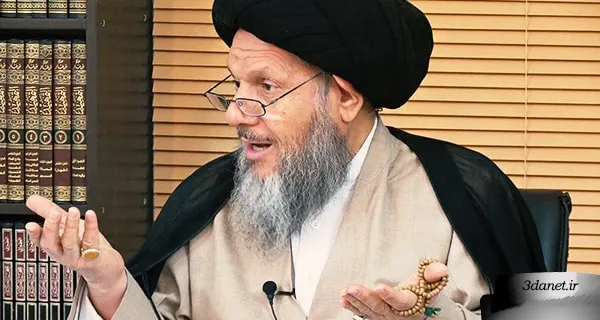
Discussion0 comments
No comments yet; let yours be the first voice.