Religion
Maqsoud Farasatkhah, Farewell to Jonah the Prophet
Maqsoud Farasatkhah sees the prophet Jonah as a symbol of honesty in lamenting to God and of hope in the heart of darkness; the stories of the prophets answer human needs. Faith is hope for a meaning beyond limitations, just as Jonah sought light in the belly of the fish.
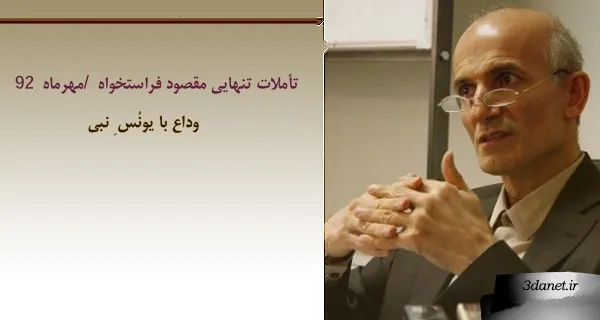
Memories are a part of human existence. One can keep certain memories only at the margins of the mind, not at its center, but one cannot evade them entirely. No matter how much historical and epochal transformation human society undergoes, and even after its recent and new epistemological and sociological ruptures, it is, I think, difficult for it to bid a complete farewell to the memories of the old world and consign them to oblivion, as if they had never been. Ancient tales are part of the human heritage, and among these are the stories of the prophets. The messengers were a group of the most important human exemplars who lived in ancient history, and their experiences, states, and attributes still captivate hearts and carry implications and signs. These are, of course, not limited to the Semitic and Abrahamic prophets, but because, in a part of our historical destiny, we have been intertwined with religiosity of the Islamic type, we are more familiar with the Abrahamic prophets.
Farewell to Jonah the Prophet
1.
Memories are a part of human existence. One can keep certain memories only at the margins of the mind, not at its center, but one cannot evade them entirely. No matter how much historical and epochal transformation human society undergoes, and even after its recent and new epistemological and sociological ruptures, it is, I think, difficult for it to bid a complete farewell to the memories of the old world and consign them to oblivion, as if they had never been. Ancient tales are part of the human heritage, and among these are the stories of the prophets. The messengers were a group of the most important human exemplars who lived in ancient history, and their experiences, states, and attributes still captivate hearts and carry implications and signs. These are, of course, not limited to the Semitic and Abrahamic prophets, but because, in a part of our historical destiny, we have been intertwined with religiosity of the Islamic type, we are more familiar with the Abrahamic prophets.
Even in this modern and postmodern era, although important epistemic, value, and institutional differentiations and distinctions have occurred, and much of what was once expected of religion and the prophet in the past is, rightly, no longer expected today, still, religious memories are occasionally activated in the mind, conscience, and life of some individuals and groups, responding to the residual needs that remain beyond the frontiers of modern reason and continue to weigh upon our human condition.
Every now and then, the tales of history's messengers come and go in the hidden corners of my own soul. They stir up a tumult and set echoes ringing. It is astonishing; many times, when I was not expecting them and was utterly oblivious to these memories, an event has suddenly occurred. The prophets have become uninvited guests in my imagination from the far, distant past. As much as the cramped and humble house of my being would allow, I have cherished them and, with a sigh, a regret, and a whisper, offered them hospitality. For some time now, Job and Jonah have been constantly coming and going. I think I understand why. Their experiences seem very familiar to the anxieties and pains of these days of mine.....
2.
That night I was alone; my heart was as heavy as the whole world. A legion of the world's evils and human afflictions were heartlessly boasting before my tired eyes, piercing harshly into my tormented mind and squeezing the nerves of my knowledge and my soul with utter cruelty. I was deeply distressed by all the beautiful words spoken in the category of justice, mercy, wisdom, and theodicy, and in a silent whisper, I said to myself (and perhaps to any greater self): if better than this was not possible, then why did existence come to be, instead of being sheer nothingness.
I wanted to take upon myself, alone, all the tears of sorrowful humanity, plus the tears of the fish of the seas, the gazelles of the deserts, and the birds of the skies, and to pour them, spring by spring, onto my own cheeks, to wash myself in their flow, and to find peace.
As is customary in this age, and within the limits of my humble mind, I believe in reason, and I also subscribe with full confidence to that famous assumption that the reduction of human suffering is not possible without the project of rationality and new consciousness, without scientific etiology, without reasonable human endeavor, without good governance, and similar imperatives. But there are moments when, as I said, all this modern apparatus remains mysteriously suspended and perhaps consciously steps aside, leaving me for a while alone with ancient memories, with the unconscious hidden in the unseen corners of my being. The guests from beyond history arrive in these timeless times. That night I was alone, my heart was as heavy as the whole world....
3.
One of those distant historical figures was gently knocking at the door of my being's house... This time it was Jonah. Weary from the long road. The prophet who, in my childhood, taught me the frankness of "being distressed," of "uttering complaint," and of becoming aggrieved with God. This design of our being is fundamentally flawed. We are condemned to live, and the problems and evils are beyond counting. Sometimes one must ask sincerely and place hundreds of whys before God. In the lengthy books I read, everyone defined infallibility, often with all sorts of contrivances. But I saw it in the innocence of Jonah's discomforts. Jonah was my childhood friend, and his memory remains with me to this day. That night of my human loneliness, too, I felt somewhat lighter once Jonah arrived.
Jonah grew weary of living in these human conditions. He became the companion of the whales of the sea: "And Dhul-Nun, when he went off in anger and thought that We would not decree [anything] upon him, and he called out in the darknesses...". Jonah suffered for the price of his honesty and frankness. Jonah was inflamed by the vastness of the pains and the difficulty of reducing sufferings, and he fled in haste. He took destiny lightly, and destiny pressed him hard. The lot of the ship's passengers fell upon Jonah's name, and he was respectfully hurled into the sea; like many respectable laws that exist to this day, by whose name some suffer and have not, and by whose name some profit and have.
Chance was, and is, and it seems will continue to be, the greatest rule of this crookedly orbiting world. It is by chance that a multitude of innocent children in this world are thrown into famine in Africa and not into modern kindergartens. It is by chance that resources have fallen into the hands of some groups, and poverty and destitution have become the lot of others. By chance, North and South have come into being, ruler and ruled have come into being. Believer and atheist have come into being, and by chance, we will go to heaven because we are Muslims, and many will go to hell because, by chance, they are not Muslims. If we drag God's foot into these "unspeakable matters," it becomes even more obscure!
4.
Another difference between Jonah and Nietzsche was that Nietzsche, in his longing for God, composed the most sorrowful, cold philosophical elegies, but Jonah could not accept the void left by God and continued to seek Him. The difference between Martin Buber and Jonah is that Buber came to terms with the eclipse of God[i], but Jonah, in the heart of darkness, still sought a light. Even in the belly of the fish, Jonah was hopeful that a transcendent command would arrive with a glance, sublime and beyond all that we imagine and define. There is a noble meaning in the utmost intractability and concealment. There is an infinite abundance beyond all the limitations we plainly see in ourselves and around us, with which we grapple. Even in the belly of the fish, Jonah had hope and desire, and faith is hope and desire. It means to live as if there is a truth, as if there is a summit, as if there is an ultimate meaning. Despite all evidence to the contrary, be resolved that there is an invitation for you...
As soon as Jonah arrived, the entire cosmos suddenly became a sanctuary, more magnificent than any mosque or church or fire temple or monastery; with a mysterious light and a strange yet familiar melody: ‘So We answered him and saved him from the distress. And thus do We save the believers...’ Despite all the afflictions he endured, Jonah did not lose his utopian understanding of existence, of humanity, and of himself. Despite all his grievances, Jonah still sought an infinite abundance in existence. He again became aware of his human limitations, again reproached himself, again raised his level of expectation for himself and lowered his expectations of others. He again saw being here as an opportunity and regarded living among people as a grace. By immersing himself in the sorrows of the world, Jonah overcame them......
Farewell, Jonah! Friend of the whales! The sorrowful sound of a strange prayer in the darkness! ...Prophet of protest and faith! The ambiguous word of anguish and salvation!... The elusive guest from beyond history! Farewell....
[i] Eclipse of God
.
.
PDF file of the article Farewell to Jonah the Prophet
.
.
Author: Maqsoud Farasatkhah
Source: Maqsoud Farasatkhah's website
.
.



Discussion3 comments
سلام و عرض ادب. تلاشهای آقای فراستخواه در پیوند سنت و مدرنیته حقیقتاً ستودنی است.از همین نوع متن نوشتنش گویاست. که چقد با انسان مدرن همدلانه ارتباط برقرار میکند و او را در دل سنت به نظاره میبرد و در عین حال اقتضائات او را هم در نظر میگیرد
سپاسگزارم.
یکی جان خواهد آن دریا همه آتش نهنگ آسا اگر داری چنین جانی روانش کن روانش کن گمشدگان لب دریا، یا چالش سمبولیک دریایی ( عموما ) و حبس در شکم نهنگ، ( خصوصا ), تصویر و ایماژی اسطوره ای ست که چندین بار در افسانه های قدیم و جدید تکرار شده، و تا حتی قصه های کودکانه پینوکیویی هم جذابیت روایی داشته، وقتی برای نجات پدر پیرش تن به امواج میسپارد. گویی گذر از آزمون دریایی، شرط تبدیل شدن به مرد واقعی و اصیل ست. اما درین میان شاید موسی رکورد هم زده باشد آنهم با عصایش در شکافتن دریا ازهم، چراکه گهر چو دست داد به دریا چه حاجت ست؟! و چه شباهتی دارد به سرنوشت یهودیان امروزین که علیرغم شکافتی پرنفوذ در آمریکا، بر سر جزییات اقتصادی نخود و لوبیا، نیروی معجزه آسای کاریزمایشان را خنثی میسازند. اما در میان معاصران ناکام، همینگوی دست خالی از دریا برمیگردد وقتی که کوسه ها، صید شاه ماهی اش را تکه تکه میکنند، شاید به اندازه کافی نمیدانست که این دریا چه موج خون فشان دارد؛ اما با اینحال بازهم امیدوارست که بار دیگر به کمک پسرکی، دوباره دل به دریا بزند. و چه شباهتی ست با سرنوشت یانکیانی که علیرغم تهور و شجاعت شأن انگار چیزی کم دارند در ساختن اتوپیای جهانی شأن. بصد دفتر نشاید گفت وصف الحال مشتاقی بمیرد تشنه مستسقی و دریا همچنان باقی