Political Science
Mohammad Mehdi Mojahedi's essay “The Banality of Evil and Collective Responsibility”
Understanding mass killings requires moving beyond superficial analyses of charismatic leaders; Hannah Arendt and Hans Mommsen show that bureaucratic mechanisms and the normalization of evil pave the way for catastrophe, placing responsibility on the collective.
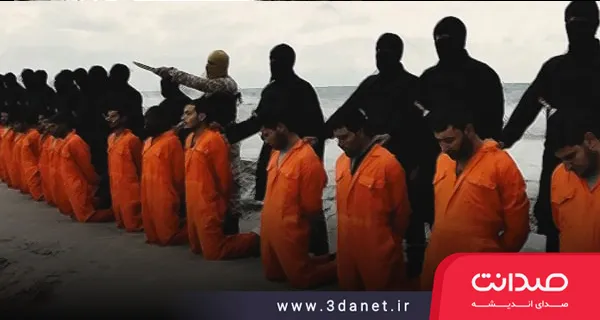
Lamentably, many elites, like the general public, resort to the most facile analysis when trying to understand atrocious and criminal events such as the Holocaust and the like: a charismatic leader, in accordance with his false and dangerous beliefs, ordered a massacre, and a few people carried it out—end of story. Such analyses, which unfortunately enjoy an exclusive prevalence in this agonizing marketplace thanks to hasty journalism, serve more to ease the conscience of the public and elites than to understand the event. The global mass media (and many of their audiences, whose ceiling of political understanding is precisely that threshold of superficial journalistic analysis) fan the flames of this ignorant and indolent neglect.
How are we to understand atrocious mass killings? There are two common and dominant models for examining and answering this question: 1. Find out who the instigators and perpetrators of the killing were; 2. See which ideology those instigators and perpetrators used to justify their crime (this is a kind of "culturalism" in understanding political violence that I have previously criticized at length in several notes).
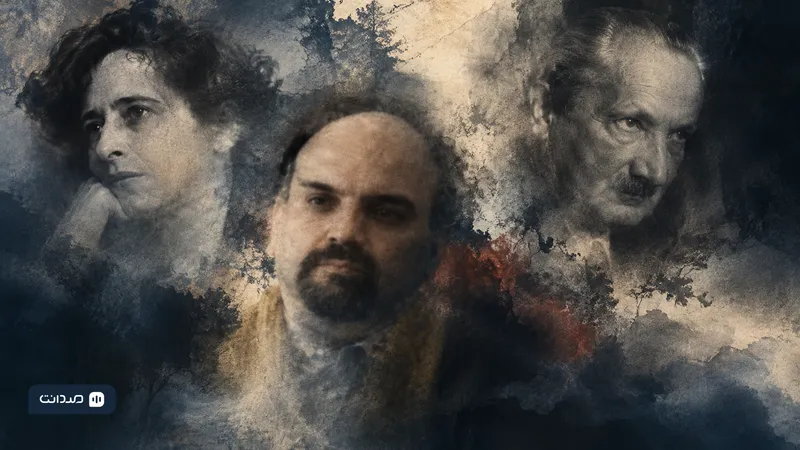
The first comprehensive historical narrative and coherent analysis of the atrocious killing of the Holocaust was written by Raul Hilberg in 1961. An analysis that opened a new path in understanding atrocious mass killings. The profound influence of Hilberg's book is evident both on political thinkers like Hannah Arendt, especially in "Eichmann in Jerusalem: The Banality of Evil" (1966), and on great and influential historians such as Hans Mommsen,* the famous German historian, particularly in "The Agents of the Third Reich."
"The Banality of Evil," in my opinion, is one of humanity's greatest, boldest, and most terrifying discoveries regarding the nature of violence and crime. Crime, even on the widest and most atrocious scale, requires no intent, no overflowing rage, no demonic aspect, no wicked character, no satanic inner nature; it does not even require born criminals. Arendt's main argument can be summarized in these lines from "The Banality of Evil": "What makes the story of Eichmann (one of the key agents of the massacre of Jews) disturbing is that he was an ordinary man, and many were like him; many of them were neither perverted nor sadistic: they were, and still are, terribly ordinary people, and this is what makes the whole story terrifying. From the perspective of our legal institutions and with our standards of moral judgment, this normality and ordinariness is more horrifying than the sum total of all the atrocities they committed."
What sometimes makes the hideous face of the "banality of evil" even more terrifying is, of course, a kind of hypocrisy for which the ground is particularly fertile in religion-based or ideology-based societies; a vice which, again according to Arendt in "The Banality of Evil," is the mother of all vices, because hypocrisy, unlike all other vices, robs a person of their integrity. In Arendt's view, violence confronts us with the confusion and corruption at the root of evils, but hypocrisy is itself the very essence of corruption and confusion.
Three years after the publication of Arendt's reports from the Eichmann trial in Jerusalem, Hans Mommsen, in his important book "The Agents of the Third Reich," examined the question of how to understand atrocious group killings in relation to the Holocaust and, through historical critique, demonstrated the invalidity of common answers and proposed a completely different response. According to Mommsen, instead of analyses focused on instigators and perpetrators, and instead of ideology-centered analyses, one must examine the mechanism leading to crime on a level above the horizon of the perpetrators and instigators of the crime and their respective ideologies—a bureaucratic and social mechanism that prepares the material and mental conditions for crime on a national scale, legitimizes those leaders, instigators, and perpetrators in the crimes they commit, and gives persuasive power to their banal ideologies, on a scale as large as a nation. The "Final Solution" (Endlösung) to the "Jewish Question," that is, the Holocaust, was in fact the result of the accumulation of "cumulative radicalization" by the agents of the Third Reich, who were set in motion by Hitler's vague and utopian visions. To understand the Holocaust, one must uncover the mechanism and process of that cumulative radicalization.
In Mommsen's view, those atrocities were the final link in a chain of factors—factors that had already rendered the occurrence of those horrific crimes ordinary and banal. In Mommsen's view, instead of retrospective analyses, one must examine the administrative and executive mechanisms that ultimately led to the commission of that great crime, crimes whose perpetration was not necessarily contingent upon prior intent, a coherent will, a deliberate plan, and a calculated conspiracy by a group of criminals...
... Mommsen's analysis also undermines the credibility of that common image, as if those criminals were not representative of the archetype of their society and their crime was alien to the ongoing processes of that society. In Mommsen's view, limiting the scope of analysis and explanation of cruelly violent mass killings to identifying the direct perpetrators and instigators of the crime or the justifying ideologies they carried with them stems from a lazy and ignorant focus on the surface appearances of the phenomenon and a negligent or willfully blind disregard for the real dysfunctions of the Nazi regime, the dysfunctional mechanisms of power, and the institutionalized layers of crime within the fabric of society and politics.
This ignorant and lazy negligence is an analytical error that not only prevents a proper understanding of the phenomenon but also entails a great moral loss: shirking the recognition of collective responsibility for cruelly violent group killings. In addition to their explanatory deficiency and moral shortcoming, these superficial analyses also render us incapable of preventing the repetition of the crime. But if these superficial analyses are so worthless, why are they so prevalent? The prevalence of such analyses does not stem from their analytical, explanatory, and preventive power. The roots of their prevalence, besides their deceptive simplicity, easy accessibility, and easy acceptability, must be sought, among other things, in psychological causes. One of the psychological causes of the prevalence of these analyses is the peace of conscience they grant their believers, relieving them, through projection, from accepting collective responsibility for the crime.
To explain the mechanism that led to the Holocaust, Mommsen advanced the "Weak Dictator" thesis. According to this thesis, the Holocaust and many other similar crimes were less the result of Hitler's coherent will than of his weakness, ignorance, evasion of responsibility, and the incoherence of his leadership style. Contrary to the prevailing image of Hitler, in the picture Mommsen portrays of Hitler, there is no trace of that iron-willed dictator who was predetermined on the systematic slaughter of the Jews. By meticulously examining the details of documents, Mommsen shows that Hitler not only had no pre-planned scheme for this slaughter and many other events of his rule, but was also clearly unaware of many affairs and conditions of Germany under his leadership, or deliberately kept himself aloof to avoid accepting responsibility. In decision-making meetings, just like in his public speeches, Hitler had rarely issued a decision for systematic criminality, especially regarding the slaughter of the Jews. In fact, the Second World War, and particularly its expansion by Germany and the mass slaughter of the Jews, was less a function of the Third Reich's ideology or the Führer's orders than a derivative of competitive relations within the vast apparatus of the Nazi German military and executive bureaucracy and its decision-making apparatus—an apparatus that was not run by the clear, precise, and direct orders of a "weak dictator" like Hitler, but where each component used the Führer's inflammatory and responsibility-evading generalities as a pretext to launch a new wave of radical actions in competition with other parts of the system, to demonstrate higher degrees of loyalty, obedience, and efficiency, and consequently to demand a greater share of the power pie.
To understand, analyze, explain, and prevent mass atrocities, journalism (even if professional and investigative) is not enough. Critical and meticulous historians and insightful, holistic political thinkers must want to and be able to explore the dimensions of the phenomenon with peace of mind and tranquility, without their personal, professional, or character security being endangered in the process. This requires a collective, national, and political resolve to know history, learn from the bitter past, and prevent its repetition. Otherwise, the occasional recollection of such bitter events could become fodder for political rivalries and pathological acting-out of complexes, or the deepening of accumulated complexes, and will increase the alienation between the state and the nation, without society benefiting from recalling these bitter experiences, any truth being revealed, or any error being prevented from recurring.
.
.
Hans Mommsen should not be confused with other historians of the Mommsen family, namely Theodor (his paternal grandfather), Wilhelm (his father), and Wolfgang (his brother), although his brother was also among the historians who played an effective role in criticizing and dismantling the common notion that the Holocaust was an ideological scheme or a pre-planned program executed by the command of Hitler and a few criminal officers and born villains—a group of professional and bizarre killers who were not of the same kind as ordinary people in their society.
.
.
The Banality of Evil and Collective Responsibility
Mohammad Mehdi Mojahedi (Professor of Comparative Political Theory, University of Berlin)
.
.




Discussion0 comments
No comments yet; let yours be the first voice.