Sociology
Mohammad Reza Safaeizad: Objections to the Translation of “A Social History of Knowledge” (2); A Reply to the Translator (Yaser Khoshnevis) and the Publisher (Kargadan Publishing)
In response to the defenses offered by the translator and publisher of A Social History of Knowledge, Safaeizadeh demonstrates that equivalents such as 'ahl-e savād' and 'jomhuri-ye savād' not only lack an archaic resonance but are also based on a misunderstanding of the concepts and lack the necessary precision.
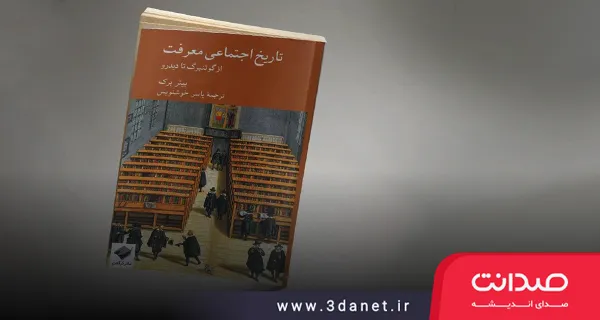
A Reply to the Translator (Yaser Khoshnevis) and the Publisher (Kargadan Publishing)
Objections to the Translation of “A Social History of Knowledge” (2)
Mohammad Reza Safaeizad
Some time ago, I published an article on the Sedanet website regarding the flaws in the translation of the book “A Social History of Knowledge” (Translator: Yaser Khoshnevis).[1] Following this article, the publisher and translator gave a brief response to the text[2] and published them on the Kargadan Publishing Telegram channel.[3] Since “Kargadan Publishing welcomes criticism of its books, whether translation criticism or content criticism, and considers such dialogues constructive,” I decided to respond to the publisher and translator’s reply. Undoubtedly, readers and specialists will be the final arbiters of constructive translator-critic dialogues. This article is divided into 5 sections, which I present in the following order:
(1) Khoshnevis’s Response, Together with the Author’s Reply:
Khoshnevis:
A) “Recently, a critical text about the translation of the book ‘A Social History of Knowledge’ was published on the Sedanet website, authored by Mr. Safaeizad. I need to offer some explanations regarding this critical text.
First, I will address the equivalents. Mr. Safaeizad has pointed to several frequently used words and phrases in the book. Regarding ‘men of letters,’ I used the equivalent ‘ahl-e savād’ (literate people), which he considers incorrect and has suggested ‘ahl-e qalam’ (people of the pen). In the book’s introduction, I noted that for phrases no longer used in English, I employ equivalents that have an archaic or unfamiliar resonance. As it happens, ‘ahl-e qalam’ is common in Persian today and does not convey a sense of unfamiliarity to the reader. Burke deliberately uses obsolete phrases from the seventeenth and eighteenth centuries, and I have also used a phrase that is unfamiliar and uncommon.”
Reply:
Firstly: The respected translator, besides the equivalent ‘ahl-e savād,’ has also used the incorrect equivalent ‘mardān-e savād’ (men of letters) [as opposed to ‘zanān-e elm’ and ‘zanān-e savād’ (women of letters)] in the book, and in my first article, I explained in detail and with reasoning that: although the first equivalent is wrong, the second equivalent (‘ahl-e savād’) is marginally better; nevertheless, I added that a better and more precise equivalent could still be chosen for it. I also quoted the translator’s introduction verbatim and noted that “the translator correctly points out that meanings with an archaic resonance should be used.” But I immediately added that to do this, one must search in classical texts to find a suitable old meaning for the term in question. The respected translator has not provided any reason to refute my detailed argument and has merely insisted on the ‘unfamiliarity’ of the equivalent ‘mard-e savād’ or ‘ahl-e savād.’ Having an archaic resonance for an old term can be a good reason for choosing an old equivalent (and is entirely correct), but why choose an equivalent that is not very clear and is almost non-existent in ‘ancient’ texts? An equivalent that also has another, disparate meaning: ‘ahl-e savād: desert dwellers, villagers’?
Secondly: Although the term ‘ahl-e qalam’ is common in Persian today, it—contrary to the translator’s opinion—effectively conveys a sense of antiquity to the reader: meaning, of course, a reader familiar with classical Persian literary texts: naturally and certainly, a mind empty of ancient literature cannot fully grasp the archaic sense of words: just as children do not perceive this sense. This equivalent is like the word ‘tabib’ (physician), which, although still used today, conveys a sense of antiquity to the reader or listener.
Third: If the translator truly intended to convey a sense of the words' antiquity to the reader, would it not have been better to maintain this consistency throughout the entire book, carefully selecting words and seeking out uncommon (yet comprehensible!) terms? For instance, for the word (hospital)—which appears several times in this book—would it not have been better to choose the equivalent
Khoshnevis:
c) “Regarding liberal arts, for which I have used the equivalent ‘فنون لیبرال’ (liberal techniques), Mr. Safaeizad has suggested ‘علوم انسانی یا علوم مقدماتی’ (humanities or preparatory sciences). ‘علوم انسانی’ (humanities) is an entirely inappropriate equivalent, because the liberal arts also include subjects such as arithmetic and geometry. Throughout the book, Burke deals with the opposition between science and art/technique, as well as the opposition between the liberal arts on the one hand and the mechanical arts on the other. A suitable equivalent for the latter category is ‘فنون مکانیکی’ (mechanical techniques) or ‘فنون ماشینی’ (machine techniques). While editing the translated text, it was suggested that liberal arts be translated as ‘علوم مقدماتی’ (preparatory sciences), but since this equivalent would obliterate both of the aforementioned oppositions, I preferred the equivalent ‘فنون لیبرال’. Translating art as ‘هنر’ (art), for instance in the equivalent ‘هنر آزادمردان’ (art of free men), is also incorrect. Perhaps an equivalent that would be a better option overall is ‘فنون آزاد’ (free techniques) or ‘فنون هفتگانه’ (the seven techniques).”
Reply:
In the first article, I provided five equivalents for liberal arts: “1. علوم انسانی (humanities), 2. علوم مقدماتی (preparatory sciences), 3. هنر آزادمردان (art of free men), 4. فنون هفتگانهی خواص (the seven techniques of the elite), and 5. علوم [یا فنون] ذهنی/ عقلی (mental/rational sciences [or techniques]).” Of these five, the first two are from common English-Persian dictionaries (such as the Pouya / Hezareh dictionary), and two others are from the book “Studies in the Understanding of Iranian Art, Dr. Ahmad Zabeti Jahromi.” Only the last one (علوم [یا فنون] ذهنی/ عقلی) is from the critic, which the translator has omitted mentioning and explaining. On the other hand, I think the respected translator has rightly pointed out that the equivalent ‘علوم انسانی’ is an inappropriate equivalent for the term (liberal arts). However, according to the detailed explanations in the first article, I emphasize once again that equivalents such as ‘فنون لیبرال’ or ‘فنون آزاد’ are not suitable and conceptual equivalents, and ‘علوم [یا فنون] ذهنی/ عقلی’ (the equivalent suggested by the critic) or ‘فنون هفتگانه’ (the equivalent suggested by the translator) are better than these two.
Khoshnevis:
d) “Regarding some equivalents that had a more limited use in the book, Mr. Safaeizad’s suggestions are useful. Particularly in the discussion about the two types of skepticism, high and low, I accept that the suggested equivalents ‘شدید’ (severe) and ‘خفیف’ (mild) are better than the equivalents ‘اعلا’ (superior) and ‘مادون’ (inferior) that I have used.
Mr. Safaeizad has mentioned several cases of inadvertent errors, errors in recording dates, or errors resulting from misreading the original text, or Persian writing errors. These things happen despite proofreading, although this is no excuse for their existence. Mr. Safaeizad himself has also been subject to such an inadvertent error. He has mistakenly written the name of the book’s author, Peter Burke, as ‘پیتر برگ’ (Peter Berg) five times.”
Reply:
The fact of the matter is that the inadvertent, historical, and other errors in the book are far more numerous than what was mentioned in the first article (new cases will be pointed out below), and the respected translator fairly states that proofreading is no excuse for the existence of these errors. However, they then point out a minor “writing” error of mine, which bears no resemblance whatsoever to their “significant errors in recording dates,” or “visual errors,” or “glaring omissions.” If the book’s errors were limited to this writing of ‘ک’ (k) instead of ‘گ’ (g), I would undoubtedly not have written anything about it. This objection carries as much weight as if I were to fault the translator for why they themselves used ‘پیتر’ (Peter) for the book author’s name (Peter Burke) and ‘پتر’ (Petr) for “Peter the Great” in the text of the book? Or on page 130, for (Pico), they mention ‘پیو’ (Pio) once and ‘پیکو’ (Pico) four lines later (without any footnote). The book’s errors are more serious than these and cannot be overlooked with tolerance.
Khoshnevis:
E) “Several omissions have also been noted. Some of these are inadvertent, and in the case of others, I believe there was no need to translate every single word. As a clear example, the word ‘madrasa’ is pronounced in two ways in Arabic and Turkish. This point is reflected in the original text due to the way vowels are written in English, and the author felt it necessary to explain it, but pointing this out in the Persian translation did not seem necessary. In some cases, the context of the discussion makes it clear which period or country the author is talking about. Therefore, it is truly not necessary that in every instance where the English author has included an adjective or an explanation, the exact same words be rendered word-for-word in the translation. For example, in a passage dealing with the Middle Ages, and the reader also realizes this point while reading, omitting the adjective ‘medieval’ does not cause confusion.”
Reply:
It is clear that the esteemed translator categorizes the reasons for the text’s omissions into three groups: 1. Some are inadvertent, 2. The presence of some is unnecessary, 3. Some are clear from the context of the discussion. The translator then, in passing, only mentions 2 instances and neglects to mention and explain the rest. Why? So that—given the explanations they have provided in their reply—the impression is conveyed that the majority of cases belong to categories 2 and 3, whose absence does not create a problem in the text! But in Part 4 of the article, we will see the matter more precisely.
Further on, the translator explains the reason for omitting the phrase inside the parentheses below, in the above:
The Ottoman medrese (the Turkish form of the word madrasa) followed a similar pattern. (p. 50)
Translator: Ottoman madrasas followed a similar pattern. (p. 82)
But the translator’s argument is by no means convincing. The author of the book (Burke), on p. 80, enters into a comparison between the educational system in Europe and in the Islamic world, and quite consciously juxtaposes words to show readers not only the difference between their educational systems, but also the differences or similarities of their terminology, both with European-Islamic world vocabulary and by italicizing them. Let us look at a few instances together:
1 . [educational] system of madrasas in the Muslim world; European [educational] system
2 . khan (خان= حجره); college system
3 . munazara (مناظره) ; western disputation
4 . ijaza (اجازه = مجوز تدریس); licentia docendi
5 . halqa (حلقه) ; circle
6 . shaykh (شیخ) ; master
Because these very subtle, important, and of course noteworthy differences held no importance for the translator, not only do they provide no footnote to indicate them, but they also forgo italicizing them (as they are italicized according to the original text of the book) and for this reason, with a pseudo-argument, consider their presence redundant and unnecessary.
In addition, of the 11 omissions I cited in the previous article, only one or two (one on p. 59, the case of ‘medieval artisans’ and another on p. 41, the case of ‘the English Revolution’) can be deleted based on textual context in such a way that almost no harm is done to the original text. But the other 9 cases are neither redundant and unnecessary, nor can they be discerned from the context of the text. A faithful text is one that adheres maximally to the original book, not one that omits them based on subjective criteria—and of course with haste—and defends their deletion with the label of unnecessary. The serious omissions in this book are so numerous that the reader can hardly believe the translator consciously ignored them based on the context of the text. In what follows, we will point to more flagrant cases of deletion to show how significant the translation’s omissions are.
Khoshnevis:
و) «آقای صفاییزاد چند خطای فاحش را نیز تشخیص دادهاند. برخی از این موارد به درستی فاحشاند (از جمله موارد مربوط به induction، proofs و midwife و چند عبارت فعلی) و برخی دیگر را میتوان پیشنهادهایی دانست که به بهبود متن کمک می کنند. در مجموع، از آقای صفاییزاد به خاطر دقت و حوصلهشان در بررسی انتقادی ترجمه تشکر میکنم. از خوانندگان و همچنین از ناشر به دلیل وجود این اشتباهات و خطاها عذرخواهی می کنم و امیدوارم فرصتی بیابم تا آنها را اصلاح کنم.»
پاسخ:
من هم به نوبهی خود از مترجم محترم تشکر میکنم که مقالهی اول را خواندند و به آن پاسخ گفتند (هر چند به طور گذرا، موردی و با تسامح).
(2) توضیح اجمالی ناشر
«چندی پیش در سایت صدانت مطلبی با عنوان "ایراداتی بر ترجمه کتاب تاریخ اجتماعی معرفت" به قلم محمدرضا صفاییزاد منتشر شد... در این نقد نمونههای مختلفی از آنچه از نظر نویسنده نقصهایی در ترجمه کتاب مهم تاریخ اجتماعی معرفت است ذکر شده است. نشر کرگدن از آقای صفاییزاد بابت خواندن کتاب و نگارش نقدی بر آن سپاسگزار است و این دست نوشتهها را مایه بهبود کار خود میداند.
البته این نکته که چنین حجم و سطحی از نمونهها در نقد ترجمه کتابی تاریخی با حجمی بیش از ۴۰۰ صفحه کافی است تا در مقدمه نقد چنین حکم شود که "ترجمهی فارسی این اثر غیردقیق، با اشتباهات قد و نیم قد بسیار صورت گرفته است" محل تامل و پرسش است. گویا ناقد محترم نکتهای مثبت در ترجمه این کتاب نیافته و اشاره به برخی کاستیها و ترجیحات ترجمهای را برای قضاوت درباره کل ترجمه کافی یافته است و میخواهد به خوانندهای که اصل ترجمه را نخوانده چنین منتقل کند که در کل نکتهای مثبت در این ترجمه نمیتوان یافت.
آقای یاسر خوشنویس مترجم کتاب در مطلبی ... به برخی از نکات ناقد محترم پاسخ داده و برخی را نیز وارد دانستهاند. روحیه نقدپذیری و انصاف ایشان در این نوشته ستودنی است. نشر کرگدن از نقد کتابهای خود، چه نقد ترجمه و چه نقد محتوا، استقبال میکند و چنین گفتوگوهایی را سازنده میداند.»
(3) پاسخ به ناشر
متأسفانه فردی که این عبارات را نوشته است، دستاش از استدلال خالی بوده و فقط به نحو سلبی صفحهای سیاه کرده است: کاری بسیار آسان و بیزحمت! یک استدلال در این کامنت وجود ندارد که نشان از اهمیت کتاب یا دال بر نکات مثبت این «ترجمه» باشد. چرا؟ چون ایشان نه قبل از انتشار، کتاب را خوانده و نه حتی بعد از انتشار، کتاب را در دست گرفته! آیا این سخن ذهنخوانی و ادعای باطلی است؟ خیر! دلایل آشکاری وجود دارد: اگر ایشان (به عنوان متخصص امر) قبل از انتشار، فقط کتاب را (نسبتاً به دقت) روخوانی کرده بودند (نه اینکه با متن انگلیسی تطبیق داده بودند!)، به راحتی به اشتباهات سهوی، مفهومی و نگارشی مترجم پیمیبردند و به مترجم محترم منعکس میکردند و مترجم نیز به رسم اخلاق حرفهای خود نام ایشان را در مقدمه ذکر میکردند و از ایشان تشکر مینمودند. اما در این باره هیچ نامی از فرد خاصی برده نشده است. اما ایشان بعد از انتشار کتاب هم، آن را در دست نگرفتهاند؛ که اگر گرفته بودند حداقل از تعداد صفحات کتاب باخبر بودند و این قدر با بی-مبالاتی نمینوشتند: «ترجمۀ کتابی تاریخی با حجمی بیش از ۴۰۰ صفحه»! خوب است خوانندگان بدانند که کل صفحات کتاب 382 صفحه است که 36 صفحهی آن مربوط به کتابشناسی است که فقط کپیپیست از متن انگلیسی کتاب است و 30 صفحهی دیگر آن نمایهی اسمی است. بنابراین کل متن ترجمه (با کسر تعداد صفحات یادداشت مترجم) میشود: 312 صفحه!
He has taken umbrage at this statement by the author of the article and has said that the author, by citing a few instances, has passed judgment on the entire book, claiming that the whole Persian translation of this work has been done “inaccurately, with errors great and small in abundance,” and therefore this sentence is a matter for question and reflection. My answer is that I wish he had read the book before publication, rolled up his sleeves, and compared the translation with the original, so that no room for reflection or question would remain for him! (It is still not too late! Both the original book and its translation are available! It just requires a little effort.) Secondly: has he paid any attention at all to the introduction of the author’s previous piece, in which I had clearly stated that “mentioning all the book’s errors is neither necessary nor feasible”? Does he really know of anyone who has ever critiqued an entire book of roughly 300 pages and published it all, point by point? Is this, in principle, the conventional practice in translation criticism?!
He goes on to say: “It seems the esteemed critic found no positive point in the translation of this book and considered pointing out some shortcomings and translational preferences sufficient for judging the entire translation, and he wants to convey to the reader who has not read the original translation that, on the whole, no positive point can be found in this translation.”
Firstly, I wish this esteemed individual who has read the book (!) and discerned the positive points of its “translation” would enumerate some instances for the readers’ awareness. Secondly, it is not the author who wants to insinuate to readers that no positive point can be found in the translation; rather, it is he who, by speaking in generalities and mentioning the phrase “some shortcomings and translational preferences,” wants to convince the reader that these types of errors are “normal, usual, natural, and insignificant” and do not cause any particular disruption to the translation as a whole. The publisher has the right to defend his work in order to sell his book (but not at any cost!). The critic also considers it his duty to inform readers of the work’s numerous errors so that they can judge it knowledgeably (with reason and proof, of course).
In the following, I will sporadically point out some other flaws in the translation, so that readers may gain greater awareness of the quality of this translation, and also to further reinforce the claim of the first article (regarding its errors great and small, hastiness, inaccuracy, and inappropriate meanings).
(4) Other Objections to the Book’s Translation
1 . By the time of the invention of printing, lay literacy already had a long history in western Europe. (p.34)
Translator: With the invention of printing, lay literacy also found a long history in Western Europe. (p.59)
Explanation: Has the translator paid any attention to the tense of the sentence? Are the meanings of these two sentences the same?
Translation: “Until the time of the invention of printing, lay literacy had a long history in Western Europe.”
2 . The historian who drew these parallels and raised the possibility of conscious western borrowing from the Muslims did not deny the existence of major differences between the two systems. However, more recent research suggests that he overemphasized the formal organization of knowledge and education in the Middle East. (p. 81)
Translator: The historian who drew these parallels and raised the possibility that perhaps Westerners consciously borrowed from Muslims did not deny the existence of major differences between the two systems. However, more recent research suggests that he overemphasized the formal organization of knowledge and education in the Middle East. (p. 81)
Note: I ask the reader to read the above translation carefully. Will they realize who this historian is? The author of the book makes no mention of such a historian either before or after these lines! Does the author not know his name? No! So what is the matter? A simple grammatical error! The translator does not know that (The historian who) refers to a plural, not a singular: “Historians who …”, and therefore the pronoun (he), although apparently singular, is conceptually plural. These are among those half-baked mistakes that trouble the alert reader. The translator pays little attention to stylistic nuances. For example:
3 . a network of assistants, agents or ‘informers’, not to say spies (p.123)
Translator: a network of assistants, agents or “informers” and also spies (p.184)
Note: The translator pays no attention to the meaning of (not to say: if not indeed) and incorrectly translates it as “and also.” It is clear that by using this phrase, the author is adding greater sensitivity to the two words before and after it.
4. new ones – the laboratory, the art gallery, the bookshop, the library, the anatomy theatre, the office and the coffee-house. (p.55)
Translator: new places such as the laboratory, the anatomy theatre, the office and the coffee-house. (p.88)
Note: One. Would it not have been more precise if, instead of the offhand translation of “the office” as “دفتر” (office), the translator had written: “administrative [or commercial] offices”? Are the translator’s omissions clear? “the art gallery, the bookshop, the library”
5 . The first was François Caron, who headed the VOC establishment there in 1639–40. (p. 60)
Translator: The first was François Caron, who managed the East India Company’s facilities between 1630 and 1640. (p.94)
Note: Undoubtedly, readers have noticed the time difference between one year (1639–40) and ten years (1630 to 1640) in the text.
6 . Venetians took a great interest in the New World throughout the sixteenth century. (p. 62)
Translator: The Venetians gained extensive benefits from the New World throughout the sixteenth century. (p.62)
Note: The phrase (take a great interest in sth) means “to become very curious about, to become very interested in” and has nothing to do with “gaining extensive benefits.”
7 . Rome had long rivalled Venice as a centre of information. (p.63)
Translator: Rome, as an information center, had long competed with Rome. (p.101)
Note: Does this need any explanation?! If that person (the very publisher!) had merely read the text aloud, would they not have noticed this line—which happens to be the opening sentence of the paragraph? Just two lines later:
8 . … ambassadors came from Japan, Ethiopia and Tibet as well as from European countries. (p. 63)
Translator: … ambassadors came there from Japan, Ethiopia and Tibet. (p.101)
Note: The omission of the phrase (as well as from European countries) is clear!
9 . the German college (1552), the Greek College (1577), the English College (1578), the Maronite College (1584), and the Irish College (1628). (p.66)
Translator: the German College (1552), the Maronite College (1584) and the Irish College (1628). (p.102)
Note: The omission of the phrase (the Greek College (1577), the English College (1578)) is clear!
10 . For the humanities there was the Society of Antiquaries. (p. 67)
Translator: The Society of Antiquaries dealt with the humanities. (p.104)
Note: First, the phrase (Society of Antiquaries) means: the Society of Antiquaries. Secondly, (the humanities) here means: “ancient culture; ancient literature.” So the meaning of the sentence becomes: The Society of Antiquaries concerned itself with [the study of] ancient literature.
11 . To avoid being deceived by these ‘false friends’, we need to defamiliarize ourselves with European categories. (p.82)
Translator: To avoid being deceived by these “false friends,” we must defamiliarize ourselves from European categories. (p.126)
Note: Upon reading the text, the reader is suddenly taken aback and asks themselves, “Who are the ‘false friends’?” The reader finds no answer! There is no footnote either! At the very beginning of this paragraph, the author speaks of terms and expressions that have undergone semantic changes over time (from the early formation of the modern era to the present) and have acquired different meanings (such as ‘animal’; ‘magic’; ‘philosophy’). So what is the relevance of “false friends” here? God knows best! The term (false friends) in fact has a literal meaning and an idiomatic meaning: 1. false friend 2. [words that are] false cognates. (The second meaning is intended here.) Wouldn’t it have been better if the translator had chosen a better equivalent instead of the offhand “false friends”?
As was also pointed out in the first article, this type of offhand and generally incorrect meaning is scattered throughout the book. I will point out a few more examples:
12 . The ideal of the ‘universal man’ was taken seriously in some circles in fifteenth-century Italy. (p. 84)
Translator: The ideal of the “universal man” was taken seriously in some circles in fifteenth-century Italy. (p.130)
Note: Is the term “universal man”! (universal man) correct and meaningful? Wouldn’t it have been better if the translator had written “the perfect human, or polymath, or a man of universal knowledge, or a universal scholar” instead? All the sentences that follow in the text indicate these meanings: “a human being capable of learning many things and becoming complete and comprehensive in multiple high arts.”
13 . So was the humanist Giovanni Pico della Mirandola, as may be seen from the list of 900 theses which this bold young scholar proposed to defend in public debate in Rome in 1487. (p.85)
Translator: Giovanni Pio della Mirandola... this bold young scholar, in 1487, proposed a list of 900 theses to defend in a public discussion. (p.131)
Note: First, as we pointed out above, the translator has mistakenly written “Pio” (Pico) instead of “Pico.” Secondly, the meaning of the phrase (a public debate in Rome) is not “a public discussion,” but its complete and correct meaning is “a public debate in Rome.”
Just a few lines later:
14 . As the Cambridge don Isaac Barrow put it in his treatise Of Industry … (p. 85)
Translator: As Isaac Barrow, the Cambridge don, says: ... (p.131)
Note: The translator has omitted the entire important phrase (put it in his treatise Of Industry).
15 . It is illuminating to learn which reference books were acquired by owners of small libraries. (p. 189)
Translator: It is appropriate to see how owners of small libraries acquired reference books. (p.280)
Note: The translator has two errors: 1. The incorrect and offhand meaning of (It is illuminating to learn) and 2. The incorrect meaning of (which).
Translation: Knowing which reference books the owners of small libraries acquired is illuminating [for us].
16 . A catalogue of the collection was published in the seventeenth century. (p. 190)
Note: The complete translation of this sentence has been omitted from the text!
17 . The conquest of India is presented as ‘a conquest of knowledge’. (p. 117)
Translator: The conquest of India is described as “the result of knowledge.” (p. 175)
Note: The translation error(s) are obvious! [This point was also noted by a reader of the first article.]
Let us set that aside and review a few instances of the translator’s carelessness, laxity, and insensitivity in word choice:
18 . the English surveys were stimulated by the fear of dissent from the Church of England. (p.122)
Translator: The English surveys stemmed from fear of opponents of the Church of England. (p. 182)
Note: Is “surveying” (i.e., measuring, gauging) an appropriate equivalent for the word (survey)? Where did “opponents” come from?
Translation: “The [bishops’] English surveys were caused by the fear of dissent from the Church of England.”
19 . [These] agents … intercepted the letters of Jesuits. (p. 124)
Translator: [These] agents … eavesdropped on the letters of the Jesuits. (p. 184)
Note: As readers know, “eavesdropping” has a specific meaning: listening secretly. Therefore, “eavesdropping on letters” is incorrect and meaningless, and the verb (intercept) has a different meaning.
20 . So far as intellectual property is concerned, the movement known today as the ‘scientific revolution’ reveals not only ambiguity but also ambivalence. (p. 151)
Translator: As far as intellectual property is concerned, the movement known today as the “scientific revolution” reveals not only ambiguity but also indicates capriciousness. (p. 222)
Note: Does choosing the word “capriciousness” for (ambivalence) make sense here?! What is its connection to the term “scientific revolution”?
21 . Or, for example, on the last page of the book (p. 316), the author mentions a treatise titled: Woman Not Inferior to Man (1739)
which the translator has rendered as: “Women Not More Base Than Men”! Does the adjective “base” not give a distorted meaning to the translation here? Would it not have been better to write instead: “Women Not Lower Than Men; or: Women Are Not Less Than Men”?
22 . Another point is that: professional historians, scholars of history, and readers of history pay special attention to precise dates and important historical periods. For example, readers know that among historians, there is a common historical division regarding the Middle Ages: 1. Early Middle Ages (roughly from the 5th to the 10th century) 2. High Middle Ages (roughly from the 11th to the mid-13th century) and 3. Late Middle Ages (from the mid-13th century to the end of the 15th century). Such divisions also exist in the following cases, which the translator passes over with complete laxity:
the late Middle Ages: the Middle Ages (p. 224)
the early modern European: modern Europe (p. 80)
the later Roman Empire: the Roman Empire (p. 178)
23 . In closing, I will briefly mention a few more cases:
1 . On p. 99 (map-making) “map publication”! Instead of “map-making.”
2 . On p. 58 (Adversarial system) “dispute system”! Instead of the specific term “adversarial system,” which has a particular legal meaning.
3 . On p. 104 (genuine Solomon’s House) “the real House of Solomon”! Instead of “the actual kingdom of the Prophet Solomon.”
4 . On p. 174 (information order) “informational order”! Instead of “information system.”
5. Wouldn’t it have been better if the translator had spent more time finding a better equivalent for “India House” — “Khāneh-ye Hendūstān”! or “Khāneh-ye Hend”! — and for “House of Trade” — “Khāneh-ye Tejārat” (p. 62)? (For example, “Hendū-Khāneh” and “Tejārat-Khāneh”).
6. The omission of the date on p. 127 for the phrase (natural history of animals (1551))
7. On p. 181, the entire phrase (and Norwich (sixty-nine questions, 1561)) has been omitted.
8. On p. 225, instead of the date (1486), they have written: “1474”!
9. On p. 180, for (Pope Innocent III), the translator has written: “Pope Innocent II”!
10. And on p. 184, instead of (King Henri IV), they have written: “Henri V”!
(5) Conclusion
The sum total of all the cases we have presented in the first article and this present article confronts the reader with a multitude of errors and intrusions that destroy both the readability of the work and the reader’s trust. It is now appropriate to ask the publisher: Considering the errors mentioned in the first article and the present article, in their opinion, what volume of errors is sufficient to undermine the credibility of a translation?
In the opinion of the author of these lines — as someone who has collated the book with its English text — if a reader does not care about this type of mistake, they can read this historical book and derive benefit from it. But those for whom precision and especially referencing are important, and who are particularly sensitive about words, terms, and dates, must approach it with great caution. Undoubtedly, the esteemed translator has invested time in this work. But for a translator who has more than ten translations in their portfolio, besides investing time, greater precision is expected. God willing, they will rectify the errors in subsequent editions. (And success is from God)
.
.
[1] Objections to the Translation of the Book “A Social History of Knowledge”, Sedanet Cultural Website, Mohammad Reza Safaeizad
[2] Yaser Khoshnevis’s Reply to the Critique of the Translation of A Social History of Knowledge:
Recently, a critical text about the translation of the book “A Social History of Knowledge” was published on the Sedanet website, authored by Mr. Safaeizad. It is necessary to mention some explanations regarding this critical text.
First, I will address the equivalents. Mr. Safaeizad has pointed out several frequently recurring words and phrases in the book. Regarding men of letters, I have used the equivalent “ahl-e savād” (literate people), and he considers it incorrect and has suggested “ahl-e qalam” (people of the pen). In the book’s introduction, I have mentioned that for phrases no longer used in English, I use equivalents that have an archaic or unfamiliar resonance. As it happens, “ahl-e qalam” is common in Persian today and does not convey a sense of unfamiliarity to the reader. Burke deliberately uses obsolete phrases belonging to the seventeenth and eighteenth centuries, and I have also used a phrase that is unfamiliar and uncommon.
Another frequently recurring case is republic of letters, for which I have used the equivalent “jomhūrī-ye savād” (republic of literacy). Mr. Safaeizad has explained in detail that republic can be translated as community (jamā‘at) or public (jomhūr). These equivalents came to mind during translation, but Burke says: “From the fifteenth to the eighteenth century, scholars commonly referred to themselves as citizens of the republic of letters, a phrase that expressed a sense of belonging to a community that transcended national boundaries.” This clause led me to the conclusion that the appropriate equivalent for republic here is jomhūrī (republic) and not jomhūr or similar cases. Presumably, Mr. Safaeizad has also seen these sentences in the book.
Regarding liberal arts, for which I have used the equivalent “فنون لیبرال” (liberal techniques), Mr. Safaeizad has suggested humanities or preparatory sciences. Humanities is a wholly inappropriate equivalent, as the liberal arts also encompass subjects such as arithmetic and geometry. Throughout the book, Burke addresses the opposition between science and technique, as well as the opposition between the liberal arts on the one hand and the mechanical arts on the other. A suitable equivalent for the latter category is “فنون مکانیکی” (mechanical techniques) or “فنون ماشینی” (machine techniques). While editing the translated text, it was suggested that liberal arts be translated as “علوم مقدماتی” (preparatory sciences), but since this equivalent would obliterate both of the aforementioned oppositions, I preferred the equivalent “فنون لیبرال.” Translating art as “هنر” (art), for instance in the equivalent “هنر آزادمردان” (art of free men), is also incorrect. Perhaps an equivalent that would be a better option overall is “فنون آزاد” (free techniques) or “فنون هفتگانه” (the seven techniques).
Regarding some equivalents that had a more limited usage in the book, Mr. Safaeizad’s suggestions are useful. Particularly in the discussion of the two types of skepticism, high and low, I accept that the proposed equivalents “شدید” (severe) and “خفیف” (mild) are better than the equivalents “اعلا” (high) and “مادون” (low) that I have used.
Mr. Safaeizad has mentioned several cases of inadvertent errors, errors in recording dates, errors resulting from misreading the original text, or Persian writing errors. These occur despite proofreading, although this is no excuse for their existence. Mr. Safaeizad himself has also been subject to such an inadvertent error. He has mistakenly written the name of the book’s author, Peter Burke, as “پیتر برگ” (Peter Berg) five times.
A few cases of omission have also been pointed out. Some of these are inadvertent, and regarding some others, I felt there was no need to translate every single word. As a clear example, the word “مدرسه” (school) is pronounced in two ways in Arabic and Turkish. This point is reflected in the original text due to the way vowels are written in English, and the author deemed it necessary to explain it, but mentioning this point in the Persian translation did not seem necessary. In some cases, the context of the discussion makes it clear which period or country the author is talking about. Therefore, it is truly not necessary that in every instance where the English author has included an adjective or explanation, the exact same words appear word-for-word in the translation. For example, in a paragraph dealing with the Middle Ages, and the reader also realizes this point while reading, the omission of the adjective medieval does not cause confusion.
Mr. Safaeizad has also identified several gross errors. Some of these are indeed gross (including the cases related to induction, proofs, and midwife, and a few verbal phrases), and others can be considered suggestions that help improve the text.
Overall, I thank Mr. Safaeizad for his precision and patience in critically reviewing the translation. I apologize to the readers and also to the publisher for the existence of these mistakes and errors, and I hope to have an opportunity to correct them.
[3] Address of Yaser Khoshnevis’s reply on the Kargadan Telegram channel
.
.

Discussion11 comments
بنظر من، اگه ناشر (بعنوان متخصص امر)، کتاب رو خونده بود، پی میبرد که در عنوان کتاب بکارگیری واژه «معرفت» صحیح نیست و این مهم رو متذکر میشدن به مترجم. چرا که این واژه تخصصی وفنی ست و بار معنایی خاصی داره (متفاوت از اونچه محتوای کتاب مراد میکنه).
به نظر من مترجمی «گوی بلورین» رو «توپ شیشهای» ترجمه کرده، چطور میشه باور کرد که معنای بعید Republic هنگام ترجمه به ذهن ایشون خطور کرده!!!
منتقد خوب بود به این هم اشاره میکرد که کتاب حاوی تصاویر متعدد است که اگه اینا رو در نظر بگیریم، ای بسا متن کتاب زیر ۳۰۰ صفحه برسه. اینطوری خوانندگان بهتر راجع به ادعای نادرست ناشر (مبنی بر حجم کتاب بیش از ۴۰۰ ص) قضاوت میکردن.
من همیشه از خواندن چنین چالش هایی لذت برده ام. چون از برخورد آراء است که حقایق مشخص می شن. درس آموز است. از نظر من کاستی های مترجم رو باید ناشر برطرف کنه. مترجم که به نوع خود زحمتش رو کشیده و نمیشه همه ش مترجم رو مقصر دونست. آخه ناشر هم وظیفه ای داره. ناشر مسئول است که کتاب پر اشتباه دست خواننده نده. کاش وزارت ارشاد برای ناشران خاطی کارت زرد (یا قرمز) در نظر می گرفت و بهشون تذکر میداد تا اینقد بی حساب کتاب چیزی چاپ نکنن.
گویا ناقد محترم نکتهای مثبت در ترجمه این کتاب نیافته و اشاره به برخی کاستیها و ترجیحات ترجمهای را برای قضاوت درباره کل ترجمه کافی یافته است و میخواهد به خوانندهای که اصل ترجمه را نخوانده (از جمله خودِ من) چنین منتقل کند که در کل نکتهای مثبت در این ترجمه نمیتوان یافت.
خوش بود گر محک تجربه آید به میان تا ...
ممنون از سایت خوب صدانت و تمام مسئولان زحمتکش آن.
تا اونجایی که من از خوندن متن دریافتم، این نقد در مجموع هم منصفانه است، هم ریز بینانه، هم حاوی ظرافت های ترجمه ای و هم مستدل، چرا که منتقد در هر مورد دلایل کافی برای اثبات مدعای خود ذکر کرده و پاسخ ها هم مورد به مورد با ذکر صفحه آورده، اما ای کاش انتقادات دسته بندی میشد مانند مقاله قبل منتقد. قطعا چنین نقدی نیاز به مطالعه دقیق اثر داره، ویرایشی که پیش از چاپ کتاب میبایست انجام میشد. انتشار این گونه نقدها از سوی صدانت، قطعا موجب آگاهی مترجم و خوانندگان میشه که انشاالله ادامه پیدا کنه.
ظاهرا صدانت دیگه نظرات رو منتشر نمیکنه. چرا؟؟؟
منتشر میشود اما زمان لازم دارد
تا اونجایی که من از خوندن متن دریافتم، این نقد در مجموع هم منصفانه بود، هم ریز بینانه، هم حاوی ظرافت های ترجمه ای و هم مستدل، چرا که منتقد در هر مورد دلایل کافی برای اثبات مدعای خود ذکر کرده و پاسخ ها هم مورد به مورد با ذکر صفحه آورده. (اما ای کاش انتقادات در دسته بندی هایی مانند مقاله قبل منتقد تنظیم میشد، اینطوری خوندنش راحت تر بود) قطعا چنین نقدی نیاز به مطالعه دقیق یک اثر داره، چیزی که پیش از چاپ کتاب میبایست از سوی ناشر انجام میشد. انتشار این گونه نقدها از سوی صدانت، قطعا موجب آگاهی مترجم و خوانندگان میشه که امیدوارم ادامه پیدا کنه.