Religion
Session Critiquing Haddad Adel's Quran Translation
At a session critiquing Haddad Adel's Quran translation, reviewers praised its concept-oriented approach while raising issues such as the rendering of the word jahl; the translator defended his lexical choices by stressing the necessity of grasping the meanings of the verses.
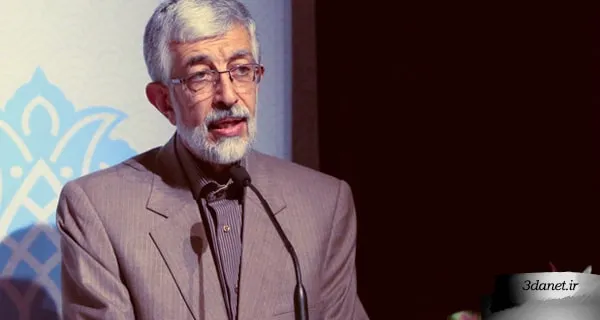
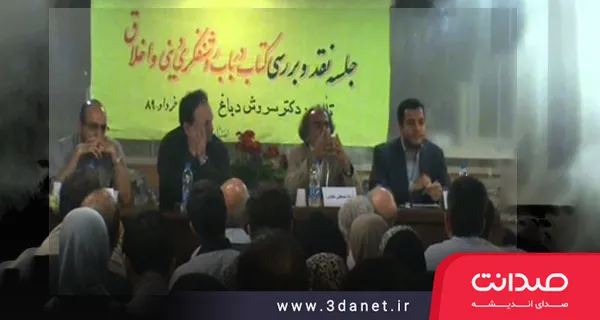
The session critiquing Haddad Adel's Quran translation was held tonight, the ninth of Khordad, with a large turnout of enthusiasts of Quranic studies, exegetes, and translators of the Quran at the scholarly associations of the seminary, and the reception of this session was such that there was no space to sit in the associations' building. At the beginning of this session, the translator said in his remarks: I have always wished, and still do, that reading translations alongside the recitation of the Quran would become a tradition and spread in the country, and I believe that beautiful recitation of the Quran, Tajwid, Tarteel, and artistic reading should all be a prelude to understanding, comprehending, and acting upon the Quran. Haddad Adel stated: In our country, optimistically speaking, 90 percent of even our educated people do not understand the meanings of the verses in gatherings and assemblies, and this is the greatest injustice to the Quran and an instance of the forsaking of the Quran, because we print the Quran beautifully and recite it, but no one understands its meaning, and this is distressing, and I have had this wish for many years, and for this reason, I turned to writing translations. .
A Step Forward
Continuing the session, Hujjat al-Islam wal-Muslimin Mohammad Ali Koosha, author and critic of translations of the Holy Quran, while presenting objections to Haddad Adel's translation, said: The more than 150 critiques I have made of translations from the fourth century until now, whether in writing or in the classroom, have all been for the purpose of completion and not out of disparagement of the author and translator, and for this reason, all those whose works I have had the opportunity to study and critique have thanked me in writing or orally. He added: His translation is a step forward, and he is among the masters of the art in the Persian language and a pioneer in preserving and safeguarding the Persian language, which is very useful for those in the field of translation, and I always refer seminary students to this translation.
Conceptualism in Translation
Continuing the session, Reza Babaei, as a critic, said: Mr. Haddad stated that his translation is concept-oriented, and I personally also believe in this type of translation because Quran translation is still plagued by literal translation, and current translations have not changed much from those of 70-80 years ago, and this very dangerous affliction and blight in translation still exists. He added: The most crucial discussion is whether the unit of translation is the word or the sentence? Currently, most of the debate is about how a certain word should be rendered into Persian, but I believe the main issue in translation is the reason for translation, and if this reason does not receive a correct answer, it will not lead to a correct approach, just as most translations have fundamental problems.
Mistranslation of the Word Jahl
Also, continuing the session, Mohammad Esfandiari, a veteran of contemporary prose and a critic at the meeting, addressed some of the translation errors of Haddad Adel, including the word Jahl, and said: In verses where the word Jahl and its derivatives appear, these words have been translated as ignorance and the ignorant, which is incorrect. He continued: Jahl has three meanings; one is the opposite of Hilm (forbearance), the second is the opposite of Aql (intellect), and the third is the opposite of Ilm (knowledge), but our minds mostly go to the third meaning, whereas in our narrations, other usages are seen in abundance; therefore, in translation, we must interpret Jahl according to the narration related to the verses. Esfandiari emphasized: Izutsu has discussed this for more than 50 pages, and as it happens, in the Encyclopedia of the Islamic World, under the entry for Jahl and Jahiliyyah, this point is mentioned, yet the translator has still incorrectly chosen this meaning.
The Translator's Defense
At the conclusion of the session, Haddad Adel defended his translation and stated: Regarding the word Jahl, I was fully aware that this word is not always the opposite of Ilm (knowledge) and in some cases is the opposite of Aql (intellect), but 'Nadan' (ignorant) in Persian has exactly the meaning of 'Jahil' in Arabic, and 'Nadan' in Persian is more often the opposite of 'Aqil' (wise). He added: I have tried, if I had any doubt about lexical and terminological words, to refer to exegesis. Haddad Adel stated: I believe that in translating the Quran, our intention should not be to teach Arabic to someone who does not know Arabic, because this is the Word of God, the Quran; therefore, we must understand the concept at the highest level and convey it, while at the same time remaining faithful to the words of the Divine Speech. Also, on the sidelines of this session, Ayatollah Yaghoub Jafari responded to some of the remarks made by critics of Haddad Adel's translation.
.
.
Audio of the Session Critiquing Haddad Adel's Quran Translation
.
.
Session Critiquing Haddad Adel's Quran Translation | 30 May 2016
.
.

Discussion1 comments
سپاس