Philosophy
Mohammad Zaimaran: Heidegger's Autobiographical Writings as Philosophy and Ideology
Heidegger's election as rector of the University of Freiburg after the Nazi rise to power placed the relationship between his philosophy and politics under scrutiny. The complicity of German philosophers with National Socialism requires that his position be judged within the framework of specific discourses and criteria.
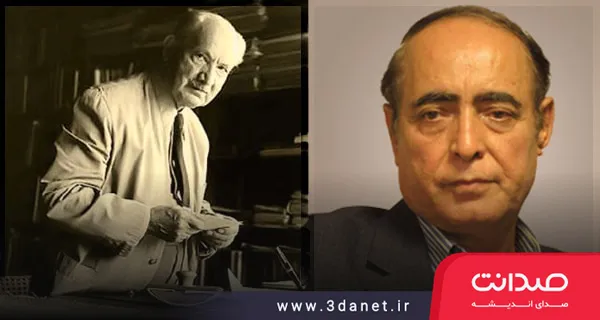
On April 21, 1933, exactly three months after the German National Socialist Party came to power, Professor Heidegger was elected rector of the University of Freiburg. Today, everyone asks themselves whether Heidegger's political leanings are connected to his philosophy, or whether the political question should not be conflated with philosophical views. This is a question that has preoccupied the minds of friend and foe alike. Richard Rorty once said before his death that there is a close connection between politics and philosophy, adding that Heidegger did not take the side of ethics and virtue in his political life. Conversely, Hans-Georg Gadamer, referring to an article entitled
Most German philosophers at this juncture found their comfort and security in aligning themselves with the realities dominating German society, namely the influence of National Socialist ideology. This was true not only of Heidegger, but also of Alfred Baeumler, who had begun his philosophical activity with research on Kant's third critique, the Critique of Judgment, and had gained renown in this field and occupied Nietzsche's chair in philosophy. By linking himself with the National Socialist party, he occupied a new chair at the University of Berlin. In 1934, Alfred Rosenberg appointed Baeumler as head of the science department of the office known as the Bureau for the Supervision of the Spiritual and Ideological Training of the Nazi Party. Eight years later, he also assumed responsibility for drafting the plan for the inauguration of the Nazi university. Bruno Bauch, professor of philosophy at the University of Jena, joined the party. Nicolai Hartmann, professor of Kantian philosophy, also declared his loyalty to Hitler's party. The famous philosopher Heinrich Rickert and the prominent German psychologist Wilhelm Wundt also declared their loyalty to the ideology of National Socialism. Gottlob Frege also joined this group. Oskar Becker, a student of Husserl and professor of the history and philosophy of mathematics, also officially declared his loyalty to this party. Hermann Schwarz, philosopher of religion and specialist in Meister Eckhart and mysticism, who was for a time university president, officially declared his inclination toward the Nazi party from 1923. Max Wundt, son of Wilhelm Wundt, professor of philosophy at the University of Jena and historian of German philosophy, while declaring his enmity toward Weimar democracy and his belief in Germanic racial and ethnic theories, acknowledged the superiority of the German Aryan race through the publication of numerous treatises. Carl Schmitt, the political science theorist, and Hans Freyer, the German sociologist, and Arnold Gehlen contributed to the formation of the ideology of National Socialism. What seems astonishing is that thinkers with different tendencies and opposing views joined this movement. Interestingly, the Hitler regime showed a strange tolerance and forbearance in the face of this diversity of thought and perspective. Gerhard Lehmann declared in 1943 that before the emergence of the National Socialist movement, philosophy had been in decline and on a downward slope, but with the emergence of this current, an aspect of a "philosophical renaissance" appeared in German society and culture. It is interesting that during the trial in 1945, Hans Heyse officially declared that in the difficult situation of the modern world, and especially Germany after 1914, National Socialism came to power in 1933 as a movement that was not very clear but was promising. In 1933, during a conversation with Dr. Martin Heidegger, we came to the conclusion that this movement somehow contained the destiny of the German nation within itself, and therefore everything in this regard depends on creating and forming an intellectual and moral foundation for it.
Establishing a Meta-Discourse in Germany
The first philosopher in Germany to speak out on this matter was Alfred Baeumler. In his inaugural lecture in Berlin in May 1933, he referred to the occasion between philosophy and the political reality of that time and noted: It is my task to present an image of the political human being in the present time. He attempted to establish a close connection between his philosophical discipline and the political sphere. On the same day, a book-burning ceremony was held in front of the university entrance. Addressing the students who had participated in this ceremony, he said: Dear students, you are now leaving this gathering to go and participate in this ceremony and consign to the flames books in which enmity toward the glorious culture of Germany is clearly observed and which are at war with us. He added that this act is merely symbolic. One must fight the enemy with words. He sought to clarify for them the concept of two distinct realms; one the symbolic realm of politics and the other the discourse of philosophy. He emphasized that these two spheres must be separated. Meaning that the intellectual independence and autonomy of the university must be respected by all. Therefore, the German university must not become a tool in the hands of forces outside the university. So that politics and the spirit of culture find unity in symbols, but in institutions they must remain separate. In the interpretation of symbols, everyone is free. Nevertheless, one must strive for the true and profound interpretation of what is currently happening. Words must not be prescribed by directive. This argument by Baeumler paved the way for the critique of philosophical positions unsuitable for the prevailing conditions. According to him, the philosophy that shaped the German university has become obsolete; sages such as Fichte and Hegel must be honored and revered. But at the same time, our task is the organized and systematic critique of the idealist tradition. This is a task upon which the future depends. In this lecture, Baeumler noted that "I am here determining the relationship between theory and practice and clarifying for you the order within which we live." He presented a new definition of the human being, one who belongs to a specific people, nation, and race. The model and ideal vision for the new human being was not a humanistic education but the model of a "political soldier," and therefore the task of philosophy is the interpretation of this new concept. In explaining the secondary relationship between symbol and word, he paved the way for the relationship between politics and philosophy. Exactly 17 days later, Heidegger delivered his lecture at the University of Freiburg on the occasion of his appointment to the rectorate. In this lecture, he established a relationship between knowledge and destiny. Although Heidegger's words possessed a particular philosophical depth, both lectures shared similar motifs.
Both of them must be considered within the category of metadiscourse Metadiscourse. A careful examination of this oration reveals that the author expressed his deepest feelings in the form of words. This speech was neither a purely philosophical lecture, nor could it be considered a purely political discourse. In this oration, Heidegger drew upon the concepts of his own philosophy. Here he pointed out that one must return to the first Greek philosophers and receive the answer from them. They considered knowledge not as a form of theory but as a power. Dasein has taken up residence within it. This knowledge consists of a questioning that, while preserving and safeguarding its own foundations, contains within itself the hidden system of that which is. Nietzsche, in the expression "God is dead," brought to the fore a fundamental transformation in the human being's concern with Dasein. It is here that questioning and inquiry are no longer the first steps, but rather questioning becomes the highest form of knowledge. Now, as the new rector of the university, the time has come to abandon the liberal concept of academic freedom and transform the university, in terms of the division of labor, into two parts: the old academic disciplines and the training of students for military and labor service.
It is here that Heidegger, by proposing a new meta-discourse, sought to clarify the relationship between the philosophical and political spheres. In this speech, he mentioned no name of Hitler or National Socialism. Nevertheless, he abandoned his usual discourse and proposed an unprecedented meta-discourse. The tone he adopted in this address was not that of a professional philosopher or a political administrator, but that of a spiritual leader. In fact, his speech entailed a commitment to the spiritual leadership of German youth. For science, in its totality, is philosophy. This means that knowing and knowledge entail confrontation and engagement with the prevailing forces of the world and the determining factors of historical Dasein. At these junctures, we encounter history, language, people, customs and traditions, poetry, faith, madness, death, law, economy, and technology. Only if we devote ourselves to these issues and subjects will the German university and the people of this land be able to fulfill their historical mission and truly grasp the glory and grandeur of this mission. » In this address, Heidegger summarized his philosophy and, by the same token, reminded that at this juncture of history, we must strive to unify science and destiny, philosophy and politics. It was for this reason that the students present at the ceremony said the esteemed rector had articulated a particular narrative of National Socialism at the university level.
Counter-discourse and Meta-discourse
The efforts of Baeumler and Heidegger to interpret the prevailing political conditions in terms of their own philosophical views did not go unchallenged. Serious critiques by Bruno Bauch, professor of philosophy at the University of Jena, against Heidegger and Baeumler were published in the periodicals of that time. Contrary to the two latter thinkers, he believed that German philosophy was in truth the heir to the tradition of German Idealism and should be considered its continuation. He then pointed to the formation of society's higher values and said that one must understand the distinction between goals and values. Here, Nietzsche's theory of the evaluation of values was subjected to critique and examination, and a new objective interpretation of his view was presented. Hartmann referred to Plato's theory of the objective existence of values and added that although Plato created a rift between the world of meaning and value, Kant and the Idealists overcame this rift. According to him, this is one of the achievements of German Idealism, which challenged the transcendence of meaning. In the next step, Nietzsche took the further step and declared that a system of values exists in this world, and added that there are values that have been distorted in Christian morality. Hartmann said that Nietzsche here took the path of excess. Meaning that Nietzsche granted humans the ability to invent values themselves and speak about them. Here, it is the combination of Kant's view on the primary character and necessity of moral needs with the multiplicity of values in Nietzsche that aids us. Values must be distinguished from meanings. Because meanings entail volition and choice, and we can select them from among the various existing values. But this selection is not the task of individuals; rather, it is nations that must choose these values. Every society must assist its leader in realizing meanings and enable him to select these meanings. Public opinion or the majority are not capable of expressing the tendencies of society; only a great leader can say what those values are. It is this leader (Fuhrer) who can recognize necessities and bring them to the fore. It is he who discerns goals and meaning in history. The materialistic and pragmatic spirit of this age must be overcome. It is the duty of all citizens, and especially of those in philosophy, to strive for the realization of this mission. Considering these discussions, it became clear that Baeumler and Heidegger each interpreted the political situation by relying on Nietzsche's critique of values. But Bauch and Hartmann explicated the theory of value by relying on the new political realities. It is worth mentioning that the members of the German Philosophical Society were in no way in agreement with Heidegger's views and claimed that his thoughts belonged to the past. In their opinion, he had preoccupied himself excessively with the dread of consciousness as the fundamental characteristic of Dasein. Heidegger sharply criticized the value theory of rival philosophers, and for this reason, he focused his lectures on Nietzsche and nihilism for a time, and reminded that a thought which measures everything in terms of value is itself an aspect of nihilism, and those who laugh at the madman who cries out "God is dead" have merely negated thinking and mistaken it for drivel that reeks of nihilism. In any case, figures such as Jürgen Habermas claim that the roots of his political inclination toward National Socialism lie deep within his philosophy. But some other German thinkers believe that his negation of objective values is in no way compatible with Nazi ideology. Nevertheless, philosophers have long said that philosophy must lift the philosopher's gaze from earthly and everyday concerns and direct it toward truth. Heidegger also put forward this same approach in the discussion of the question of Being. However, his initial interest in the question of the meaning of Being inclined him toward reflection on Dasein, the essential and fundamental existence of the human being. But with the emergence of new conditions in Germany, in his inaugural address at the University of Freiburg, he spoke of reforming the German university system, and thereafter claimed the spiritual leadership of the National Socialist movement. Plato's initial gaze from the phenomenal worlds toward the realm of Being in Socratic thought was ultimately manifested in the return to the phenomenal realm (back into the cave). In Heidegger's experience, too, it began with the concern for Being, but it was not long before it became linked with the historical conditions of human beings. It is evident that philosophy has long paid attention to the relationship between thought and the environment in which thought flourishes. Therefore, no one throughout the history of philosophy has been able to resolve this paradox.
همین اصل دکارت را بر آن داشت تاریخ را بهعنوان افسانه جهان (Fabula mundi) رد کند یا لایب نیتس میان حقیقت امر واقع و حقیقت عقل سرگردان باشد یا هوسرل در اکثر آثار خویش گرایش به روانشناسی را به چالش گیرد. لذا طرح پرسش فلسفی پیرامون مناسبت میان زندگی و تفکر، مساله تفکر و زمان، تفکر و شرایط حاکم، کاری است بس دشوار. نزاع اصلی فلاسفه میان گرایش لازمان فلسفه و رویکرد زمانمند به مسائل فلسفی بوده است. گفتنی است سه درون مایه فلسفی در اندیشه هایدگر یعنی تاکید بر دازاین بهعنوان وجود تاریخی و زمانمند، دور هرمندتیکی و بحث افزامندی (Zuhandenheit) هستی موید فهم فلسفه او برحسب شرایط تکوین آن است. هایدگر خود یادآور میشود که رهیافت حقیقی به مساله هستی مستلزم بازیابی نظرگاه پیشسقراطیان در باب هستی است. لذا آنها که اندیشههای هایدگر را فراسوی گستره تاریخمند آن مدنظر قرار میدهند فرادادههای هایدگری در آموزههای او را نادیده میانگارند. خود او در مصاحبهای که با مجله اسپیگل انجام داد و بعد از مرگش به چاپ رسید صریحا اظهار کرد که روزگاری او میپنداشت نازیسم نمودار فرصتی است در خور توجه. اما رفتهرفته با گذر زمان او از این ایدئولوژی دلزده و مأیوس شد و به همین جهت درسگفتارهای خود در مورد نیچه را آغاز کرد. او در خلال سخنرانیهای خود نظریه معروف نهیلیسم خود را مطرح کرد و بعدا به فلسفه تکنولوژی پرداخت. به همین جهت او در گفتوگو با اسپیگل یادآور شد، نازیها کوشیدند استیلای تکنولوژی جهانی را به چالش گیرند اما در این رسالت شکست خوردند. بعضی بر این باورند که نوشتههای یادشده موید دلسردی و مخالفت او با ایدئولوژی نازی بوده است. باید توجه داشت که وقتی هایدگر کتاب «هستی و زمان» را مینگاشت فریاد مردم آلمان از شکست آلمان به آسمان بود و همین امر نیز زمینه بروز جنگ جهانی دوم را فراهم ساخت. تاکید هایدگر بر اتکا به نفس ملی، اصالت، کنش مصمم و با عزم آهنین و گرایش به آینده ریشه در ناکامیهای ملی آلمانیها در جنگ جهانی اول و ویرانی این جامعه و فرهنگ داشته است. این عوامل در هستیشناسی بنیادین هایدگر راه یافت و فلسفه او را در مرحله نخست شکل داد. به قول بعضی اندیشه هایدگر را باید فرانمود فلسفی جمهوری وایمار به شمار آورد، همانگونه که گفتههای افلاطون تبلوربخش شرایط حاکم بر آتن قرن چهارم پیش از میلاد و نوشتههای هگل بازتابدهنده هویت مردم پروس پس از انقلاب فرانسه محسوب میشود رهایی از شرایط زمان و مکان امری است محال. هایدگر هم از این قاعده مستثنی نیست!.
.
Heidegger's Autobiographical Writings as Philosophy and Ideology
Lecture by Mohammad Zaimaran at the Seminar "An Introduction to Methods of Art Criticism"
30 Azar 1395 | Iran Hall, Faculty of Visual Arts, University of Tehran
Text published in: Farhikhtegan Newspaper
.
.





Discussion0 comments
No comments yet; let yours be the first voice.