Philosophy
Mohammad Zaimaran's Lecture at the 'Philosophical Approaches in Cinema' Conference, Titled 'The Philosophy of Cinema'
The philosophy of cinema has roots in the thought of Plato and Aristotle and flourished from the 1980s onward. The relationship between philosophy and film theory, the early perspectives of literary figures, and racial and colonial critiques of cinema were examined in a session with Mohammad Zaimaran.
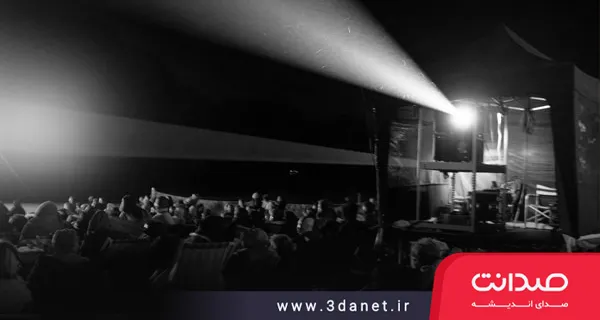
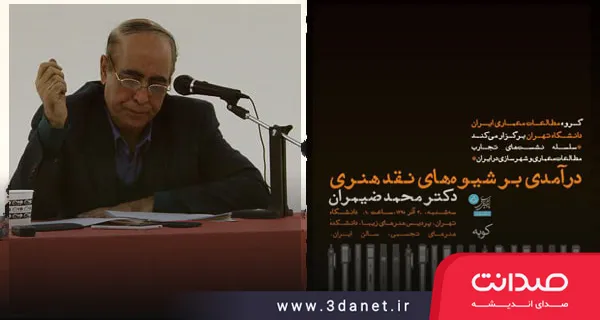
A look at the presence of philosophy in cinema can be a source of extensive research in both disciplines. Given the importance of such a current, Dr. Mohammad Zaimaran, at the conference “Philosophical Approaches in Cinema” held at Shahr-e Ketab, briefly addressed the place of philosophy in cinema. The following article is the result of this inquiry.
Before the 1980s, the number of works published on the philosophy of cinema did not exceed the fingers of one hand, but from this decade onward, a renaissance emerged in this field. There are many reasons to justify this auspicious event. But suffice it to say that the explosion of cinematic works and activities in general gradually made the philosophical examination of cinema a special necessity and placed it alongside the philosophy of theater, the philosophy of dance, and the philosophy of painting. Today, the philosophy of film is taught in most educational institutions worldwide as an important subject under film aesthetics, film theory, and film criticism. Here, two major characteristics of the philosophy of film should be pointed out before entering into the more subtle and precise discussions of this discipline; first, cinema researchers who are not themselves professionally considered philosophers have made a major contribution to raising philosophical issues. This distinguishes the philosophy of cinema from other philosophies of... Second, there is a close relationship between the philosophy of cinema and film theory. Therefore, separating film theory from the philosophy of cinema is an extremely difficult task and may not yield any tangible benefit.
It is obvious that the philosophy of cinema can be traced back to Aristotle’s famous treatise, the Poetics. In this treatise, Aristotle sought to analyze the prevalent art form of his time, namely tragedy, from a philosophical perspective. In this invaluable work, he explained the various types of dramatic and poetic arts and, in defining tragedy, addressed the various aspects of the genre. Thus, he examined the types of events in terms of their parts and limits, the social status of the dramatic characters (noble and base), the moral qualities of the characters (examining tragic flaws and errors), the structure of the narrative (dramatic reversal or sudden change), and the effect of the work on the audience (catharsis of pity and fear or terror). The Aristotelian school still plays a decisive role in the philosophy of art in general and the philosophy of cinema in particular.
Plato, in Book III of the “Republic,” also divided artistic forms into three categories: 1- pure imitation of dialogues (in tragedy and comedy), 2- direct narration (dithyramb), and 3- a combination of the two (in epic). Aristotle, influenced by his teacher, also distinguished between the medium of representation, the subject represented, and the manner of representation and embodiment. It can be said that the philosophy of cinema, as well as film theory, derived its historical background from the thoughts of the two ancient Greek philosophers, Plato and Aristotle. It is interesting to note that there is an extraordinary parallel between Plato’s allegory of the cave and the ontology of cinema. In the sense that both Plato’s cave and cinema deal with a form of artificial light. In Plato’s cave, a light shines from behind the prisoners or spectators. In this cave, the aforementioned weak light casts its rays upon people moving outside the cave, and its reflection falls on the wall at the end of the cave, causing the prisoners to mistake the reality of the people outside the cave for their shadows on the cave wall. In the world of cinema, too, a light shines upon a film, which is itself the shadow of real people and spaces, causing a shadow of it to be reflected on the wall. In both cases, that is, in both the cave and cinema, the light is behind the prisoners and spectators, and both groups deal with shadows. Therefore, the role of Plato and Aristotle in explaining modern cinema cannot be ignored. It is evident that today, film and cinema, as a highly important art form, place a responsibility on philosophy to dissect the nature of this artistic phenomenon. Today, various schools and movements have undertaken the task of analyzing, criticizing, and interpreting cinema.
Most early writings about film and cinema were penned by renowned literary figures and authors. For instance, Maxim Gorky, commenting on a film screened in Russia in 1896, said: “Last night I was in the kingdom of shadows. If you only knew how strange it was. A world without sound, without colour. Everything there—the earth, the sky, the trees, the people, the water and the air—was dipped in monotonous grey. What I saw was devoid of life. Everything was reminiscent of the shadow of life. A strange silence pervaded everything; no sound of wheels, footsteps, or conversation could be heard.” Writers regarded cinema as literature for the illiterate and noted that cinema promised harmony, sympathy, and empathy for both the cultivated and the uncultivated. Cinema knows no borders; cinema dissolves ethnicity, nation, and race. In an article published in the world of cinema in 1910, it was stated that upon entering a movie theater, one feels freed for a time from the constraints of one’s environment. Another piece in 1913 stated that for the stranger and the illiterate, language is in no way limiting. The destitute and degraded person realizes that he, too, shares a similar fate with the cinematic figures on screen. He witnesses courage, pain, suffering, and grand aspirations, and through this, gradually comes to understand the depths of his own existence.
Yet at this same time, African Americans protested the racism pervading D. W. Griffith’s film “The Birth of a Nation.” In the 1920s, heated debates about racism in Hollywood also erupted. Fredric Jameson says: “The history of cinema is not separate from history in general. Cinema torments the individual while also being inspirational.” Some claim that a nationalist and chauvinistic aspect gradually grew in cinema, and cinema became a tool serving the great powers, thus reflecting national, ethnic, and racial fantasies. In the early twentieth century, most films were produced in England, France, America, and Germany. These four countries were also the greatest global powers. Recent research, including post-structuralist and post-colonial approaches, has incorporated these aspects of film production into its discussions and analyses. According to post-colonial scholars, the dominant Western cinema narrated the story of history’s slaves. In such films, themes like the mission and duty of civilizing and the superiority of the white European race constituted the most important cinematic motifs. In truth, the dominant cinematic discourse of this period embedded a Eurocentric and ethnocentric aspect deep within its plots. It was during this period that history, geography, anthropology, ethnography, and the like were reflected in the plots of various films. This situation gradually changed with the onset of World War II, and from the 1930s onward, fascism took hold in Europe, major films in Italy and Germany came under the control of official ideologies, and a number of filmmakers placed their art at the service of the official goals of their respective states. With the end of the World War, this process underwent a major change.
The Philosophical Nature of Cinema ( Philosophy of Cinema )
The primary issue that philosophy posed regarding cinema at the outset was the question of whether cinema could be considered an art form. Initially, due to its popular and mass nature, cinema was not regarded as an artistic form in comparison with arts such as theater, painting, opera, and other fine arts. Moreover, cinema borrowed elements from other arts. Most early films largely reflected theatrical performances or everyday life. Hence, cinema was often seen as a window onto other arts. Gradually, however, some researchers and philosophers began to examine and analyze the ontological foundation of cinema. In the classical era of cinema, three figures played a significant role in formulating and outlining the philosophy of cinema: “Hugo Münsterberg,” “Rudolf Arnheim,” and “André Bazin.”
Münsterberg studies cinema as a specific medium from an ontological perspective. He is the first philosopher to have, while compiling a monograph on film as a particular art form, distinguished it from other visual arts including theater, painting, and sculpture, and claimed that elements such as editing, flashback, and close-up, as technical tricks, distinguish the cinematic film from other visual arts. In Münsterberg's view, it is these very visual and technical elements that give cinema a distinct character and turn it into a self-sustaining art. He can be counted among the first cognitive philosophers in the field of cinema. Münsterberg drew upon the categories of Neo-Kantian philosophy as well as the psychology of perception and claimed that cinema can be considered the art of representing subjectivity. Because film imitates the methods that human consciousness employs in formulating the phenomenal world. According to him, the play of images, by overcoming the forms of the external world—namely time, space, and causality—narrates a human story, and thus, by adjusting and modifying events in the way that the forms of our mental world dictate, that is, in light of the employment of memory, imagination, and emotions, it presents a narrative before the audience. What was important to him was the connection between cinematic processes and mental dynamics. Hence, it can be said that he emphasized the psychological and mental elements in the creation of cinematic art. He can be considered the philosopher of silent cinema.
Rudolf Arnheim published a book in Germany commonly known as Film, which was published in the English-speaking world under the title Film as Art. He, like Münsterberg, was an advocate of Kant's philosophy. In psychology, he was a proponent of the Gestalt school. Hence, he examined visual perception and paid particular attention to the perception of motion. He, too, like Münsterberg, emphasized the major role of the human mind and consciousness in shaping every phenomenon, including film. Arnheim claimed that sound cinema should be considered a decline from the peak of silent cinema. He was also among those thinkers who believed in the specificity of the cinematic medium. It is worth noting that some thinkers used other artistic disciplines to describe the nature of cinema. Arnheim considered cinema a unique art and pointed out that cinema should be regarded as art in the strict sense of the word.
In his opinion, the aesthetics of cinema should not be confused with other fields of art. He considered silent cinema the pinnacle of the seventh art and said that the elimination of all perceptions except the sense of sight and the reduction of depth, the projection of solid, three-dimensional objects onto a flat surface, the absence of color, and the discontinuity of time and space distinguish cinema from other arts. In his view, film must first be considered a mental phenomenon, and what are considered enabling characteristics in other arts, their absence in cinema is counted among its strengths. Hence, speech and words in cinema should not be counted among its strengths. In fact, this very speech diminishes its visual beauty. According to him, adding sound to motion in cinema sterilizes the progress and transcendence of this art because cinema audiences, when confronted with sound film, become accustomed to a kind of artificial realism. In reality, speech empties cinema of its original essence, which is precisely the visual element, and distorts its character.
Although André Bazin was not a professional philosopher, through the publication of articles that still have a profound influence on film and cinema theorists, he challenged Arnheim's theories. In his view, there is no particular duality between silent and sound film; rather, this dualism should be drawn between films that emphasize the image and those that rely on montage. Although montage was considered the essential feature of cinema by figures like Eisenstein, André Bazin, in order to demonstrate the presence of alternative methods in the realization of cinematic art, returned to the era of silent cinema and recalled that the film camera must display the true nature of the world, because in his view, film and cinema possess a realistic character, as their roots must be sought in photography. According to him, the future of cinema as an art form depends on the genesis and evolution of its ability to present an image frozen in time of the external world. For this reason, he emphasized realism as the primary genre of cinema. In this context, he spoke of the expression "the mummification of reality." In his belief, cinema always strives to substitute the world with its double. Cinema blends photographic imitation with the reproduction of time. In his opinion, the image of objects and phenomena is the mummified image of their time. According to him, the photographic image is itself an object—an object freed from the conditions of time and space governing it.
Cinema from Structuralism
Structuralism is an expression used to examine all phenomena existing in the human world, including language, literature, kinship relations, art, and various domains such as cinema. Structuralists consider all observed elements and factors within a system of relations. Ferdinand de Saussure is the founder of this movement in the field of semiotics. Generally, the structuralist narrative of any artistic phenomenon, including cinema, involves these motifs: 1- discovering the immutable and fixed laws of mental activities at the linguistic level and other cultural phenomena such as myth, kinship systems, and the like; 2- discovering binary poles such as the signifier and the signified in the analysis of metaphor and metonymy; 3- discovering the formal order of interpretive codes in the deep structure of the subject of research; 4- combining factors 1 and 3 precisely or generally.
In the twentieth century, a large number of philosophers, including Wittgenstein, Bakhtin, Merleau-Ponty, Heidegger, Barthes, and Derrida, emphasized the importance of language in human life; therefore, structuralists also based their discussion on language. For this reason, in philosophy, the linguistic turn or linguistic revolution came to be discussed. This issue is important in both continental and analytic philosophy. Lévi-Strauss challenged the issue of the author and creator. In the domain of cinema, the auteur theory was also subject to much criticism. It is worth noting that the film director as author was first proposed by Truffaut. By applying the concept of the author in cinema, Truffaut sought to question the role of literature and literary works in the cinematic arena. In his view, only films whose screenplay is created by the director, and who plays a key role in its production, possess artistic merit. Only such films can be recognized as works of art. This theory faced much criticism because it neglected the role of other filmmaking factors. Structuralists in the realm of cinema pointed to the death of the author, and it was in fact they who paved the way for the overthrow of the authorial concept. Auteurism fundamentally had its roots in existentialism and particularly French humanism. André Bazin used Sartrean expressions in his cinematic discussions. Both Sartre and Bazin emphasized the centrality of the subject and the author in general. Structuralists, and particularly thinkers like Foucault and Roland Barthes, by proposing the death of the author and the general decline of the philosophical subject, opened the ground for a new semiotic approach in cinema and film criticism.
In fact, it can be said that structuralism caused the overthrow of the author-centered paradigm and a turn toward language and signs. In the realm of cinema, Lévi-Strauss's work on myth became the basis for the work of cinema practitioners. They abandoned discussions about the genius and creativity of the film director and made the film itself the basis for structural analyses. Film semiotics gradually became widespread in the French cultural milieu, and with the interdisciplinary studies of figures such as Barthes, Foucault, Greimas, and Christian Metz, new linguistic concepts emerged. In the 1960s, a new discipline called "film linguistics" took shape in France. Christian Metz can be considered the founder of this school. For Christian Metz, cinema is an institution rooted in cultural and social structures, including the economic infrastructure, the studio system, and technology. He called these elements pre-cinematic events and then pointed to post-cinematic events such as distribution and exhibition, film screening, and the political, social, and economic impact of film. He regarded the film itself as a text in which a network of codes is intertwined, creating a specific texture within the film. Film is a discourse composed of linguistic significations. He distinguished between film and cinema and said the relationship between the two can be compared to the relationship between story and literature. Cinema is composed of a collection of films, and film can be likened to Saussure's parole and cinema to langue.
Cinema from a Post-Structuralist Perspective
From the 1970s onward, a new movement called post-structuralism challenged the themes and motifs of the structuralists. The proponents of this movement were Foucault, Barthes, Derrida, and Kristeva. They sought to challenge the centrality of structure. It can be said that the main goal and fundamental motivation of post-structuralism was the deconstruction and dismantling of structures. In the realm of art, post-structuralists sought to challenge the self-sufficiency of the artwork. They do not consider the artwork an object but rather recognize it as something that lies between the object and the audience. This thing or space is composed of infinite meanings and significations whose origin and end cannot be determined. In fact, the boundaries and limits of the work, from a post-structuralist perspective, dissolve in the process of deconstruction. Here, the artwork reverts to a text, and this text is placed within a network of other texts and in interaction with them. In a sense, the text in question can be considered the space between texts. From a post-structuralist perspective, the signified cedes its validity and currency to the signifier. Furthermore, the post-structuralist critique of structuralism rests on two pillars: first, that no self-sustaining system, or structure as they call it, can be assumed; and second, that the dualities and binary oppositions that the structuralist system considered are fundamentally unjustifiable. In a short essay titled "Structure, Sign, and Play in the Discourse of the Human Sciences," Derrida challenged the metaphysical foundations existing from the time of Plato to the present day, stating that the concept of structure, the most key category cited by structuralists, entails a centering aspect, and that the center or focal point generally originates from considering being as presence. He added that even when we speak of our own existence as a system of body and soul, we inevitably assume it crystallized in a unified identity conventionally known as the 'I,' or ego, or self. This identity and essence, as a unifying foundation, explains the basis and structure of all phenomena.
Derrida argues that Western metaphysics, since the time of Socrates, has employed numerous interpretations in discussing principles, foundations, and axial structures, but what is sacrificed in these oppositional and binary spectrums is irony, allusion, metaphor, metonymy, and jest. Derrida considers Western philosophical thought to be replete with oppositions, analyzing them under the rubric of logocentrism, and says that since Plato’s era, a duality has always prevailed between speech and writing, with speech having precedence over writing because presence is fundamental in speech, while absence governs writing. In this sense, writing has always been regarded as a copy of speech. Derrida claims that the ruse that helps us understand and grasp this relationship is precisely deconstruction, opening-up, or dismantling. Derrida’s main technique in employing dismantling is the notion of alterity and suspension and deferral. In this sense, he places metaphysical oppositions in a different kind of relationship. In his view, every concept of opposition must be put into suspension, and through this, one must free oneself from oppositional spectrums. Derrida claims that one of the main afflictions of the logocentric gaze is the acceptance of a presupposition based on the oppositional hierarchy of man, woman, West, East, white, black, and the like in the depiction and representation of human relations. It is evident that from the beginning of the growth and expansion of cinema, Hollywood has always designed cinematic subjects on the basis of these very oppositional spectrums. Films such as The Birth of a Nation, The Terminator, Star Wars, and the like have all been produced on the basis of logocentrism. Most importantly, Derrida’s doctrine known as phallogocentrism has found objective crystallization in Hollywood films. All the films produced in the 1970s about the Vietnam War were manifestations and symbols of phallogocentrism. In such films, America’s defeat on the battlefield takes on an inverted form in the film, and the defeat of reality is transformed into a virtual victory.
Deleuze and Cinema
The French philosopher Gilles Deleuze published two major books on cinema, inspired by Henri Bergson's theory of creative evolution. In these two volumes, he was by no means seeking to discuss film theory; rather, he endeavored to examine cinema from a philosophical perspective. He first addresses the function of art from a philosophical standpoint, claiming that the essence and origin of art, like philosophy, should not be limited to the representation of reality; instead, the artist, like the true philosopher, is one who seeks the creation of creative works. In this sense, they must fuel the movement of forces directed toward desire and longing. From the era of Plato to the age of Heidegger, philosophy and art have always considered truth their primary concern. Deleuze, following Nietzsche, argues that the work of art deals with forces directed toward desire and longing, and art's connection to truth, even if conceivable, is of secondary importance. In other words, the work of art sets life-giving and desire-arousing forces in motion. In a sense, the artist introduces new modes of being and imparts a fresh color to life and the will directed toward it. In the book Anti-Oedipus, Deleuze and Félix Guattari sought to challenge the two major pillars of semiotics, namely Ferdinand de Saussure and Jacques Lacan. They criticized Saussure from the perspective of language-centered metaphors, claiming that he ignored the dynamic and striving lexicon, the desire-oriented apparatus and energy, but their critique of Lacan was from the angle of the Oedipus complex story discussed by Freud. In their view, this Freudian doctrine has always been used as a tool for repression and suppression, and in the absence of access to the mother, it has bolstered patriarchal capitalism. According to Deleuze and Guattari, the Oedipus complex has always repressed multi-faceted and unruly desires and paved the way for the profitability of the patriarchal order, and contrary to Lacan, who promoted the dystopian narrative of the Oedipal subject, Deleuze explicates the ideal politics of multi-centered desires and reminds us that schizophrenia should not be considered a form of psychological pathology but rather a tool in the struggle against bourgeois ideological domination. While demolishing the Saussurean and Lacanian systems, Deleuze seeks to replace their theories with the logical and semiotic theory of Charles Sanders Peirce. According to Deleuze, film should not be considered a Saussurean langue or a Metzian language, but should be viewed within the framework of Peircean semiotics. Although, in his view, the relationship between cinema and language is among the most important issues of contemporary philosophy, this issue should not be reduced to Saussurean decoding, because Saussurean film semiotics empties cinema of its primary energy and vital force. In this sense, cinema's primary energy, namely movement, has always been neglected by Saussure and his followers within this system. Deleuze, imitating Henri Bergson, considered the encounter between perception and matter in cinema in the form of movement. Deleuze considered the infinite set of images in parallel with the constant movement of matter in an ever-changing and evolving world. In his view, being and matter are not static and fixed. The world of cinema should not be considered a world of frozen images; rather, it should be recognized as a world of images in a state of becoming, as Heraclitus would say. Film must be regarded as a rapid process and dynamic flux. In the film Citizen Kane, we as the audience are exposed to overwhelming waves, and time loses its main mechanism and routine, and we are confronted with temporality as a permanent crisis.
.
.
Download the article Philosophy of Cinema by Mohammad Zaimaran
Download from Server 1 | Download from Server 2
Article: Philosophy of Cinema | Mohammad Zaimaran | Ketab-e Mah-e Falsafeh, Year 1, Khordad 1387, No. 9
.
.
Audio of the lecture Philosophical Approaches in Cinema (Philosophy of Cinema)
Mohammad Zaimaran | Central Book City | Saturday, 11/4/87
.
.


Discussion1 comments
جالب بود. مقایسه تمثیل غار افلاطون با فیلم و سینما. سینما هم صنعت است و هم هنر. صنعتی است پولساز که صاحبان و تهیه کنندگان فیلم با هوشمندی می توانند قوه خیال و تخیل انسانها را تحتِ تصرف خودشان درآورند . سینما , آن صفحه جادویی است که براحتی جادوگری می کند. جادوگران با تصرف در خیال و نه عقل جادو می کنند. اگر سینما تنها( صنعت) باشد,, خیال و جادویی بیش نخواهد بود. جادویی که انسان را از خود بیگانه می سازد و آن خودِ دروغین را نمایش می دهد. اما اگر سینما هنر تلقی شود,, چه افقهای گسترده ایی به روی بشریت می گشاید. تمثیل غار افلاطون ,, هنرِ سینمایی افلاطون است. افلاطون فیلسوف هنرمندی است که در ذهنِ خودش با تمثیل ,,( امر نامتناهی) را در( امر متناهی) به گونه ایی نمایش می دهد. این هنرمندی هر هنرمند است که بتواند امرِ نامتناهی را در امر متناهی تعریف کند. از کل به جزء رفتن کار ساده ایی نیست؟ همانگونه که از جزء به کل رفتن مشکل است. در سینمای مستند که واقعیات موجود را به گونه ایی نمایش می دهد , دیگر تخیلات کمرنگ می شود و واقعیات آشکار می گردد. انسان با ساخت مستند , به خودش واقعیتِ خودش را نشان می دهد. مستند, آینه ایی است در مقابل انسان. برخی از فیلسوفان میگویند فلسفه میدانِ برهانآوری عقلی است، نه بازی با احساسات و به همین دلیل نباید فیلمها را وارد بحثهای فلسفی کرد؟ اما درواقع سینما اگر به فلسفه ورود کند به نوعی باعث رشد و ارتقای هنر نیز خواهد شد. آنجا هنر دچار بحرانِ عمیق می شود که دور از فلسفه قرار گیرد...