Philosophy
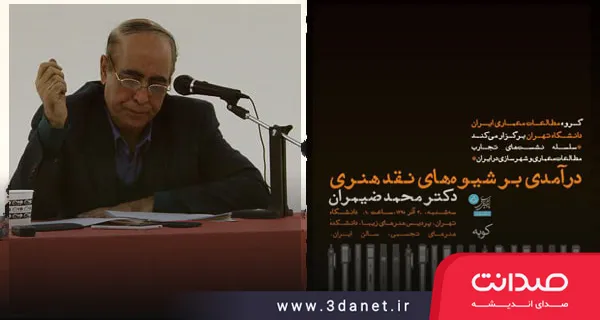
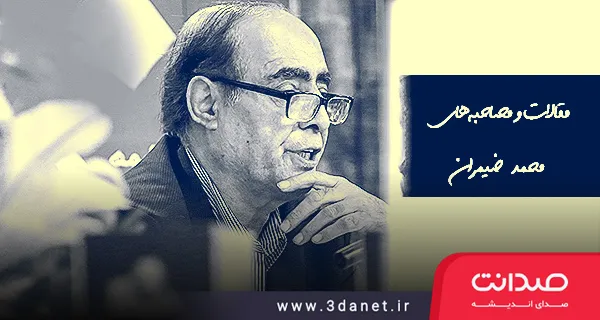
Lecture by Mohammad Zimran: “Phenomenology: Another Aspect of Levinas’s Thought”
Levinas, an influential figure in European philosophy, challenged Heidegger's ontology by centering the concept of transcendence. Rejecting abstraction, he emphasized the concrete human experience and the encounter with the Other, viewing death as the refusal of possibilities.
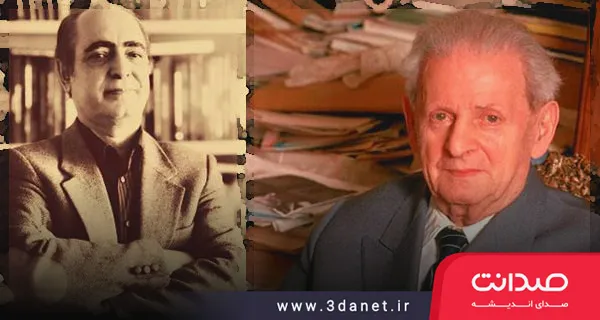
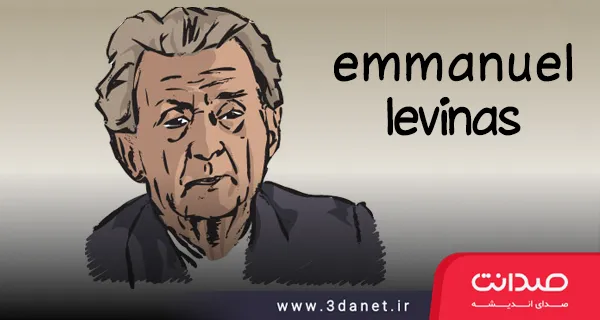
Levinas is an unknown yet influential thinker in the contiguous philosophy of Europe. To understand his philosophy, examining several keywords in his thoughts and writings plays an important role and brings us closer to the architecture of his ideas. The first and most important term reflected throughout his works is transcendence.
Levinas: Philosopher of the Other
He was born on January 12, 1906, in Lithuania. In 1914, at the start of World War I, his family emigrated to Kharkov in Ukraine. But in 1920, they returned to their homeland. In 1923, Levinas went to Strasbourg and there began studying philosophy at the University of Strasbourg. In 1928, he went to Freiburg to attend Husserl's classes. At the same time, Heidegger's seminars were also being held. He attended these seminars as well. In 1932, he married Raïssa Lévy. In 1934, he published a treatise on the philosophical analysis of the phenomenon of Hitlerism. In 1939, he became a French citizen. In 1940, he was arrested by Nazi forces and sent to a forced labor camp. In 1961, he published his doctoral dissertation, Totality and Infinity. In 1995, he published his famous treatise Alterity and Transcendence and on the twenty-fifth of December of the same year, he passed away.
Introduction
Levinas is a little-known yet influential thinker in the continental European philosophical tradition. To understand his philosophy, examining several key terms in his thought and writings plays a crucial role and brings us closer to the architecture of his ideas. The first and most important term, reflected throughout his works, is transcendence. In his master’s thesis, The Theory of Intuition in Husserl’s Phenomenology (1930), he first examined the meaning of intuition from Husserl’s perspective and argued that every experience is capable of phenomenological description and explication. According to him, every experience can be analyzed in the form of an intentional mode. The following year, in 1931, he translated Husserl’s Cartesian Meditations into French, and in doing so, addressed the transcendental dimensions of phenomenology. In his philosophical method, he was influenced by the philosophies of Husserl and Heidegger. For this reason, he subjected the centrality of the transcendental ego to revision and ultimately realized that Husserl’s philosophy was too entangled in essentialism—that is, it was caught in the abyss of particles and essences. He challenged transcendental methods and the a priori of experience. In this regard, and because of the empirical and concrete character of Heidegger’s philosophy in Being and Time, he turned his attention to this work. But gradually, in the years 1934 and 1935, he became aware of the shortcomings of Heidegger’s existential and transcendental philosophy. He therefore outlined the project of challenging Heidegger’s ontology—a counter-ontology. Hence, in interpreting the concept of transcendence, he said: transcendence is a need directed toward escape and liberation from the bonds of finitude and limitation. In 1935, he published the treatise On Escape, in which he examined the correlation between the empirical, embodied ego and the intentional ego, and within this framework, he considered the material and emotional needs of the human being. Unlike Heidegger, he shifted his attention from Being (existence) to the concrete, experiential existence of the human being, and contrary to Heidegger, he addressed everyday human experiences, making human states, manners, and habits the basis of his philosophical analysis. In this context, he noted that in the light of transcendence, we are able to free ourselves from the narrow confines of our own self, break the chains of identity, go outward—that is, into the realm of the other—and welcome them with open arms. In other words, to direct ourselves toward diverse possibilities. It is evident that Levinas accepted Heidegger’s conception of transcendence in the book The Basic Problems of Phenomenology. Heidegger, in defining transcendence, said: transcendence is stepping over from something to something. Here, Levinas analyzed Heideggerian Being within the framework of existence, presence in the shadow of feelings, emotions, experiences, and inner states. In 1935, he explicitly stated that inner states and feelings allow us to escape from ourselves and join the other. We must move beyond the discussion of Being and come to know our own existence. The distinguishing mark of our existence is precisely need. Need shows that we do not accept neutral Being or existence and strive to move beyond it. Levinas explicitly declared that “any civilization that passively accepts Being, and thereby justifies every crime for itself, deserves the name of barbarism” (On Escape, 73). Levinas’s writings of the 1940s focused on challenging the problem of Heideggerian Being. He centered his critique on the doctrine of the dimensions of embodiment. In 1930, he was deployed to the front as a reserve officer in the French army. But it was not long before he was taken prisoner by the Nazi army and confined in a camp near Hanover. In this camp, he turned to the study of Hegel’s philosophy. In 1947, he wrote two treatises: Existence and Existents and Time and the Other. In these two works, he characterized existence as having two origins: light and the indeterminacy of darkness, and noted that this existence can be examined in two dimensions. One is the Being of the phenomenal world, and the other is the darkness from whose heart light and illumination emerge. Or, in his own words, the darkness from which light is created. Here, in analyzing Being, he employed the metaphor of light and illumination and once again invoked the term transcendence. At this stage, Levinas considered transcendence within a temporal framework and noted that the movement of transcendence can be counted as a dynamism toward fertility and the birth of a child. When a child is born, this being is both a part of the parents’ existence and separate from them. The future of the family is generally faced with two limitations: 1. death, 2. the other. Here, Levinas accepted Heidegger’s interpretation of death as the “possibility of impossibility” and noted that we always regard death solely as the death of the other. For this reason, we do not consider it the finitude of existence.
From his perspective, death is precisely human otherness. Levinas says that every conception of death ultimately reaches an impasse. For this reason he explicitly declares that death is the refusal of all our possibilities. During this period he spoke of terms such as anxiety, fear, fatigue, and weariness, and sought to abandon being in its abstract sense and to address the experiential and concrete states of us human beings. For this reason he placed our existence in this world at the forefront of his reflections and thereby endeavored to challenge Heidegger’s abstract ontology. In Levinas’s view, Heidegger seeks a path to Being through instrumental relations with beings. But Levinas, by employing light and illumination, opens the way to grasping the experiential states of existence. He links light and illumination with inner states, emotions, and feelings, and instead of the Heideggerian term Sorge (care and concern), he speaks of desires, sincerity, and candor. Levinas claims that it is the dark dimension of existence that confronts us with fear and anxiety. In fact, this very situation signifies indeterminacy. This indeterminacy of essence and nature constitutes pure being. Whereas our existence, in its affective form, brings us closer to the light of consciousness. In such a state, we find ourselves moving toward the other. Levinas regarded the need to escape from finite existence as the primary source of transcendence. What compels us to feel within ourselves the desire to exit the finite mold of being is the narrowness of the cage in which we find the self imprisoned. According to Levinas, in our surpassing of our finitude we undergo desperate efforts such as pleasure, shame, and nausea; but ultimately we find ourselves compelled to self-positing. This self-positing is not detached from everyday life. Rather, it is filled with our lived experience. It is here that the need for surpassing or transcendence comes to life in the human being. Going beyond oneself requires movement toward the other. (On Escape, 58) Sometimes this surpassing and transcendence encompasses pleasure and sometimes pain. Pleasure and pain push us to the threshold of temporality. It can be said that pleasure and pain are like an abyss into whose depths our existence is thrown. Levinas claims that pleasure is nothing other than concentration in the present moment (On Escape, 61). Here Levinas points to three important philosophical themes. First, that the being which seeks to escape from itself, and which is trapped in the cage of “facticity,” cannot be called a master. Rather, it is a limited creature. (On Escape, 72). Second, that nausea should not be considered merely a physical event; rather, it tells us that existence surrounds us on all sides and that we are submerged in existence. Third, that being in its purest form has a neutral character. This signifies our powerlessness. Hence, we can neither bypass it nor accept it passively. Being, in a certain respect, entails position and stance, and this stance belongs to us. The distinctive mark of our existential stance is need. Need proves to us that we cannot accept the neutral being discussed by Heidegger.
Totality and Infinity
In 1961, Levinas published his doctoral dissertation focusing on totality and infinity. In this work, too, transcendence plays a key role. In this dissertation, he put forward the "face-to-face encounter" and claimed that being must be explicated within the scope of "totality and wholeness." This work led to his being taken seriously for the first time in French philosophical and intellectual circles. In this text, Levinas indirectly pointed out that from the very emergence and development of metaphysics in Greece up to the present day, and especially in the philosophy of figures such as Husserl and Heidegger, priority has always been given to identity. Even the other has been suppressed by the "same." By the "same," Levinas meant the expansion and development of totality and wholeness. The historical project of Western philosophy is nothing but the reduction of alterities and othernesses to the totality and wholeness of the same. In this sense, every totality is composed of parts and elements, and these elements become intelligible only in light of the whole. Therefore, in order to belong to the whole, each part or element must be reduced or interpreted back to the "same." Thus, it can be said that the entire project of Western philosophy can be summarized as the reduction to the same. Now, this "same" may be the Platonic ideal forms, the Aristotelian substance, the Cartesian cogito, the Hegelian dialectic, Marxist materiality, or Husserlian consciousness. Levinas claims that the totality under discussion never encompasses the whole truth. Rather, there is always an other that does not fit into this totality and can be posited outside it. According to him, knowledge of the other, or the other-than-self, is not possible in light of the totality under discussion. Rather, it must be grasped in terms of infinity or boundlessness. Here, Levinas invokes Descartes' Third Meditation on the existence of God, saying: we are confronted with an infinite substance whose understanding and comprehension is impossible for us. If this infinity and boundlessness is considered beyond the substantial ontology of Descartes, we encounter the "transcendence and surpassing of the other." This other establishes a relation with [us] that itself entails an immeasurable distance. It is here that Levinas speaks of the exteriority of the other. The second title of the book Totality and Infinity is Exteriority. By exteriority, he means a break from the immanent disposition of the totality. According to him, even Heidegger's thought is captive to this same totality. In proving this claim, he points out that Heidegger's Dasein is a self-centered, totalizing, and totality-seeking entity. For Dasein is a center whose encompassing unconcealment and disclosedness is considered an essential part of it. In other words, Heideggerian Being itself entails a horizon that crystallizes ontological totality. Levinas extends the doctrine of the other to a concrete, non-ontological level and claims that the other signifies the other person. This person, in an unlimited and absolute manner, demands my unconditional respect and leads to my ethical responsibility toward him or her. Levinas challenges the prevailing theory that defines metaphysics as first philosophy, claiming that ethics does not arise from metaphysics but must be considered the origin of first philosophy. According to him, Heidegger's Being and Time crystallizes the perspective of immanence and Husserlian intentionality. Whereas the other propels us from the corridor of interiority to outside ourselves. It is the desire and longing for exteriority that confirms the existence of the other for us. Furthermore, unlike Heidegger, Levinas does not consider life to entail care and anxiety; rather, he counts it as filled with enjoyment (jouissance). In this sense, enjoyment is not the goal of life but its existential condition. Living itself entails happiness and delight. Enjoyment itself entails a free existence that shapes its own world according to its own taste and sensibility. Levinas discussed the encounter with the other under the title "Ethics and the Face" in the dissertation Totality and Infinity. (page 197) He points out that in encountering the other, we always connect with them through their face (visage). It is their face that compels us to speak. In his view, the face and countenance of the other is not something we perceive. Rather, it is a manifestation and epiphany that is revealed to us. The content of this epiphany and manifestation itself entails this strict commandment: Thou shalt not kill. If you kill me, society will punish you for your act. It is on this basis that the general principle "willful murder is wrong" has been issued; therefore, one must not commit it. In other words, the latter propositions signify the inviolable realm of the other. By this account, our responsibility in the presence of the other is established. In his view, my responsibility for the other is infinite. That is, no consideration limits the said responsibility. Furthermore, this responsibility is asymmetrical.
زیرا که منطقاً مستلزم تعهد متقابل نیست. برخلاف ژان پل سارتر در کتاب هستی و نیستی که می گوید: من، دنیای امن و راحت دیگری را در هم می ریزد و دیگری نیز دنیایی را که من برای خویش ساخته ام دستخوش تزلزل می سازد؛ لویناس مدعی است که تنها بار هستی دیگری است که بر دوش من سنگینی می کند. مناسبت اخلاقی از لحاظ مسئولیت در نگاه سارتر متقابل و متقارن است. اما این امر در نظر لویناس کاملا یک سویه محسوب می شود. بدین معنا که تعهد و مسئولیت باری است که دیگری بر دوش من هموار می کند. اما من نیز در مقابل قادر به چنین کنش متقابلی نیستم. در بحث از آزادی، لویناس یادآور می شود که این من تنها در مقابل دیگری است که آزاد می شود. زیرا آزادی چیزی نیست جز واکنش من به نیاز دیگری به احترام. یعنی آزادی در مواجهه با دیگری است که تحقق می پذیرد. این دیگری است که آزادی را به من اعطاء می کند. زیرا که مرا در مقابل ارزشی اخلاقی قرار می دهد که به هیچ وجه به اختیار من جعل نشده است. افزون بر این می گوید در برخورد با دیگری است که من اطمینان و اعتماد به نفس خویش را از کف می دهم و لذا پریشانی بر من مستولی می شود. اینجاست که وجدان مرا در معرض پرسش قرار می دهد. بدیهی است که همین وجدان من را با مسئولیتی بی حد و حصر مواجهه می کند. بدین اعتبار معنای مسئولیت مورد بحث لویناس با مسئولیت و تعهدی که در رشته حقوق قضائی مورد بحث قرار می گیرد تفاوتی فاحش دارد. مسئولیت حقوقی محدود و کرانمند محسوب می شود. اما مسئولیت اخلاقی لویناس واجد منشی ناکرانمند است. بدین نحو آنچه را که او اخلاق می نامد یا آنچه که در فلسفه های متعارف اخلاقی مطرح شده، بس متفاوت است. بطور کلی آنچه را که نظام متعهد و مسئولیت نام می دهند، لویناس تحت عنوان عدالت مطرح می کند. به نظر او نظام عدالت در هر جامعه با عقل و خرد آدمی سازگار است. یعنی همان گونه که در چارچوب مناسبات رویاروی من از ناحیه دیگری در موضع پرسش و چالش قرار می گیرم، همین طور عدالت هم در برخورد با دیگری است که اهمیت و معنا می یابد. یعنی این دیگری است که اخلاق و وجدان و عدالت را اعتبار می بخشد و آن را برای من مطرح می کند. بنابراین در نظام اخلاقی و نیز سامان عدالت مورد تأویل او، ;غیریت; و ;دیگرسانی; نقشی اساسی ایفاء می کند. این غیریت و دیگرسانی فراسوی هستی شناسی متداول و نیز معرفت شناسی مدرن قرار می گیرد. بطور کلی لویناس حتی معنای انسان، معنای طبیعت و کرانمندی و نیز خدا را در ذیل محور «غیریت» تحلیل نموده است. در پروژه فلسفی او دگرسانی و غیریت غیرقابل تقلیل معرفی شده است. در همین راستا او دیگری را به صورتی عریان و مطلق قرار می دهد. عریانی دیگری در چهره او هویداست و این چهره مظهر همه هستی است. و از این روست که ما را به ساحت خویش فرا می خواند. بطور کلی به نظر لویناس زبان، وجود، خدا و شخص دیگر جملگی نمود و تبلور غیریت محسوب می شود. به باور او، رابطه خود یا نفس با دیگری در مناسبتی نامتوازن asymnetric شکل می گیرد. این عدم توازن به زمان برمی گردد. زمانی که با زمان تقویمی متفاوت و با زمان درونی برگسون یعنی ;دیرند; مرتبط است. آن بُعد زمانی که بیش از عوامل دیگر مدنظر اوست زمان آینده است. برخلاف گذشته، آینده را نمی توان در حال ادغام نمود. آینده مفهومی است مطلقاً نو و باید آن را «ضرف دیگری» یا ;غیریت مطلق; تلقی کرد. در رساله کلیت و ناکرانمندی آورده است که برداشت او از زمان از تفسیر هیدگر در مورد دازاین Dasein نشأت گرفته است. اما در بحث از سه بُعد زمانی، برداشت هیدگر در قلمرو زمان را مورد انتقاد قرار داده است. در اثر مزبور بیش از هر چیز به مفهوم آینده پرداخته است. هایدگر بحث آینده را با مرگ مرتبط نموده است. اما لویناس آینده را با عشق پیوند داده و مدعی است که مرگ و لحظه آن برخلاف نظر هیدگر آنقدرها هم قطعی نیست؛ بلکه واقعیتی است مبهم و گیج کننده و عشق تلخی مرگ را به تمنا و پویائی تبدیل می کند. بطور کلی به نظر وی زمان واقعیتی است که فراسوی مقولات وجودشناختی سیر می کند و حتی از گستره هستی هم فراتر می رود. زمان به گفته او چیزی جز یک سّر نیست. به همین جهت معنای آن آنقدرها هم ملموس و مشخص نیست. بلکه در بحث از زمان ما با زیادت معنا سروکار داریم.Sartre and Levinas
When the contemporary French philosopher Sartre studied Levinas's book The Theory of Intuition in Husserl's Phenomenology in 1930, and the more he delved into this work, the more he clearly observed his own thoughts within it. Hence, it can be said that the most famous French philosopher of the twentieth century was influenced by Levinas's ideas. The same influence can be observed in the writings of figures such as Maurice Blanchot, Jacques Derrida, Luce Irigaray, Lyotard, and others. Therefore, attention to his philosophy is an extremely necessary and unavoidable matter for those who have made modern continental philosophy their concern.
.
.
Audio of Mohammad Zimran's lecture titled Phenomenology: Another Aspect from Levinas's Perspective
.
.
Lecture by Dr. Mohammad Zimran, Professor of Philosophy at the University of Art
Title: Phenomenology: Another Aspect from Levinas's Perspective
Tuesday, September 23, 2007, at the Central Book City
Audio file from Ms. Mirgozar
.
.

Discussion0 comments
No comments yet; let yours be the first voice.