Religion
More Birdlike Than the Birds of the Air: An Essay by Soroush Dabbagh
In a mystical and ethical analysis, Soroush Dabbagh views the uprising of Imam Hussein (AS) as a symbol of pure-hearted sacrifice and spiritual lightness. Rumi calls the martyrs of Karbala 'more bird-like than the birds of the air'—those who, through the sacrifice of life and honor, transcended all attachments.
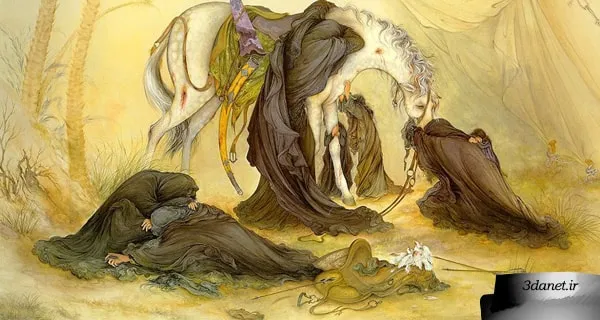
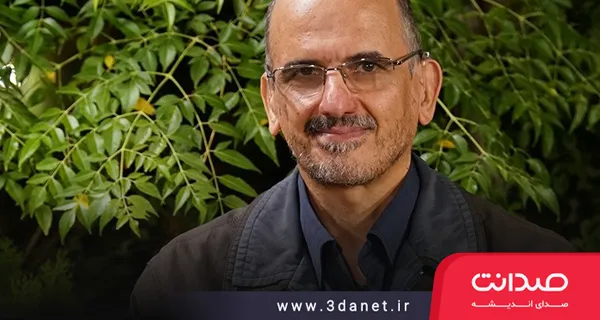
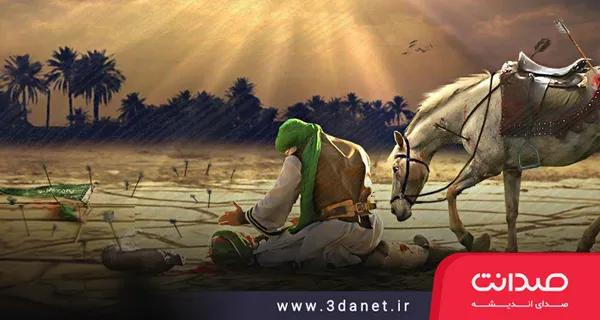
Great human beings, through the immense sacrifices they have made, have brought themselves immortality, permanence, and a good name; whereas the majority of people are bound by time and place and entangled with the foam of the sea. The trans-jurisprudential and trans-theological dimension of Imam Hussein’s (AS) uprising consists of selfless devotion, crossing over, journeying toward distant horizons, abandoning attachments, and lightness of being. The event of Ashura can be discussed from various ethical, mystical, sociological, and other perspectives. We are familiar with certain sociological analyses of this event in the words and writings of scholars and intellectuals such as Dr. Seyyed Jafar Shahidi, the late Salehi Najafabadi, Dr. Ali Shariati, and the martyred master Morteza Motahhari. In the present discourse, delivered on the eve of Ashura this year in the city of Toronto, Dr. Soroush Dabbagh attempts to analyze this event from a mystical perspective, taking as his basis a celebrated ghazal by Mawlana Jalal al-Din Muhammad Balkhi (Rumi): A well-known saying of Imam Hussein (AS), addressed to the house of Abu Sufyan and transmitted through successive testimony, is as follows: “If you have no religion and do not fear the Day of Resurrection, then be free men in your worldly life.” As we know, an erroneous translation of this narration circulates among us: “If you have no religion, at least be free.”; but in the Arabic text, the word “at least” is not used. This freedom is, primarily and essentially, an ethical concept and speaks of a moral detachment and a liberality that he had in mind. One of Imam Hussein’s (AS) ethical motivations for the uprising, which is useful for our contemporary analysis, is lightness of being, selfless devotion, and giving away the most precious capital an individual possesses: one’s life and honor. This is one of the important lessons that can be drawn from this event; the ultimate end of ethical sacrifice, which is among the most important human virtues, is the giving of one’s life and honor. One of the heart-stirring verses of the Quran is as follows: “Never will you attain righteousness until you spend from that which you love.” If we lend an ear to this saying, we will certainly affirm that giving up one’s life, security, and honor—the hardest and most precious of human assets—can be an instance of attaining the truth of righteousness and goodness. As Hafez said, to attain felicity, one must show devotion and give something up: The human and the fairy are dependents of love’s being / Show devotion, so that you may attain felicity That Arab poet also said: By the measure of toil are glories acquired / He who seeks eminence stays awake through the nights One who intends to reach lofty stations must keep vigil at night. Of course, what people “love” differs from one to another. I may be preoccupied with wealth and riches, another may be captive to fame, and the temptation of status may beguile someone else, making it hard for them to give it up; for the educational, epistemic, and psychological backgrounds of individuals differ, but life and honor stand at the apex of things that a person cannot easily relinquish.
Among the major analyses that have been made of the event of Ashura, the account of the late Salehi Najafabadi appears to have more historical evidence. In this historical account, emphasis is placed on the important words that Hussein ibn Ali (AS) addressed to Hurr: “I will not pledge allegiance, for the pure laps that raised me prevent me from submitting to allegiance to Yazid, who is the epitome of transgression and debauchery.” When Muawiyah was the Caliph of the Muslims, he exercised caution and endeavored to observe the outward forms of the Sharia, but Yazid was not like this and did not observe even the minimal outward forms of living as a Muslim; it was thus that Hussein (AS) gave his life to enjoin the good and forbid the evil. Let us remember that Imam Hussein’s (AS) movement, according to what was instilled in the people at that time, was a rebellion against the Caliph, and the rulers and authorities strove to defame him in the minds of the people and portray him as an opponent of Islam and the government.
According to this analysis and the use I made of that Quranic verse, the meta-theological dimension of the uprising of Husayn ibn Ali (AS) can be understood. One need not be a Shi‘a to hold such a perception and judgment of this event. One need not even necessarily be a Muslim to see the selfless devotion, lightness of being, and spiritual buoyancy of Imam Husayn (AS) and his companions in the event of Ashura. It is for this reason that a Sunni mystic like Mawlana Jalal al-Din, arriving several centuries after the Ashura uprising and encountering this historical phenomenon, composed a ghazal addressed to Imam Husayn (AS) and his companions. Theologically, Mawlana was not of the same denomination as Imam Husayn (AS), but he was captivated by the selfless devotion and the depth of the ethical act of Husayn and his companions, and praised them without the slightest affectation. The ghazal “Where are you, O divine martyrs” is one of the enchanting ghazals of the Divan-e Shams and contains subtle points. In this ghazal, Mawlana addresses the martyrs of Karbala from an ethical and mystical (not theological) perspective and presents his judgment before others. The first description he utters addressing the martyrs of Karbala is “light-spirited lovers”:
Where are you, O light-spirited lovers / More birdlike than the birds of the air
According to religious teachings, besides the body, we possess a spirit. Lightness of being and spiritual buoyancy arrive when a person releases the various crookednesses, impurities, and fetters that have been bound to his hands and feet. The birds of the air have one enviable quality: they spread their wings with ease; as if they have no attachment to the surrounding world and take flight in any direction without inhibition. In Persian, we have coined the equivalent “forudgah” for the word airport, but the Arabs have chosen a more beautiful equivalent, “matar,” meaning the place of flight and soaring. Flight is always enchanting for human beings, and of course, these flights encompass both physical and spiritual flights. Due to physiological limitations, human beings are unable to fly; but one who relinquishes his various attachments and practices self-sacrifice is, in Mawlana’s expression, more birdlike than the birds of the air, for nothing has tethered him to the earth.
In our mystical tradition, one of the counsels that the spiritual guide and master usually gives to the person under his tutelage is to relinquish attachments; this task, of course, appears difficult and onerous. When Mawlana looks at the story of the martyrs of Karbala, it is as if he recalls his own story and that of Shams-e Tabrizi. Among Shams’s counsels to Mawlana was that, in order to acquire a capacious spiritual digestion, to become light of being and spiritually buoyant, and to set foot in the boundless realm, he must relinquish his attachments. Shams believed that one of Mawlana’s attachments was his mantle of spiritual mastership and guidance, which Shams considered an obstacle on the path to Truth and strongly advised Mawlana to overcome and relinquish it. The ghazal that pertains to the symbolic dialogue between Shams and Mawlana in the “Divan-e Shams” places the emphasis on abandoning attachments.
I was dead, I became alive; I was weeping, I became laughing / The fortune of love came, and I became an enduring fortune / He said, "You have become a candle, the qibla of this assembly" / I am no candle, no assembly, I have become scattered smoke / He said, "You have wings and feathers; I will not give you wings and feathers" / In seeking His wings and feathers, I shed my own wings and feathers
If weights are hung upon the wings of birds, they cannot rise and take flight; they will be grounded. Historical sources recount that several hundred students would attend Rumi's classes, and until the age of thirty-eight, before his encounter with Shams, he was a mufti and a teacher. He had, of course, traversed the path of spiritual wayfaring under the guidance of Burhan al-Din Muhaqqiq Tirmidhi, but in the guise of a teacher and lecturer, he also taught. One of Shams's recommendations to Rumi was that he should no longer read the Diwan of al-Mutanabbi, the Arab poet whom Rumi admired, and leave it behind: In opposition to habit, seek fulfillment, for I / Gathered composure from those scattered tresses
One must act in opposition to habit; at a higher level, the wayfarer must also endure the blame of others, for enduring the blame of others eradicates self-love. This notion has had many proponents in our mystical tradition, for they considered self-love and narcissism to be the mother of all vices. Their diagnosis was that to break the self, one must also endure the blame of others. It seems that Rumi's fascination with the uprising of Imam Husayn (peace be upon him) was precisely this story of abandoning attachments, which he saw manifested in the uprising and spiritual wayfaring of that noble figure:
Where are you, O you who have escaped from soul and place / Who can say to reason, "Where are you?"
Where are you, O you who have broken the prison / And granted release to the debtors
To regard the world as a prison, to experience it, and to seek liberation from it, is one of the components of Rumi's mystical system, and it is, of course, harmonious and consonant with the spiritual wayfaring of Husayn ibn Ali (peace be upon him). In religious traditions, we have: "The world is the believer's prison." This world is a prison, and we are the prisoners / Dig a hole in the prison and set yourself free
One who sees the world as a prison does not take it seriously and will not be beguiled by it. Another tradition states that the world is the abode of delusion (dar al-ghurur). Today, the word ghurur in Persian means selfishness and narcissism. But its literal meaning is deception. In the story of "The King and the Handmaiden" in the first book of the Masnavi, Rumi also uses the word ghurur in the sense of deception and explains that the king deceived (ghurur) the goldsmith of Samarkand. The world presents what is perishable as imperishable, and what is imperishable as perishable. One who has a mystical view of existence is not captivated or deceived by these appearances and regards the passing of this world with a discerning eye. Rumi also views the event of Ashura from this perspective: Where are you, O you who have broken the prison / And granted release to the debtors
The phenomenon of liberation occurs when a person is severed from what they deem undesirable and steps toward what is desirable. If one does not assume the world to be a prison, leaving it is not desirable for them and does not entail liberation. Elsewhere in the Divan-e Shams, Rumi says: Take up a pickaxe to dig a hole in the prison / When you have broken the prison, you will all be kings and princes
This image of the world has had many proponents among our mystics. Of course, this theme has also been addressed in Christian mysticism, and when speaking of the world, Christian mystics have sought to diminish its importance. To prevent any misunderstanding of my words, I must say that in the tradition of Islamic mysticism, seeking to diminish the world and regarding it as a prison does not mean that a person should not take worldly life seriously at all and neglect its share and the rights of the body; rather, one must pay the body its due in proper measure and fulfill basic needs so that the person is prepared to fly in boundless expanses:
You are a delicate beauty, but within your own limits / For God's sake, do not step beyond your measure
Both Rumi and Ghazali were scholars, and knowledge is among the goods of this world; they took this worldly measure seriously. This point is significant because in Christian mysticism, there was at times such excess that they even recommended abandoning the body, going months without bathing. Will Durant wrote that some disciples, when visiting the great figures of Christian Sufism, could not approach due to the stench and would stand at a distance to express their devotion. These mystics believed that "the matter is easier than that": one should not take the world seriously or attend to it overmuch, which is, of course, an extreme approach. Where are you, O you in the open treasury? / Where are you, O melody of melodylessness? You are in that sea of which this world is its foam / For a moment longer, keep acquaintance / The foam of the sea are the forms of the world / Pass beyond the foam if you are of the people of purity Many human beings are enchanted by the foam of the sea; but what is lasting and imperishable is the water itself. These glittering forms in the world are like the foam of the sea; what matters is that one pushes aside the foam, is not beguiled by it, and can look into the water; what matters is that while regulating one's daily relations and affairs, one can see with the naked eye the foam-like nature of the events one grapples with, and realize one's own transience and impermanence in this world—which is, of course, an exceedingly difficult task. The secret of Rumi's devotion to the uprising of Imam Hussein (AS) also originates from here: that the Imam and his companions had plainly seen the transience of the world and had adopted pure-hearted self-sacrifice. This saying of Hafez, "Travel light, for the path of well-being is narrow," has been the perennial story of history. But great human beings, through the immense sacrifices they have made, have brought eternity, permanence, and a good name for themselves; whereas the generality of humankind are bound to time and space and entangled in the foam of the sea. The supra-jurisprudential and supra-theological dimension of Imam Hussein's (AS) uprising consists of pure-hearted self-sacrifice, crossing over, journeying toward distant horizons, abandoning attachments, and lightness of being:
«One must cross over/ and become a fellow-traveler of distant horizons/ and sometimes pitch a tent in the vein of a single word/... The sound of the wind is coming, one must cross over. And I am a traveler, O everlasting winds!/ Carry me to the vastness of the formation of leaves.» In addition to the lesson of selfless devotion and sacrifice, another lesson can be drawn from the uprising of Imam Hussein (AS). In a religious society, the image that most people have of the relationship between religion and ethics is that ethics leans heavily on religion. For instance, if you look at the Old and New Testaments, they contain numerous ethical injunctions; the Ten Commandments and the Sermon on the Mount delivered by Jesus (AS) contain lofty ethical points. In Islam and the Quran, important and insightful ethical teachings are also mentioned. The erroneous translation that has been circulated of Imam Hussein's saying also reflects this image that many have of the relationship between religion and ethics: «If you have no religion, at least be free-spirited»; as if freedom of spirit is a lower and inferior rank to religiosity. But the story is not like this; for human beings adorned with moral virtues can also be found outside the circle of religiosity. It is clear that we have numerous religious and morally upright individuals. If ethics is supported by religion, and if the general image religious people have of an ethical person is a religious individual, some might suppose that whoever is religious will necessarily be an ethical person as well; whereas this is not necessarily the case. For there are people who consider themselves religious, yet in practice do not observe ethical relations. At the same time, one can find those who are both religious and live ethically. In this context, a point that believers and the religious must consider in a religious society is that detachment and ethical living are also seen among the non-religious. This saying of Imam Hussein (AS) that if you have no religion and do not fear the Hereafter, be free-spirited, contains this very meaning. By considering such an image of the relationship between ethics and religiosity, the worth and dignity of ethics can be better understood. Then, grasping the fact that an individual can be religious yet not live ethically becomes easier. On the other hand, one can also acknowledge and accept that outside the circle of religiosity, individuals can be found who have adopted an ethical life. The religious must broaden the circle of ethical living to realize that, in addition to the religious, there are also non-religious human beings who live ethically. Another point is that the religious must be sensitive to ethical relations and know and bear in mind that the behavior of the religious can and «must» be weighed and critically evaluated on the scales of ethics. A religious person should not imagine that their duty is complete merely by performing religious acts and rituals. You have heard the name of Hegel, the German philosopher of the second half of the eighteenth and first half of the nineteenth century. He ethically criticized Judaism and believed that the image of God presented in Judaism is that of a stern God, and the human being who worships this faith is crushed under the dry and stern laws of this religion and will lose their human dignity. I am not now in a position to judge Hegel's words; rather, the point is the independence of ethics and the weighing of people's beliefs and behavior on the scales of ethics. One who takes ethics seriously and places it at the forefront, ethical sensitivities come alive within them, and they strive to judge themselves and others in such a way that they do not assume the matter is concluded merely by the fulfillment of certain religious rituals. One must acquire the ability to weigh one's own doctrinal teachings on the scales of ethics as well. Of course, this point requires more elaboration and discussion than this, and more philosophical formulations can also be derived from it, which requires another occasion. I mentioned this so that the dear Muslims present in this gathering know that freedom of spirit is just as important as religiosity. The religious who, by disparaging ethical teachings, ultimately become alienated from themselves, go astray; while they imagine they have fulfilled their duty by performing religious rituals; whereas a sharia severed from ethics leads nowhere: The master thinks he is performing obedience/ Unaware of the sin he is committing with his soul The profound meaning of this saying of the beloved Prophet of Islam (PBUH), «I was sent to perfect the noble traits of character,» is precisely this; the essence and jewel of religiosity consists of ethical living and upholding ethical principles. Religiosity without regard for ethics is a shell empty of a kernel, which neither casts longing into a heart nor yields good spiritual results.
.
.
Examining the Ethical and Mystical Dimensions of Imam Hussein's (AS) Uprising
pdf of the essay More Birdlike Than the Birds of the Air by Dr. Soroush Dabbagh
.
.



Discussion0 comments
No comments yet; let yours be the first voice.