Religion
Mostafa Malekian on the Pathologies of Religious Society, Fasting, and Worship
Mostafa Malekian identifies three afflictions of a religious society: reducing religion to rituals while neglecting ethics, the spread of unquestioning deference to the point of clericalism, and treating religion as a commodity monopolised by a select few rather than a spiritual journey open to all.
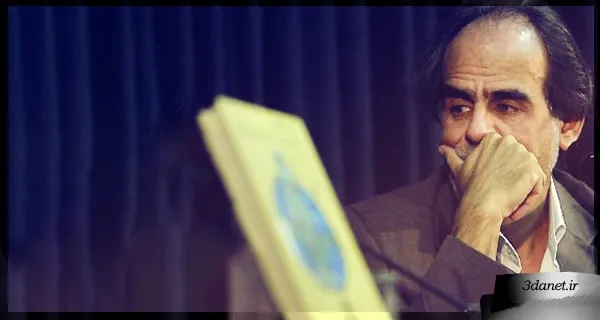
● One can only point to the most important pathologies of a religious society; otherwise, the afflictions that may befall a religious society, insofar as it is religious, are very numerous.
.
Pathologies of Religious Society from Mostafa Malekian's Perspective:
.
First Pathology: The Reduction of Religion to Ritual Worship
One of these pathologies of a religious society is that religion, which in reality comprises the three parts of beliefs, ethics, and acts of worship, becomes confined to acts of worship—for example, prayer, fasting, and pilgrimage. This is something that, although no one theoretically subscribes to it, many religious people practically suffer from. That is, they consider being religious as limited to observing the rules of worship. This conception of religion, besides consigning two important parts of religion—namely, beliefs and especially ethics—to oblivion, also falls prey to a great illusion regarding acts of worship, failing to realize that acts of worship are only and exclusively valuable insofar as they serve two functions: First, that they serve the moral becoming and moral remaining of the human being; that is, they are a prelude and a means for the ethical living of a person. The Quran says about prayer: "Indeed, prayer prohibits immorality and wrongdoing." The property of prayer is that it restrains the one who prays from ugly and reprehensible deeds. That is, if you commit an ugly and reprehensible deed, you have, in reality, not performed the prayer; you have merely acted out the role of performing prayer in a film, nothing more. About fasting, it says: "Fasting has been prescribed for you as it was prescribed for those before you, that you may become righteous." That is, fasting has been made obligatory so that, perhaps, piety may be attained through fasting; otherwise, what benefit is derived from enduring hunger and thirst? As Imam Ali (peace be upon him) said: "How many are those who gain nothing from their night prayers but sleeplessness and fatigue, and how many are those who gain nothing from their fasting but hunger and thirst." Again, after explaining the rituals and rites of Hajj, the Quran says: "Their meat and their blood will not reach Allah, but what reaches Him is piety from you." That is, the flesh and blood of the sheep, cows, and camels you sacrifice in the Hajj ceremonies will never reach the Divine realm; only if, through these sacrifices, a piety arises within you, it is this piety that reaches God and benefits you. The purpose of such statements is to draw attention to the meaning that acts of worship must serve our moral becoming and moral remaining. The other function of acts of worship is their symbolic function. That is, in worship, a person considers their outward, physical actions and deeds as a symbolic reference to an inner state they have towards God, which they cannot display and express except through bodily actions. Now, if the intended inner, heartfelt state does not exist at all, for what purpose is the outward, physical action and deed performed? Let me give an example. If, when I encounter you in the streets and alleys, I take my hat off my head, this act of removing my hat is a symbolic act, and its symbolic meaning is that, through this act, I wish to display the feeling of respect and esteem I have for you within myself, which I cannot show and express in any way other than through an outward, physical action, by taking off my hat. Now, if there is not an iota of respect for you in my inner being, my taking off my hat will lose its symbolic function and will be of no use. Yes, in the relationship between two human beings, one can say that if, for instance, I do not feel respect for you in my heart, my taking off my hat, although it loses its symbolic value, at least has another benefit, which is that through this act I can deceive you, win your heart, and gain something through you. But in the relationship between a human being and God, since God cannot be deceived, this possibility is also ruled out. Therefore, if I do not possess feelings of respect, awe, love, praise, and the like towards God within myself, then ablution, prayer, fasting, and pilgrimage will have no function whatsoever. In summary, besides being susceptible to the pathology of confining religion to acts of worship, we may also fall into this other error of forgetting the two functions of acts of worship and, consequently, considering acts of worship as an end in themselves rather than a means, thereby slipping into a kind of superficiality and formalism.
The Second Pathology: The Expansion of the Realm of Ta'abbud (Non-Rational Submission)
Another pathology is that we extend the attitude of unquestioning devotion and refraining from asking “why and how” to domains where it does not belong—and we do extend it. Without a doubt, religion is not entirely devoid of devotional acceptance, and anyone committed to a religion or creed is, in a general sense, devoted to the words of a certain person or persons. The pathology of a religious society is that this inescapable devotion gradually expands, and the society becomes afflicted with devotion toward numerous individuals, turning away from reasoning, proof, critique, opinion, discussion, inquiry, and questioning. For instance, a kind of “clericalism”—which is a prominent form of idolatry—emerges. I have borrowed the term “clericalism” from the Quran, which, speaking of the Jews and Christians of the Arabian Peninsula fourteen centuries ago, says: “They have taken their rabbis and monks as lords besides God,” meaning they worship their clerics and are thereby tainted with a form of polytheism. Some Quranic commentators, including the late Tabatabai, have said that because the Jews and Christians exhibited toward their religious scholars the very attitude that a human being should only have toward God—that is, they accepted their words without question and without demanding proof or evidence—the Quran deemed them polytheists and worshippers of clerics. To speak more plainly, refraining from asking “why and how” and accepting a statement without demanding proof or evidence is contrary to sound human nature, and therefore, it must be reduced to its minimal possible and necessary extent, not that we should constantly be expanding its dimensions and domain.
The Third Pathology: A Product-Oriented View of Religion
Another pathology is that religion, instead of being viewed as a kind of process that necessitates action and a spiritual, inward journey and wayfaring, is seen as a kind of product that some possess and others have been deprived of. Religion, in reality, is a kind of spiritual journey and inward wayfaring from the dust and the pit to the pure celestial realms, and therefore, only those who are engaged in this striving and dynamic movement are religious. Religion is not a souvenir that was brought for some and not given to others. A souvenir-like view of religion turns it into a pretext for pride, boasting, self-aggrandizement, and the belittling of others. But viewing religion as a journey and a voyage makes the religious person perpetually anxious about the meaning that “the sweet sleep at the dawn of departure”—which is an immersion in surfaces and appearances—might bar me from the path. Religion is not a Homa bird of felicity that has alighted on the roof of my house and not on the roof of another’s; rather, it is a Simorgh in whose quest we must all search and strive all the way to Mount Qaf. A religious person is not someone who imagines themselves the owner of truth and truth as their exclusive property, but rather someone who sees themselves as a seeker of truth.
.
.
A Conversation with Mostafa Malekian on the Pathologies of Religious Society, Fasting, and Worship
Source: Khordad Newspaper, No. 253 – Thursday, October 21, 1999
.
.


Discussion0 comments
No comments yet; let yours be the first voice.