Religion
On Determining Canonical Times and the Manner of Fasting During Long Days, Abolghasem Fanaei (2)
In regions where the sun neither rises nor sets, the traditional criteria for determining prayer and fasting times break down. Abolqasem Fanaei argues that for these obligations to remain applicable in such areas, the method of jurisprudential inference must be revised so that other criteria can replace those derived from the Quran and the Sunna.
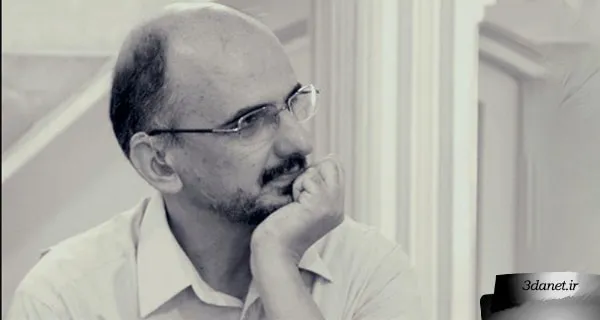
Abolghasem Fanaei: In the first part of this series of articles, we divided geographical regions into three zones: (A), (B), and (C). Zone (A) had two characteristics: first, the sun rose and set there, and second, the difference between the length of day and night in this zone was, by common custom, insignificant and negligible. Zone (B) also had two characteristics: first, the sun rose and set there, and second, the difference between the length of day and night in this zone was, by common custom, not negligible. And Zone (C) had one characteristic, which was that the sun neither rose nor set in this zone.
.
1. Statement of the Problem
In the first part of this series of articles, we divided geographical regions into three zones: (A), (B), and (C). Zone (A) had two characteristics: first, the sun rose and set there, and second, the difference between the length of day and night in this zone was, by common custom, insignificant and negligible. Zone (B) also had two characteristics: first, the sun rose and set there, and second, the difference between the length of day and night in this zone was, by common custom, not negligible. And Zone (C) had one characteristic, which was that the sun neither rose nor set in this zone.
This classification has a purely jurisprudential application; that is, its importance lies solely in the role the differences among these three zones might play in determining the canonical times for prayer and fasting, and in understanding the verses and narrations related to these two duties. Naturally, geographical regions can be divided into various categories based on different criteria and for different purposes, but in our view, the "jurisprudentially relevant" classification is this very one.
2. Determining Canonical Times in Zone (C)
We began our discussion with Zone (C) because the criteria mentioned in the Quran and narrations for determining canonical times do not apply to this zone. These criteria are the break of dawn, sunrise, the sun's zenith, and sunset; and of these four natural phenomena, only the sun's zenith occurs in some parts of Zone (C) and is observable with the naked eye or measurable with simple or scientific instruments.
As we know, the daily prayers and fasting in Islamic law are time-bound, meaning that the daily prayers must be performed at specific times of the day, and fasting must also begin at a specific time and continue until a specific time. For instance, the time for the morning prayer is from the break of dawn until sunrise. Fasting also begins at the break of dawn and continues until sunset. However, none of these natural criteria are available to those living in Zone (C).
Here, logically, three paths lie before the jurists. First, to say: "Muslims living in Zone (C) are obligated to emigrate from this zone and go to Zone (A) or (B), where these natural criteria are available, so that they can perform their religious duties at the designated times." Second, to say: "The obligation of the daily prayers and the fast of the month of Ramadan is specific to Muslims residing in Zone (A) and Zone (B), and does not include Muslims residing in Zone (C)." And third, to say: "The daily prayers and the fast of the month of Ramadan are also obligatory upon these Muslims, but they must determine their canonical times based on another criterion"; a criterion that is not explicitly mentioned in the Quran and narrations.
3. Critique of Common Fatwas on Determining Canonical Times in Zone (C)
Each of these three views has its own difficulties. The problem with the first view is that it is incompatible with the established rational/logical principle that a duty-bound person bears no responsibility for the conditions under which an obligation becomes incumbent. If an obligation is conditional upon certain circumstances, that obligation will only be placed upon the duty-bound person when those circumstances are realized, and the duty-bound person has no duty to bring about those circumstances in order to fall under the address of that obligation. The second view is inconsistent with the extraordinary importance of the daily prayers and the fast of Ramadan. The problem with the third view, however, is that within the framework of traditional Shiʿi jurisprudence and based on the method of legal derivation prevalent in this jurisprudence, such a view cannot be justified. For this method of derivation in no way permits jurists to deviate from or go beyond the criteria mentioned in the Qurʾan and the Sunna for determining canonical times.
In order to go beyond these criteria, we are compelled to reconsider the current method of legal derivation. In fact, jurists who hold the third view must inevitably first abandon some of the presuppositions they accept and claim in the principles of jurisprudence and the philosophy of jurisprudence in order to be able to justify such a view from a jurisprudential standpoint. The science of jurisprudence is not a science of self-evident truths. Indeed, if legal rulings were self-evident, Muslims would have no need for the science of jurisprudence or for emulating a mujtahid. The science of jurisprudence is a theoretical science, meaning that the propositions and statements discussed and investigated in this scholarly discipline are not self-evident; rather, they are theoretical, and to justify them one must reason, and jurisprudential reasoning, like any other reasoning, is based on a set of formal and substantive premises and presuppositions.
For example, one might say that the very principle of the obligation of prayer, fasting, and pilgrimage, and that such duties exist in summary within Islamic law, is "self-evident," but whether, for instance, Muslims residing in region (c) are also subject to these duties or not, and what the canonical times within which these duties must be performed are, and by what criterion they should be discovered or measured, are theoretical issues based on reasoning.
4. The Nature of Jurisprudential Reasoning and the Method of Its Critique
Therefore, behind every jurisprudential opinion lies one or more arguments, and hence, by critiquing that argument/those arguments, the incorrectness of that opinion can be demonstrated. And this is what jurists do when critiquing one another; of course, critiquing an opinion by critiquing the reasoning upon which that opinion is based is different from critiquing an opinion by critiquing/destroying the character of the mufti.[1] The secret of the disagreement among jurists in their opinions also goes back to this very point. One jurist may deem a narration weak and reject it. Another jurist may consider that narration reliable. Likewise, one jurist may interpret a verse or narration in one way, and another jurist may interpret the same verse or narration in another way.
If two jurists share common presuppositions and practice ijtihad under a single "paradigm,"[2] for example, both considering the solitary report of a trustworthy narrator as authoritative, they will only be able to critique each other's opinions within the framework of those presuppositions, and this is typically the case. However, critiquing an opinion by critiquing the paradigm that produced it is also possible. And if this paradigm, which is itself a set of presuppositions, is rational, reasonable, or customary, non-jurists will also have the right to dispute the opinions of jurists, which are the product of that paradigm, by critiquing that paradigm.
For example, if a jurist errs in identifying the customary conditions necessary for the validity of commercial contracts and issues a fatwa based on this incorrect assessment, an economist will have the right to dispute that jurist’s understanding and perception of those customary conditions and thereby call that jurist’s fatwa into question. Criticizing a jurisprudential fatwa, especially if it is reasoned, does not entail criticizing the religious ruling that the fatwa expresses. Or if an epistemologist concludes that the conditions that jurists mention in the principles of jurisprudence for the validity of “knowledge by testimony”[3] differ from the habit, tradition, or social convention of the wise in this regard, and that jurists have erred in understanding the “conduct of the wise” in this matter, they will have the right to question the validity of jurisprudential conclusions based on this incorrect epistemological presupposition. Similarly, if a moral philosopher can demonstrate that “morality is prior to religion,” and “jurisprudence is not a substitute for morality,” but rather the validity of jurisprudential interpretations of religious texts depends on the compatibility of these interpretations with extra-religious moral values, they will have the right to criticize a specific jurisprudential fatwa that is incompatible with these values.
5. The Sources Nourishing Jurisprudence
The raw materials/premises of jurisprudential arguments are supplied from two main sources: one is religious texts (= the Qur’an and the Sunnah) and the other is extra-religious sources, such as reason, custom, and human experience. Every jurisprudential argument is based on a considerable number of presuppositions. Naturally, the validity of the conclusion of any argument depends on the validity of the premises and presuppositions of that argument. These presuppositions are divided into two categories: (1) “methodological” presuppositions[4] and (2) “substantive” presuppositions[5]. Every jurist is inevitably compelled to borrow these presuppositions from outside jurisprudence and employ them within jurisprudence.
These presuppositions are not sacred; rather, they are subject to criticism, scrutiny, and revision, and a jurist may err in understanding them. The science of the principles of jurisprudence (uṣūl al-fiqh) merely examines some of these presuppositions. If these presuppositions are rational or customary, this means that all the wise people of the world have the right and competence to comment on them. Jurists usually do not refer to the premises and presuppositions of their fatwas in relation to their followers (muqallids); rather, they merely convey the result of their ijtihad based on those presuppositions to their followers in the form of a fatwa. Even in books of discursive jurisprudence, where the foundations of each fatwa are mentioned, only some of these presuppositions are alluded to. This is, of course, a natural matter. Unfortunately, in our Islamic culture, we do not have a discipline called the philosophy of jurisprudence, in which the presuppositions used by jurists in jurisprudential arguments are addressed, although some of these presuppositions are discussed and examined in the science of the principles of jurisprudence.
6. The Necessity of Revising the Paradigm of Ijtihad and Its Conditions
The principle of conservatism in epistemology requires that jurists practice ijtihad within the framework of the existing “paradigm” as long as it is capable of solving new problems. However, if a jurist encounters a new problem for which they cannot find a satisfactory answer under the existing paradigm, they are compelled to undertake a “paradigm shift,”[6] that is, to revise that framework and modify their grand presuppositions in such a way as to provide an adequate answer to the problem or problems under discussion.
Of course, we must also note that not every answer is an answer. Sometimes the existing paradigm is capable of providing an answer to a new problem, but that answer is not adequate; rather, it is a pseudo-answer. For example, to say that individuals living in regions where the length of the day is 23 hours are obligated to fast for the entire 23 hours, and if this is beyond their capacity, the obligation of fasting is lifted from them due to hardship and distress, or to say that these individuals can travel and make up their fast in the winter, is a pseudo-answer that is compatible with the existing jurisprudential paradigm, but it is not an answer, or not an adequate answer.
The second solution is akin to advising those obligated to fast to deliberately make themselves ill so that the duty of fasting is lifted from them. “If there are two ways to escape fasting, why is one of them recommended?” And if the intended meaning of “sick” in the verse concerning fasting is someone who has fallen ill by chance, not someone who has deliberately made themselves ill to avoid fasting, why should we not say the same about the traveler—that the intended meaning of “traveler” is also someone who happens to be traveling during Ramadan due to occupational necessity or otherwise, not someone who deliberately travels to escape fasting? The first solution is also a pseudo-answer, not a proper and reasonable response, because it is meaningless for a wise Lawgiver to impose a duty upon a group of individuals as a primary ruling and then, due to hardship and difficulty, lift that duty from most of them as a secondary ruling.
Therefore, the mere rational possibility of answering a question does not justify insisting on preserving the existing paradigm and resisting its revision. Any answer to a jurisprudential question must be compatible with the attributes of God, including wisdom, justice, and mercy, as well as with the rational, psychological, economic, cultural, social, and physical capacity of the general public or the majority of those obligated. On this basis, it can be said that cases necessitating a revision of the existing jurisprudential paradigm are not limited to issues for which the existing paradigm has no answer at all, but also include issues for which this paradigm provides an answer, but that answer is not proper and reasonable.
7. Determining Canonical Times in Region (C) Depends on Revising the Paradigm of Ijtihad
In the author’s view, one of these issues that compels jurists to revise the existing paradigm is precisely the matter of determining canonical times in region (C).[7] This issue is insightful in two respects: first, it shows that the existing paradigm lacks the necessary capacity to answer this question and requires revision, and second, contrary to the claims of some jurists and religious intellectuals, it shows that the problems for which a satisfactory answer cannot be found within the framework of the existing paradigm in traditional jurisprudence are not confined to the domain of transactions (= social/worldly relations in the broad sense of the term), but that we face similar problems in the domain of acts of worship as well.
It is clear that logical consistency requires that if a jurist revises their paradigm of ijtihad, they must also adhere to the implications and consequences of this revision regarding other jurisprudential issues. For example, if a jurist is compelled, in order to solve the issue under discussion—namely, determining canonical times in region (C)—to recognize the authority of speculative rational and empirical proofs, they are necessarily compelled to recognize the authority of these proofs in the matter of determining canonical times in regions (A) and (B) as well. Or if a jurist is compelled, to solve a specific problem, to recognize the necessity of dividing the content of the Sharia into essential and accidental, and consequently the necessity of cultural translation/interpretation of religious texts, they cannot deny the separation of essential and accidental elsewhere, nor the permissibility or legitimacy of cultural translation/interpretation in other cases. Similarly, if a jurist resorts to jurisprudential experience (= jurisprudential intuition/jurisprudential taste) to solve a particular issue, they cannot question and deny the validity of this experience in other cases.
8. Some Components of the New Paradigm and a Critique of the Traditional Paradigm
We began our discussion with determining canonical times in region (C) and showed that within the framework of the prevailing paradigm in jurisprudence, the existing fatwas regarding canonical times in this region have no intra-religious basis. Hence, the only remaining path is to revise this paradigm and transition to a new paradigm under whose shadow a proper and satisfactory answer can be found for this issue. The alternative paradigm we proposed replaces several major presuppositions that are part of the structure of the existing paradigm.
The following list contains a number of these presuppositions:
(1) The separation of the essential and the accidental in the Sharia,
(2) The necessity of cultural translation/interpretation of that part of religious texts which expresses the accidentals of the Sharia,
(3) The possibility of the evolution of the Sharia and the change of religious rulings after the passing of the Noble Prophet (PBUH),
(4) the necessity of extending the prophetic jurisprudential experience as one of the ways through which the developments of the Sharia after the passing of the Holy Prophet (PBUH) can be discovered, and
(5) the authoritativeness of conjectural rational and empirical proofs.
In the existing paradigm, the essential aspects of the Sharia are not distinguished from its accidental aspects, and all religious rulings are considered part of the essential aspects of the Sharia. Naturally, in this paradigm, the cultural translation/interpretation of religious texts is not recognized, because it holds no definite meaning. Furthermore, in this paradigm, God's hand is tied in legislation, meaning that one of the components of the existing paradigm is that after the passing of the Seal of the Prophets (PBUH), no change or development will occur in the Sharia, and the Sharia brought by the Prophet (PBUH) contains the final and most complete rulings that God could legislate for eternity. In our belief, this claim is unreasonable and unacceptable for numerous reasons.[8]
It is clear that if someone accepts such a presupposition, they will have no need to use reason and experience in understanding the Sharia and discovering religious rulings. For such a person, transmitted sources (= verses and narrations) will be the only way to discover religious rulings. Of course, in existing principles of jurisprudence, reason and consensus are counted alongside the Quran and the Sunnah as the four sources of the Sharia/the Four Proofs, but a closer look shows that consensus is not an independent source or proof, and is only valid as a way to discover the Sunnah, and its mention in this list is merely for identity purposes, that is, so that no one might think the Sunni school is more complete than the Shia school, and the presence of reason in this list is also merely decorative and for identity purposes. This means that, although the authoritativeness of reason is recognized by jurists of a Usuli disposition, this authoritativeness is not absolute, but is conditional upon the result obtained from rational reasoning and inquiry being definitive and certain. However, in practice, such results are very rare, and the rare is as good as non-existent.
9. The Status of Rational and Empirical Conjectures in the Traditional Paradigm
One of the monumental components of the existing paradigm is the prohibition of issuing fatwas based on conjectural rational and empirical proofs. In fact, one of the epistemological presuppositions assumed in this paradigm is an epistemological discrimination between transmitted proofs on the one hand and rational and empirical proofs on the other.[9] Based on this discrimination, the validity of rational and empirical proofs is conditional upon attaining certainty and conviction, but the validity of transmitted proofs is not conditional upon such a condition.
In this paradigm, transmitted conjectures/conjectural transmitted proofs are considered valid and their status is elevated to the status of certainty and conviction, but rational and empirical conjectures/conjectural rational and empirical proofs are considered invalid and their status is degraded to the level of doubt. This epistemological stance has several fateful consequences:
(1) The first consequence is that jurists, when deducing religious rulings, must not pay attention to rational and empirical conjectures; rather, they must treat these conjectures as they would treat doubt. Within the framework of the existing paradigm, if a jurist, after examination and searching through conjectural transmitted proofs, finds no proof for or against a religious ruling, they are obliged to refer to the practical principles.
(2) The second consequence is that the conflict between conjectural transmitted proofs and conjectural rational and empirical proofs must always be resolved in favor of the conjectural transmitted proofs, even if the conjectural rational and empirical proofs possess much greater strength and produce a stronger conjecture in the mind of the knower.
(3) The third natural outcome of such an epistemological stance is that practically no difference will remain between the Usulis and the Akhbaris; that is, both groups, through two different paths, more or less reach a similar conclusion, which is the suspension of reason and experience in the face of transmitted sources. The spirit of Akhbarism has permeated the warp and woof of Shia jurisprudence, even if the Akhbaris, as a socially identifiable group, have become extinct.
10. The New Paradigm and Determining Canonical Times in Region (C) Based on It
اما پارادایم جدیدی که در اینجا به برخی از مؤلفههای آن اشاره کردیم هیچ یک از این پیامدهای ناپذیرفتنی را در بر ندارد. در این پارادایم دلایل ظنی از رتبهی یکسانی از اعتبار و ارزش معرفتشناختی برخوردارند؛ اولاً، هیچ یک از این دلایل از منزلت قطع و یقین برخوردار نیستند و نباید با آنها معاملهی قطع و یقین کرد، و ثانیاً هیچ یک از آنها از حیث معرفتشناختی کاملاً بیارزش نیستند و نباید با آنها معاملهی شک کرد. در صورت تعارض این دلایل نیز وظیفهی عقلانی/ اخلاقی ما ایجاب میکند که از دلیل قویتر پیروی کنیم، یعنی آن را قرینهای قرار دهیم برای تصرف در دلیل مقابل.
این پارادایم به فقیهان امکان میدهد که مسئلهی تعیین اوقات شرعی در منطقهی (ج) را به نحوی شایسته و معقول حل کنند. به نظر نگارنده معقولترین راه برای تعیین اوقات شرعی در منطقهی (ج) استفاده از فرمول زیر است:
اوقات شرعی در هر نقطهای از منطقهی (ج) معادل اوقات شرعی در نقطهای با طول جغرافیایی همان نقطه از منطقهی (ج) و عرض جغرافیایی مکه است.
بنابراین در تعیین اوقات شرعی در منطقهی (ج) عرض جغرافیایی مکه ملاک است، اما طول جغرافیایی آن ملاک نیست. مثلاً، اوقات شرعی در گرینلند معادل اوقات شرعی نقطهای است با طول جغرافیایی گرینلند و عرض جغرافیایی مکه.
روشن است که اوقات شرعی در هر نقطهای از منطقهی (الف) بر اساس طول و عرض جغرافیایی همان نقطه محاسبه میشود. البته نتیجهی این محاسبات در صورت فقدان موانع از طریق مشاهدهی حسی نیز قابل روئیت است. مشکلی که دربارهی منطقهی (ج) وجود دارد این است که اوقات شرعی در این منطقه نه از طریق مشاهدهی حسی قابل تعیین و تشخیص است، ـ زیرا نشانههای طبیعی/ جوی مذکور در قرآن و روایات، به حسب فرض، در منطقهی (ج) وجود ندارد، ـ و نه از طریق طول و عرض جغرافیایی خود این منطقه قابل محاسبه است.
برای حل این مشکل یا باید از عرض جغرافیایی منطقهی (ج) صرفنظر کنیم، یا هم از طول و هم از عرض جغرافیایی آن. اما به نظر ما، کافی است که از عرض جغرافیایی صرفنظر کنیم و لازم نیست از طول جغرافیایی نیز صرفنظر کنیم.
به تعبیر جامعتر، ترجمهی فرهنگی متون دینی در باب اوقات شرعی اقتضا میکند که نشانههای طبیعی مذکور در این متون را به طول و عرض جغرافیایی و محاسبات نجومی مبتنی بر این طول و عرض ترجمه کنیم، و این کاری است که حتا مسلمانان ساکن مکه و مدینه نیز در دوران حاضر میکنند. یعنی به جای احراز طلوع فجر، طلوع خورشید و غروب خورشید از طریق مشاهدهی حسی با چشم غیر مسلح، از طریق محاسبات نجومی اوقات شرعی محل سکونت خود را تعیین میکنند.
تفاوت منطقهی (ج) با منطقهی (الف) در این است که نشانههای مذکور در قرآن و سنت در منطقهی (ج) وجود ندارد تا به طول و عرض جغرافیایی همین منطقه ترجمه شود. به همین خاطر عرض جغرافیایی منطقهی (ج) باید با چیزی دیگر جایگزین شود، و به باور ما بهترین جایگزین برای آن عرض جغرافیایی مکه است.
چنانکه در مقاله پیشین دیدیم، برای محاسبهی اوقات شرعی در منطقهی (ج) سه راه متفاوت از سوی برخی از مجتهدان پیشنهاد شده است: اول محاسبه اوقات شرعی در منطقهی (ج) بر اساس طول و عرض جغرافیایی مدینه (یا هر نقطهای از منطقهی (الف). دوم محاسبه اوقات شرعی در منطقهی (ج) بر اساس طول و عرض جغرافیایی وطن اصلی مکلف. و سوم محاسبه اوقات شرعی در منطقهی (ج) بر اساس طول و عرض جغرافیاییِ نزدیکترین نقطه از منطقهی (ب) به منطقهی (ج).
اما اولاً، هیچیک از این سه راه در چارچوب پارادایم سنتی اجتهاد قابل توجیه نیست و مستند شرعی ندارد، زیرا نه در قرآن و سنت ذکری از این معیارها به میان آمده است و نه با استفاده از اصول عملیه میتوان چنین معیارهایی را توجیه کرد.
Secondly, within the framework of the traditional paradigm of ijtihad in jurisprudence, substituting mathematical and astronomical calculations for tangible natural signs observable with the unaided eye is problematic even in region (A), let alone regions (B) and (C). This substitution depends on abandoning the apparent meaning of the relevant verses and narrations, and to abandon the apparent meaning of verses and narrations we need a contextual indicator, and the only contextual indicator available in this case is a rational/empirical indicator; an indicator that is conjectural, not definitive and certain.
Praise be to God, first and last.
To be continued...
.
.
[1]. For example, no jurist can accuse another jurist of toying with people's religion, simply because that jurist's fatwa does not accord with the fatwa he himself accepts. If the second jurist's fatwa is correct, the content of this fatwa is precisely the religion that ought not to be toyed with. In other words, accusing other jurists of toying with people's religion is itself an instance of toying with people's religion.
[2]. paradigm
[3]. In Islamic culture, the sciences are divided into two categories: "transmitted sciences" and "rational sciences." In this culture, knowledge by testimony has been called "transmitted knowledge"/"traditioned knowledge," as opposed to "knowledge by proof/knowledge by reasoning," which is called "rational knowledge"/"intellected knowledge." For further explanation on knowledge by testimony, its difference from knowledge by proof, and the conditions of its validity, see the article "On Confusing Motive and the Motivated" by the same author. This article is available at the following website:
http://neeloofar.org/phocadownload/fanaei/about-motivation-and-motivated.pdf
[4]. methodological/procedural
[5]. substantive
[6]. paradigm-shift
[7]. A similar issue is the ruling for a traveler who is fasting while moving from east to west by airplane, and also the ruling for a fasting astronaut orbiting the Earth in a spacecraft.
[8]. I have presented some of these reasons in The Ethics of Theology.
[9]. For a critique of the epistemological foundations of traditional jurisprudence, see The Ethics of Theology, especially chapters one, three, and four.
.
.
On Determining Canonical Times and the Manner of Fasting During Long Days (2)
Author: Dr. Abolghasem Fanaei
.
.
Related Content:
On Determining Canonical Times and the Manner of Fasting During Long Days, Abolghasem Fanaei (1)
On Determining Canonical Times and the Manner of Fasting During Long Days, Abolghasem Fanaei (2)
On Determining Canonical Times and the Manner of Fasting During Long Days, Abolghasem Fanaei (3)
.
.



Discussion0 comments
No comments yet; let yours be the first voice.