Religion
On Determining Canonical Times and the Manner of Fasting During Long Days, Abolqasem Fanaei (1)
The Qur'anic and Sunnah criteria for prayer times are specific to normal regions and do not apply to areas with significant differences in day and night length. An alternative criterion, such as the time interval of Mecca and Medina, should be adopted. Abolghasem Fanaei
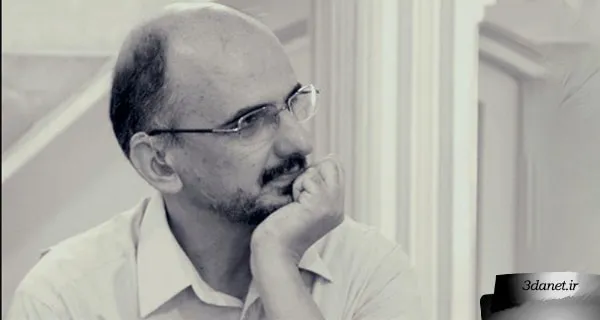
Abolqasem Fanaei: In this series of articles, we will address the following two topics: (1) determining canonical times in regions of the earth where the length of the day, from a customary perspective, is meaningfully longer or shorter than the length of the night, and (2) the ruling on fasting in such regions. To examine these two topics, it is necessary to distinguish three geographical regions from one another.
.
On Determining Canonical Times and the Manner of Fasting During Long Days (1)
Abolqasem Fanaei
Speak a new word, so the two worlds become new
Freed from the world's limit, it becomes boundless and measureless
Divan-e Shams, Ghazal 546
1. The Subject Under Discussion
In this series of articles, we will address the following two topics:
(1) determining canonical times in regions of the earth where the length of the day, from a customary perspective, is meaningfully longer or shorter than the length of the night, and
(2) the ruling on fasting in such regions.
To examine these two topics, it is necessary to distinguish three geographical regions from one another.
2. Distinguishing Three Geographical Regions from One Another
These three regions are demarcated based on their proximity to or distance from the equator, because this proximity or distance causes the sun's situation and the extent of its presence and absence in the sky to change during different seasons of the year, and this change, in turn, causes these three regions to differ from one another in terms of the existence of day and night or the length of day and night. These three regions are:
(a) A region where the sun rises and sets, and from a customary perspective, the length of the day does not have a significant/meaningful difference from the length of the night.
(b) A region where the sun rises and sets, but from a customary perspective, the length of the day has a significant/meaningful difference from the length of the night, such that this difference is not negligible from a customary standpoint; that is, custom does not ignore it in its considerations, including when understanding the law.
(c) A region where the sun does not rise or set.[1]
Many scholars do not differentiate between region (a) and region (b) when determining canonical times and apply the same ruling to both, but they hold a different view regarding region (c). According to this group, canonical times in regions (a) and (b) are determined based on the movement of the sun in the sky,[2] — that is, the break of dawn, sunrise, the sun's culmination, and sunset — in that same region, but this is not the case for region (c), because in this region such a criterion does not exist in nature upon which to determine the times for prayer and fasting; in this region, the sun does not rise or set, even though it may culminate.[3]
On the other hand, the criterion mentioned in the Quran and the Sunnah for determining the times of prayer and fasting is the break of dawn, sunrise, the sun's culmination, and sunset relative to the local horizon. Therefore, two very important questions arise here:
(1) "What reason is there for going beyond the criteria mentioned in the Quran and the Sunnah?" / "Where does the new criterion presented by some scholars for determining canonical times in region (c) come from?", and
(2) "Why is the criterion for determining canonical times in region (b) different from that in region (c)?".
I believe the key to solving the problem of determining canonical times in region (b), and consequently determining the manner of fasting in this region, lies in the answer to these two questions.
On the other hand, when we discuss the ruling on fasting in region (b), we must distinguish the following two cases from each other:
(1) The duty of a person for whom fasting according to the local horizon in such a region does not entail hardship or harm.
(2) The duty of a person for whom fasting according to the local horizon in such a region entails hardship or harm.
It is clear that sometimes the act of fasting itself does not entail hardship, but rather the length of the day causes fasting to entail hardship or harm for most legally responsible individuals or for specific persons. For instance, if the length of the day were 12 hours instead of 18, the legally responsible person could fast with ease.
3. Four Main Claims
In this discussion, we have four main claims. These four claims are:
(1) The criterion mentioned in the Qur'an and Sunnah for determining canonical times is specific to region (A) and does not apply to regions (B) and (C).
(2) The canonical times in the two regions (B) and (C) must be determined based on another criterion. This criterion could be the temporal "interval" between the break of dawn, and the sunrise, zenith, and sunset at the same time of year in Mecca and Medina.
(3) The principle of the obligation of prayer and fasting is not lifted from those who live in the two regions (B) and (C).
(4) The hardship or harm resulting from the long duration of the fast, or from excessive thirst and hunger beyond the ordinary, does not cause the principle of the obligation of fasting in the blessed month of Ramadan to be lifted from the legally responsible person; rather, depending on the case and the source of the hardship or harm, the duty of fasting is lifted only to the extent that the hardship or harm is removed.
4. The First Claim
The criterion mentioned in the Qur'an and Sunnah for determining canonical times,
is specific to region (A) and does not apply to regions (B) and (C).
There is no disagreement that this criterion does not apply to region (C), because such a criterion is practically unavailable in the nature of this region to be able to claim that the application of the proofs stating the canonical times also includes this region. The point of disagreement is region (B). For, as we have seen, in region (B), due to the movement of the sun, or more precisely due to the earth's rotation on its axis, we have both the break of dawn, and the sun rises, reaches its zenith, and sets, although the interval between sunrise and sunset—the length of the day—in this region is not ordinary, meaning that from a customary perspective, this interval is meaningfully longer or shorter than the interval between sunset and sunrise the following day—the length of the night. For example, the length of the day is 20 hours and the length of the night is 4 hours.
Regarding region (B), many scholars rely on the application of the proofs stating the canonical times and believe that these proofs are not specific to region (A) but also apply to region (B). However, the author's claim is that these proofs are specific to region (A) and do not apply to region (B). Therefore, the canonical times in region (B), like the canonical times in region (C), must be determined based on another criterion, other than the criterion explicitly stated in the Qur'an and Sunnah.
1/4 Canonical Times in Region (C)
The issue of determining canonical times in region C is one of the relatively new jurisprudential issues. Apparently, the first Shiite jurist who raised this issue and attempted to answer it from a jurisprudential perspective was Ayatollah Sayyid Muhammad Kazim Yazdi, the author of the book al-Urwah al-Wuthqa. Of course, he does not express an explicit opinion on this matter, but rather raises four possibilities and considers two of them unlikely. The two possibilities he considers unlikely are, respectively: (1) the possibility of the duty of prayer and fasting being lifted from such a legally responsible person, and (2) the possibility of the fasting being waived along with the obligation of one day and night's prayer during this long period. The other two possibilities that he does not consider unlikely are: (3) determining canonical times based on region (A), and (4) determining canonical times based on the legally responsible person's original homeland / his previous place of residence, if such exists.[4]
As far as I know, regarding how to determine canonical times in region (C), the following three opinions are common among later and contemporary Shiite scholars:
(1) The times for prayer and fasting in region (C) are determined based on the times for prayer and fasting in region (A), with the stipulation that the canonical times at any point in region (C) are equivalent to the canonical times at a point in region (A) that lies on the same meridian. For example, if at that same time of year, days in region (A) are 14 hours long and nights are 10 hours long, those living in region (C) are obligated to fast for 14 hours out of every 24-hour period.[5]
(2) Those living in region (C) can choose between two options: first, to determine their canonical times based on the canonical times in region (A), for instance, performing the noon and afternoon prayers, then after 6 hours performing the sunset and evening prayers, and after 11 hours performing the dawn prayer. And second, to perform their prayers and fasting according to the canonical times of their original homeland or city—which, by assumption, is located in region (A) or (B).[6] For example, if they have traveled from Tehran to region (C), they would perform their daily prayers according to the horizon of Tehran, and begin and end their fast according to the horizon of Tehran. This applies when living in region (C) is a necessity for the person. However, if the person is not compelled to live in this region, they are obligated to migrate from this region to region (A) or (B) so that they can fulfill their religious duties at the designated times.[7]
(3) For determining prayer times, the obligatory precaution is that the duty-bound individual consider the nearest point from region (B) to region (C) and perform their daily prayers according to the times of that point, with the intention of seeking absolute proximity to God. However, regarding fasting, if they are able, they must travel from region (C) to region (A) or (B) during the month of Ramadan or after it and fast there. And if neither of these two options is possible for them, fasting is not obligatory upon them; rather, they must give a fidya (expiation) instead.[8]
1/1/4 The Nature of the Obligation of Prayer and Fasting
One of the presuppositions whose stance affects the determination of the ruling on this issue is the "nature" of the obligation of prayer and fasting. The question is: "Is the obligation of prayer and the obligation of fasting simple/indivisible, or composite/divisible?" That is, "In these two cases, are we faced with a simple duty or a composite duty that can be divided into two or three duties: one being the principle of prayer and fasting, and the other being prayer and fasting at specific times?" If the obligation of daily prayers is not simple, then regarding these prayers, we will have two duties instead of one: the first is the principle of performing the prayer, and the second is performing the prayer at specific times. On this basis, if someone cannot perform their prayer in its time, they must make it up outside its time, and we do not need a separate proof to establish the obligation of making up the prayer outside its time, because after the designated time has passed, the principle of the obligation of prayer will remain in place, even though the obligation of prayer at the specific time ceases due to the impossibility of its fulfillment. In the case of fasting, if the obligation of fasting is not simple, we will have the following three duties instead of one: (1) the obligation of fasting, (2) the obligation of beginning the fast from the break of dawn, and (3) the obligation of continuing the fast until sunset.
If the obligation of prayer and fasting is composite/divisible, then it can be said that if fulfilling the second and third duties becomes impossible, or if these two duties are lifted from the duty-bound individual for any reason, the first duty will remain in force, and the duty-bound individual is obligated to fulfill it. It is clear that in region (C), by definition, there is neither a break of dawn nor a sunset between which a person can fast. Likewise, in this region, there is neither a break of dawn nor a sunrise within which the duty-bound individual can perform their dawn prayer. Also, the sun does not set in this region so that the duty-bound individual can perform their sunset and evening prayers after sunset.[9] But if we accept that the obligation of prayer and fasting is composite, then we must say that these two duties are not lifted from the residents of region (C).
اما اگر وجوب نماز و روزه بسیط/ غیر قابل تجزیه باشد، در این صورت دو راه در پیشروی ما وجود خواهد داشت: اول اینکه بگوییم نماز و روزه بر کسانی که در منطقهی (ج) زندگی میکنند، اصلاً واجب نیست. یعنی دلیل وجوب نماز و روزه شامل افرادی که در این منطقه زندگی میکنند نمیشود. و دوم اینکه بگوییم، افرادی که در منطقهی (ج) زندگی میکنند موظفاند به طور دائمی یا موقت از آن منطقه هجرت کنند و به منطقهی (الف) یا (ب) بروند، تا بتوانند به وظایف شرعی خود در اوقات تعیین شده عمل کنند.
اما هر یک از این دو راه پیامدهای غیر قابل قبولی دارند. راه اول با دلایل فراوانی که بر اهمیت نماز و روزه دلالت میکنند منافات دارد؛ مثلاً وجوب نماز بر کسی که در حال غرق شدن است بر اهمیت فوقالعادهی آن دلالت میکند. و راه دوم با یک قاعدهی مُسَلَّم عقلی/ منطقی منافات دارد؛ قاعدهای که میگوید: اگر وجوب مورد بحث مشروط باشد، مکلف نه تنها نسبت به تحقق «شرط وجوب» هیچ مسئولیتی ندارد، یعنی موظف نیست با ایجاد کردن شرط وجوب وظیفهی مورد بحث را برای خود فعلی کند، بلکه میتواند با جلوگیری از تحقق آن شرط، اجازه ندهد که آن وجوب شامل حال او شود. مثلاً، شرط فعلیت وجوب نماز مغرب این است که آفتاب غروب کند. دلیل وجوب نماز مغرب در قالب این قضیهی شرطیه صورتبندی میشود: «اگر آفتاب غروب کرد، سه رکعت نماز بخوانید». مفهوم این قضیه شرطیه این است که تا وقتی آفتاب غروب نکرده، نماز مغرب بر شما واجب نیست. از این نظر نماز و روزه مانند حج است. چنانکه میدانیم، وجوب حج مشروط به استطاعت است. مکلفی که مستطیع نیست، واجب نیست کاری کند که مستطیع شود تا حج بر او واجب شود. به همین ترتیب میتوان گفت مکلفی که در منطقهی (ج) زندگی میکند، که در آن از غروب آفتاب خبری نیست، موظف نیست از این منطقه هجرت کند و به منطقهی (الف) یا (ب) برود، که از غروب آفتاب در آن خبری هست، تا نماز مغرب بر او واجب شود.
بنابراین، از طرفی میدانیم که وجوب نماز و روزه شامل افرادی که در منطقهی (ج) زندگی میکنند میشود و از طرف دیگر میدانیم که این افراد قادر نیستند نماز و روزه خود را در اوقاتی به جا آورند که در قرآن و سنت برای این دو وظیفه معین شده است. بنابراین، تنها راهی که باقی میماند این است که بگوییم وجوب نماز و روزه بسیط نیست، بلکه مرکب و قابل تجزیه است.[10] یعنی اصل وجوب نماز و روزه یک چیز است و وجوب آغاز آن از زمانی خاص و پایان آن به زمانی خاص چیزی دیگر. و ناتوانی از امتثال وظیفهی دوم (و سوم) به خاطر شرایط طبیعی/ جوّی منطقهی (ج) موجب نمیشود که وظیفهی اول نیز از دوش مکلف برداشته شود.
اما از آنجا که نماز و روزه از وظایفی است که به هر تقدیر باید در اوقات معینی انجام شود، برای تعیین وقت انجام این دو وظیفه در منطقهی (ج) باید از معیارهای دیگری استفاده کرد ـ غیر از معیارهای ذکر شده در قرآن و سنت، یعنی طلوع فجر، و طلوع و غروب خورشید به افق محلی.
2/1/4 امتناع حل مسئله در چارچوب روش رایج استنباط در فقه سنتی
به باور نگارنده، این مسئله و نظائر آن را نمیتوان در چارچوبهای پذیرفته شده در فقه سنتی به نحوی شایسته حل و فصل کرد. مشکلی که روش رایج استنباط در فقه سنتی با آن روبروست از اینجا سرچشمه میگیرد که این معیارهای جدید، هرچه باشد، نه به صراحت در قرآن و سنت آمده است و نه از عموم و اطلاق آیات و روایاتی که بیانگر اوقات شرعی هستند قابل استفاده است، و نه اصول عملیه اقتضای خاصی در این مورد دارند. زیرا تنها معیاری که در قرآن و روایات در این مورد آمده طلوع فجر، و طلوع، زوال و غروب خورشید به «افق محلی»/ «افق محل امتثال» است. روش سنتی استنباط و مبانی علما در اصول فقه و فلسفه فقه به آنان اجازه نمیدهد که از معیارهای تعیین شده در قرآن و سنت فراتر بروند و معیار جدیدی برای تعیین اوقات شرعی در منطقهی (ج) معرفی کنند؛ معیاری که هیچ اثری از آن در قرآن و روایات نیست.
بنابراین، تنها راهی که برای حل این مشکل باقی میماند بازنگری در روش استنباط و مبانی اصولی و فلسفی فقه است. درواقع این مشکل از سکوت قرآن و سنت در این مورد سرچشمه نمیگیرد، بلکه از روش سنتی استنباط از قرآن و سنت سرچشمه میگیرد، و این روش استنباط، که خود مقولهای فرادینی/ بیرون دینی است، فهم نادرستی از قرآن و سنت را در این مورد و موارد مشابه به ارمغان آورده است.
To put it more clearly, in determining the canonical times for region (c), a jurist faces at least four different paths: first, to resort to analogy (qiyās) and juristic preference (istiḥsān) and determine the canonical times in region (c) based on these two styles of reasoning. Second, to say that the criterion for determining canonical times is not the horizon of the place of residence, but rather the horizon of Mecca and Medina, or some other place, such as the obligated person's original homeland or the nearest point in region (b) to region (c). Third, to undertake a
Of course, these two theories are not accepted by the scholars, but the reason these two theories are not accepted by the scholars is that they are based on specific presuppositions that contradict the presuppositions or extra-religious/external foundations accepted by the scholars in “principles of jurisprudence” and “philosophy of jurisprudence.” Because these two theories and their presuppositions, as well as the rival presuppositions, are all extra-religious, we are compelled to take a stance on them before referring to religion and religious texts. The meaning of this statement is that with an understanding and interpretation of the Quran and Sunnah based on traditional presuppositions, one cannot reject these two theories and their presuppositions. Similarly, it can be said that to accept the third and fourth solutions, we do not need to abandon the Quran and Sunnah; rather, we must revise our extra-religious presuppositions in the principles of jurisprudence and the philosophy of jurisprudence. Of course, revising these presuppositions will bring about a new understanding of the Quran and Sunnah, but such an act is neither an innovation in religion nor playing with religion. The method of jurisprudential inference is borrowed from outside religion and applied to the domain of religion. This method is neither sacred nor above criticism. Judgment about the correctness or incorrectness of the extra-religious presuppositions used in jurisprudence is made based on rational and reasonable criteria, not religious criteria; these presuppositions are methodological/structural, and the understanding and interpretation of religious texts are entirely based on them.
5/1/4 Separating the Essential from the Accidental in Sharia, the Possibility of Sharia’s Evolution After the Prophet’s Passing, and the Authoritativeness of Conjectural Rational and Empirical Proofs
One of those presuppositions is “separating the essential and the accidental in Sharia,”[13] another is “the possibility of Sharia’s evolution after the passing of the Holy Prophet (PBUH),”[14] and another is “the authoritativeness of conjectural rational and empirical proofs.”[15]
If we accept that religious rulings are divided into two categories, essential and accidental, then we can claim that the principle of the obligation of prayer and fasting is among the essentials of Sharia, but the canonical times stated in the Quran and narrations are not among the essentials of Sharia; rather, they are among its accidentals, and therefore changeable. That is, the verses and narrations that express the principle of the obligation of prayer and fasting are “universal”[16] / transtemporal and transpatial, but the verses and narrations that express the canonical times are “local”[17] or “contextual”[18] and specific to and concerned with region (A). In other words, in the first category of verses and narrations, which express the principle of the obligation of prayer and fasting, the Lawgiver’s serious meaning corresponds to His employed meaning, but in the second category of verses, which express the time of prayer and fasting, His serious meaning is other than His employed meaning. Therefore, in understanding and interpreting the verses and narrations of the second category, one cannot rely on principles such as “the primacy of the apparent meaning” and “the primacy of absoluteness,” because the rational convention of the world’s reasonable people does not rely on such principles in these cases. The domain of validity of these principles and their like, from the perspective of the reasonable, extends only so far as the “context”[19] and conditions are relatively identical or similar in relevant respects.
The epistemological and hermeneutic consequence of this separation is that the verses and narrations of the first category can be understood, interpreted, and used as the basis for legal opinions without the need for cultural translation, whereas the verses and narrations of the second category require cultural translation. That is, these two categories of verses and narrations cannot and should not be interpreted using a single method, which is the method of “literal interpretation.”[20] This method is only suitable for interpreting the first category of verses and narrations.
Since for the cultural translation/interpretation of religious texts we need to use rational and empirical indicators, and these indicators are typically conjectural, the validity of the result of such a method depends on recognizing the authoritativeness of rational and empirical conjectures.
On the other hand, if we accept that God both has the right and is able to expand His Sharia and change His rulings after the Prophet’s passing, we are compelled to accept that to discover these changes and evolutions, the “expansion of the prophetic jurisprudential experience” is necessary. But since the result of jurisprudential experience is a conjectural result, not a definitive one, the validity of this result will also depend on accepting the authoritativeness of empirical conjectures.
And finally, the last point is that traditional jurists cannot opine on the criterion for determining canonical times in region (c) without revising their foundations in the principles of jurisprudence and the philosophy of jurisprudence, whether in the form of a fatwa or in the form of obligatory or recommended precaution. That is, within the framework of the prevalent method of deduction, principles of jurisprudence, and philosophy of jurisprudence, these opinions lack an acceptable and defensible basis. There is neither a verse nor a tradition in this regard whose generality or absoluteness can be relied upon, nor do the practical principles necessitate such a thing. Based on the common and accepted foundations in the principles of jurisprudence and the philosophy of jurisprudence, one can neither say that prayer and fasting are obligatory in region (c), nor can one introduce a criterion for determining canonical times in this region, nor can one even claim that those who live in region (c) are religiously obligated to emigrate from this region.
In writing this article, I am indebted to dear friends who shared their observations and critiques with me, both in discussion and conversation and in written form. Although I am unable to mention these dear ones by name here, I express my gratitude and thanks to them. The responsibility for the shortcomings of the article rests entirely with the author.
O Giver of intellects, come to our aid,
Until Thou willest, no one wills aught.
Both the seeking and that goodness are from Thee,
Who are we? The First is Thou, the Last is Thou.
If we have spoken wrongly, do Thou correct it,
Thou art the Corrector, O Thou Sultan of speech.
To be continued...
.
.
[1]. The separation of these three regions from one another is "conceptual" not "referential," meaning that a specific geographical point, such as Tehran, may be considered part of region (b) in some seasons of the year and part of region (a) in other seasons. Determining this is left to the judgment of custom. Conceptual stability is compatible with referential change.
[2]. It goes without saying that what is meant by the movement of the sun in the sky is the movement that we humans see with our own eyes. It is clear that, scientifically speaking, our eyes err in this matter, and what actually causes the change in the sun's position in the sky is the earth's rotation on its axis. In everyday life, which is regulated by custom, and in customary parlance, this movement is attributed to the sun out of tolerance.
[3]. The sun's culmination means its crossing of the imaginary meridian line.
[4]. Ayatollah Sayyid Muhammad Kazim Yazdi, Al-Urwah al-Wuthqa, Kitab al-Sawm, Chapter 12, Issue 10.
[5]. Ayatollah Makarem Shirazi, New Inquiries, vol. 2, Q. 139. And also see Ayatollah Makarem Shirazi, Mi'raj, Shaq al-Qamar, and Worship at the Poles, p. 98 ff.
[6]. Naturally, the second option is only available to those for whom region (c) is not their primary homeland and who have traveled to region (c) from somewhere in region (a) or (b).
[7]. Ayatollah Fazel Lankarani, Jami' al-Masa'il, vol. 1, pp. 69-70.
[8]. Ayatollah Sistani, Minhaj al-Salihin, vol. 1, p. 434, M. 88.
[9]. In parts of region (c), the sun has a culmination, and therefore determining the time for the noon and afternoon prayers according to the local horizon in these areas is not problematic, but in other parts of this region, this is not the case.
[10]. We will later say that customary understanding, especially regarding fasting, fully confirms the claim that the obligation here is composite, not simple. In the verses related to fasting, the principle of the obligation of fasting and its beginning and end are expressed using three independent sentences. These three sentences are, respectively: "O you who have believed, decreed upon you is fasting..." (Al-Baqarah/183), "...and eat and drink until the white thread of dawn becomes distinct to you from the black thread..." (Al-Baqarah/187), and "Then complete the fast until the night." (Al-Baqarah/187).
[11]. For the precise meaning of the cultural translation of religious texts and its method, see Fanaei, A. (2010) The Ethics of Religious Studies: An Inquiry into the Ethical and Epistemological Foundations of Jurisprudence (Tehran: Negah-e Moaser Publications), Chapter Seven.
[12]. In the author's view, juristic experience is a kind of knowledge-yielding experience; that is, this experience is one of the probabilistic sources of knowledge and justification in jurisprudence. Some traditional jurists have referred to this experience with the term "juristic intuition" (shamm-e feqhi). To learn more about this experience and the meaning of its expansion, see The Ethics of Religious Studies, Chapter Six.
[13]. "Essential and accidental in the Sharia" is different from "essential and accidental in religion." Dr. Abdolkarim Soroush considers the entire Sharia to be among the accidentals of religion, but in the author's opinion, this is not the case. On this matter, see The Ethics of Religious Studies, Chapter Seven.
[14]. The possibility of the evolution of the Prophetic Sharia after the Prophet's passing is one of the philosophical/theological presuppositions of jurisprudence. According to this theory, the seal of prophethood means neither the end of religiosity nor does it entail the eternal fixity and ossification of the Sharia. A God who is capable of changing His ruling before the Prophet's passing will also be able to do so after his passing; for the Prophet's passing neither creates a change in God's nature nor ties His hands in disposing of His rulings. The question remains: "If God changes one of His rulings, how does He communicate this new ruling to the believers?" The answer is that communicating this ruling does not depend on sending a new prophet, such that this claim would contradict the seal of prophethood; rather, God can communicate His ruling to His servants through other means, one of which is "juristic experience" and another is "reason" / the "inner prophet." On this matter, see The Ethics of Religious Studies, Chapter Six.
[15]. For an elaboration and defense of this view, see The Ethics of Religious Studies, especially Chapters One through Four.
[16]. universal
[17]. local
[18]. contextual
[19]. context
[20]. literal interpretation
.
.
On Determining Canonical Times and the Manner of Fasting During Long Days (1)
Author: Dr. Abolqasem Fanaei
.
.
Related Content:
On Determining Canonical Times and the Manner of Fasting During Long Days, Abolqasem Fanaei (1)
On Determining Canonical Times and the Manner of Fasting During Long Days, Abolqasem Fanaei (2)
On Determining Canonical Times and the Manner of Fasting During Long Days, Abolqasem Fanaei (3)
.
.


Discussion3 comments
بنده هم موافقم،باید مقاله نوشت و مودبانه بحث علمی کرد اما شما هم با عناوینی که به کار بردید توهین کرده اید...در حالی هیچ نیازی به توهین ندارید
بسیار محکم و مقنع. آفرین بر این حدّت ذهن و شدت تقوا. بهترین نظری که تاکنون در این باره خوانده ام.
به نظر بنده نظر آقای فنایی و کیفیت استدلال ایشان در رد نظرات بسیار سطحی است و کاملا قابل رد است و اندکی تامل برای متامل اشکلات ایشان روشن است