Philosophy
Mostafa Malekian's Interview with Negah-e Aftab Magazine, Titled 'I Am a Moral Absolutist'
In a conversation with Negah-e Aftab, Mostafa Malekian clarifies his position on moral absolutism by emphasizing the compatibility of mystical virtue ethics with rationality and human rights. He defines absolutism as the existence of at least one trans-temporal and trans-spatial moral judgment, not that all moral judgments are absolute.
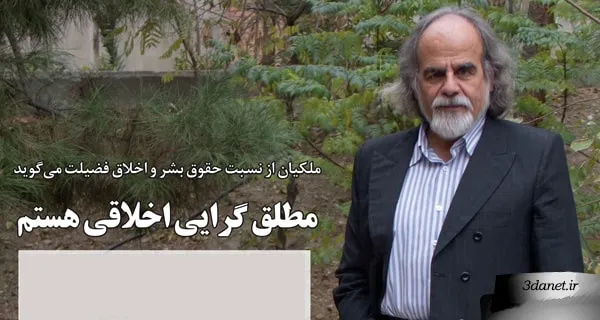
Ali Varamini/ Among the major and principal theories in moral philosophy, Mostafa Malekian favors virtue ethics above all. Among the various approaches one can take to this theory, it seems he prefers the mystical approach over others. On the other hand, this moral philosopher has repeatedly emphasized that what is acceptable in this age must be compatible with three modern concepts. For him, those three concepts are rationality, universal ethics, and human rights. The combination of these two (i.e., Malekian's inclination toward mystical virtue ethics and the compatibility of anything with the three aforementioned concepts for its acceptance in the modern world) leads Malekian's audience to the conclusion that mystical virtue ethics is not incompatible with the three concepts of rationality, modern ethics, and human rights. I decided to discuss this relationship with him and see, if my conclusion is correct, how Malekian defends it. But before that, an important preliminary discussion had to take shape. If we have a moral judgment or moral judgments that have held true from centuries ago until today, then the moral matter is absolute for us. For this reason, our conversation took shape around the relativity or absoluteness of the moral matter and occupied a major part of the dialogue.
Mostafa Malekian: If you have even just one moral judgment and rule that is placeless and timeless, provided that the rest of your moral judgments and rules are not incompatible with this one trans-local, trans-temporal, and trans-situational rule, you are a believer in moral absolutism. Because moral absolutism never holds that all moral judgments and rules are absolute; rather, it says we have at least one absolute (i.e., trans-local, trans-temporal, and trans-situational) judgment and rule. I use this point to say that those who have erred and stated that someone who believes in moral absolutism considers all moral judgments and rules as absolute are mistaken. This is clearly invalid. For there are numerous ethical schools, and within each school, there are many ethical systems, and within each system, there are numerous ethical theories. Then, if someone says that moral absolutism means all judgments and rules are absolute, what do they do with all these mutually incompatible moral rules and judgments? Do they want to consider all of them absolute? Therefore, no one has ever claimed that moral absolutism means all moral judgments and rules are absolute. Someone who makes the claim of moral absolutism means that there are moral judgments and rules that have nothing to do with place, time, and situation . . .
.
.
PDF file of Mostafa Malekian's interview with Negah-e Aftab magazine, titled 'I Am a Moral Absolutist'
.
.





Discussion0 comments
No comments yet; let yours be the first voice.