Philosophy
Third Issue of Negah-e Aftab Quarterly Published
The third issue of the quarterly Negah-e Aftab, Spring 1400, has been published, featuring an interview with Towfiq Hashempour Sobhani. This issue includes an unpublished text by Zarrinkoub on the meeting of Shams and Rumi, and an examination of loneliness in Rumi's teachings.
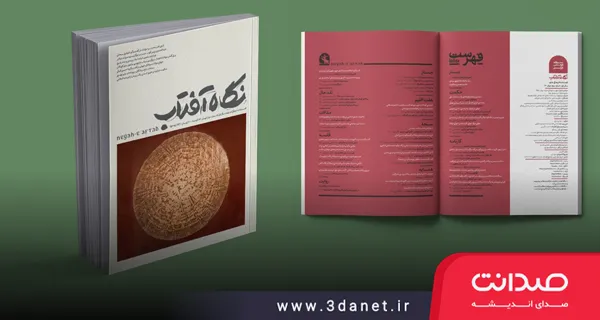
The third issue of Negah-e Aftab Quarterly—Spring 1400—features a meeting with Dr. Towfiq Hashempour Sobhani, a distinguished professor in the field of literature and mysticism, during which he speaks of the impact of his meeting with Abdülbaki Gölpınarlı.
In the Wisdom section, the subject of loneliness as a human concern is examined in relation to Rumi's teachings from the perspectives of Mohammad Saeed Hanaei Kashani, Mahmoud Moghaddasi, Soudabeh Karimi, Mohyiddin Ghanbari, Homayoun Hemmati, Mehrab Sadeghnia, Saba Fadavi, and Hassan Ashayeri.
The Dossier section is dedicated to examining the activities of Professor Abdolhossein Zarrinkoub. In this section, an account of the meeting between Shams and Rumi, in a speech delivered by Professor Zarrinkoub in 1996 at the University of California, USA, is published for the first time. Also in this section, Mehdi Mohaghegh, Sirus Shamisa, Fathollah Mojtabaei, Maryam Moshref, Rouzbeh Zarrinkoub, Enayatollah Majidi, Ebrahim Mousapour Besheli, Ali Bahramian, Seyyed Sadegh Sajjadi, and Kamyar Abedi have presented their views on the services and record of Zarrinkoub and his influence on Rumi studies.
In the Essays section, Rahman Moshtagh Mehr, Mahmoudreza Esfandiar, Seyyed Majid Sadat Kiaei, Mehdi Kampani Zare, and Mahboubeh Mobasheri have answered the question, "Why should one read the Masnavi? And what do you consider its most important lessons?"
In "Seven Climes," a child-friendly rewriting of the Masnavi for children is examined in a roundtable with the presence of Mostafa Rahmandoust, Marjan Fouladvand, and Maryam Jalali, and Mohammadreza Yousefi speaks of the necessities of recreating ancient texts for children.
In the "Touchstone" section, Ehsan Ebrahimi has spoken with Hossein Kamali on the subject of Rumi's world and the global Rumi; Ardeshir Mansouri with Mohammad Dehghani on the subject of a look at the mystical heritage; and Hedayat Jalili with Mohammad Fanaei Eshkevari on the subject of recognizing the currents of conflict with the mystical heritage. This section also includes notes by Akbar Sobout, Pari Iranmanesh and Mohsen Zandi, and Azizollah Hassanzadeh.
The Neighbor section provides an overview of Rumi's cultural and spiritual presence in Bosnia and Herzegovina. This section includes writings by Mobina Moker, Sedad Dizdarević, Rašid Hafizović, Elvir Musić, Saeed Abedpour, as well as a conversation with Muhamed Karahodžić.
In the "Critique of the Present" section, Seyyed Mohammad Beheshti, Ahmad Masjed Jamei, Ali Asghar Seyedabadi, and Mostafa Badkoubei have spoken of their lived experiences with Rumi.
"The Silence of God and the Anxiety of Man" by Shabbir Akhtar and "The Unparalleled Hot Market" by Seyed Majid Gharavi appear in the Articles section of this issue.
In the "Bookshelf" section, conversations have been held with Mehdi Salari Nasab about the book "Understanding the Masnavi," and with Amirhossein Elahiyari about the book "The Time of the Insignificance of Death." Alireza Rezayat has written about the book "Beyond the Principles of Beliefs," Davoud Vafaei about the book "Sufism in the Balkans," and Manouchehr Dinparast about the influences of Abbas Kiarostami from Rumi in the book "Fire."
In the Narrative section, news and reports from the field of Rumi and Rumi studies in Iran and other countries around the world have been published.
As per the routine of each issue, a translation of the magazine's summary into three languages—English, Turkish, and Arabic—appears at the end of the magazine in the Translation section.
This issue comprises 11 chapters and 316 pages, along with summaries of the content in English, Arabic, and Turkish.
In this issue we read:
Reconciling the Altar with the Tavern: In Conversation with Dr. Towfiq Sobhani
The Meeting of Shams and Rumi: An Unpublished Speech by Professor Abdolhossein Zarrinkoub
A Critical Examination of Rumi's Mystical Heritage: In Conversation with Mohammad Fanaei Eshkevari and Mohammad Dehghani
Writings by Mahmoud Moghaddasi, Homayoun Hemmati, Mohyiddin Ghanbari, and others on Loneliness and its Relation to Rumi's Teachings
A Critical Reflection on Abdolkarim Soroush's Narration of the Story of Moses and the Shepherd: In a Writing by Azizollah Hassanzadeh
In Memory of Professor Abdolhossein Zarrinkoub: With Writings by Kamyar Abedi, Fathollah Mojtabaei, and others
The World of Rumi and the Global Rumi in Conversation with Hossein Kamali
Documentary Narratives of Personal Encounters with Rumi's Lifeworld by Ali Asghar Seyedabadi, Seyed Mohammad Beheshti, and...
Why Should We Read the Masnavi? With Responses from Rahman Moshtagh Mehr, Mahmoudreza Esfandiar, and...
A Review of Rumi's Cultural Presence in Bosnia and Herzegovina with Writings by Saeed Abedpour, Mobina Moker, Sedad Dizdarević, and...
.
.
The third issue of Negah-e Aftab Quarterly comprises 11 chapters and 316 pages, including summaries in English, Arabic, and Turkish, priced at 90,000 Tomans.
To obtain Negah-e Aftab Quarterly:
For more information (Telegram, WhatsApp, and phone):
09196721586 021-88253719
Negah-e Aftab Instagram Page
Negah-e Aftab Telegram
Order Negah-e Aftab Quarterly with free shipping (Express Post) on the Negah-e Aftab website
The license holder of Negah-e Aftab is the Soroush-e Molana Institute, and its managing director is Maryam Mousavi.
.
.



Discussion0 comments
No comments yet; let yours be the first voice.