Philosophy
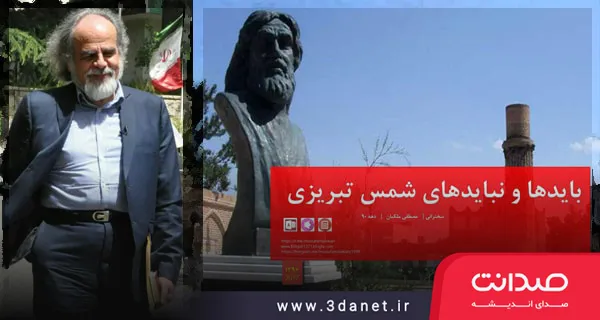
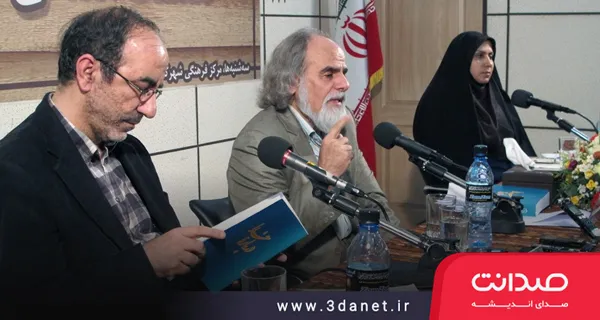
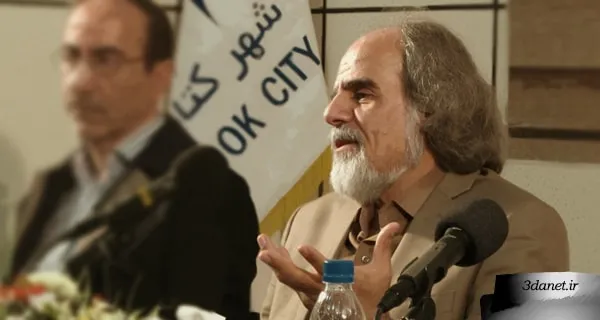
Mostafa Malekian's Lecture at the Book Review Session for 'Shams Tabrizi'
In his review of a book on Shams Tabrizi, Mostafa Malekian argues that before introducing a thinker, one must first determine their type—philosopher, mystic, theologian, scholar, or sage—and also decide whether the approach to their ideas will be historiographical or practically applied.
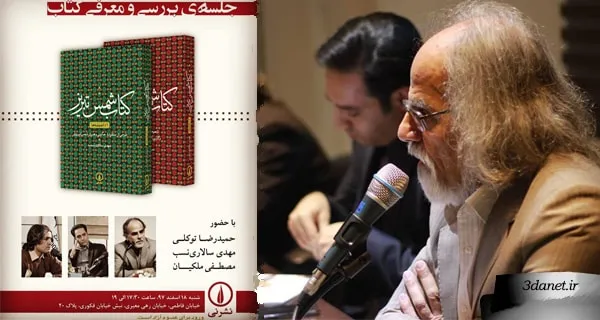
At the outset, before addressing the book on Shams Tabrizi by Mr. Salarinasab, I will briefly mention a point: it seems that the method customary in Iran for introducing and presenting thinkers is not one that is compatible with the latest achievements of intellectual historiography, and since addressing this does not fit within the scope of this discussion, I will pass over it.
Regarding Mr. Salarinasab's writings, I believe that anyone who considers his book will envision a brilliant future for him in terms of literature, and particularly mystical literature. In connection with the book on Shams Tabrizi, several points are worthy of reflection. Although these points are general, in my opinion, their generality does not diminish their clarity, and they are very clear points.
The first point that must be taken into account is that when examining a thinker, one must first ascertain the type of thinker. In fact, based on a general classification comprising five categories, all individuals who have spoken or left behind a work throughout the history of human culture (thinkers) fall into one of these five categories, which I will elaborate on; therefore, it is important to know which of these five categories the thinker we are introducing belongs to and fits into, because based on this classification, we can better understand the thinker's speech, grasp the presuppositions of his speech, and be able to attribute the implications of his speech to him.
The classification of thinkers is as follows: some thinkers of the world generally fall into the category of philosophers. Philosophers must speak with a philosophical methodology; they must prove their claims with philosophical methodology, and naturally, we must also expect philosophical results and implications from them, and when criticizing them, we must also proceed with a philosophical method. Another group of thinkers are those we refer to as mystics; mystics, like philosophers, have their own specific methodology, foundations, and presuppositions, and specific effects and implications can also be deduced from the thoughts of mystics. Theologians fall into the third category of this classification; those who, by their own claim, explain and elucidate sacred texts, defend them, and are representatives and spokespersons of a religion and denomination. In our culture, jurists and legal scholars are also considered among the theologians. The fourth category of thinkers are scientists; including those who work in empirical science, or in other sciences such as mathematical-logical science or historical sciences. The concern and attention of this group of thinkers is directed towards the external world, that is, nature and what can be derived and adopted from nature. Scientists, like philosophers, mystics, and theologians, have their own specific methodology and foundations, which differ from the other categories. The final class are the sages; sages, by virtue of being sages, are not necessarily philosophers; nor are they necessarily mystics, theologians, or scientists. Sages, who have few instances in our time, are those who possess a kind of transpersonal intuition of matters and perceive life intuitively. The intuition of sages differs from the unveiling and intuition of mystics. This classification is an inductive classification, and other categories may be added to it, although so far it has been limited to these five.
Therefore, when we set out to introduce Shams as a thinker, we must first determine in which category he belongs and what kind of thinker he is. A thinker cannot belong to two categories, because the foundations and presuppositions of each group of thinkers are different from and incompatible with the other groups; for instance, in philosophy, philosophers rely on reason, whereas mystics have attained something beyond reason, and theologians, likewise, rely on the texts of the founders of religions and sects, which differ from reason and mystical unveiling. It seems that in this book, the type of thinker has not been ascertained; rather, there are sometimes loose ends; for example, in the title of the book in the first volume, it is stated: The Philosophical and Artistic System of Shams. Does 'philosophical' (ḥekami) mean that Shams was a sage and a wise man, or does it refer to Shams being philosophical? Whichever the author intends, it is not acceptable; because it seems that Shams can be imagined neither as a sage nor can he be considered a philosopher. At the same time, throughout the book, it is as if Shams is introduced as a mystic; but the question is, what is the basis for Shams being a mystic? Is it because Shams uses mystical terminology, or is the basis having a mystical experience (in Maqalat-e Shams, no mystical experience is recounted), or if the basis is that a mystic must have a specific character and personality, by citing which component of Shams's personality do you introduce him as a mystic? In fact, we must state in a reasoned manner what kind of thinker we consider Shams to be. This demarcation and separation of the domains of thought and ascertaining the type of thinker based on the fivefold categorization is very important and cannot be taken lightly, and we must specify in which of these five categories our intended thinker falls; but in this work, although it is a very valuable book, this point has been generally neglected, and this ascertainment has not been observed, and the type of thinker has not been specified.
The second point I will address is that in encountering any thinker and introducing them in a work, two types of approaches and encounters can be adopted, and a personality can be introduced from two perspectives, and the author must clarify their position regarding this point: from which perspective they are introducing the personality. (Each of these two perspectives can be divided into sub-perspectives). I will explain the first approach with an example. Suppose we intend to introduce Avicenna in a work. In this work, as a historian of philosophy, we consider him one of the philosophers of Islamic culture and proceed to recount the life and thoughts of Avicenna. Or, for example, as someone researching the history of mathematics in Islamic culture, we recount the life of Khwarizmi and introduce him as one of the mathematicians of Islamic culture. From this perspective, we have introduced the personality through the narrative of scientific history, where that personality is considered a thinker and a man of that science, and we have, in fact, recounted the history of that science; for instance, by introducing Avicenna, we have narrated the history of the science of philosophy, and by introducing Khwarizmi, the history of the science of mathematics in Islamic culture. This type of approach, which is the recounting of the history of each science, is a realistic approach and has its own valuable place.
The second perspective is the pragmatist view; in this view, we introduce a thinker from the standpoint of what impact and manifestation their teachings have in our practical lives. In other words, when we examine a figure, the question for us is what points that figure's teachings raise for the human being of today, in both an individual and social capacity, and what knots these teachings untie in the material, spiritual, psychological, and social life of the twenty-first-century human. In this approach, we present the thinker's words based on their efficacy and practicality for human life; and we deal with those ideas that are true and, while being true, offer practical guidance for human beings. Those teachings of a thinker that, despite being true, have no application in the life of today's human being are set aside and have no place in our encounter with the thinker. For example, when we examine Avicenna, we do not concern ourselves with the fact that Avicenna is one of the philosophers of Islamic culture and narrate the history of Islamic philosophy; rather, the criterion is how relevant Avicenna's words are to the human being of today and their concerns and challenges. In fact, in encountering Avicenna, we divide his words into two categories, one category of true words and another of false words; we pass over Avicenna's false words, and his true words are worthy of consideration and attention only if they relate to the life of the contemporary human being and alleviate a pain in their life; for instance, Avicenna's words about how to repair the axles of carts and carriages, despite being true, are of no importance to us, because carts and carriages no longer have any application in our lives; but his words concerning teeth are worthy of consideration and examination, because the issue of teeth is an issue relevant to the contemporary human being; therefore, in the pragmatist view, we deal with true words that are related to the problems, needs, and concerns of today's human being. In my opinion, considering that a human being's lifespan and inner and outer resources are not unlimited so that they can make known and uncover all the unknowns of the world, it is important that we have compassion for the human being and, in an era where human beings are immersed in anxiety, depression, and loneliness, seek out teachings and thoughts that can untie knots for the challenged contemporary human being. In the words of the Prophet (PBUH), we seek refuge in God from knowledge that is of no benefit. Of course, knowledge that is of no benefit is still knowledge and not ignorance, and it corresponds to reality, but it is of no use to the human being of today; for example, in the past in Islamic culture, massacres were carried out to prove or disprove whether the Quran was created or eternal; but this issue is of no importance to the human being of today and has lost its efficacy; therefore, addressing it is not a priority.
The realist and pragmatist views do not contradict each other and are not refutable; but the author must clarify their position towards them. In the book on Shams Tabrizi as well, the author must specify whether they intend to narrate the life and circumstances of Shams as one of the mystics of the Islamic world and are a historian of Islamic mysticism, or whether their approach is a pragmatist one; that is, they deal with those teachings and words of Shams that have efficacy for the practical life of the contemporary human being and help with the meaningfulness, well-being, and happiness of human life, and resolve or diminish their challenges, anxieties, meaninglessness, and loneliness. In the pragmatist view, the culture of 'wisdom, what is it to me?' is manifested. 'Wisdom, what is it to me?' which is raised among the sciences and not among actions; meaning we should only engage in learning sciences that are useful for the practical life of the human being and solve a problem for them. If we apply the criterion of 'wisdom, what is it to me?' in encountering Shams's words, it turns out that Shams himself is one of the greatest proponents of the culture of 'wisdom, what is it to me?'. Shams Tabrizi, in the collection compiled under the name 'Discourses of Shams Tabrizi', recounts that someone was told that they are carrying trays. That person replied: What is it to me? They said, but these trays are being taken to your house. Again, he replied: Then what is it to you?
It seems that in the book on Shams Tabrizi, these two realist and pragmatist aspects are preserved, and there is oscillation and vacillation between them. In some instances, it appears Shams is introduced as a figure of cultural history, and at other times his teachings take on a practical and applied aspect; therefore, these two positions in the book must be separated from each other; at the same time, Mr. Salari Nasab's book is very valuable as an academic work, accompanied by practical points that are useful for the practical life of the human being.
Another point I must address is that in examining Shams's sayings, one must take into account the context of his words, meaning one must consider the situation and circumstances in which Shams spoke. This sensitivity toward Shams's words arises because his language is indexical; that is, a language in which pronouns, demonstrative nouns, and demonstrative adjectives are frequently used, and sentences of this kind are grammatically a single sentence, but logically they constitute billions of propositions; that is, they can be true in numerous instances. For example, the sentence 'The earth is spherical' is grammatically one sentence and logically no more than one proposition, because it pertains only to the planet Earth, or a sentence like 'Iran is in Asia.' However, a sentence like 'This man is my father,' while grammatically one sentence, is logically billions of propositions, because countless people can attribute this sentence to themselves and it can be applied to countless people, and of course, the truth or falsehood of this sentence depends on who is saying it and in relation to whom. For instance, if my father were present in this gathering and I, Mostafa Malekian, pointed to him and said, 'This man is my father,' this sentence would be true; but if Mr. Salari Nasab pointed to my father and said, 'This man is my father,' this sentence would be false. Therefore, when encountering Shams's words and teachings, one must exercise the necessary caution and be sensitive to the context of his words, because Shams's sayings are replete with pronouns, demonstrative nouns, and demonstrative adjectives, and one cannot easily deduce a universal judgment and apply it to all, unlike, for example, the sayings of Avicenna in 'Al-Isharat wa al-Tanbihat' (Remarks and Admonitions), which lack pronouns and demonstrative nouns, and the circumstances in which they were spoken are of no importance. Considering this point, it seems that in the book 'Shams Tabrizi,' Mr. Salari Nasab has been very diligent regarding this issue and has exercised the necessary care, though in a few instances, it appears this caution has not been observed, and a universal judgment has been deduced that cannot easily be attributed to Shams.
Another point I will address concerns the topic of critique. When encountering a work, it is expected of its author not to be merely in the position of a narrator and relater of a thinker's words, but also to express their own stance and criticisms regarding their teachings. We should not be an example of a nation that always says 'they have said,' but rather we must be among a nation where each individual says 'I say,' and in the words of a mystic, 'Do not be a writer of tales; be such that tales are told of you.' Given the importance of this point, regarding the book 'Shams Tabrizi,' it is also expected of Mr. Salari Nasab to show his critical stance toward Shams's words and maintain the position of critique in encountering Shams, for Shams is not infallible and free from error and mistake. Therefore, he should show whether there are contradictions in the beginning and end of Shams's sayings, whether Shams's words correspond with reality, what reasons Shams offers for his teachings, and whether his words are reasoned or not. Of course, depending on which category of philosophers, mystics, scholars, theologians, or sages we place Shams in, we expect reasons from him appropriate to that position. For example, if we introduce Shams as a philosopher, his words must be rational, and if as a theologian, his teachings must be grounded in religion and creed. In the book 'Shams Tabrizi,' despite Mr. Salari Nasab's good knowledge, high power of thought, and deep understanding, this point has not been observed, and the aspect of critique is absent from the book.
The final point I will address concerns the definition of the concept of poetry and the observation that, for the ancients, poetry had a different definition than in our contemporary era. The first person in Western culture to raise and discuss the issue of poetry was Aristotle. Aristotle noted that speech can be considered from two perspectives: sometimes in terms of content and sometimes in terms of form and shape. In terms of form, speech is divided into two categories: verse and prose. If speech is rhythmic, regardless of having rhyme or refrain, it is called verse, and if speech is not rhythmic, they called it prose. In verse and prose, the content of the speech is unimportant, and only the form of the speech is the criterion for classification. The other classification of speech relates to its content; content is divided into five categories: demonstration, dialectic, rhetoric, sophistry, and poetry. In the definition of the ancients, poetry pertains to the content of speech, and if speech was imaginative and imagination had a role in it, that speech was considered poetry and was no longer demonstration, dialectic, sophistry, or rhetoric. According to this definition, poetry can be in verse or in prose. Demonstration, rhetoric, dialectic, and sophistry can also be in verse or in prose; therefore, it is the imaginative and fancy-evoking quality of speech that makes it poetry, not the form of verse or prose, and speech can be versified but not be poetry. If we approach Shams's words from this perspective, Shams's words are not considered poetry; because the basis for speech being poetry is its imaginative quality; but except in a few rare instances, there is no imagination in Shams's words, and Shams's words are the expression of a series of psychological, metaphysical, anthropological, and epistemological realities. My reference to this point is to state that Mr. Salari Nasab's intention in using the term poetry in the second volume as Shams's poems is poetry in the modern sense and concept; because poetry, based on the meaning understood today, differs from the meaning of poetry among the ancients, and from the perspective of modern poetry, although it is a debatable concept, Shams's words can be considered poetry.
.
.
Audio of Mostafa Malekian's Talk at This Session
.
.
Lecture by Mostafa Malekian at the Review Session for the Book "Shams Tabrizi" Written by Mehdi Salari Nasab / Nashr-e Ney Building, March 9, 2019
Transcription and Editing: Ms. Samira Rahimi
.
.
Discussion0 comments
No comments yet; let yours be the first voice.