Religion
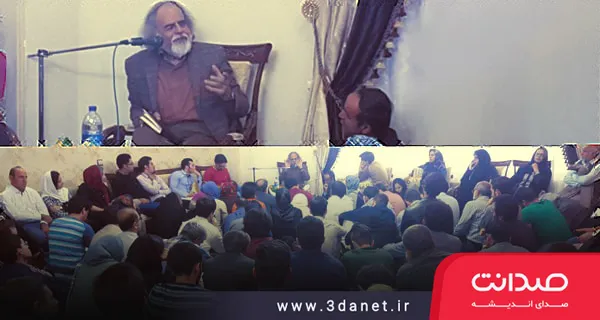
Mostafa Malekian's Lecture: “Hussein and Life, Everywhere and Always”
In his lecture 'Hussein and Life, Everywhere and Always,' Mostafa Malekian argues that life should not be preserved at any cost; values govern life. Imam Hussein demonstrated that some people cannot be bought, and peace at any price is not right.
Life should not be continued at any cost; one should not live at any cost, and there are values that can determine the worth of life. And of course, this does not mean revolutionary activism, and this must be pointed out to today's youth. I am willing to preserve life only so long, and if there are things I would have to lose, then that life is no longer worth living and must be relinquished. Imam Hussein showed that 2_ Some human beings are not for sale, at no price; no essence sells itself for its accidents. Threats and enticements have no effect on them.
A summary of the lecture "Hussein and Life, Everywhere and Always":
1_ Life should not be continued at any cost; one should not live at any cost, and there are values that can determine the worth of life. And of course, this does not mean revolutionary activism, and this must be pointed out to today's youth. I am willing to preserve life only so long, and if there are things I would have to lose, then that life is no longer worth living and must be relinquished. Imam Hussein showed that
2_ Some human beings are not for sale, at no price; no essence sells itself for its accidents. Threats and enticements have no effect on them.
3_ Political power is more helpless before human beings than it imagines. Indeed, man transgresses... (Lord Acton's saying) Power brings a kind of intoxication, an unawareness of one's surroundings. One of the realities of power's intoxication is that it thinks everything is subject to power, and Yazid was like this. In other words, the more you use the sword, the duller it becomes. Every government has power and authority, and both are necessary for a system, and there is a seesaw paradox between them. The exercise of more power leads to a decrease in authority.
4_ Aristotle said that the mean is virtue, and the extremes of excess and deficiency are vice. In our culture, from a thousand years ago, they even attributed to the Prophet—which is, of course, an incorrect attribution—that everything in the world is negotiable, as if there is no such thing as right and wrong. If the situation is very complicated, then the two sides should compromise. Negotiation is when we do not see one of the parties as being in the right. To negotiate over right and wrong makes one a conservative, which is a sickness, someone who wants to preserve peace at any cost. Reconciliation comes after the inability to distinguish right from wrong. Imam Hussein had many of these mediators, and Imam Hussein showed that peace at any cost is not right, and the oppressed cannot smile at the oppressor.
5_ Not creating a rift among the ranks of the nation is not an art (the story of the Samaritan's calf in the Quran). There are values that are more important than the unity of the people. The unity of the people itself has no sanctity. The first one to create division was God, with the sending of the prophets. If there is a truth at stake, then even if division arises among the people, there is no fear. Unity around ignorance is also a kind of unity. They told Imam Hussein, "You have created a rift in the Islamic Ummah." Every powerful person, from the day they come to power, says the people must be united; we must find unity around moral values.
6_ Sometimes you attract people by appealing to certain values, and then you retreat from them later. But when it comes time to pay the costs, I withdraw from these values; that is, I run with the hare and hunt with the hounds. Imam Ali used to say, "I am a lover of truth, not the benefit that truth brings me," so that whenever a value entails a cost, I would set it aside. "O God, make my soul the first noble thing You take from me." Jesus says: It is not worth it to sell your soul and gain the whole world in return. One cannot deal in moral values with double-dealing. Every truth-seeking heart beats for Imam Hussein. Moral values are captivating and make the human soul tremble, but when I have to pay the cost, I say, "I am not here."
7_ Imam Hussein did not exploit religious sanctities for his own benefit (the story of his presence in Mecca). He did not make religion a tool to overcome his enemies.
.
.
Audio of the lecture "Hussein and Life, Everywhere and Always"
.
.
Lecture Title: Hussein and Life, Everywhere and Always
Speaker: Mostafa Malekian
Friday, October 16, 2015
2:00 PM
Ghadir Charitable Society
.
.

Discussion0 comments
No comments yet; let yours be the first voice.