Philosophy
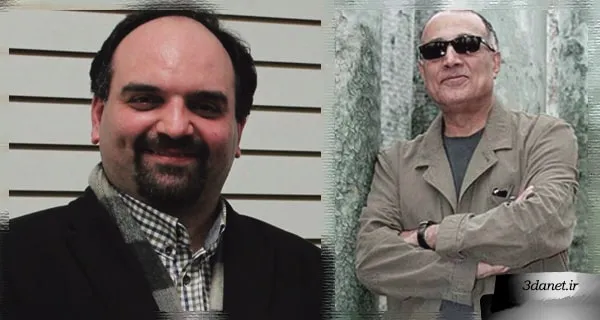
Nasim-e Bidari's Conversation with Soroush Dabbagh on Gholamhossein Ebrahimi Dinani
Soroush Dabbagh considers Ebrahimi Dinani's heated reactions in debates unjustified, insisting that the rules of intellectual engagement apply equally to all. He describes the critique of works as an ancient tradition that should become a cultural norm, not a vehicle for personal disputes.
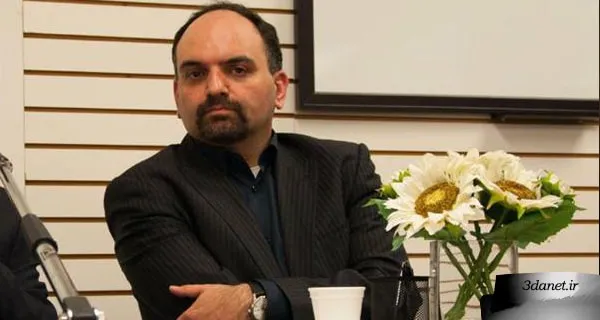
Soroush Dabbagh recently, in a note, critiqued Gholamhossein Ebrahimi Dinani's book "Shoa'e Shams", to which responses were given by Dinani's students, but Dabbagh, in responding to these critiques, opens up newer axes in his criticism and critiques other dimensions of Dinani's works and teaching style. Soroush Dabbagh's criticisms reveal important points about the works and teaching of prominent figures and professors like Dinani that have not been critiqued and examined until now. Pointing to the importance of epistemic critiques, he hopes that these critiques, as a long-standing tradition in the realm of science, knowledge, the university, and higher cultural echelons, become a culture rather than a path for raising personal disputes. In the following conversation, Dabbagh points to important issues in the thought and works of Ebrahimi Dinani.
Being polemical, along with becoming inflamed and raising one's voice in the midst of conversation, was one of the criticisms you leveled against Dinani. Many have seen and heard this type of encounter from Dinani. Sometimes his age and impatience are cited as the reason, and some believe that the low level of knowledge of the interlocutor or critic robs Dinani of this patience. In your opinion, which is justified?
In that piece I wrote about his book "Shoa'e Shams", which became somewhat controversial and people wrote for and against it, I had pointed to the story of him becoming inflamed and raising his voice during discussion and conversation. This judgment was based both on what I had heard and on my several years of experience attending the Iranian Society of Wisdom and Philosophy and, before that, the "Marefat va Pajouhesh" Institute. In any case, these two interpretations you made or quoted from others seem unjustified to me. During my time in England, and also in the last 6 years in Canada and the United States, I have occasionally seen elderly professors over 70-75, either retired or on the verge of retirement, conversing calmly, and impatience, possible exasperation, and short-temperedness are not seen in them. If a person is not capable of tolerating and carrying forward a conversation, or for any reason sees that they lack patience, they should not enter into a conversation. But when someone is willing, interested, or submits to conversation and discussion, I think they must adhere to the rules of the epistemic game. As I have written before, during my time in England, I had the great fortune of extensive association with John Hick; when I met Hick, he was almost 80 years old; from then until the end of his life at 90, I had the opportunity and fortune of 10 years of discussion and conversation with him. During this time and throughout these conversations, I never once saw anger or inflamed behavior from Hick. Many times our conversations were critical, meaning I criticized Hick's position and he criticized mine. I have greatly benefited from him in these conversations and am truly pleased about this, but in all these years, I never once saw him become inflamed. I think advanced age in no way justifies an angry and impatient encounter. Regarding the second reason you mentioned, I think it is even more unjustified than the first. As a person of philosophy, I absolutely cannot tolerate this kind of talk; that someone's level of knowledge is higher or lower than another's, therefore they should be treated this way!!!
Philosophizing is essentially Socratic dialogue. Now, I may have a judgment about so-and-so's erudition, or someone may have a judgment about me and the likes of me, but that does not mean that in an epistemic game this can be adduced as a reason and it be said that others are beneath me, and therefore I lack the patience for them. Whoever it may be, it makes no difference; this rule has no exceptions. Whether a person has published thirty volumes, one volume, or no book at all, when engaging in dialogue with anyone, they must submit to its rules. Philosophical dialogue has its own requirements; to say that the audience's level of knowledge is low and that this robs one of patience is mistaken. To be honest, this statement has a very egoistic and self-centered character, carries not an ounce of weight on the scales of inquiry and fairness, and is miles away from the Socratic method of dialogue and philosophical conversation, which is a justified and accepted practice. I have repeatedly seen professors who attend class with patience and forbearance and teach first- and second-semester students. My own professor in England, who was then around 55 or 56 years old, in addition to the courses he taught at the doctoral level, also taught first-year students and had a class titled "introduction to philosophy"; I attended his classes for two semesters. He taught with enthusiasm, answered the questions of students fresh out of high school, and took them seriously; he never said to himself, "I am a full professor, I was a student of Michael Dummett; what have I to do with first-year students!"
At this very University of Toronto, three years ago, I attended a class taught by a woman on the verge of retirement. She, too, taught this philosophy course to 19- and 20-year-olds with great patience, despite being 50 years older than her students.
This kind of talk has no standing in epistemic discussion and dialogue; it is of the nature of boasting. It is like saying, "Because I have four cars and you have one, I have nothing to say to you," or someone saying, "I have written ten books but you have only one article, so no dialogue should flow between us."
Dialogue means we listen to the other party, even if our educational and epistemic backgrounds differ, in order to learn something, whether the other person is twenty years younger than me or forty years; none of us is the all-knowing sage of the age. In the various and numerous classes I have had over the past ten years, my genuine perception has been that when someone asks me a question, whether in class or at lecture gatherings, I should listen so that if there is a point to be had, I can benefit from it. There is a time when a person raises these matters out of mere courtesy; and there is a time when one deeply believes in this Socratic and dialogical method. If you believe in the latter, its consequent effects and results will be manifest in your outlook and behavior.
You also raised another point, that his works are not critiqued. Can it be said that this lack of critique of his works stems from this very ethic of his, and that critics, fearing unpleasant encounters or the possibility of upsetting him, refrain from critiquing him? Or is it due to the bad tradition that has taken root in Iran, whereby as soon as an epithet of greatness is attached to someone's name, no one dares to critique them, and this task is postponed until after that person's death?
It seems clear to me that if there is no criticism in the realm of knowledge or philosophy, the first person who suffers is the individual who puts forward their ideas. In our culture, as you mentioned, this kind of attitude exists; I hope that gradually, collective effort will move in a direction where criticizing anyone becomes easily possible. In this regard, when I look at the contemporary era, I think figures like Ali Shariati and Abdolkarim Soroush were very fortunate in our culture because, in addition to the tremendous influence they had, by the testimony of friend and foe alike, their ideas have been heavily criticized, and this criticism has greatly helped them. Any thinker whose views and ideas are criticized has certainly received the greatest service. Mr. Malekian has also been fortunate in this regard in recent decades; I have personally published several critiques of his works in the form of articles and interviews, and others have done the same. Culturally, this point is clear and more or less obvious: in the world of knowledge, such criticisms directed at any individual not only do not destroy them but are a help to them. Among us, the pleasantries you mentioned do exist; even very often, criticisms have been accompanied by personal score-settling, in such a way that the person feels their character, and not just their ideas, has been attacked, and then they resist. In any case, for various reasons, people of culture and philosophy among us avoid epistemological criticism of others' works. Nevertheless, I imagine that some individuals, including Mr. Dinani, have not been fortunate in this regard and their works have not been criticized. Part of this lack of criticism is due to his character and his possible reactions, and part of it is due to the cultural narrative that has become prevalent among us.
I would like to add another point to this issue; although my words are frank, I also think it can be part of your answer to this question. That point is that Dr. Dinani is not a thinker, but rather a scholar of philosophy. His prominent characteristic is that he has a very good familiarity with Islamic philosophy and has published numerous works on this subject, but he does not have new ideas; as far as I have seen, one reason for the lack of criticism directed at him is this very matter.
In fact, criticism can indicate the importance of the person being criticized and their standing within their own scholarly community.
For example, what I had said about Dr. Dinani concerned the method of his works, for instance, the book "Dar Sho'ae Shams" (In the Sun's Radiance). This book was a work that fell short of conventional book publishing standards. The purpose of criticizing works includes this type of criticism as well; at the same time, in addition to such criticisms, some critiques are also aimed at the presentation of new ideas; when there are no new ideas, people also do not criticize. I might publish a book about Wittgenstein or Kant, and some might find my arguments unjustified and write a critique of it; or they might consider a book like "Sho'ae Shams" to lack the necessary scholarly standards—that is one way of writing a critique. In addition to this, there is another type of criticism that concerns the innovative and original ideas of thinkers. For example, the late Allameh Tabatabai, in the sixth article of the book "The Principles of Philosophy and the Method of Realism," introduced the discussion of e'tebariat (subjective constructions), which, in that formulation, was original and controversial. Observe how much it has been discussed so far and how many works have been published, whether among those educated in the Western philosophical tradition, those in Islamic philosophy, or those doing comparative work. I have personally taught this part of the late Tabatabai's views extensively and have engaged in comparative discussions about it. My critical observations regarding Dr. Dinani's works are not of this kind; rather, they are directed at the manner of publication of some of his works, works like "Sho'ae Shams" and other conversations he has conducted about some other poets, which I believe are subject to serious criticism in this respect.
As long as I was in Iran, I used to read most of his works. I do not think he has new ideas, ideas that have the potential to be controversial and that people could engage with in the position of commentary or criticism. In any case, when years pass and no criticism is written about an individual's works from this perspective, one can also look at the issue from this angle.
You also raised in your critique that, as with his other works in the arena of written and spoken publication, he has an improvisational style that does not fit within the framework of a research and scholarly project. I have also seen this criticism you made in other critiques, where it has been said that his books are not methodical.
To be frank and brief, some of his works are good, such as "The Adventure of Philosophical Thought in the Islamic World" or "The Ledger of Reason and the Sign of Love," which are valuable works and clearly could not have been written extemporaneously. What I spoke about concerns works like "Ray of the Sun." I was referring to his dialogue-centered books where he discusses Khayyam, Rumi, and Hafez. These, in my view, have an improvisational style, meaning, I emphasize again, these works are not within the framework of a research and scholarly project.
The second critique relates to his classes. I attended several of his courses, and it was quite clear that he came to class without a prior plan. I attended his doctoral classes; part of his class takes shape through dialogue, and more importantly, he does not come to class with prior preparation. This point stems from my own experience, and I have also heard frequently about his lack of a plan for classes and lengthy conversations. In any case, someone who goes to a class, even for a single teaching session, whether it be Islamic philosophy or Western philosophy, must participate with full prior preparation and a clear plan.
From this perspective, too, a serious criticism applies to him. Another point regarding his good works is that, in my opinion, his works lack good editors, and part of the book's content is verbose and may bother the reader. Repetition and prolixity are also abundant, and I think if these works had good editors, the volume of the book could be reduced to even a quarter. My fourth critique concerns the fact that his works are not research-based, as Mr. Yathribi also stated, and in his critique of him regarding the book on Ibn Rushd, many of his references are general. Many of his references are not clearly identifiable as necessarily belonging to which tradition; when you do research work, it must be within a tradition. I myself have seen some of his works; the references are either not precise or not correct. I think these four types of objections can be made to his working method.
Whether regarding the improvisational style of some of his works or his classes, where it is evident he attended class without a prior plan, this, at the very least, is far from my image and understanding of philosophical teaching. Philosophical chat or free discussion in a lesson session is fine, but if you entirely go to class without a clear plan or a defined syllabus, this, in my view, is a significant methodological error and must certainly be corrected. Another critique included the editing of his works, and I believe if he himself studied the book seriously, he would definitely delete parts of it. Regarding this problem, one can point to the good tradition that exists in Canada. Here, a panel of reviewers examines the books. For instance, right now as we are speaking, I have an English book in hand for review, for which I am writing my observations, both in terms of form and content, for the publisher, and then the publisher decides and gives the work to an editor to edit the book technically. In addition to the content points, serious editing has not been done on Mr. Dinani's works (those I have read). The fourth point was the issue of references and the research aspect of the work, that he neither provides correct references to the works of individuals who worked in this field before him, nor are the references he has provided precise references, like references that have a registration number and year of publication.
To what extent can his unfamiliarity with Western philosophy be considered effective, and to what extent can it be seen as a negative point? Especially for someone like Mr. Dinani, who occasionally delves into Western thoughts and philosophers?
In principle, there is nothing wrong with someone not being acquainted with Western philosophy, just as there is nothing wrong with someone not being acquainted with Islamic philosophy and working in another field, or with someone publishing works solely in the domain of Western philosophy—whether translations, articles, or books—or with someone publishing works solely in the domain of Islamic philosophy. The objection to Mr. Dinani concerns the manner of reading Rumi's teachings under the rubric of Hegel and then analytic philosophy. The explanations he provided contained several serious errors, and I believe this way of using Western philosophers is present in his other works as well. He has not done serious work in this arena; he has neither studied in the field of Western philosophy, nor studied abroad, nor engaged with the classic works of Western philosophers. At most, he was and is familiar with translations, which is fine in its own right, but when you want to engage in a discussion of a comparative nature, you must have considerable study on the subject or a good familiarity with Western philosophy. When I encounter such serious errors in his works, I say it would be good if he refrained from these comparative discussions or entrusted this part to others who are educated in Western philosophy. Comparative discussion is very good, and my point is that someone who speaks about these topics must be proficient in both domains, or when one reads that person's writings in this area,
one should realize that the person is familiar with the fundamentals of the discussions in that arena. The explanations he gives about Western philosophers are explanations that are not noteworthy for experts and those familiar with Western philosophy. In my view, this approach harms him because it is an error, of the kind of error in analysis. Of course, the fact that I, for example, do not believe in your account of a certain philosopher is different from your providing basic information and explanations about a philosopher that show you are not very familiar with that topic, that philosopher, or the philosophical ideas of such-and-such a philosopher. The explanations he gives about the history of analytic philosophy, logical positivism, and the like, which I have seen in several places, contain wholesale errors; his errors in this domain are consensus errors—that is, not concerning the influence of a certain philosopher, but the very meaning of positivism. Suppose it is the periods of analytic philosophy, the early and later Wittgenstein and their central doctrines, which anyone who has worked, studied, written, and read in these fields realizes are glaring errors. In this sense, I think it would be good if he did not discuss these areas, or if he wants to engage in comparative discussions, he should carefully examine the necessary primary sources; if he does not have the time, for whatever reason, one simply does not enter the field. In my opinion, entering these arenas harms a person. The comparisons he makes, on the scale of research, with the explanation I have given, carry little weight and cannot be considered good and lasting works of comparative philosophy. At least, that is my understanding.
Unfortunately, the absence of a culture of criticism, or at least its not being established among us, especially in such circles, may give rise to the suspicion that the aim is to discredit an individual. But one of the missions of the press is to fulfill and raise these points.
Dear readers of this interview should not take these criticisms as, God forbid, personal scores or view the issues as non-epistemic. Absolutely and under no circumstances do I have the slightest non-epistemic considerations. During the days I was in Iran, I would see him from time to time. He is a pleasant and humorous person. He can also become sharp at times, but on the whole, especially if you know how to handle him, you greatly enjoy his company. I have attended many gatherings where he was present at the Iranian Institute of Philosophy, and I have benefited from and enjoyed his fascinating reminiscences from before and after the revolution about his associations and friendships with people. I have been with him in travel and at home; I am personally fond of him, and the points I have raised are purely epistemic in nature and from the perspective of someone who is a philosophy researcher. Proceeding in this manner and on this basis, it is very good if we can separate personal relationships and connections from epistemic discussions. One can be very good friends with someone or be fond of them, yet at the same time have considerable criticisms of their work. What I have said does not diminish my respect for him in the slightest, as someone who has worked hard and taught for many years. We have conversed many times, about Western philosophy and about Islamic philosophy. I am personally fond of him, but as we have all heard it said, Plato is dear, but truth is dearer. It is necessary not to abandon the side of truth. What I have said is of this kind, and these considerations, whether in those two writings I mentioned or now that the opportunity for elaboration has arisen and I have provided more explanation, are all of this type. I conclude this conversation with this expression from Hafez:
The seal of love bears that very seal and mark
Since, as you also pointed out, criticism has not become established among us, it has not turned into a tradition. Perhaps many times we mistake epistemic criticisms for personal criticisms; if we practice more, the matter will gradually fall into its proper place. I hope such endeavors become more frequent. As someone who is a writer and has published several works, numerous criticisms of my works and views have been published, many of which I have placed on my website, in the section for others' articles. Now, some are also tainted by political reasons and motives and personal attacks, which should not be fueled, and this is not from a lack of self-confidence but rather from not giving value to a kind of non-epistemic game. However, good epistemic criticisms must be valued.
Not only do I read them, but I also place them on my personal website so that those who study my works can also see the criticisms directed at them. I have benefited from many of these criticisms and learned from them. I think if this type of relationship becomes more institutionalized among us, it will help the growth of knowledge. We should never mistake benevolent criticisms for personal scores. I know that some people ultimately do this; the human world is never empty of such matters and is certainly rife with them, and these things also exist among us Iranians and the people of intellectualism, philosophy, and knowledge. I say,
let us move towards a collective effort so that this behavior becomes a culture. For my part, the numerous criticisms I have written of others' works have truly been from this perspective, or my rereading of the works of intellectuals, which I have been engaged in for several years, including those who are alive and those who are not. As it happens, I am holding a course on Al-e Ahmad, Ashouri, and Fakhreddin Shadman at the Suhrawardi Foundation in Toronto, which is entirely from this perspective and with this motivation. In principle, errors can also find their way into my work, but I try to keep personal and non-epistemic motives to a minimum. In closing, I reiterate that what has been said does not diminish my respect for him in any way. As a philosophy researcher who has, after all, followed his works for years and now believes that these errors, flaws, and ambiguities are seen in his works, I raise these discussions. I hope he has a long life.
.
.
Nasim-e Bidari's Conversation with Soroush Dabbagh on Gholamhossein Ebrahimi Dinani
.
.


Discussion6 comments
من انگلیس رفتم من آمریکا رفتم من خارج من فرنگستون رفتم!
امیدوارم اقای دباغ راهی که پدرشون رفتند رو طی نکنند.. شما الگویی از فیلسوف یا محقق فلسفه ای رو ارائه بدید که به استنداردها وفاداره..خود بخود بازار مدعیان کساد میشه..لازم نیست درعرصه اندیشه به این و اون تاختن ..گذشته از اینکه قرار نیست همه به سبک و سیاق تحلیلی و غربی شما بنویسند و سخن بگند.. سنت ها با هم متفاوتند. مگه فلاسفه آلمان و انگلیس یه جور مینویسند؟! یا حتی یه جور فکر میکنند؟ شما با خطکش خودتون همه رو اندازه میگیرین مثلا نقدهاتون به مرحوم جعفری واقعا بی رحمانه و ناهمدلانه است. ..اگرچه در کل قصد خیرتون رو انسان درک میکنه..
اصول تحقیق و پژوهش فلسفی در همه دنیا مشخص و شناخته شدهاست.شما اگر تعصب مذهبی نداشته باشی و اهل فلسفه باشی متوجه میشی.اقای دینانی فلسفه دان است نه فلسفه ورز.
اقای دباغ شما چه وقت میری سراغ خدا وپپغمبر و قرآن و آنها را نقد کنی؟عبد الکریم سروش ازهمین جا ها شروع کرد
با سلام دوست عزیز این نوع انتقاد کردن واقعا دور از شآن انسان های عالم و متفکر هست
چرا انتقاد نکنه مگه کم بد بختی داریم از دست دین