Philosophy
On the Concept of Dialectic in Conversation with Babak Ahmadi
For Hegel, dialectic is not a method of inquiry but a theory of the subject's inner development and the resolution of contradictions. Babak Ahmadi traces the concept's evolution after Hegel, its divergence from Marxist readings, and the context of its reception in Iran.
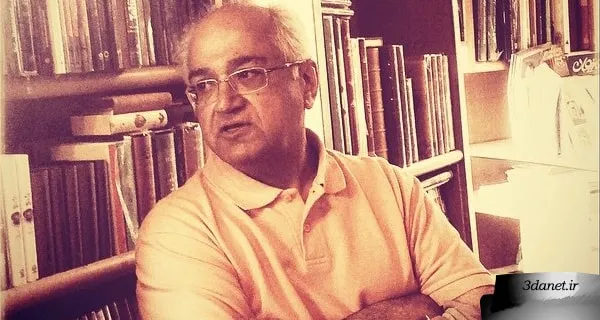
Babak Ahmadi, born in 1948, entered university in 1967 and received his bachelor's degree in political science from the University of Tehran in 1970. He earned his master's degree in philosophy from the universities of Pennsylvania and Kansas in the United States in 1974.
His most important works relevant to the subject of the present conversation are: Modernity and Critical Thought, The Enigma of Modernity, Marx, Modern Politics, Marx's Philosophical Lexicon, Doubt, Heidegger and the Fundamental Question, Heidegger and the History of Being, and Sartre Who Wrote.
The discussion of modernism and postmodernism is among the topics that Iran's Perspective pursues. This time, we raised one of the facets of modernism, namely dialectic and its course of evolution after Hegel, in the world and especially in Iran, with Professor Babak Ahmadi. Namely: Is dialectic a law expressing evolution? Is dialectic a method of cognition? What is the difference between Hegel's dialectic and the dialectic of Engels, Marx, Lenin, Stalin, and Mao?
In Iran—especially in the 1960s and 1970s—a generation grew up with dialectic as a dynamic logic and method in opposition to formal and static logic, which sought a single logic to explain nature, society, and history, and believed that struggle is also a science and that just as one attains the laws of physics and chemistry, one must also attain the laws of social motion. This generation, while its essence is evolutionist and transformation-seeking and has undergone ups and downs, by pursuing the process of dialectic's evolution, is also unwilling to follow spontaneous and lawless movement. The professor was asked what the difference is between dialectic and hermeneutics and systems theory, since many features of hermeneutics are also seen in the process of dialectic's evolution.
What are the characteristics of Hegel's dialectic?
There are many who recognize Hegel as the initiator of a new and modern conception of dialectic and consider this one of the most important achievements of his philosophical work and even one of the significant contributions of the history of philosophy. But apparently Hegel himself did not attach such importance to his discussion of dialectic. Nowhere in his works or letters have I read that he introduces the discovery or initiation of a new discussion of dialectic as an important achievement in his philosophical work. In fact, this was one of dozens of his philosophical innovations that was put forward in the first part of the Encyclopedia of the Philosophical Sciences, and it seems that it had no particular importance or special characteristic, at least in his own view.
The Greek word dialektik comes from the word dialegesthai, meaning conversation. In Plato's dialogues, this term was used to explain Socrates' particular method of advancing a discussion. Socrates would ask his interlocutor to present a positive judgment in defining or explaining a concept (usually a universal concept), then by posing questions about the consequences of this positive view, he would lead the interlocutor into the abyss of contradiction, and by emphasizing the contradictions, he would force him to concur with Socrates' own definition or explanation, which was gradually introduced and put forward in those very precise questions. Before Socrates, Zeno of Elea also pursued a method in philosophical discussions that was in one respect similar to his method. By displaying the contradictions arising from the philosophical judgment accepting the possibility of motion, Zeno argued that motion is not possible. For this reason, in the nineteenth century, Zeno was recognized as the founder of dialectic.
For Hegel, dialectic does not pertain to an engagement in a discussion between two thinkers, or even a thinker's thought about the subject under investigation. He did not introduce dialectic as a method in the investigation of matters, but rather considered it the self-contained and independent development (a kind of self-transcendence) of the subject under investigation, a subject which could be, for example, a form of consciousness or a concept. Hegelian dialectic is a theory about the progression of the subject based on contradictions that, although they initially appear irreconcilable, ultimately come together and find a new, more advanced form. This dialectic has three stages: 1) A concept or category appears as a fixed form, precisely defined and independent of other concepts or categories. In Hegel's philosophy, this is the stage of understanding. 2) When we think about this concept or category, it no longer has a fixed, defined, and determinate form but appears as two or more concepts or categories that are mutually contradictory, and this is the stage of negative or critical reason. 3) The result of this dialectic is the emergence of a new, superior, or more advanced concept or category that initially seems to include the same previous concepts or categories, but their contradiction has been sublated. In reality, a new concept or category has been born. This new concept or category is the result of the unity of contradictions, and this is the stage of speculative or positive reason. Hegel believed in a process in which every positive proposition is negated, and from the synthesis of that affirmation and negation, a new positive proposition is constructed, which is in turn negated again, and the process continues. All of this is presented in paragraphs 79 to 82 of the first volume of Hegel's book Encyclopedia of the Philosophical Sciences (1817), and also recalls his great philosophical work Science of Logic (1812), in whose first chapter being, nothing, and becoming are mentioned as a philosophical triad, and becoming was introduced as the "unity of contradictions." In every evolutionary process, Hegel saw the synthesis as the result of the combination of thesis and antithesis. Many writers believe that Hegel's understanding of dialectic was confined to the realm of reason, and he presented dialectic as the self-differentiation, self-criticism, and ultimately the internal progression of reason. However, I agree with Michael Inwood's interpretation on page 82 of his book A Hegel Dictionary (Oxford, 1992) that, for Hegel, "dialectic was a feature not only of concepts but also of real things." This interpretation, of course, shows the critique by Marx and Engels, which reduces Hegel's dialectic to a method for understanding the evolution of ideas, to be incorrect. Hegel's famous example in the preface to the Phenomenology of Spirit, which presents the development of the bud into the flower, is an example of a real thing or movement and not of the evolution of ideas. For Hegel, the dialectic of natural things and events is independent of the dialectic of our thought about them, and this shows the contemporary aspect of Hegel's discussion. I repeat that, for Hegel, dialectic is not a "method." That is, it is not a tool that a thinker uses to investigate a subject, but rather a theory about the process or the internally evolving and changeable structure of the subject (i.e., its development). Thanks to Hegel's philosophical work, we can consider dialectic as the process of resolving conceptual and social conflicts. That is, we can understand the internal relations that, due to conflicts (and in fact the combination of contradictory matters and the negation of the negation), lead to the transcendence of a mode of thought or form of life. This transcendence has the form of progress and development, but it does not mean a process that is constantly and continuously progressing. Progress lies in the totality of the movement and may not be observable, deducible, or provable at every moment. Borrowing Hegel's famous analogy, the odyssey of spirit, progress can be considered a movement or a journey toward a final destination and goal. But the path of this movement is not linear and continuously progressive. It is as if a traveler stops, even goes backward, and then begins the forward movement again. In the Hegelian odyssey, we finally reach the destination, but we have traversed parts of the route many times.
What transformation did Marx bring about in Hegel's dialectic?
In the afterword to the second edition of Capital (1873), Marx wrote that his dialectical method differs fundamentally from Hegel's. In his view, Hegel limited dialectics to the evolutionary movement of ideas, because he recognized ideas as the creators of reality, whereas ideas should be considered the result of the evolution of material and real things (and actual social relations), and consequently, dialectics should be posited as a method for understanding the concrete and existing contradictions of social life. From Marx's perspective, Hegel had mystified dialectics because he had stood it on its head and saw the world upside down. It must be turned right side up again to see the real world. Earlier, in the preface to A Contribution to the Critique of Political Economy (1859), Marx had raised the point that transformations and the evolution of the social, political, intellectual, artistic, etc., superstructure (which in Persian translations is rendered as rubnā) are, in the final analysis, the result of transformations in the economic foundation (translated as zirbānā). The economic foundation of every society is the relations of production established within it (in legal language: property relations). The key to understanding the historical evolution of human societies is attention to the mode of transformation of the relations of production. One must know how relations of production that are obstacles to the development of the productive forces disappear and give way to new relations. This attention to the economic foundation and relations of production was the result of Marx's materialist insight, and differed from scholastic debates about the primacy of matter or consciousness. Marx's materialism (as he himself put forward in the Theses on Feuerbach) is not naturalistic, dogmatic, and mechanistic, but rather values the intellectual, social, and historical life of human beings and does not ignore it. Marx's understanding of dialectics, in this specific sense, is also a materialist understanding. That is, dialectics is the method of understanding evolution arising from the unity of contradictions, and all of this finds meaning within a historical totality (the history of humanity, which is the history of class struggle). The term materialist conception of history, which appears in The German Ideology, is a guide to another mode of expression: the materialist understanding of the dialectic of history. The model Marx had in mind for examining and understanding human history is the assumption of a series of modes of production, each of which, due to the contradictions they generate (and which block
the path to the growth of the productive forces, i.e., economic institutions, labor power, modes of production, and technology), cedes its place to another. From primitive communism, humans stepped into ancient societies that were split into classes. In these class societies, they made their own history, but not under conditions of their own free choosing, rather within a range of existing possibilities where the mental products of human production appeared before them as alien objects. The various modes of production that were (and are) based on this class division do not manifest the true capacity of human beings, but alienate them from the process of labor and production, from the product of their labor, from others, and from themselves. It is in the future communist society that human beings will be human in the true sense of the word, and their real history will begin. The process of replacement—primitive communism → succession of class societies → true communism—is a dialectical process. Likewise, the discovery of fundamental (infrastructural) contradictions, i.e., the antagonism between the growth of the productive forces and the existing form of class and property relations, is also dialectical.
What was Engels' role in formulating the foundations of dialectical materialism?
A discussion began with Engels that ultimately led to the formulation of "Dialectical Materialism," although he, like Marx, had never used this term, nor the term "Historical Materialism," in any of his works. The coinage of these two terms in the final decade of the nineteenth century was a symbolic and significant act. In this period, the first generation of Marxists sought to construct a proletarian science, a new worldview, scientific socialism, and a coherent, precise ideological apparatus under the name of Marxism. With the relative growth of the working class's power, the advancement of unions, cooperatives, and labor parties, the possibility of representatives of labor parties penetrating state institutions, especially European parliaments, and the expansion of working-class hegemonic elements (leadership of democratic struggles), the necessity of formulating what Karl Kautsky, the intellectual and political leader of the Second International, called the workers' worldview was felt. True science had to be sounded against the bourgeois worldview. Socialists needed to answer all social questions, including scientific ones, and had to offer a powerful theoretical alternative as well. Hence, attention turned to Marx's works as the most prominent proletarian thinker, someone who had created a new science that no longer interpreted the world but changed it. Marx's scientific socialism (which was consonant with the positivist scientism of the nineteenth century) was considered absolute science. The cornerstone of this proletarian science was dialectic in a materialist conception. The coinage of the term Dialectical Materialism was the work of Russian Social Democrats such as Plekhanov, Martov, and Lenin. According to "Historical Materialism," human history is a unilinear path divided into a series of modes of production, each possessing its own specific economic character and class structure, different from other modes of production. Historical transformations are the result of breaking the barriers that relations of production create in the path of the development of productive forces. Dialectical Materialism encompasses all aspects and facets of Marxist philosophy except its theory of history. In it, epistemology and ontology are discussed according to Marx's teachings. Since Marx had left behind no coherent and precise philosophical work, the foundations of this new philosophy had to be compiled by examining his scattered references and remarks. Engels and some other followers of Marx, such as Paul Lafargue, August Bebel, Eduard Bernstein, Karl Kautsky, and Wilhelm Liebknecht, undertook this task. Of course, they also considered themselves obliged to discuss new fields. Engels published the results of his studies in anthropology, the historical understanding of kinship and family relations, and the empirical sciences of the era. His two books, one refuting Dühring's theories, titled Anti-Dühring (1878), and the other, Dialectics of Nature (1925) (published posthumously in Moscow in 1925), discussed the foundations of this new proletarian insight and science. These works were written in a simple, universally comprehensible language, and paved the way for superficial interpretations. The discussion of dialectic is mainly found (aside from scattered references) in the thirteenth and fourteenth chapters of the first part of Anti-Dühring and in two notes in Dialectics of Nature. The codification of dialectic into general laws (the laws of the transformation of quantity into quality and vice versa, the unity of opposites, the negation of the negation, evolution as the result of the conflict of opposites), the citing of superficial examples such as movement resulting from the positive and negative poles of electricity, or the combination of chemical substances, the rewriting of dialectical laws based on the achievements of the natural sciences, the subordination of social and historical science to the empirical physical and natural sciences—all are the result of the mechanistic, deterministic, scientistic, and positivist vision contained in these works of Engels. After the publication of these works and their promotion as the principal textbooks of the working class, criticism of them was always accompanied by the risk of expulsion from labor parties. Nevertheless, in the 1920s, figures such as Georg Lukács and Karl Korsch, accepting the difficult consequences, initiated the first criticisms within the labor movement. With the consolidation of Stalinism, the possibility of pursuing these criticisms was eliminated.
In my view, George Lichtheim’s critique of Engels in the fourth chapter of the fifth part of Marxism: An Historical and Critical Study is precise and justified. The aging Engels had ignored the early teachings of the young Marx in the field of philosophy, sought to discover a universal and general theory of nature and history with a Darwinian interpretation of evolution, and the influence of Haeckel’s ideas on him was evident. These conceptions were inherited by the communists of the twentieth century through Kautsky, Plekhanov, Lenin, and Bukharin. Their mystical faith in final victory was the result of their analysis of the deterministic evolution of history toward communism.
What were the characteristics and differences in the understanding of dialectic by Lenin, Stalin, and Mao? Were these individuals the most important figures who advanced the Marxist discussion on dialectic?
First, I will answer the second part of the question. No, from a philosophical perspective, they were by no means the most important figures who discussed dialectic. However, it was due to their political role—that is, the leadership of communist parties and governments—that whatever they said and wrote was considered important. In my opinion, the writings of figures such as Lukacs, Althusser, Adorno, Sartre, Kosik, and Colletti on the subject of dialectic are far more important than the works of these individuals. For example, Colletti's writings, such as Hegel and the Dialectic of Matter, Dialectical Materialism and Hegel, and especially Dialectical Contradiction and Non-Contradiction, are very important. The latter article is a refutation of dialectical materialism and a proof of the point that dialectic is inseparable from idealism. A judgment that, nearly eighty years earlier, Bernstein had also put forward in a different form and through a different path.
One of Lenin's philosophical works is Materialism and Empirio-criticism (1907), which was devoted to criticizing several relatively well-known philosophical doctrines of that era and is a defense of the foundations of dialectical materialism in its common meaning within the Second International. It is a book in defense of philosophical realism and a sharp critique of any kind of relativism and skepticism about ultimate truth. This critique even extended to Einstein's theory of relativity, and it is clear that Lenin's knowledge of the physics of his time was limited to second-hand sources and textbooks. This book, like all of Lenin's works, has a polemical tone, and it is evident that its author has not a shred of doubt that he knows everything about the subject under discussion and is undoubtedly in the right. His task is to crush the opposing view and consolidate the basis of his own rightful theories. In other words, this book, contrary to its subject matter, lacks the spirit, insight, and requisites of a philosophical work. What can be found in it about dialectic does not go beyond the original writings of the intellectual leaders of the Second International, especially Kautsky and Plekhanov. It must be said explicitly that Plekhanov, although himself captive to an obvious philosophical dogmatism, served the formulation of a serious discussion on dialectic, and especially historical materialism, far more than Lenin did, and if anyone wishes to become acquainted with or critique these discussions, they must study his works. Lenin's other philosophical work consists of the annotations he wrote on Hegel's Science of Logic, dating back to the years of the First World War when he was living in Zurich, detached from the Second International, and had found the opportunity to study Hegel's philosophy. In the annotations he wrote, published as volume 38 of his collected works, he found a more open and, one might say, more philosophical perspective. He does not shy away from writing phrases such as that the judgments of intelligent idealism are often more brilliant and real than the judgments of dogmatic and mechanical materialism. He constantly praises Hegel and, in various places, finds it necessary to trace Marx's innovation in the field of dialectic back to this primary source. Nevertheless, after finishing the study of these annotations, the reader feels they have not heard anything serious or new in the field of dialectic. It is enough to compare this attention to Hegel with two brilliant works published in 1923, namely Lukács's History and Class Consciousness (whose subtitle is Studies in Marxist Dialectics) and Karl Korsch's Marxism and Philosophy, to realize to what extent these two thinkers were far more capable than Lenin of deriving new points from Hegel's works, and this was achieved thanks to the critical character of their thought and their familiarity with the culture and literature of the era—precisely the things Lenin lacked. Even Lukács's famous book on Lenin (subtitled A Study in the Unity of His Thought) does not show that Lenin had anything new to say in the field of dialectic. In Lenin's writings and speeches after the October Revolution, references to dialectic are rare, and he constantly advises party youth to arm themselves with the dialectical method by studying the works of Marx, Engels, and Plekhanov. I should also mention that by reading the writings of other Bolshevik theorists, including Nikolai Bukharin and Leon Trotsky, on dialectic and historical materialism, you will find nothing beyond the writings of Plekhanov. They, too, understood dialectic only as a method for analyzing contradictions, discovering the unity of opposites, and the law of development. Lenin's limited and dogmatic view, after his death and during the difficult years of Stalin's bloody dictatorship, was accepted as the great theoretical achievement after Marx. The term Marxism-Leninism was invented. At the same time, the concept of the classics of Marxism was devised, which, of course, placed Stalin in the ranks of Marx, Engels, and Lenin. In a treatise published under Stalin's name titled Dialectical Materialism, dialectical materialism was revealed for what it was: an ideological tool (in the sense that ideology had in Marx's The German Ideology, i.e., the false and inverted consciousness of the real) in the hands of a despotic government and the Comintern to arm the communists—who, in Stalin's explicit words, had a special nature—against bourgeois science and philosophy.
This opposition of dialectic toMao's understanding of dialectic in his philosophical essence did not go beyond this official understanding, which was the theoretical guide for all communists of the world. His famous treatise entitled On Contradiction, written during the war years with Japan, is the best example. The instrumental character of the discussion of dialectic is powerfully displayed in this treatise. By putting forward two types of contradiction (antagonistic contradiction and non-antagonistic contradiction), Mao opened the way to unite with the enemy wherever it was in the interest of the Communist Party. To unite with the Kuomintang (the ruling party led by Chiang Kai-shek, the party responsible for the bloody massacre of Chinese communists following the defeat of the 1927 revolution), he put forward the point that the contradiction of the Chinese communists with Japan was now antagonistic, but their contradiction with the Kuomintang was non-antagonistic. Thus, in the war against the Japanese invaders, they united with their old enemy. Apparently, after the end of the war with Japan, the contradiction with the Kuomintang became antagonistic again, and the war continued until the overthrow of Chiang Kai-shek's government! In the 1960s, when radical student movements, labor strikes, and popular demonstrations, especially against the war in Vietnam, had erupted in Europe and the United States, some European communists (including Louis Althusser) considered this treatise by Mao and his other philosophical writings as steps forward in the discussion of dialectical materialism. They pointed out that Mao had thought more about the unity of contradictory things than about irreconcilable opposition. They introduced Mao's worthless writings, which were written in a superficial and colloquial language, as guides for the philosophical thought of the era. To summarize: dialectical materialism is based on a mechanistic and naturalistic materialism that Marx, in his critique of Feuerbach, had subjected to the most severe attacks. This intellectual apparatus is opposed to any skepticism and relativism. It considers the material world as prior to the mental world and the ultimate determinant of the context, main characteristics, and evolution of the latter. The body is the precondition of consciousness, and the evolution of matter produces knowledge. The material world is known primarily through empirical sciences. Although the importance of empirical science was emphasized, in practice, this science was also a function of the political demands of communist governments; otherwise, how can one explain the tragicomic event of the formulation of Lyssenko biology in Stalinist Russia, or the emergence of proletarian science during the Chinese Cultural Revolution?
Was it right or wrong that they once sought to achieve a logic that would be a guide for solving natural and social problems? Is a dual-logic world (that is, separate logics for matter and meaning) correct?
Nineteenth-century thinkers faced two important problems concerning social knowledge, problems that in some respects had already been raised for thinkers before them in the Enlightenment: 1) Can we attain a single social science, or are we necessarily compelled to resort to various social sciences? 2) What is the difference between this social science (or these social sciences) and the empirical sciences (physical and natural)? The scientism of the nineteenth century on the one hand, and the authority of new discussions in the natural sciences (the most important example being Darwinism) on the other, gave a particular direction to these debates. This path can be seen as the adherence of the mode of understanding and scientific method in the social sciences to the mode of understanding and method of the physical and natural sciences. Positivism, which emerged and became dominant in the discourses of the social sciences in the second half of the nineteenth century, had submitted to this adherence. The first signs of the necessity of separating the methods of the social sciences and the natural sciences appeared in the works of German thinkers of the late nineteenth century. Among them, the writings of Wilhelm Dilthey played an important role. From 1883, he had paid attention to the difference between the methods of the natural and historical sciences. By distinguishing the method of scientific description and explanation (specific to the natural sciences) from the method of interpretation (specific to the social sciences), he took the first step in this discussion. A year later, Wilhelm Windelband emphasized that philosophy and the social sciences have methods completely different from those of the natural and physical sciences, and Heinrich Rickert also pursued this discussion in his examination of the history of philosophy. It can be said that methodological dualism, or two different "logics," were proposed. In the philosophy of science of the twentieth century, an effort was made to refine this difference. The problem of the similarities and differences between the two kinds of science was raised in works critical of logical positivism. For instance, in Popper's critical realism, Wittgenstein's discussions in the second phase of his intellectual work, the insistence of Marxist dialecticians on finding, in the traditional Engelsian manner, a single method and law applicable to the understanding of every natural or social phenomenon and subject is no longer acceptable or justified. As Sartre has shown well, dialectical materialism is a universal theory of evolution that holds equally true for nature and history. It also represents a belief in the passive, epiphenomenal character of consciousness following natural evolution and reduces everything to a dry, mechanistic materialism. In fact, it negates the independent evolution of consciousness and its history. It is tragic that the important philosophical discovery of the young Marx, which paved the way for a critique of the Cartesian concept of the subject, should suffer such a fate, presenting the evolution of the mind and the consciousness of the subject as the direct result of the evolution of matter and nature. Engels wrote in Ludwig Feuerbach and the End of Classical German Philosophy that we understand concepts in our brain in a materialist way. They are images or reflections (Abbilder) of real things... Dialectic reduces itself to the science of the general laws of motion in both the external world and human thought. Both sets of laws, which are identical in essence, appear different in their expression, insofar as the human mind can become aware of them. The root of many mechanistic conceptions of the transformation of human societies lies in this very dogmatic understanding of the relationship between subject and object.
Activists of the Second International, owing to their belief in the equivalence of historical evolution to the evolutionary process of natural phenomena, adopted a conformism with the bourgeois order. A similar belief among Stalinists, in various respects, led to theoretical and practical deviations. Even in the 1970s, articles were still being published in scientific journals that, for instance, spoke of class struggle among molecules. I object to this simplism, and this does not mean rejecting the serious scientific efforts of materialists who work in the natural sciences (including neurology and research on human brain function) and strive to extend the theoretical achievements of their work to research concerning the psychic and, in a sense, social life of humans. The issue is not complicated. There are those who dogmatically seek to prove the correctness of the classical thinkers' ideas. Disregarding the evolution of scientific and philosophical discourses, they seem to still live in the horizon of the late nineteenth century or recall with nostalgia the "achievements of proletarian science during the era of communist rule in the Soviet Union." The intellectual work of these followers of a dead tradition is not serious. But on the other hand, there are also those who, based on their scientific experiences, propose theories and try to test these theories and ascertain their truth or error. These individuals have the ability to set aside theories as a result of new tests and are, in the strict sense of the word, scientists. Among them, some still strive to find a unified logic. Their work is not legible with new achievements in the field of philosophical and cultural research (including in the Post-Modern discourse) nor with some important results of the discussion in the philosophy of science (including the theories of T. Kuhn and P. Feyerabend). But it is clear that this incompatibility does not yet signify the incorrectness of their view or work. A thoughtful materialist like Roy Bhaskar belongs to this category. He is the author of the famous book A Realist Theory of Science (1975), and in 1993 wrote an important book titled Dialectic: The Pulse of Freedom. I hope this book will be translated into Persian. In that case, the Persian-speaking reader will encounter a new and more serious effort in the field of dialectical thought. An effort which, although I do not philosophically agree with it, I believe is many times more important than all the discussions that formed around the concept of dialectical materialism.
Why in recent years (after the Iranian Revolution) has there been no discussion of dialectic among us?
Dialectic entered among Iranian cultural figures and intellectuals through the gateway of "Marxist" literature. The reason for using quotation marks is also clear. Because this literature was Marxist in name, and was in fact the translation of Stalinist textbooks such as the book "Elementary Principles of Philosophy" by Georges Politzer, in whose publication the Tudeh Party played a role.
Tabari’s writings in the 1350s (1970s) were a more recent example of that conception and were influenced by the theoretical works being written in official Soviet literature on the subject. Apart from this, some intellectuals tried to introduce a different understanding of dialectic to Persian-speaking readers. For example, translations of works on Hegel’s philosophy, and books in the specific field of social sciences, including Gurvitch’s book on dialectic and works by liberal thinkers that offered critiques of Stalinism and orthodox Marxism, were published. Dialectic in the strict sense of the word, grounded in a materialist conception, was prevalent among activists and supporters of leftist parties, and this is not very surprising. But the point is that the same conception was also used in the writings of some religious militants. For instance, the Mojahedin organization’s understanding of dialectic was fundamentally based on a Marxist understanding, but it was accompanied by the difficult effort to clothe it in an Islamic garb. Just as an interpretation grounded in a newer and perhaps more radical understanding of concepts such as justice, equity, the prophetic community, martyrdom, and so on, brought them (and Shariati) closer to a kind of socialism that manifested itself in the classless monotheistic society—which, of course, from the Marxists’ perspective, was nothing but an expression of utopian socialism. Now our cultural horizon has changed. A new generation of intellectuals and students has tried and managed to set aside the ideological dogmas of previous generations. New discourses (including postmodern discussions, hermeneutics, discourse analysis, innovations in analytic philosophy, etc.) have been raised. The theoretical and practical confusion of leftist parties during the 1979 Revolution on the one hand, and the failure of Soviet Marxism and the obvious weakness of communist parties in Europe on the other, have been influential in young thinkers’ break from the dogmatic and certain conceptions of the past. Even leftist writers and translators have found a new language and know that the old ideological dogmas no longer have supporters. We must take the disappearance of the word dialectic, which was grounded in a dogmatic and Stalinist understanding, as a good omen. This is a precondition for beginning a new discussion of dialectic. By studying its deep sources in German idealist philosophy and Hegel, and a new understanding of Marx’s writings, the time has come to think about dialectic, because no one fears criticizing it. Critical reason has finally begun its work in the realm of our culture. If you say that our era is still a difficult time for free thought and criticism, I will say, quoting Hegel, that the owl of Minerva, the goddess of wisdom, spreads its wings and takes flight in the darkness of night.

Discussion4 comments
در توضیح جهان و حرکت کلی آن و درک حکمت الاهی ، نادیده گرفتن نوسانات باز و بسته شدن و یا انبساط و انقباض محتوای آن چیزی نخواهد بود غیر از نادیده گرفتن کشفیات علمی و تداوم گمراهه روی های دینی - فلسفی - عرفانی . لذا دیالتکتیک الاهی را باید مورد توجه قرار داد و از آیات و روایات و احادیث دینی و استدلال های منطقی و عقلانی فلاسفه و ذوق و شوق و شهودات باطنی شاعران و عارفان عبور کرد و به مراتع و چراگاه های پر بار دست یافت.
دیالکتیک در اصل و ریشه به معنای بازی متقابل مقابل ها می باشد، لذا در هر زمینه ای باید اول مقابل ها یا طرف های مقابل را تعیین نمود و سپس به فکر شناخت مقرارت و قواعد بازی افتاد. چند مثال کوتاه : تز : سرمایه داری آنتی تز : حاکمیت مطلقه یا دیکتاتوری پرولتاریا سنتز : جامعه بی طبقه و ایجاد سوسیالیزم نتیجه : حاکمیت یا دیکتاتوری پرولتاریا در اروپای شرقی با شکست مواجه گردید و سوسیالیزم ایجاد نشد. تز : خدا باوری و دینداری آنتی تز : خدا ناباوری و بی دینی سنتز : باور و اعتقاد و ایمان و اعتماد و اطمینان و امید به خداوند از طریق علمی و کنار گذاشتن دین. یا آزادی باور و ایمان و امید انسان به خداوند بدون تعلقات دینی - مذهبی. تز : حجاب و جدایی دختر و پسر ؛ زن و مرد از همدیگر به حال افراد و جامعه خوب و مفید می باشند. آنتی تز : حجاب و جدایی دختر و پسر ؛ زن و مرد از همدیگر باعث افزایش بار جنسی می شود و سنگینی بار جنسی باعث ترمز یا جلوگیری از رشد و نمو و بلوغ قوای ادراکی فهم و عقل کوکان و نوجوانان و جوانان و میان سالان می شود. سنتر : مفید و بهتر و منطقی و معقول خواهد بود که از همان دوران کودی دختران و پسران را در انتخاب حجاب و جدایی از همدیگر آزاد بگذاریم تا استعداد های خدا دادی آنها بطور معقول و منطقی و طبیعی شکوفا شوند و سرکوب نگردند. تز : ولی فقیه ( مذکر ) آنتی تز : ولیه فقیهه ( موئنث ) سنتز : انتخاب را به دست مردم بسپاریم که آزادانه یک مرد یا یک زن را به رهبری جامعه انتخاب نمایند و حاکمیت جنس مذکر را به آنها تحمیل نمائیم.
امروزه در جامعه ما جای خالی فلسفه و صاحب نظران بیشتر دیده میشود و از همین فضای خالی خیلی از سبک مغزان پر ادعا سوءاستفاده میکنند و مردم را در در بهت فرو بردند
باتشکر از سایت خوب و پربار شما, و با سپاس از استاد گرانمایه جناب بابک احمدی با تحلیل های درخشان و عمیق شان از مسائل فلسفی و اجتماعی.