Sociology
On the Importance of the Essay Exam
Relying on two principles of textual criticism—disregarding the author's reputation and focusing on the work's internal logic—Seyyed Javad Tabatabai's Ibn Khaldun and the Social Sciences has been critiqued. A specialist in Persian literature described the writing as garbled and meaningless, deeming it deserving of a zero grade.

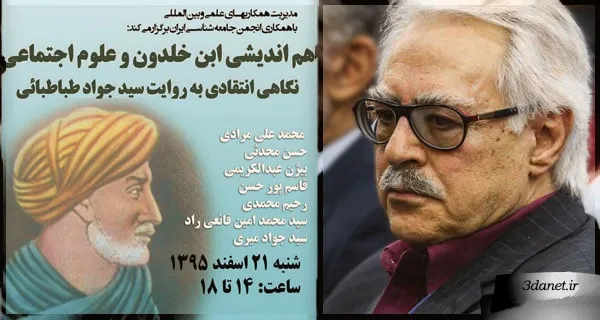
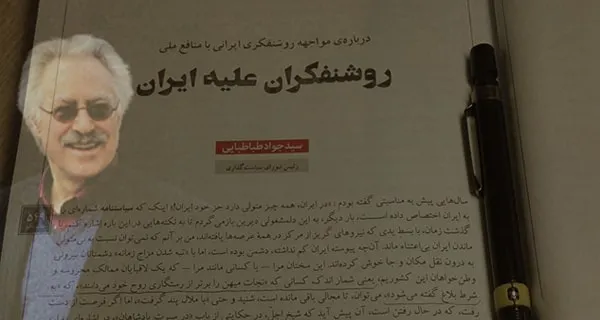
In the course on Textual Criticism and Sociological Theories, I always tell students not to forget two simple but important principles in the work of textual criticism: a) engage with the work regardless of the name, reputation, and fame of its creator, because the fame of individuals does not guarantee the credibility and value of their work; b) pay attention to the content of the work independently of the author's own assessments, because a text is not necessarily subject to the opinion and desire of the writer, but rather possesses an internal logic, and the critic, more than and prior to paying attention to the author's evaluations of their work, must strive to grasp the characteristics of the work itself, discover its internal logic, and lay it bare. Now, in this article, I have attempted to do this with regard to Dr. Seyyed Javad Tabatabai's book Ibn Khaldun and the Social Sciences (2011), so that it may be made available to esteemed students as an example of critical work. Incidentally, the specific opinion of a university professor and specialist in Persian literature, after I sent him passages from Tabatabai's writing, is based on these very principles. This esteemed specialist in Persian literature initially did not know whose writing he was judging, but even after being informed, his opinion did not change and he allowed his judgment to be published: "You are absolutely right. I do not know who the author of these confused and meaningless statements is, but if a student wrote such an essay for me, I would undoubtedly give them a zero (provided I was sure of their sanity, of course)." Therefore, the more we critique according to principles, the more valid our critique will be. It is necessary to remind that I have just begun studying the works of Seyyed Javad Tabatabai and may, in the future, critique some of his other works in the same manner. As I have said before, it is better to benefit from his thoughts and ideas during his lifetime and see what our contemporary thinker has to offer. Moreover, if we write a critique, it is better for it to be during the author's lifetime. I thank the Zeitoon website for publishing this piece. The original and detailed article (the full text of this critique) is scheduled to be published in a scholarly research journal.
.
.
PDF file of the article On the Importance of the Essay Exam
Part of a detailed critique of Tabatabai's book Ibn Khaldun and the Social Sciences
.
.
Author: Hassan Mohaddesi Gilvaei / 14 March 2017
.
.

Discussion0 comments
No comments yet; let yours be the first voice.