Philosophy
Panel Discussion on the Book Understanding Hegelianism with Mehdi Bahrami and Mohammad Mehdi Ardabili
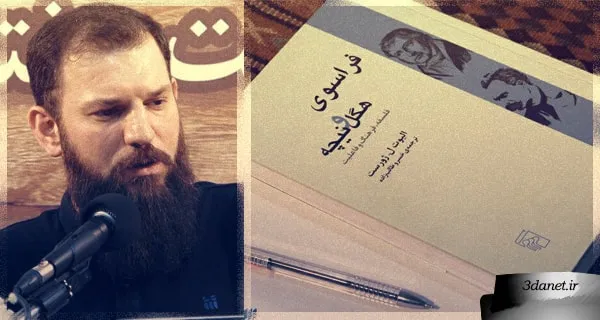
The publication of the book Understanding Hegelianism provided an occasion for a roundtable on the history and legacy of Hegelian thought and a critique of readings by figures such as Heidegger and Popper. The dynamism of Hegel's thought and its capacity to chart a path for the 'future' were emphasized.
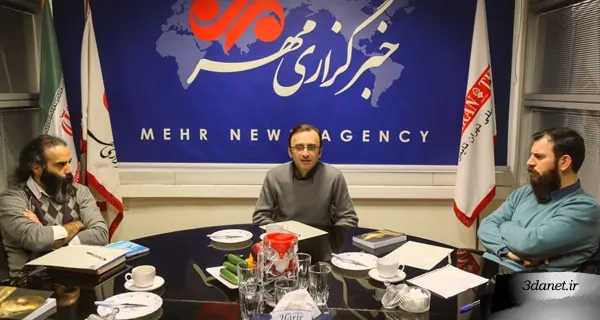
Mehr News Agency : The publication of the book Understanding Hegelianism, written by Robert Sinnerbrink and published by Lahita Publications, provided an occasion for a panel discussion with Mehdi Bahrami (the book's translator), Mohammad Mehdi Ardabili (the book's editor), and Mehdi Parsa Khanqah, a faculty member at Allameh Tabataba'i University, to examine this book as well as Hegel's place in the history of philosophy.
In a part of this panel dedicated to critiquing the readings of Hegel by thinkers such as Heidegger and Popper, Ardabili claims that the critiques of Hegel by Popper, Schopenhauer, and Heidegger were misguided, and that fundamentally, we must not only critique Popper's method but also tear the mask of pluralism from his face to reveal his fascism. Mehdi Parsa also opposes this view, stating that Popper's work is philosophy.
*Mr. Bahrami, as the translator of the work (Understanding Hegelianism), please briefly introduce the book so that we can proceed with the discussion with the other participants.
Bahrami: The basis of this book is formed around the idea of "Hegelianism" Hegelianism, which we can understand and comprehend as a series of complex reactions to Hegel's philosophy. The book intends to provide an introduction to the history and legacy of Hegelian thought, especially within the context of continental European philosophy and also within the framework of contemporary social and political philosophy.
The central thesis of the book is to give form to the philosophical present and to open up the future possibilities of thought, meaning that Hegel's thought is a dynamic, challenging, and inspiring thought that compels us to think conceptually about history, society, and politics and to chart the path of the "future." This "future" is precisely the unthought element of Hegelian thought, which, while not visible, is also not entirely invisible, and his theoretical idealism has not reached its perfection and completion, and this "future" is the essence of the present.
The book Understanding Hegelianism intends to provide an introduction to the history and legacy of Hegelian thought, especially within the context of continental European philosophy and also within the framework of contemporary social and political philosophyThe book consists of three main parts and eight chapters. The first part, entitled "The Adventures of Hegelianism," begins with a brief introduction to the main elements of Hegel's idealism and its presentation, relying on his three major works: Phenomenology of Spirit, Science of Logic, and Elements of the Philosophy of Right. The author presents these elements as a critical reaction to Kant's philosophy and then proceeds to describe various philosophical movements that, through continuous engagement, whether affirmative or critical, were inspired by Hegel's philosophical project.
From the explicit followers of the philosophy, namely the "Left" and "Right" Hegelians, to those independent movements, namely Existentialism and Marxism – Kierkegaard and Marx – are examined as opposing poles of Hegelian thought. Before I forget, I should mention that this section also briefly refers to the "British Idealism" school, figures such as McTaggart, Green, Bradley, and Bosanquet, who grappled with Hegelian idealism at Oxford and Cambridge, and Russell and Moore were among their prominent students.
The next two parts are titled German and French Hegelianism, which are specifically focused on twentieth-century Hegelianism. The German Hegelianism section deals more with the tradition of Hegelian Marxism and the critical theory of the Frankfurt School, though there is one exception here, which is Heidegger's encounter with Hegel, one of the most fascinating parts of the book. The first chapter of this section is dedicated to Lukács and Heidegger.
Hegel's thought is a dynamic, challenging, and inspiring thought that compels us to think conceptually about history, society, and politics and to chart the path of the "future"
Lukács's critique of Hegel and modernity is examined with a focus on two books, The Young Hegel and History and Class Consciousness. Heidegger's encounter with Hegel also begins with Heidegger's critique of time and spirit and continues with his reading of phenomenology, self-consciousness, and the concept of experience in Hegel. The second chapter of this section addresses Adorno and Horkheimer. The main discussion concerns how Hegelian concepts are appropriated and transformed through their own specific radical critique. The books Dialectic of Enlightenment and Negative Dialectics are examined.
The final chapter of this section is dedicated to Habermas and Axel Honneth, focusing on their approaches to the critique of modernity, their Hegel-inspired attention to the theory of intersubjectivity (intersubjectivity), and their renewed emphasis on the concept of mutual recognition (mutual recognition) as a fundamental feature of social identity.
The final part addresses French Hegelianism. The first chapter of this part is dedicated to the famous French Hegelians, such as Jean Wahl, Alexandre Koyré, Jean Hyppolite, and Alexandre Kojève, who, through highly original interpretations of Hegelian themes and concepts, had a significant influence on the next generation of French thinkers. The second chapter of this part focuses on three important moments in twentieth-century French philosophy: Sartre's critique of Hegel's account of the relation and connection with the other, de Beauvoir's appropriation of Hegelian themes, and Merleau-Ponty's assessment of the relationship between Hegel and existentialism, along with his attempt to transform Hegelian dialectic into a kind of pluralistic hyper-dialectic.
The third chapter of this part focuses on two prominent post-structuralist thinkers: Deleuze and his critical encounter with Hegelian dialectic and its conceptual transformation, and Derrida and his Heidegger-inspired deconstruction of metaphysics, for which Hegelian dialectic is considered, on the one hand, an intrinsic criterion and source, and on the other, the primary target of its critique and attack. The book concludes by proposing and suggesting the possibility of a kind of relative or limited Aufhebung (Aufhebung) between German Hegelianism and French Hegelianism.
Parsa: I think that Hegel, like many classical philosophers, is a philosopher whose inner forces have not yet been actualized or exhausted. I believe that philosophy is always built upon another foundation When a philosophy has not "reached its end," we cannot say what that philosophy is, or seek to assign an identity to it and Hegel is still a philosopher with an immense potential for philosophizing. So the point is that, in addition to the vast volume of material referenced in this book, I think Hegel can still produce philosophy. But the consequence of this point is that when a philosophy has not "reached its end," we cannot say what that philosophy is, or seek to assign an identity to it.
Deleuze says: a festival at its point of origin, when it is first produced, is not a festival but merely an event; however, when it is repeated every year, it becomes a festival, and the more history it accumulates, the more solid an identity it acquires. In fact, I want to say that until a thought is finished and completely exhausted, we must keep our definitions of it open. I think that Hegel's philosophy is still in the process of being created as long as we still have Hegelian philosophies.
Another point is attention to the critiques leveled against Hegel in the French post-structuralist tradition. We should adopt an affirmative attitude toward them, meaning we should consider the critiques themselves as interpretations of Hegel and additions to Hegel. For example, if you look at Deleuze's approach to Hegel, you will observe that in many places he criticizes Hegel. Where he criticizes Hegel, he is actually constructing a figure of Hegel, and by distancing himself from that figure, he begins to create a philosophical thought and seeks to move away from it. A faithful Hegelian might say that this is not Hegel and that this image he constructs of Hegel is reductive. My view is that we should also consider the philosophy produced from the critique of that figure of Hegel as Hegel.
Hegel, like many classical philosophers, is a philosopher whose inner powers have not yet been actualized or exhausted; Hegel is still a philosopher with an immense potential for philosophizing.
Ardabili: It seems to me that with Dr. Parsa's remarks, we have, right at the outset, begun from the very core of the discussion. The main idea put forward in this book is the "centrality" of Hegel. That is, Hegel holds a unique position in the history of philosophy; he is both the pinnacle of modern thought and provides a ground for postmodernists. The author of the book has also pointed out that Hegel still holds many potentials for all of us that we must come to know. Part of this may also be due to Hegel's writing style, which contains a kind of prophetic ambiguity that causes his books to be read repeatedly from various angles and to remain alive.
Another important point is that, according to Hegel's own expression in the preface to the Philosophy of Right, one could say that Hegel himself is nothing other than "philosophy" in his own time. I think that if we still hear the echoes of Hegel's philosophy in post-Hegelian philosophy today, it is because it is philosophy itself that is speaking. With Hegel, something happened in philosophy whose light still shines on thought and dazzles everyone's eyes. So I read the entirety of post-Hegelian thought based on this light, this Hegelian revolution, and I consider Hegel to be the thread that holds all post-Hegelian currents together, even those that curse Hegel.
According to Hegel's own expression in the preface to the Philosophy of Right, one could say that Hegel himself is nothing other than "philosophy" in his own time.This is not a matter of taste either, that I, for instance, happen to like Hegel and emphasize him while another emphasizes Schopenhauer; rather, you can clearly observe Hegel's shadow over the entirety of contemporary philosophy. This shadow manifests itself at times as a kind of homage, at other times as a kind of enemy, but it is present in any case.
Over the past 200 years or so, every major thinker, in order to demonstrate that they possess a distinctive style and are generators of ideas, must first and foremost clarify their position vis-à-vis Hegel. It is clear that the initial encounters are for the sake of a negative identification, as if, upon reaching maturity, you stand up to your father in order to declare your independence.
The relationship of contemporary philosophy, from the analytic tradition to postmodernism, from phenomenology to leftist currents, with Hegel is of this type of encounter with the father, whether it manifests itself in the form of devotion to the father, in the form of criticism of the father, or even in the form of patricide.
In short, rereading the entire contemporary philosophical tradition in light of its relation to Hegel has three outcomes: first, we will come to know contemporary philosophical schools more deeply. That is, we will evaluate them not in light of superficial interpretations, but from their foundations. Second, we can encounter Western philosophy as a whole. Holism differs from speaking in generalities. As Hegel puts it in the preface to the Phenomenology of Spirit, "The true is the whole."
Hegel's philosophy is still in the process of being created as long as we still have Hegelian philosophies.
The fruit of this encounter is also that we will understand the gap that exists between modernity and postmodernity, how modernity arrives at postmodernity. Who, again, is the mediator of this gap? In my view, Hegel himself is that precise point which shows us that there is both a gap and no gap. Hegel himself is both the link between modern and postmodern thought and the very gap between the two. Though perhaps an opportunity should arise for me to explain why I use the term "postmodern."
In any case, I consider all of these to be updated versions of Hegel. I also understand Dr. Parsa's remarks in this way: that if a thinker speaks even in criticism of Hegel, this itself means they are considered a continuation of the Hegelian tradition; that is, even in the most radical case, it is an antithesis to Hegel.
*As Mr. Bahrami mentioned at the beginning, this book teaches a kind of history of philosophy from Hegel onwards. Is my understanding correct?
Hegel holds a unique position in the history of philosophy; he is both the pinnacle of modern thought and provides a foundation for postmodernists,Bahrami: Both yes and no. Yes, in the sense that the book is an introduction to a philosophical movement called Hegelianism, which began in the second half of the nineteenth century and continues right up to the contemporary era. No, in the sense that the book is more a kind of philosophical reflection and a sort of prying into, grappling with, and tinkering with Hegelian concepts and themes, and the way various philosophers and thinkers have engaged with these concepts. Of course, we could consider Hegelianism not to be confined to this specific period and examine it from the beginning of modernity, that is, from Descartes and with the isms that existed before Hegelianism (Hegelianism).
For example, Rationalism (Rationalism), Empiricism (Empiricism), Romanticism (Romanticism), Idealism (Idealism) – Kant, Fichte, and Schelling – which have direct and indirect connections and relations to Hegelianism.
Parsa: First, regarding this last point about the isms, I must say that each of these is a philosophical concept. In the sense that they help us to see certain things together. I think that some of these concepts are good, meaning they work well, and some do not work well. For example, postmodernism is not a good concept, and I do not use it. Because it places currents alongside each other that I do not understand why they should be together.
I do not like to call Derrida and Deleuze postmodern, because I think they stand in a generative and dynamic relationship with classical philosophy. To consider this philosophy and their texts merely as a reaction against modernism is to reduce them. But instead, I think concepts like rationalism or realism are good concepts and work well.
There is a kind of prophetic ambiguity in Hegel's writing that causes his books to be read repeatedly and from various aspects, and to survive.
Bahrami: Regarding your point that postmodernism does not work well, does it not work well in all contexts?
Parsa: No, I think in art history or in sociology ... it differs. I mean specifically in philosophy. Let us think about this in an analytical sense: what does it mean to be a philosopher? That is, what does it mean to produce a philosophy? As we know, philosophy has its own tradition and history, and there are individuals and texts that have created this tradition. I think a philosopher is someone who connects everything that exists in this tradition in the most complex way possible. In this sense, I agree with Dr. Ardabili's statement that Hegel is philosophy itself.
In the sense that Hegel establishes connections between the philosophies that exist, and this requires that you read these philosophies, and reading a philosophy means moving from one point to another. This movement can continue, and when this whole becomes larger and larger, a philosophy takes shape. In the sense that I now have a connection between concepts and ideas in my mind that has a specific form; with this form, I can look at a new concept, so that my view of it, for example, is different from two years ago.
Every great thinker, in order to show that they have a distinctive style and are generators of ideas, must first and foremost clarify their position on Hegel.
Therefore, every philosopher must be a Hegelian. In the sense that if a philosopher says they have nothing to do with this part of the history of philosophy, that philosopher has merely limited themselves in being a philosopher. In philosophy, we cannot choose, because nothing exists in advance. Rather, I establish connections, and then something gradually comes into being.
For a philosophy to be read, it must have potentials within itself. In this sense, all philosophical problems are one problem and are interconnected to the extent that they form a philosophical tradition, and there is no philosophical problem that is unrelated to the others. Because no essence exists in advance to determine where I should go.
In this way, being a philosopher means being a Spinozist, being a Hegelian, and so on; that is, dealing with everything, but with a single voice. That is, to read everything, which is multiple and manifold, with a single voice. For this reason, I think we are not going to go to a very strange place in the future, nor are we going to produce a very different philosophy. In fact, we are neither the end nor the beginning of something; rather, philosophy is a totality that is taking shape and flowing, and the new philosopher is a philosopher who reads more and incorporates more philosophers into their system.
The new philosopher is a philosopher who reads more and incorporates more philosophers into their system
For example, you see that Plato, Aristotle, etc., are present in Kant, and likewise in Hegel. That is why I consider these to be classical philosophers. It seems to me that perhaps Dr. Ardabili treats Hegel as a fixed essence that has stood somewhere and said something, and the rest are merely reactions to it. We do not have anything called Hegel-in-himself or Kant-in-himself at all; rather, connections and relations are what matter.
Ardabili: The idea of criticizing a philosopher's or commentator's view on Hegel, in the sense that they do not present the true Hegel, carries a danger that you mentioned. That is, it risks implying that we possess a definitive, certain Hegel and its truth is with us, and that so-and-so has distorted this Hegel. But the crucial point is that one must not fall off the other side of the roof. In fact, sometimes one must take a stand and criticize, Popper, in The Open Society and Its Enemies, does not try to find and cultivate possibilities in Hegel; rather, he explicitly wants to suffocate Hegel, he wants to block the possibilities of Hegel and even Platobecause some of these interpretations are clearly distortions.
For instance, read Popper's critiques of Hegel; Popper, in The Open Society and Its Enemies, does not try to find and cultivate possibilities in Hegel; rather, he explicitly wants to suffocate Hegel, he wants to block the possibilities of Hegel and even Plato.
Here, we cannot adopt a pluralistic gesture, sit on our hands, and say, "Well, Popper's interpretation is an interpretation nonetheless." Rather, we must criticize Popper methodologically and also show what kind of fascist lies behind his pluralistic mask. I am concerned that these pluralistic approaches, which have now become fashionable and arise from the collusion of liberalism, postmodernism, and hermeneutics, under the pretext of not eliminating different voices, are practically making critique itself impossible. For example, why is it that in this country, in a significant part of the academic community, as soon as you mention Hegel's name, you are either accused of authoritarianism or accused of superstition?
Parsa: It is fine if, in criticizing an approach, you say that a certain claim is wrong, but in my view, this is not philosophy. That is, if you say that Popper's statement about Hegel is wrong and that, for instance, he overlooked a certain page, in this way you can say it is wrong, but this work is not philosophy. Although I believe that Popper's work is philosophical work, in the sense that it is not a blockage of Hegel.
Hegel himself is both the link between modern and postmodern thought and the very rift between the two
Ardabili: We must see from what perspective the discussion is being raised. I don't mean that Popper says something about Hegel and we go and bring something and... rather, my view goes beyond these issues, and I want to say that if we look at things in a Hegelian way, certainly Popper himself is also part of philosophy, but isn't our own critique also part of philosophy? Our critique is not for restricting the space and silencing voices, but for safeguarding philosophy itself.
In this regard, we must certainly critique everyone, even Hegel himself. But there is a time when the critique itself opens up Hegel. In that sense, such critiques are welcomed. But in the second half of the 19th century, a strange thing happens: a large portion of the philosophers of this period, when they speak of Hegel, whether in defense or in critique of him, are in a sense not speaking of Hegel. Rather, they are speaking of the Young Hegelians.
Parsa: So here, in a way, there has been a conflation?
Popper must be critiqued methodologically, and it must be shown what kind of fascist lies behind his pluralist mask
Ardabili: I want to say that the return to Hegel is in a way a return to the rereading of Hegel, not to Hegel himself. That is, a rereading and revival of the possibilities in Hegel that have been falsely, through oversimplification and distortion, shown to be blocked. It might be interesting to say that, in my opinion, there is something called the curse of Hegel. As it happens, all those who were anti-Hegelian in the most intense way possible, in the end, either themselves, or their philosophy, or their heirs become Hegelian.
For example, the analytics or the positivists who initially adopted an anti-Hegel stance, in the end, for instance through figures like Quine and others, gravitated toward Hegel, and indeed today we have a tradition of analytic Hegelianism. Or, for example, the Husserlian phenomenological view, which was strongly anti-Hegelian, in the later Husserl clearly approaches the Hegelian project.
The return to Hegel is in a way a return to the rereading of Hegel, not to Hegel himself
I want to say that many of the critiques that exist are, at certain times, a kind of deception, and our mission is to expose these deceptions. In any case, I also believe that there is no such thing as "Hegel himself" or the "essence of Hegel," and we are dealing with Hegels, but this should not lead us to a kind of pure pluralism where no difference remains between Hegel and non-Hegel.
The example I usually give is this: suppose the shadow of a four-legged animal falls on this wall. I might say this animal is a goat, you might say it's a cow, and Mr. Bahrami might say it's a horse. Perhaps we can discuss our details and disagreements and bring evidence. But if someone jumps in and says it's actually a whale, or for instance a tree, what can we do? Your logic says we cannot reject it, because that is also an opinion. My concern is that these whales and trees are now being fed to you and me. Our mission, without falling into dogmatism, of course, is to defend the truth, by relying on the text.
Parsa: Of course, if creativity is very high, that same tree is also possible.
Ardabili: I precisely call this lack of standards postmodernism.
Parsa: I call it art, and it has always existed; if you look at the text of Plato and Socrates, you see that they see many things very, very differently. I do not reduce philosophy to truth and falsehood and...
Ardabili: Why do you accuse me of something I am not? Certainly, with Hegel, one cannot reduce philosophy to truth and falsehood.
I am concerned that these pluralistic approaches, which have now become fashionable and arise from the collusion of liberalism, postmodernism, and hermeneutics, under the pretext of not eliminating different voices, practically make critique itself impossible
Parsa: You are doing that right now. You are saying what is correct about Hegel and what is incorrect. I am saying that you have no criterion by which to say what is Hegel himself and what is not. Deleuze says that the dialectic of Hegel and Socrates is the same thing.
Ardabili: This stems either from Deleuze's misunderstanding, or from his tendentiousness in the book Nietzsche and Philosophy. Neither is the Nietzsche of that book Nietzsche, nor is the Hegel he criticizes Hegel.
Bahrami: Incidentally, the ironic and sardonic point regarding the reading of the French post-structuralists is that they read Hegel according to the interpretation of the Old Hegelians, and then expend all their energy presenting a Young Hegelianism, but without Hegel.
Parsa: Yes, it is likely that Deleuze would answer you that the Hegelian dialectic is the same as the Socratic dialectic. I take these as one.
Ardabili: I think the discussion has reached a good point. My concern is precisely these positions, which I consider the plague of our era. That is, for fear of falling into a rationalist dogmatism that wants to determine truth and falsehood for everything, we have fallen into a situation where if someone comes and says even nonsense about Hegel, you say it is freedom of speech.
Parsa: If I want to, I listen; if I don't want to, I don't. What is the problem?
Ardabili: "Critique" has a position; you must articulate a critique from a position.
Parsa: I don't understand the connection.
Bahrami: I will return to one of these misunderstandings and Heidegger's discussion of self-consciousness in Hegel, in which the post-Heideggerians, existentialists, and post-structuralists are immersed.
Parsa: So you believe that they have made a mistake?
Heidegger's interpretation of Hegel, instead of entering into speculative reason, remains at the level of a kind of abstract reflection, that is, understanding self-consciousness in terms of a kind of abstract formalismBahrami: Precisely and exactly, yes. Heidegger's Cartesian-Fichtean interpretation of Hegel on the subject of self-consciousness fails in explicating the moment of concrete individuality within the concept of self-consciousness. Hegel in the Phenomenology defines the concept of self-consciousness in a way that encompasses three essential moments: 1) the pure undifferentiated "I" (universality); 2) mediation through the object of desire (particularity); and 3) the movement of recognition between self-conscious subjects (concrete individuality). While Heidegger explicates the first moment (the abstract self-identity of the "I" as "I" = "I") and the second moment (the particularity of self-consciousness as desire), he provides no explication of the third moment (the concrete individuality articulated through intersubjective recognition).
In this sense, Heidegger's interpretation of Hegel, instead of entering into speculative reason, remains at the level of a kind of abstract reflection, that is, understanding self-consciousness in terms of a kind of abstract formalism. Thus, Heidegger remains with an incomplete grasp of self-consciousness, failing to unite all three moments of universality, particularity, and the decisive third moment, namely individuality, which is achieved through intersubjective recognition.
Parsa: So Heidegger did not see this? What are you trying to salvage?
Bahrami: I don't know, perhaps he did not see it, and perhaps he did not want to see it.
Parsa: There are others who have highlighted it as well. But this philosophical current has emphasized a Heideggerian reading. Yet I don’t understand where the problem is. Do you want to say that this is wrong, or that Heidegger misunderstood Hegel? I would never permit myself to say such a thing. What does it even matter? I never speak about anyone in this way, about how they understood someone else. Whoever understood, understood well. Because the work that is done is influential, therefore it is correct. The Heideggerian reading has worked and produced. That is why I don’t understand what you are trying to defend. You say that “Hegel himself” does not exist; if he doesn’t exist, then what are you trying to protect?
Bahrami: On the contrary, exposing the internal contradiction of Heidegger’s reading without donning the cloak of conservatism is itself a form of rescue and protection.
Ardabili: Dr. Parsa, by negating any form of critique, what are you trying to protect? A void or meaninglessness?
Parsa: I believe that philosophy is not discovery but creation.
Ardabili: The issue is that, while it is true we do not have Hegel himself, this does not mean we have no criteria whatsoever. My limiting the multiple interpretations of something does not mean we can say whatever we please about it. What you are saying is like me calling this table water. I believe that if we do not preserve at least one anchor, “understanding” and “critique” themselves become impossible. This is not a protection of Hegel’s essence, but a protection of the human possibilities we are losing, and this loss of possibilities means the impoverishment of human possibilities.
We must defend the openness of humanity. When we want to talk about something (although I believe every understanding is a distortion), this does not mean there is no criterion for this creation, because if there is no criterion, we will have no understanding at all. Of course, this very criterion must be critiqued, but again, with this same criterion; this is one of the most important lessons we have learned from Hegel. The very lessons that readings like Popper’s, by presenting a caricatured image of Hegel, try to destroy.
Parsa: Do you believe we must have a foothold?
Ardabili: Not only must we have one, but we actually do have a foothold. I am not saying that, for example, I am in favor of criteria and you are not; rather, I am saying that you too have criteria and foundations, everyone does—Popper himself, the postmodernists themselves, even anti-metaphysical and anti-criterion thinkers themselves, you all have criteria, you just don’t acknowledge it.
Parsa: Then allow me to ask, what is that which is? Although you didn’t say. I also believe that we can have transient and provisional criteria. Certainly, in these fields, something is right and something is wrong. But it must be noted that this is the case within one domain, and we can change domains. You cannot fixate one of these domains and say that this alone is the truth. You want to protect one domain, whereas I believe we must move between domains. One must know that domains are multiple. But a philosophy will be rich that can move between these domains, and if you remain in one domain and... I think you have limited your own philosophy.
Bahrami: Do you not consider exposing the misunderstandings that exist about Hegel’s philosophy to be philosophizing!?
Parsa: We can do this locally. For instance, we can say that if we look from this perspective, what you say is wrong, but you cannot absolutize this and say absolutely that Popper’s statement is wrong. That is in no way correct.
*How can we allow ourselves to say that the readings of Hegel are wrong? How can you say that Hegel's thought is only one narrative that can be relied upon?
Ardabili: We are here faced with a very serious discussion, namely the question of our era. When we say that such-and-such an interpretation must be criticized, you want to push me to that position as if I am speaking of a fixed essence called "Hegel himself," whereas this is not my position at all. Also, I do not claim that everyone who comes to speak about Hegel must look at Hegel only from my position; rather, anyone can speak about Hegel from their own position, which may be different from or even opposed to mine.
Why is it that in a significant part of our country's academic community, as soon as you mention Hegel's name, you are either accused of authoritarianism or accused of superstition?
The point is that anyone who speaks about Hegel must show with what evidence they are speaking. For example, referring to the totality of Hegelian thought based on the Phenomenology of Spirit or the Encyclopedia or even the Elements of the Philosophy of Right is one thing; referring to a few lectures or Schopenhauer's nonsense in line with his personal and psychological settling of scores with Hegel is another.
Again, I say that I understand your concern that we might fall into dogmatism, but my concern, on the other hand, is how far we want to push this lack of standards? That is, can anyone read a single sentence from a book and say that this book means this one sentence? I too am an advocate of openness in interpretation and understanding, but if this openness exceeds its limit, it is no longer openness, but rather a rupture that, as it happens, leads to the blockage of thought.
Parsa: It can have an influence or not. We do not have a predetermined position on philosophy. You believe that critique must have a position; should this position be a fixed and stable position, or can it change?
Ardabili: We cannot read a book from only one position. Anyone can read a book from their own specific position. But the problem is whether anyone can speak anywhere? I say that it is true that we do not have a dogmatic criterion, that referring to Hegel's text is the solution, although this text itself should not be made dogmatic either. But I want to say that we must have a criterion so that we do not utter any idle talk.
Now the question is, what is that criterion? The criterion that comes to my mind is the effort to approach a kind of rational coherence between both sides, that is, a set of propositions from my understanding and Hegel's texts that moderate each other. That is, when we speak about Hegel, our words must be related both to themselves and to Hegel's text. For example, when Heidegger speaks about Hegel and sometimes says something that has no connection at all with the logic governing Hegel's philosophy.
Parsa: To understand and discover this logic, what criterion do you refer to? If you refer to the text, you must enter into dialogue with Heidegger's philosophy. You might mistakenly think that you have found the main point or the Hegelian logic, whereas I say no; you have not yet done this. Rather, you have merely placed another reading of the text against another reading. One can easily understand which one has done more work.
Ardabili: Let me give an example from Being and Time. When Heidegger speaks of Hegel's approach to time, he says something that has nothing to do with Hegel at all. Heidegger here, in his own imagination, criticizes Hegel and then takes a position against Hegel that, as it happens, is Hegelian. He criticizes Hegel in a place where Hegel is not standing. Even when Heidegger refers to Hegel, he refers to the very place where Hegel is criticizing an approach, passing off the position criticized by Hegel as Hegel's own position.
The issue is not about my understanding or my interpretation; the matter is quite clear. There is no time now, but I have explained this discussion in detail in my article titled “Hegel, Heidegger, and the Problem of Time,” which is also accessible on the internet. In any case, the main point is that when we read a philosopher, our understanding must possess a kind of coherence. This coherence is not necessarily dogmatic.
Parsa: Heidegger is internally coherent.
Ardabili: Even if he is internally coherent, because his discussion is in relation to Hegel, you must also establish a relationship with Hegel’s text.
Parsa: You have now returned to the things you rejected. But I say that this thing you call Hegel himself is an orthodox reading of Hegel, within which sense-certainty has a place, and Heidegger’s work stands in contradiction to that orthodox reading of Hegel.
This claim of yours does not refute my point, because I also consider this orthodox reading as one domain, which, of course, because the name Hegel has been so closely associated with it, you do not call it an orthodox reading, but rather “Hegel himself.” If this is the criterion, we must know that it is only one domain and not the essence of the matter. Now, you believe there must be a criterion, and if you want to consider this as the criterion, I call you a conservative Hegelian. Everyone has the right to change their position and think differently, and none of this is a lack of standards.
Ardabili: But what about the issue of deception? Hegel is a set of data.
Parsa: Why would anyone deceive? Of course, you cannot say it is a set of data, because data are themselves interpretations.
Ardabili: But the different parts of the data must be coherent with one another; otherwise, what is the difference between Hegel, Kant, Schelling, and Nietzsche? With this interpretation of yours, there are no boundaries.
Parsa: What are you worried about here? Are you worried about authenticity? If this is, as you say, deception, whom does it harm? In philosophy, whom does the existence of deception harm, and why is it bad? I do not believe that deception exists in philosophy. I believe that if someone, as a philosopher, lies in philosophy, but is influential and produces something, there is no problem. However, I do not believe in lying in social life, because in that social life we want to participate and we want its security, but in philosophy it is different, and we have no problem with lying.
Bahrami: Ambiguity and deception can in no way be equated. This ambiguity is an effort towards articulating the complexity of modern experience with a language that speculatively seeks to imitate its own objects, that is, it rejects the Cartesian demand for the clarity of a philosophical discourse modeled on mathematics and the exact sciences.
Parsa: Hegel himself is a great deceiver. Examine the philosophers Hegel read, one by one, and see how Hegel read them. For instance, examine Hegel’s critique of Kant. A Kantian will certainly say that Hegel misunderstood Kant. I believe that philosophy works in this way.
When Thales says everything is water, it does not mean he dives onto the table in his room; rather, he is playing a game, and within this game there is a deception. But the point in this statement is that there are two types of deception: one, conscious deception, and the other, unconscious deception. That is, if it is philosophy, it is a conscious deception. Meaning it does not stem from the philosopher’s shortcoming; rather, the philosopher is inherently a deceiver, and in fact, it is an artistic deception. Whereas I consider error to be inherent to human nature, and anyone can make a mistake.
Ardabili: The issue is that, firstly, the mode of encounter you propose does not allow for any distinction between forms of deception. Because you use this dangerous pragmatist phrase: "it works." Fascism might also work. Hitler, at one time, also worked. Secondly, suppose I accept your argument. Given your position that there is no falsehood and it is always truth, I simply do not know why you are debating with me? By your own reasoning, you should now accept all of my words as well. Does your very critique of my words contradict your position on critique? Do my words "not work"?
Parsa: In the end, I will only say this: I too believe in a kind of internal coherence, but I consider it a kind of local internal coherence.
Ardabili: Dr. Parsa, I completely understand your words and your positions. My critique is more and more deeply directed at the state of thought in this era. I consider you a representative of our own time. All my effort, of course, is a critique of this very postmodern and relativist era, which is an era of human bewilderment and lostness.
.
.
Panel Discussion on the Book Understanding Hegelianism with Mehdi Bahrami and Mohammad Mehdi Ardabili
Source: Mehr News Agency
.
.


Discussion1 comments
شاید بهترین گفتگویی بود که امسال خوانده بودم. فقط چرا بحث نصفه کاره ماند؟ آیا فایل صوتی این نشست را منتشر می کنید تا آن را در اختیار دیگران قرار دهیم، چون این بحث برای خیلی ها جذاب است، اما حوصله خوندنش را ندارند