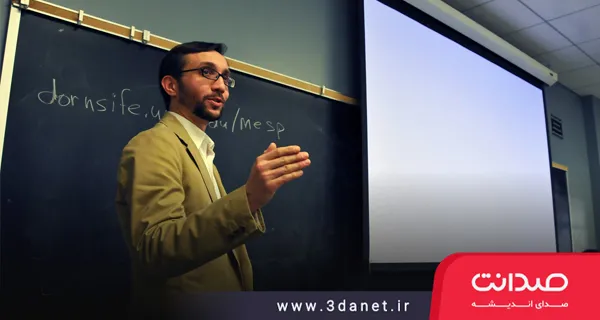
The second (and final) session of a discussion on the philosophical problem of prayer, presented virtually on April 13, 1401, at the invitation of Ghadir Cultural House. In this discussion, after summarizing the previous session, Yaser Mirdamadi addressed five responses given to the problem of the compatibility of God and prayer—that is, a two-part problem indicating: 1. the problem of the incompatibility of an impassible and immutable God with prayer, 2. the problem of the incompatibility of God’s prior omniscience with prayer. These five responses to the problem of the incompatibility of God and prayer are: 1. portraying God as passible, 2. portraying God as impassible but claiming its compatibility with prayer, 3. a subjective portrayal of prayer, 4. a portrayal based on “open theism,” and 5. a portrayal based on divine “middle knowledge.”
Religion
Ramadan Lectures at Ghadir Cultural House (Ramadan 1401)
During Ramadan 1401, the Ghadir Cultural House held three scholarly sessions on religion: 'The Philosophical Problem of Prayer' with Yaser Mirdamadi, 'Towards the Uninscribed Role' and the concept of ta'abbud with Farhad Shafti, and the Quran's relationship with contemporary and earlier texts in 'Intertextuality' with Zuhair Mirkarimi.
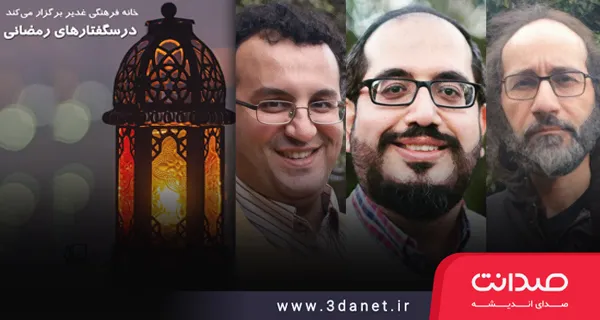
In Ramadan of the solar year 1401, Ghadir Cultural House held three series of sessions centered on topics in religious studies. In the first series, Yaser Mirdamadi, over two evenings titled “The Philosophical Problem of Prayer,” examined the compatibility of God and prayer; in the second series, Farhad Shafti, under the title “Towards the Unpatterned Pattern,” explored the mysterious nature of “Absolute Truth” with a focus on “Alhamdulillah” and analyzed the concept of devotion; and in the third series, Zohair Mirkarimi, over two evenings titled “The Quran and Its Subtexts,” after introducing the theoretical foundations of “intertextuality,” examined the Quran’s relationship with texts contemporary to it and those predating it.
.
.
First Lecture Series: The Philosophical Problem of Prayer
Yaser Mirdamadi April 6 and 13 (Ramadan 4 and 11)
The first session of a two-part discussion on the philosophical problem of prayer, presented virtually on April 6, 1401, at the invitation of Ghadir Cultural House. In this discussion, Yaser Mirdamadi first defined prayer, distinguishing it from other ritual acts, and then explained two problems that the concept of answered prayer creates for Abrahamic theology: 1. the problem of the incompatibility of an impassible and immutable God with prayer, 2. the problem of the incompatibility of God’s prior omniscience with prayer. Efforts to resolve these incompatibilities will be discussed in the second session.
.
Second Lecture Series: Towards the Unpatterned Pattern
(A meta-religious reading of Surah Al-Fatiha for intra-religious benefits) Farhad Shafti April 18, 20, and 22 (The Nights of Qadr)
Audio of First Session: April 20, 1401
In the first session, we discussed the mysterious nature of “Absolute Truth,” focusing on “Alhamdulillah” and reviewing the Quran and some intra-religious and meta-religious statements on this matter.
Audio of Second Session: April 22, 1401
In the second session, following the same approach as the first, we explored and discussed the horizon of being to which the praise (ḥamd) in Sūrat al-Fātiḥa refers.
Audio of the Third Session: 4 Ordibehesht 1401
In the third (and final) session, we addressed the concept of devotion (taʿabbud) and analyzed it from both an intra-religious and a meta-religious perspective. At the end, I tried to answer the participants' questions.
.
Third Lecture Series: The Quran and Its Subtexts
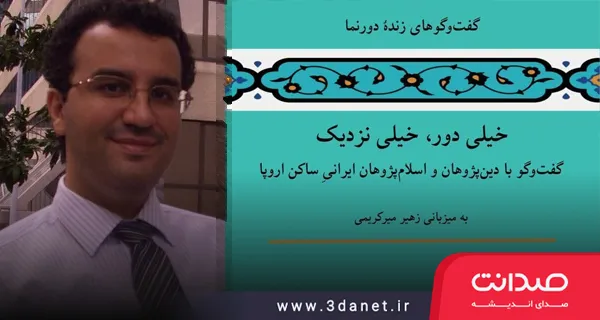
Zohair Mirkarimi 6 and 7 Ordibehesht (26 and 27 Ramadan)
Part One, 8 Ordibehesht 1401
Part Two, 9 Ordibehesht 1401
.
.
Ghadir Charity Telegram Channel
.
.


Discussion0 comments
No comments yet; let yours be the first voice.