Religion
Ramin Jahanbegloo Interviews the Dalai Lama
In conversation, the Dalai Lama reveals that the secret to his vitality is service and compassion, and presents Buddhism as a bridge between religion and science. He describes his nonviolence strategy as grounded in common sense, and sees violence as a disturbance of peace.
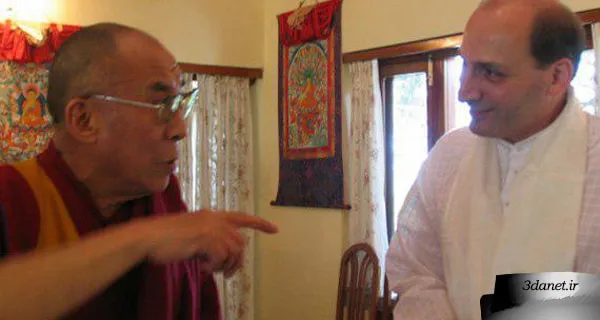
His real name is not the Dalai Lama, but his unique character and the events that have befallen him have led people around the world, among the 14 Dalai Lamas in history, to know only him by the name Dalai Lama: the spiritual leader of the Tibetans and one of the most important religious leaders in the world today, whose most significant characteristic is considered to be his advocacy for peace. Chinese authorities call him a saboteur and separatist, while the chairman of the Nobel Committee compared him to Gandhi when awarding the prize. He was 24 years old when, fearing arrest, he fled on foot to India. He formed a government in exile and received the Nobel Peace Prize. Now he is a symbol of tolerance. Now few remember his real name. He is the Fourteenth Dalai Lama.
Your Holiness, you turned seventy on July 6, 2005. Today, your fame and influence extend far beyond the community of 6 million Tibetan followers; you stand at the rank of guardian of the global conscience. Never in the past has a Dalai Lama traveled so much or shouldered so many responsibilities. May I ask Your Holiness, what is the secret of this vitality? And how do you manage the multitude of related affairs simultaneously?
I think it relates to my practice. You know, all religions speak of the necessity of applying love, generosity, tolerance, and such matters. In Buddhism, too, compassion is the foundation and basis. You are certainly aware of the two traditions, Pali and Sanskrit, within Buddhism. In the Sanskrit tradition, compassion is not merely a feeling of sympathy for another; it is a kind of entrusting of commitment and responsibility to others. Part of this practice is my entire being, and not only mine, but all those who dedicate their existence to the service of others, and not just in this life but in the next life, are like this. Buddhism demands this commitment and responsibility. I will give an example of a Buddhist monk who is now 85 years old. After 1959, this man spent 18 years of his life in Chinese gulags (prisons). He came to Dharamshala in the early 1980s, because the Chinese allowed some Tibetans to leave Tibet. In a conversation I had with this man, he told me that during those 18 years in prison, he faced many dangers. I asked him about those dangers. He told me the worst danger was the fear of losing compassion for the Chinese. I think compassion is that important, and if it is damaged, humanity will be in danger. I may not be at the level of that Tibetan monk; I may be someone who loses his temper. But whatever my ability, at whatever level I am, I can and must serve others in some way. I feel that as a Buddhist and in the position of the Dalai Lama—with this opportunity I have, bearing the title of Dalai Lama—I am in a better position to serve others compared to those monks. So, I take advantage of this opportunity. Whenever you face life in this way, you do not feel tired. That is the secret of my vitality.
So, you must forgo some of your interests, such as engaging in manual work, including watchmaking?
I have no time at all for such tasks. I am not very interested in manual work either. My favorite pastime is reading books. These days, if I get a chance, I read books; classical books, sometimes new books, mostly books written in the Tibetan language.
What do you see as the reason for the growing interest in Buddhism in the East and West? Can it be said that Buddhist thought has been revived anew in the world?
I am not sure that what you call a revival of Buddhism actually exists. But I think these days more information and books are available to people, and due to the expansion of tourism, disseminating news to different parts of the world has become easier. Moreover, certainly different individuals with unconventional traits emerge, and to them, Buddhism or ancient Indian thought appears as a novel phenomenon. In fact, some people, sometimes out of curiosity and sometimes through logic and common sense, find the Buddhist approach more suitable. I think that due to the current conditions and awareness, people in other parts of the world who had no connection with Buddhism are now showing an inclination toward it. I should also add that within Tibetan society, among Buddhists themselves, due to the increase in news, some are looking at Buddhism critically. For a time, Buddhism was completely banned in China. But these days, because of the availability of news, attention and excitement regarding Tibetan Buddhism have increased.
It seems your words on non-violence and compassion have been very effective, as they emphasize the peaceful dimensions of religious thought more?
I consider myself an advocate or a student of Mahatma Gandhi and an admirer of Mother Teresa. But the difference between me and Mahatma Gandhi is that Gandhi was a pioneer and showed the way, and I took him as a model and follow his path. Moreover, undoubtedly in our age, at the end of the twentieth century and the beginning of the twenty-first, we have perhaps become more scientific and have more flexibility in our outlook, but Mahatma Gandhi was a saint and I am a small human being; nevertheless, my strategy of non-violence is not based on teachings, it relies on common sense. Whenever I speak about non-violence, I do not refer to Buddha or another religious tradition, I only speak of shared experiences. Violence means harming peace and tranquility. Peace is not merely the absence of pain, but a way to support and protect happiness. The goal is to preserve oneself from suffering and to be elevated to the source of inner happiness. This is peace; whether it is achieved through scientific accomplishments or through shared experiences and insights. I do not talk about life after death or God. Not to mention that in Buddhism there is no clear idea of God. From the perspective of a Christian or a Jew, I am considered irreligious. In contrast, communists identify me as religious. Who knows, perhaps I am somewhere in between! Therefore, I sometimes describe Buddhism as a bridge. This tradition has accepted high values such as meditation, revelation, and praying here and there. We also have relations with the religious. It is true that we do not have a general concept of God, but we have a perception of a Supreme Being to whom we can pray and seek mercy. Radicals do not recognize Buddhism as a religion at all. They say it is a kind of science and knowledge of the mind. So Buddhism also has a link with science.
If, as you say, non-violence is common sense, and if we accept that the contemporary world is a world of violence, does that mean our world has lost its common sense?
Yes! I believe our world has lost common sense. Abandoning common sense occurs on two levels: one is when you lose common sense and go mad. The other is when you behave normally for 20 hours, then for a few hours you are overcome by hatred. In those moments, the individual's way of thinking lacks common sense, because the basis of common sense is rational thinking, and when the mind is overwhelmed by hatred, it cannot function reasonably. Therefore, during that period, the person in question is a madman. This type of madness is worse than ordinary madness. Compare these two mental disturbances! In the first case, a person is mad, but does not interfere in wrongful affairs. In the second case, the person is seized by hatred and deviates from the path of normal thinking. This one is worse, because it can cause numerous catastrophes. It is like a person who always lies; since everyone knows he is a liar, no one trusts him, and his lies are not dangerous. But if a truthful and honest person tells a lie, it is very dangerous; in the same way, a person who is mad 24 hours a day is not much of a danger, but often very normal people occasionally become insane – like some of our political leaders in the world today. These people are truly dangerous.
How and in what manner do you think different religions should work together to achieve peace in the world?
In the first step, we need personal contact, which is very fundamental. We must sit together, get to know one another, and exchange personal experiences. Then we can find similarities. For example, during my childhood in Lhasa, Tibet, a number of Muslims lived there; a small community of Indian Muslims who had been residing in Tibet for at least four centuries. In the records of these Muslims, there was no case of conflict. They were very peaceful and very kind people.
Well, if our criterion is these Muslims, one can say that the Muslims of India and the Muslims of Ladakh are very kind people. I myself, through personal contacts, have Muslim friends in India. The Muslims of India, especially the Muslims of Ladakh, are very close to me. Last year, an opportunity arose and I traveled to Jordan for the first time. I met some Muslim leaders there—including Muslim academics, scholars, and students. They were all very cheerful and had a very friendly demeanor. In my view, in the performance of religious duties, the values of compassion, worship, and self-sacrifice are the same among Muslims and Buddhists. Even Christians, Muslims, and Jews have one God. In Christianity, there are Catholics and Protestants. In Islam, there is a slight difference between Shia and Sunni; similarly, differences are also seen among Buddhists—even among Tibetan Buddhists, for instance, in the color of their hats—which is of little importance. Yet, in the eyes of illiterate and ignorant people, the color of hats matters. By the same analogy, the differences among Muslims, Christians, and Hindus are made to seem important. This is the beginning of trouble, and it is from here that Western media and some Western scholars portray Muslims as akin to terrorists. Sometimes a Western individual also comes to think that there is a clash between Western civilization and the Islamic world, but in reality, there is no clash. I imagine when we say Western civilization, we mean modern civilization. Modernity mostly means more technology. Modern society is an industrial society. In this way, another model of human society emerges, but Islamic countries and India have also traversed this path. A Buddhist country like Thailand is also moving on the path of modernism. This is a way of life. On this basis, one cannot draw a distinction between Western and non-Western, but in today's world, wherever the way of life is different, the way of thinking is also different. So the distinction is between modern and non-modern, not between Western civilization and the Islamic world. As far as the issue of religion is concerned, I believe Islam, along with Christianity and Judaism, are the most important religions in the world. I have always said this explicitly. Now, the concept of the one truth and the one religion is important at the individual level. For example, I am a Buddhist, so Buddhism is the one religion and the one truth, and Buddhism is the best for me, but I cannot say that Buddhism is the one truth and religion for my Christian friend as well. Christianity is the one truth and religion for my Christian friend. We both must accept two religions and two truths. At the societal level, several truths and several religions must be accepted. When Muslims among themselves speak of a God who is the one God, and this is entirely appropriate, but they cannot impose this on the whole world, it will cause trouble. If I were to try to impose on the whole world that Buddhism is supreme, it would cause trouble. Moreover, it is not realistic at all. The Buddha himself never tried to draw the whole world to Buddhism. Some Christians tried to convert the entire world to Christianity—some Muslims did so as well, but both failed. Here too, common sense is needed. It is true that Jesus Christ said my teachings would reach the farthest points—meaning the conversion of humanity to Christianity, but in the era of Jesus Christ, the known world was limited to a small area. That statement was realistic in that era. We must use common sense. So, if we say that instead of one religion and one truth, there are several religions and several truths, there is no contradiction in this statement. I often give the example of medicine. One cannot say that only one medicine is the cure for all ailments, but if you fall ill, that medicine may be good or bad. For a headache, that medicine is suitable. For joint pain, another medicine; each medicine is prescribed according to the specific patient and illness.
One of the main matters you have paid attention to and given special importance to is “secular spirituality,” and it is very interesting that it has been articulated by a religious figure. In one of your writings, I read that you have distinguished between “spirituality with faith” and “spirituality without faith.” How is it possible for a person to be spiritual but not religious?
Secularism, in my view, does not mean being irreligious. I use the word secularism as it is in the Indian constitution. In the Indian constitution, secular means respect for all religions, not the rejection of religions. So, in my ethical principles, secular means respecting all traditions, but in reality, the importance of compassion, generosity, and kindness lies in its reliance on common sense. Let us take the feeling of love as an example. Our lives begin from birth with affection and love. Without love, we would not survive. We need a mother or the love of another person substituting for her to take care of us. An infant does not have the ability to survive alone; it is entirely dependent on others to look after it, but care out of duty and not with love would not be sufficient. We need care and love together. Modern medical science has assessed physical contact as very important in brain development. So, our lives begin this way. In the first years of our lives, the care of others for us plays a vital role in our growth, but eventually, we grow up, feel independent, and no longer need the care of others. Then a false notion arises in us — I believe our original nature has more freshness in childhood — then our intelligence and cleverness become greater and more complex, and we take fundamental values for granted, deploying our energy in various fields without much effort. I have often thought that if people like Hitler and Stalin had had a natural and normal life at birth and during childhood, they would not have become so cruel and violent in adulthood. So, a mother’s affection and love are very important. Because our lives begin with maternal love, we must remember this experience until the moment of death. Hence, affection and love in our family — in our human community — are of great importance. My basic beliefs are based on the reality of life and biological mechanisms. People who are happy and cheerful in natural conditions undoubtedly also enjoy greater physical health. One can clearly see who has been raised in a family with affection and love. Happy and smiling children have better physical growth compared to oppressed and beaten children. These children suffer physically and mentally. All these beneficial emotions are the foundation of our happiness and success and are considered a primary necessity of humanity, but hatred and jealousy also reside in a corner of our mind, and as soon as they are nurtured, a person loses mental peace. They suffer from indigestion, high blood pressure, and other illnesses. In other words, biologically speaking, some emotions are very harmful to our health, and others can be beneficial. So, one can distinguish between desirable and undesirable emotions.
Do you feel no anger whatsoever towards the Chinese? Are the Chinese good or bad for your health?
I imagine the China issue is very serious, but I do not feel hatred. Sometimes small resentments and issues arise. Let me tell you a story: some time ago, I had a meeting with a television journalist. I told that lady that if she kept asking irrelevant questions, I would lose my temper. The lady journalist was asking me about the future. I told her that as a Buddhist monk, I do not think about the future, but as far as I am able, I will cooperate in this life. But if I think too much about my fame, my positive actions will also be negated and will turn into selfish motives. That lady repeated the same question again and received the same answer. The third time, the same question again, at which point I lost my temper. Yes, last year I saw this lady in New York, and recalling this scene, we had a good laugh together.
Do you think you will see Tibet again?
Without a doubt, the global assessment of changes in China shows a very positive transformation. The Chinese are increasingly showing interest in Tibetan Buddhism and culture. They also treat Tibet better, though at the high levels of government, extremist and hardline thinking often prevails. These days, as the Chinese government faces problems within its own country and society, I am more hopeful about Tibet's future. Of course, we are not seeking independence or complete separation from China and the Chinese people. We want to achieve an acceptable autonomy so that we can preserve our culture, spirituality, and environment. Living with the Chinese people raises the expectation of material progress. For 6 million Tibetans in a vast land, progress would certainly be difficult alone. If we stay with the Chinese, it will be to our economic benefit and we will have better progress. This is the basis of my thinking. Look at the European Union: shared interests are more important than individual interests.
Presumably, holding a religious and spiritual role alongside a political role must be very difficult? Is it easy to reconcile the two?
So far, my political activity has been in the struggle for freedom. By freedom, I mean religious freedom and the freedom of Tibetan culture. So the type of politics I am involved in is part of my spiritual program. Whenever politics becomes partisan, I will no longer be involved in it. I made this matter completely clear in 1992, that after the freedom of Tibet, I will hand over this small power of mine to others and live as an ordinary Tibetan citizen. Truly, I consider service to others the most important matter.
So for you, democracy is the same as service to others?
Yes, of course. The outcome of democracy must benefit society, and the well-being and dignity of others—since 1951, when I took on this responsibility, I have always had the provision of democracy in mind. In 1959, I came to India, and since then I have strived to establish democracy in Tibet. Currently, we elect our representatives every 5 years in a completely democratic manner, and I personally hold a semi-retired position.
My last question. Your Holiness, in all events, even during times of suffering, you have never withheld your kindness from people. I wonder if it might be possible for you to come to Iran someday?
In a meeting, I met Ms. Shirin Ebadi, the Nobel laureate from Iran, and expressed my eagerness to visit Iran. In my eyes, Muslim, Hindu, Buddhist, even communist—we are all human beings and practically live together on one planet. The idea that America or Europe are the centers of the world is, of course, a great mistake. Muslims are also not the standard for the whole world. One must discover the world and understand different traditions. I have always been eager to know diverse societies and different parts of the world. I truly believe that the Islamic world needs more contact with the outside world. Isolation is an outdated way of thinking. Islamic countries need connection with the outside world to be discovered and introduced. Unfortunately, due to a lack of transparency in the media, they have been portrayed as unpleasant examples, and their goodness has remained hidden. Without transparency, solidarity and friendship among nations will not flourish. This is my view.
If you travel to Iran, I would be honored to host Your Holiness.
Let me give you an example. A few years ago, I visited Palestine. The Palestinian people welcomed me, presented me with an Arab headdress, and I put it on my head. Then they put me on a donkey. According to Tibetan tradition, riding a donkey is frowned upon. But I said to myself: what harm is there? Let me tell you another story. In Ladakh, in some Muslim communities, if a Buddhist person's body touches the garment of a Muslim person, the Muslim must perform a ritual ablution. Thus, the Buddhist is considered impure, because they are without religion. Moreover, a Buddhist and a Muslim would never share a meal, but when I was visiting Palestine, the Palestinians invited me to lunch, and I eagerly accepted their invitation and ate with them—and what a delicious meal it was! This is important, very important. We say that all human beings have mouths and stomachs. This kind of encounter is of special significance. We must think about the fact that more than six billion human beings live on the planet, and we have no choice but to plan the future together.



Discussion4 comments
دوست عزیز دیدگاه شما محترم ولی باید روی الفت وبرادری و انسانیت اسلام را هم نگاه کرد در تاریخ اسلام همیشه جنگ نبوده همانطور که در تاریخ هیچ دینی همیشه صلح نیست باید کمی خویش تندار بود و فکر کرد از شما انتظار دارم که فکر کنید وبا انسان خوبی بودن دنیا را جای بهتری برای انسانهای دیگر بکنید با تشکر
یک مسلمان هرگز نمی تواند ابنگونه اندیشه ها را بپذیرد زیرا او سرسپرده الگو واشخاصی است که تنها یک حقیقت کلی را قبول دارد یک قدیس بی نقص که حتی تصوراندکی لغزش را از سوی وی گناه می داند واین یعنی لغو وحذف عقل سلیم...وانگهی بهترین سخن درباره مسلمانان را دالایی لاما زد که گفت مسلمانان باید جهان ومردم جهان را بهتر وبیشتر بشناسند، اما وقتی کسانی اعتقاد به دینی دارند که برای پنجهزار نفر اهل مدینه ساخته شدو تازه آنجا را که آباد نکرد هیچ جز جنگ وخون ریزی قرناقرنی وتا هنوز دستاوردی نداشته خب چنین کیانی جز با همان دیدگاه باید درو کرد باید که کوبید باید دوباره از ریشه رویید به مسایل جهان نمی نگرد.کار مسلمانان در جهان کنونی با کرام الکاتبین است وبس....
با سلام و احترام مصاحبه ی جالب و خواندنی بود . بسیار زیبا
Thank you for sharing this lovely article about his biography. I am sharing your article with other