Philosophy
Reason and Religious Experience: A Conversation with Gholamhossein Ebrahimi Dinani
Gholamhossein Ebrahimi Dinani considers reason to transcend formal logic and stresses that religious experience only finds meaning in the light of rationality. In his view, no truth—including revelation—is ineffable, and faith without understanding is mere habit.
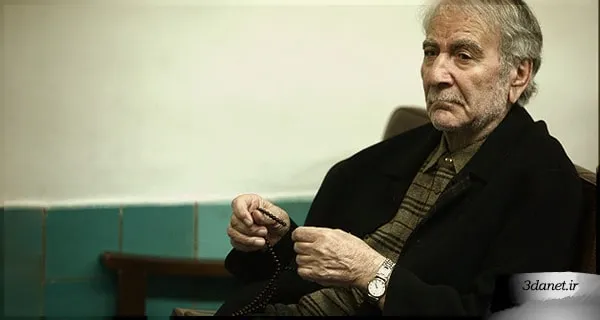
Mr. Dinani places great emphasis on the element of reason in philosophical and religious thought. In his view, reason manifests itself in diverse and numerous forms and should not be reduced to Aristotelian logic. Among the manifestations of reason is its appearance in the garb of experience, and experience itself has two types: outward and inward. Reason can grasp the meaning of inner, religious experience and convey it to others through language. True knowledge of God is from God to God, not from man to God.
You are among the few thinkers who greatly emphasize the element of reason in religion. My question is, firstly, what is your approach to the discussion of religious experience, and secondly, what is your conception of reason?
Reason appears in the form of Aristotelian logic, in mathematical form, and in the guise of experience; but it is not confined to any of these manifestations and goes beyond them; to the point where it even sees revelation as rational; for if it were not rational, it would not accept it. I am speaking of this reason.
If a person has grasped a religious experience or intuition, they can convey it, at least to some extent, to me as well. This transmission occurs through language, and human language is the manifestation of human reason. For this reason, beings that lack reason also lack (rational) language; in inanimate objects and animals, language is the locus of reason's manifestation. Therefore, if a religious experience is rational and has meaning, it is valuable, and if it is incomprehensible, irrational, and meaningless, it has no value whatsoever.
It seems that the value of a single religious experience might be greater than years of rational effort. In other words, philosophizing does not lead us to the desired goal in this matter. What is your view?
Firstly, one cannot say definitively that God cannot be reached through philosophical arguments. Many philosophical arguments open the way, and sometimes this is not the case; that is, I accept your point in a partial affirmative sense. It is not necessarily the case that everyone who philosophizes reaches God; many philosophize and do not reach. Many others, through philosophizing, have their way opened and do reach.
Secondly, what do you mean when you say it does not have the value of a religious experience? By what criterion are you making this valuation? I stated that if a religious experience does not find meaning in the light of rationality, it has no value whatsoever. If it is to have meaning, it is only possible in the light of reason; otherwise, God is meaningless. So is your God meaningless? If a meaningless God has value for you, I accept that. A meaningless God is more worthless than an idol, because an idol at least has meaning.
You are interpreting philosophizing in a bad sense. What I mean by philosophy is not sitting in a corner and arranging Aristotelian syllogisms. That is also philosophy, but it is the preliminaries. I said that reason goes beyond. Philosophizing means reasoning. Essentially, the human being is inherently a philosopher. The human being is constantly philosophizing. The human being reasons and gives meaning to themselves. It is true that my knowledge of myself is by presence, but I give meaning to myself; I give meaning to myself for myself within a rationality. If I do not become rational, I cannot become a source of effect.
So you agree with the existentialist statement: "Man is among men because he is man"?
Yes, it is entirely correct, and for this reason, the prophets take on a created, human aspect, and the mystic who says, "When the Prophet went on the Mi'raj, he returned; if it were me, I would not have returned," is mistaken. The place to which the Prophet ascended was the station of the Mystery of Mysteries. If the Prophet had remained there, access to him would not have been possible, and consequently, he would not have had such effects. The Prophet had to return. The blessing lies in the return.
What is Reason?
Reason is light, and, in essence, the human being is light. This is a point that Suhrawardī addressed. Today, these separatists, that is, the followers of the School of Separation (Maktab-i Tafkīk), consider the soul to be dark; they consider the rational soul to be pure darkness and do not realize the problem with this belief. In pure darkness, there is no meaning; in darkness, there is no brightness. Suhrawardī says: "The soul is light, and if it were not light, it could not connect with the Light of Lights." Of course, this light sometimes grows faint, sometimes becomes veiled—I accept these things—but the essence of the human being is luminous, that is, rational; because light is that which is itself manifest and makes other things manifest, and this is precisely the property of reason. Nothing other than reason can give meaning to reason. Is the defining reason higher, or the defined reason? The defining reason. Reason transcends. Definition itself means transcending, and whatever definition reason gives of itself, it transcends it. I speak of this reason. I am not Tertullian, the Christian saint. He says: "I believe because it is absurd." I cannot believe in something that has no meaning and that I do not understand. Therefore, I consider a faith that is not the result of understanding and knowledge to be nothing but habit or deception.
You said that religious experience or mystical intuition must be expressed. On the other hand, it is famously held that words obstruct concepts and are incapable of conveying meanings as they truly are. What is your view on this?
It is not as you have said. You do not have concepts without words. There is no concept unless a word can express it. Give me an example of a concept that has no verbal equivalent.
For example, in an inner experience, I encounter an angel, and this angel is so beautiful that I become enchanted and bewildered. If I want to convey the quality of that beauty to you, I have no way but to give an example of a sensible beauty; therefore, what I express is not a complete expression of that beauty.
You expressed that beauty, you perceived it; it was infinite, it bewildered you, and you were astonished. You can even say: "I cannot express it, I cannot describe it." These are expressions of that beauty. You expressed it, and I understood. That beauty is nothing other than what you perceive and express. The Holy Prophet perceived the greatest divine grandeur and expressed it. I, at least from the standpoint of belief, know of no experience higher than the experience of the Prophet. No human being has had an experience as grand as the experience of the Noble Prophet, nor will anyone until the Resurrection, because the Prophet is the Seal of the Prophets. The inner being of the Prophet receives revelation, and this is a personal reception. But the Prophet expresses it, and people understand it according to the measure of their understanding. The sanctuary of your inner being is your interior, which no stranger has access to. But this interior has a manifestation and comes to expression. Therefore, we have nothing personal that is inexpressible. On this matter, I agree with Wittgenstein, who says: "We do not have a private language; everything is expressible."
You had said that I know myself in the light of the other. Please explain further.
When I say "I," "I am," the other comes into play. I also consider myself as the other. Here we have "subject" and "predicate." These are two words. That is, I first imagine that I am not myself; but then I become certain that I am myself. It is from here that multiplicity begins. Multiplicity emerges from the interior of unity; that is, presence becomes meaning. Presence first shows itself to itself, and then manifests to the other. In principle, God showed Himself to Himself. We think mistakenly. We think God showed Himself to us. Who were we that God should want to show Himself to us? Because God was manifest to Himself, He became manifest to me. The path is not from the human being to the Truth; because I, while preserving my ego, cannot reach the Truth. As long as the "I" is preserved, I cannot reach the Truth. The path is not from the Truth to me either. Because I must exist for the Truth to come toward me. Must the Truth have an opposite to go toward it? Does the Truth have an opposite? Can anything exist in the face of the grandeur of the Truth? Therefore, the path is from God to God. True knowledge lies in the Unity of Being.
Mr. Seyyed Javad Tabatabai, who pursues the theory of decline in Iran, believes that decline first emerged in the realm of thought and that we have suffered an impossibility of thought, which then led to an impossibility in practice. He sees the solution in a return to rationality and believes that we must experience the experience of the West, and for this reason, we must become aware of the theoretical foundations of the modern West. The question is whether the reason you speak of can save us from the crisis of the impossibility of thought.
That he says we have fallen into decline is undeniable. That he says we must experience the West, I also accept. But my question is this: if we want to experience the experience of the West, must we have our own rational backing, or should we lack it and surrender to the West? I believe we must have our own rational stance. If we lose our own rational backing, we will dissolve into Western culture. I must encounter the experience of the West critically. I can only encounter it critically when I myself possess a rationality. Perhaps this critique of mine will save the modern West from this quagmire. I do not consider the modern West felicitous, but I do consider it advanced and modern. Now, the next point is what my rational backing consists of. It is here that I do not separate the rationality of Avicenna from that of Mansur al-Hallaj. The history of Islamic philosophy is the unfolding of al-Hallaj's utterance, "I am the Truth." Mulla Sadra is a commentator on Mansur al-Hallaj. The foundation of Islamic philosophy is the discussion of "existence" and the "unity of existence." Avicenna is a proponent of the unity of existence. He says: "By contemplating existence, we need nothing else to prove God." He was the first to propose the Proof of the Veracious. Avicenna is, in fact, the chief of the Illuminationists. Suhrawardi is also a proponent of the unity of existence. Of course, Suhrawardi speaks of light instead of existence. Mulla Sadra, it is true, emphasizes the graded unity of existence more; but when his thought reaches its peak, he subscribes to the individual unity of existence. For this reason, I consider the history of Islamic philosophy to be the unfolding of al-Hallaj's utterance.
Note
1. Mr. Dinani made some good points regarding the connection of reason with experience and inner states. His point that religious experience also finds meaning in the light of reason is a correct and logical one; because otherwise, anyone could substitute any superstition for the truth, and there would be no criterion or standard for evaluating it. If we consider reason to be outside the realm of experience, whether sensory experience or religious experience, and view it as a meddlesome guest, the evaluation of valid experiences from invalid ones will become impossible. Reason is the measure of assessment and evaluation and the arbiter that grants validity; without reason, there is no validity for any of our actions or states.
2. The meaning of the above statement is not that reason is the source of all values and that no value is found outside the domain of rationality. Beauty, ethics, faith, and action are also valuable, although we are dependent on reason to understand their value. The value of religious experience is also not limited to what reason understands of it. For a religious experience to be valuable, reason must stamp it with authenticity and find a meaning for it. But its value is not confined to the limits that reason perceives and goes beyond it; this judgment is also made by reason itself. Therefore, one can agree with Mr. Dinani's statement that "if a religious experience is rational and has meaning, it is valuable. But if it is incomprehensible, irrational, and meaningless, then it has absolutely no value for me." However, one should not conclude from this statement that the value of religious experience is limited to the boundaries that reason perceives and cannot go beyond them.
3. Mr. Dinani says: "Reason is light, and indeed, the human being is light." If his intention is to equate the human being with reason, this is an incorrect statement. It is true that reason is light, but the human being is not that light itself; rather, the human being can be luminous and receive its light from reason. Apparently, Mr. Dinani does not conceive of a separation between reason and the human soul; for he says: "The essence of the human being is luminous,... that is, it is rational." But this view is contrary to the perspective of many Muslim and non-Muslim philosophers, as well as contrary to Quranic revelation and narrations. If the followers of the School of Separation believe in the possibility of separating reason and the soul, they are right, but if they believe the soul is inherently dark, meaning it shuns reason, this statement is incorrect. Of course, such an attribution does not seem to be accurate.
In any case, the soul is an entity distinct from the intellect: if the intellect governs it, it becomes luminous, but if lust and anger govern it, it becomes darkened. The soul is a created being endowed with a capital of innate intellectual light, and this light of the intellect can, through correct upbringing, increase, encompass the entire soul, and render it wholly luminous. Likewise, through incorrect upbringing, it can diminish and vanish, leaving the soul in pure darkness, and it becomes satanic.
The intellect, however, is light by its very essence, luminous and incapable of turning into darkness. That is to say, it is impossible for the intellect to exist and yet be darkened. One can conceive of a human being with a satanic soul, but one cannot conceive of an intellect with a satanic inclination.
4. Regarding the relationship between inner experience, concepts, and language, there is also room for reflection in Professor Dinani's remarks. It is not the case that everything one can experience, one can form a concept for. The relationship between experiencing and concept-formation or having a concept is not one of equivalence, but rather one of generality and specificity in some respects. There are some abstract concepts of which we have no experience, such as multiplication and division, radicals and sets, whole and part, and so on. There are some experiences that do not fit into the mold of concepts, such as the mystical experiences concerning the states of the people of paradise and hell, which cannot be spoken of except in allegorical, metaphorical, and allusive forms; and even when spoken of, one must simultaneously negate what one has attributed and say that what has been said differs fundamentally from what has been experienced. Some experiences do become concepts, and examples of these are abundant.
But the relationship between concept and language appears to be one of equivalence. That is, without language there is no concept, and there is no concept for which we do not have a word. Mr. Dinani's statement in this regard is correct. However, he has taken having a concept to be coextensive and equivalent with having an experience.
Another point is that the inability to express an experience, and the verbal articulation of this inability, is not equivalent to expressing that experience. This articulation shows us a glimpse of the importance and magnitude of what has been experienced, and also conveys the serious importance and impact of the experience. But what that experience and the thing experienced precisely is cannot be inferred from this inability to express it. It is exactly similar to what we have in religious literature, that our knowledge concerning God is very, very deficient, and we must say, "ما عرفناک حق معرفتک; We have not known You as You ought to be known." In some religious expressions, it is stated that the confession of inability to know God is the true knowledge. But this does not mean that we have known God as He is, but rather that we have known God to the extent possible for a creature, and there is a fundamental difference between these two kinds of knowledge.
5. From Wittgenstein's theory of language, which denies the existence of a private language, it cannot be deduced that "everything is expressible." What follows from Wittgenstein's theory is that what is capable of being expressed is something that is, in principle, understandable to everyone; there is a difference between these two statements. If someone reveals something from the sanctuary of their inner self through language, it is not proof that everyone can actually understand it, nor is it proof that they themselves can bring to expression everything that passes within the sanctuary of their inner self; perhaps for much of what is in their inner self, they have no concept and, consequently, no language or word. In fact, here Wittgenstein's theory yields the opposite of what Mr. Dinani says; for what exists within the sanctuary of individuals' inner selves, due to its private nature, cannot enter language unless others also have something similar, have conceptualized it, and assigned a word to it; only then does it have the capacity to be spoken; since many of people's private experiences are unique and others do not have anything similar, they lack the capacity for expression.
6. Mr. Dinani says: “The path is from God to God: true knowledge lies in the unity of existence.” This theory of his, namely the personal unity of existence, is irreconcilable with religions. Nor can one, by citing one or two fragments from the words of Mulla Sadra and Ibn Sina, present them as commentators on and elaborators of Hallaj’s utterance “I am the Truth.” The definitive principles of Ibn Sina’s philosophy do not permit such a move; the entirety of Ibn Sina’s philosophy is incompatible with the personal unity of existence. Likewise, all of Mulla Sadra’s intellectual foundations, including the most important of them in the problems of the world—namely the gradation of existence—negate the personal unity of existence. Of course, Ibn Sina and Mulla Sadra, like Ibn Rushd, are not Peripatetics, but neither are they Illuminationists like Suhrawardi, and each independently possesses their own theoretical foundations, which are incompatible with the personal unity of existence. Even in the case of Shaykh al-Ishraq, one cannot readily consider him an advocate of the personal unity of existence; for he posits differences in intensity and weakness among the lights, and this resembles Mulla Sadra’s gradational unity of existence.
Mr. Dinani says: “Mulla Sadra believes in the gradational unity of existence, but when he ascends in terms of thought, he comes to believe in the personal unity of existence.” The ascent that Mr. Dinani has in mind is precisely that dubious position which cannot be clung to in order to disregard the definitive principles of Mulla Sadra’s theory. Mulla Sadra, like any other philosopher, is in some instances incapable of solving certain problems and encounters dead ends. In these dead ends, he is sometimes forced to break the frameworks of his own theory or unconsciously transgress them and say something that does not even cohere with his own foundations. Therefore, in attributing a theory to a philosopher, one should not take the dead ends of his work as the criterion; rather, his path-opening foundations and his achievements are the criteria for judgment. Thus, Mr. Dinani’s attempt to present all Islamic philosophers as commentators on the theory of the personal unity of existence of Mansur al-Hallaj is an incorrect and unsuccessful endeavor.
.
.
Reason and Religious Experience
A Conversation with Gholamhossein Ebrahimi Dinani
Source: Baztab-e Andisheh dar Matbu'at Magazine, Issues 55 and 56
Ishraq Quarterly, No. 1, Autumn 2004
.
.



Discussion2 comments
بسیار مغالطه آمیز و سطحی...
درقسمت اشاره بند 3:منظور جناب دکتردینانی انسان کامل است...این هم بر خلاف قرآن نیست؟؟در آیه نور اللَّهُ نُورُ السَّمَاوَاتِ وَالْأَرْضِ مَثَلُ نُورِهِ کَمِشْکَاةٍ فِیهَا مِصْبَاحٌ الْمِصْبَاحُ فِی زُجَاجَةٍ الزُّجَاجَةُ کَأَنَّهَا کَوْکَبٌ دُرِّیٌّ یُوقَدُ مِن شَجَرَةٍ مُّبَارَکَةٍ زَیْتُونِةٍ لَّا شَرْقِیَّةٍ وَلَا غَرْبِیَّةٍ یَکَادُ زَیْتُهَا یُضِیءُ وَلَوْ لَمْ تَمْسَسْهُ نَارٌ نُّورٌ عَلَی نُورٍ یَهْدِی اللَّهُ لِنُورِهِ مَن یَشَاءُ وَیَضْرِبُ اللَّهُ الْأَمْثَالَ لِلنَّاسِ وَاللَّهُ بِکُلِّ شَیْءٍ عَلِیمٌ مفسران نور را تفسیر به قرآن، ایمان، هدایت الهی، دین اسلام، پیامبر اسلام، اهل بیت، علم و دانش، و… کردهاند. در قسمت اشاره بند 6:جناب دکتردینانی می فرمایند :راه از خدا به خداست .به نظربنده، منظور جناب دکتردینانی همان آیه معروف (انالله وانا الیه راجعون ) می باشد،،چرا قابل جمع با ادیان نیست؟؟؟ انسان در قوس نزول وبعدقوس صعود قرار می گیرد .. دقیقا مطابق آیه قرآن کریم است...