Religion
Reflections on Islam and Modern Thought by Seyyed Hossein Nasr
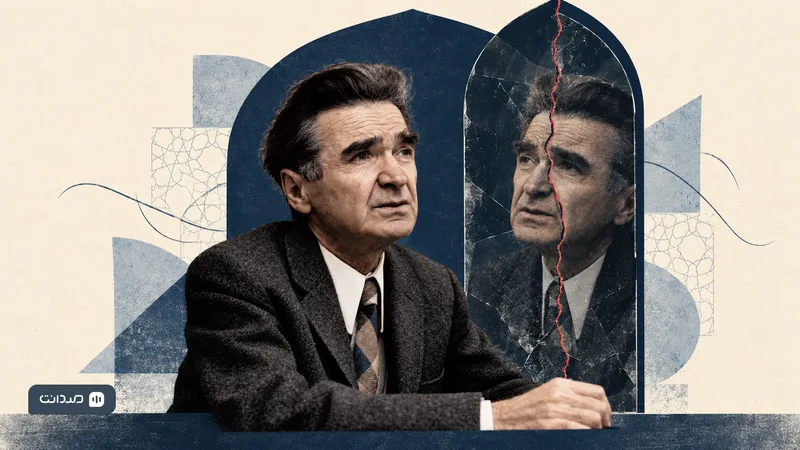
Modernism is a break from transcendental principles and a turn toward anthropocentrism, placing it in opposition to religious tradition. By elucidating this nature, Seyyed Hossein Nasr demonstrates the unbridgeable gap between Islam and modern thought and declares any reconciliation between the two impossible.
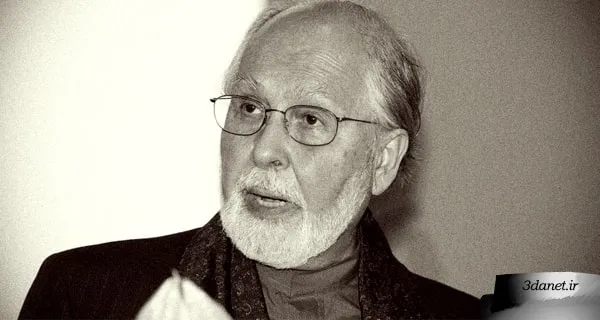
The present article by Seyyed Hossein Nasr is an attempt to demonstrate the unbridgeable chasm between Islam and modern thought. Abstract: The relationship between Islam and modernity has been one of the most problematic issues since the encounter of Muslims with the West. Some Muslim thinkers have tried, by referring to authentic Islamic sources, to provide evidence for the compatibility of Islam and modernity and to present them as reconcilable. Another group of thinkers in the Islamic world consider only certain aspects of Islam to be compatible with modernity, and especially in matters of doctrine, they believe in a deep chasm between Islam and modernity. Yet another group of thinkers considers Islam and modernity to be irreconcilable and impossible to combine or synthesize. In the view of this group, there is a profound difference between the two in terms of epistemology, ontology, and anthropology. This group can perhaps be identified as the Traditionalists. Seyyed Hossein Nasr, as one of the renowned Islamic thinkers of the contemporary era, is not only in this group but at its forefront. The present article is an attempt to demonstrate the unbridgeable chasm between Islam and modernity. This article is philosophically and scientifically thought-provoking and presents a great challenge to the first two groups.
Today, there are few subjects that arouse more excitement and controversy among Muslims than the “encounter between Islam and modern thought.” Of course, this subject is very vast and encompasses wide domains from politics to sacred art; the issues under debate have often caused such an eruption and intense boiling over of emotions, attachments, and even insults that it is difficult to draw upon them for an objective analysis of causes and a clear understanding of the problems. The entire discussion has also been rendered ineffective and sterile by the psychological state of inferiority and the feeling of helplessness in the face of the modern world. This feeling of powerlessness has caused most modernist Muslims to refrain from evaluating the [modern] situation and stating the truth—regardless of whether it conforms to or conflicts with popular opinion, whether it is acceptable or unacceptable. We begin our discussion by defining “modern thought.”
The term modern has been applied to many meanings, including “contemporary,” “innovative,” and “novel,” or “in step with the passage of time.” But the question of principles(principles) and, indeed, truth itself has rarely been considered in the discussion of modernism. It has almost never been asked whether this or that idea, this or that form, is in accord with an aspect of the truth or not. The only question has been whether it is modern or not. The lack of transparency, precision, and clarity in the mental and artistic designs that characterize the modern world itself seems to have created a serious obstacle to the understanding of modernism by contemporary Muslims, whether those Muslims who wish to accept its beliefs or those who wish to rise up against it. The influence of modernism has also clouded that crystalline clarity which traditional Islam possessed in its intellectual and artistic manifestation.
What we mean by the word "modern" here is not "contemporary" or "current," nor that which has emerged victorious in dominating the natural world; rather, "modern" from our perspective signifies a severance and rupture from transcendent principles (transcendent), that is, from the immutable and eternal principles that govern all things and of which man becomes aware through inspiration and revelation. In this sense, modernism stands in opposition to tradition (religion); in modernism, man alone is everything, having severed his connection with the Divine Source. Tradition in this sense is as old as humanity itself and is, in fact, a defining characteristic of human existence, whereas modernism is a very recent phenomenon. For as long as man has lived on earth, he has buried his dead and believed in life after death and the world of the spirit. Thus, for "hundreds of thousands" of years of life on earth, man has held a traditional outlook, and his relationship with God and nature has "remained unchanged." Compared to this ancient history [of tradition], throughout which man has ever praised his Lord and undertaken the specific function of God's vicegerency on earth (khalifat Allah), the period of modernism's dominance, which began with the Renaissance in fifteenth-century Western Europe and continues to this day, is but the blink of an eye. Yet, it is within this fleeting moment that we live; from this arises the apparent hegemony of modernism's power, before which many Muslims retreat out of sheer necessity and despair, or else they join in with the superficial joy that often mingles with the world's allurements.
There is also a point worthy of reflection concerning the term "thought" itself; the term "thought," as used here in the compound "modern thought," is itself a modern rather than a traditional term. The Arabic term fikr and the Persian term andishah, which are usually employed synonymously, hardly carry a similar meaning in traditional texts. In fact, the French term (Pensée), in the sense that Pascal intended it, is more in keeping with the traditional understanding of the term; a term better understood as "unveiling" than as "thought." Both the Arabic term "fikr" and the Persian "andishah" relate to "contemplation" and "unveiling" rather than to a purely human, and therefore non-divine, mental activity, which the term "thought" better conveys. Therefore, if we use the term "thought," it is because the reader we are addressing has been nurtured with all that this term signifies, and it may not be possible to substitute another term that conveys the same meaning.
All these forms of mental activity which together constitute modern thought and encompass science, philosophy, psychology, and even certain aspects of religion itself, possess certain common characteristics and traits that must be examined and studied before an Islamic response to modern thought can be achieved. Perhaps the first major characteristic of modern thought is its anthropomorphic nature. How can a form of thought that denies any principle higher than man be anything other than anthropomorphic? Of course, the objection might be raised that modern science is not particularly anthropomorphic, but rather it is the pre-modern sciences that should be labeled man-centred. Nevertheless, and despite all appearances, this claim is no more than an illusion if its epistemological factor is carefully scrutinized. It is true that modern science describes a world in which man as spirit, mind, and even psyche has no place, and thus the world appears as an "inhuman world" with no connection to the human condition. But it should not be forgotten that although modern man has created a science that excludes the reality of man from the overall picture of the world, the criteria and instruments of knowledge that characterize this science are entirely and exclusively human. Human reason and the senses determine modern science. The cognition of even the most distant galaxies is carried out by the human mind. This scientific world from which man has been abstracted is ultimately based on anthropomorphic foundations, and it is man who knows and determines what constitutes science.
Conversely, the traditional sciences are profoundly non-anthropomorphic; that is, for them, the locus and vessel of knowledge is not the human mind but ultimately the Divine Intellect. True science is not based on pure human reason but on the Universal Intellect, which belongs to a suprahuman level of reality and illuminates the human mind. If the medieval cosmologists placed man at the center of the universe, it was not because they were "humanists" in the Renaissance sense of the term, according to which worldly and earthly man was the measure of all things, but rather to enable man to see the cosmos as a hierarchy, the lowest rung of which he occupied, and from this dark corner of the cathedral crypt he had to begin his journey and undertake his ascent. No one can begin a journey from anywhere other than where he is.
If the characteristic of anthropomorphism is found in modern science, it can be observed with even greater clarity in other forms and aspects of modern thought, such as anthropology or philosophy. Modern thought, of which philosophy is in one sense the father and progenitor, became profoundly anthropomorphic at the moment man became the criterion of reality. When Descartes said, "I think, therefore I am" (cogito ergo sum), he posited a kind of individual consciousness, limited to itself, as the criterion of existence. For certainly, the "I" in Descartes' statement was not the Divine "I"; the Divine "I" can be found in Hallaj's utterance "I am the Truth" (ana'l-Haqq); according to traditional doctrines, only the Divine "I" has the right to say "I." Until the time of Descartes, it was Pure Being, that is, the Being of God, that determined and defined human existence and the various levels of reality. But with Cartesian rationalism, the existence of the individual human became the criterion of reality and truth. In the general course of Western thought, and with the exception of certain superficial developments, ontology gave way to epistemology, and epistemology to logic, until finally, as a reaction, logic was confronted with those anti-rational "philosophies" that prevail today.
What occurred in the West in the post-medieval period was that the higher levels of reality, in both the objective and subjective domains, were obliterated and destroyed. In the human being, nothing was higher than his reason, and in the objective world, nothing existed beyond what reason could perceive with the aid of the ordinary human senses. This was, of course, limited, especially as long as the famous principle of “adequation” ( adequatio) existed, according to which, in order to know something, we must possess a cognitive instrument that corresponds to the nature of the object of knowledge. And from the moment modern man rejected the principle higher than himself, everything that arose from his mind and thought could not but be anthropomorphic.
The second characteristic of modernism, which is closely tied to anthropomorphism, is the lack of principles that defines and describes the modern world. Human nature is so unstable, changeable, and turbulent that it cannot be taken as a principle or standard. A mode of thought incapable of transcending the human level and which remains anthropomorphic cannot, ultimately, possess principles either. In the realm of practical life or the active life (active life) — that is, the domain of ethics (although ethics cannot be reduced merely to the practical realm) and, from another perspective, politics and economics — everyone feels this lack of principles. Yet, regarding the sciences, this statement may be objectionable and contentious. Nevertheless, here too it can be claimed that neither empiricism (empiricism) , nor validation through induction, nor reliance upon and reference to sensory data affirmed by reason, can be considered as principles in the metaphysical sense. They are all valid on their own level, and likewise, the science that arises from them is valid on this same level. But they are devoid of immutable principles, and modern science, which has discovered many things about a particular level of reality, has, due to its severance from higher principles, encountered a kind of instability in its discoveries and inventions. In the metaphysical sense, only mathematics can possess certain principles; and the reason for this is that mathematics ultimately remains a Platonic science, and its laws, discovered by the human mind, are reflections of metaphysical principles. In this sense, reason itself cannot be other than the fact that it, too, is a reflection of the Divine Intellect. The discoveries of the other sciences, to the extent that they correspond to an aspect of the nature of reality, certainly possess symbolic and metaphysical significance. But this does not mean that these sciences are connected to metaphysical principles and integrated into a higher form of knowledge.
Thus, modern science and its general principles, like the other fruits of that mode of thought and practice we have attributed to modernism, suffer from the lack of principles that is characteristic of the modern world itself; an absence and lack that, with the passage of time, is felt even more acutely.
The question may arise: what other instruments of knowledge were available to other civilizations before the modern period? The answer, at least for those Muslims who are aware of and familiar with the intellectual life of Islam, is clear: dhawq (taste) and kashf or shuhūd (unveiling or intuition). The Muslim intellectual sees revelation not only as a means for learning the moral laws pertaining to the active life or practical living, but also as the primary source of knowledge. He is also aware of the possibility that man can purify and cleanse himself until the "eye of the heart" or "'ayn al-qalb," which resides in the center of his being, opens and enables him to attain direct vision of celestial realities. Finally, he accepts the power of reason to know, but this reason is always connected to and dependent upon revelation on the one hand and intuition on the other. Those individuals in the Islamic world who severed this cord of reliance and dependence upon intuition and revelation, and asserted the independence of reason from revelation and intuition, were never accepted in the mainstream of Islamic thought. They remained marginal and peripheral figures, whereas conversely in the post-medieval West, those who tried to preserve the dependence of reason upon intuition and universal intellect were marginalized, while the mainstream of modern Western thought was the negation of revelation and intuition as instruments of knowledge. In the modern era, even religious philosophers and theologians rarely defended the Bible (the Bible) as a source of sapiential knowledge that could define science (Scientia) in the manner proposed by the tradition of St. Bonaventure (St.Bonaventure) . The few who do see the Bible as an intellectual guide usually fall into shallow literal interpretations of the Bible, in whose conflict with the modern sciences, the proponents of the rationalist camp almost inevitably emerge victorious.
When one meditates upon these and other salient features of modernism, one realizes that to understand modernism and its manifestations, it is necessary and essential to grasp the conception of man that exists within it. One must strive to understand how modern man pictures himself and his destiny, how he sees human beings (anthropos) in relation to God and the world. Moreover, it is essential to realize what constitutes the spirit and mind of the men and women whose thoughts and ideas have shaped the modern world. Certainly, if figures like al-Ghazzālī and Rūmī, or for that matter Erigena (Erigena) or Eckhart (Eckhart) , held chairs of philosophy in the major universities of the West, a different kind of philosophy would have been propounded and evident in that world. Man thinks according to what he is, or as Aristotle said, knowledge is contingent upon the mode of the knower (Knower) . A study of the modern concept of man as a being "free" from God ( , the absolute master of his destiny, confined to the earth but also the master of the earth, indifferent to all eschatological realities ( eschatological) which he has replaced by positing an ideal within profane historical time, indifferent if not outright hostile to the world of the Spirit and its needs, and lacking a sense of the sacred, will make completely clear how futile have been the efforts of those modernist Muslim "reformers" who have tried to harmonize and reconcile Islam and modernism in the sense we have defined it. Even if we briefly address the Islamic conception of man or homo islamicus (homo islamicus) , we will soon realize the impossibility of reconciling this conception with the modern concept of man.
The human being envisaged by Islam is the servant of God and His vicegerent on earth (khalīfat Allāh fī al-arḍ). He is not an animal that can merely speak and think, but a being possessing a soul and spirit created by the Lord. The Islamic human being has animal and vegetative natures within himself, even as he is also the noblest of creatures; but the human being is not the evolved form of lower types and forms of life. The human being has always been human. The Islamic conception of the human being envisions him as a being who lives on earth and has earthly needs; but he is not earthly, and his needs are not limited to material things. He rules over the earth, but not autonomously; he is God's representative before all creatures. Hence, he is also responsible for the order of creation before God and is a channel of mercy for God's creatures. The human being envisaged by Islam possesses the power of reason, a faculty that analyzes and divides, but his mental abilities are not confined to reason. He possesses the possibility of inward knowledge; knowledge of his own inner being, which is in fact the key to knowledge and cognition of God. According to a prophetic hadith, "Whosoever knows himself has verily known his Lord" (man ʿarafa nafsahu faqad ʿarafa rabbahu). He is aware of the fact that his self-consciousness has no external, material cause but originates from God Almighty and is too profound to be affected by the event of death. Thus, the human being envisaged by Islam acknowledges eschatological realities; that is, the fact that although he lives on this earth, he is here merely a traveler who has fallen far from his original home. He is aware that his guide for this journey is the message that issues from his original home, from God, and this message is nothing other than revelation, to which he adheres, both in its legal aspect, the Sharīʿah, and in its aspects of truth and knowledge.
He is also aware that human faculties are not limited and confined to the senses and reason, but rather, to the extent that he is able to actualize and perfect all the powers that God has deposited within him, the human mind and intellect can be illuminated in the light of the spiritual world, and he is able to attain direct knowledge of that spiritual world and the meaning to which the Noble Qurʾān refers under the title of the Unseen (ʿālam al-ghayb).
It is evident that such a conception of the human being differs profoundly from that conception of modern man which sees itself as a purely earthly creature, the lord of nature, but responsible to no one except itself. None of the baseless justifications can bring these two different conceptions close together and reconcile them. The Islamic conception of the human being completely obliterates the possibility of a Promethean rebellion against God and the rendering of God insignificant in human life. The result of such a vision is therefore the creation of a civilization, art, philosophy, or an entire mode of thought that is completely theocentric and stands in opposition to the anthropomorphism that is a defining characteristic of modernism. For authentic Muslim sensibilities, nothing could be more shocking than the Promethean and Titanic "religious" art of the late Renaissance and Baroque periods—which stands in direct contrast to the completely non-anthropomorphic art of Islam. In Islam, the human being performs his function as "homo faber" as a "servant" of God and not as a creature who has rebelled against Him. His function is not the glorification of himself but the glorification of his Lord, and his greatest goal is to become "nothing" and to submit to the experience of fanāʾ, which enables him to become a mirror in which God contemplates the reflections of His Names and Attributes, and a channel through which the theophanies of the Divine Names and Attributes are reflected in the world.
Of course, what characterizes the Islamic conception of the human being shares profound similarities with the conception of the human being in other traditions, including Christianity. But modernism is neither Christianity nor any other tradition. Here, our concern is Islam's encounter with modern thought, not its comparison with Christianity. In other words, what could be closer to this Islamic teaching—that the human being was created to attain ideal perfection and spiritual felicity through spiritual and intellectual growth, and that he is only truly human when he seeks perfection (ṭālib al-kamāl) and strives to transcend himself—than the saying of Scholastic (Scholastic) philosophy that: in order to reach perfection, the human being must be more than human [the human being must try to transcend himself]. Homo non Proprie humanus sed superhumanus est) )
The characteristics of modern thought discussed earlier—namely its anthropocentrism and, by extension of meaning, its secular nature, the lack of principles in its various branches, and the reductionism associated with it, which is most evident in the domain of the sciences—stand in complete opposition to the principles of traditional Islamic thought. Just as the modern conception of the human being, which arises from these patterns of thought, stands in opposition to the traditional Islamic conception of the human being. This opposition and difference is clear enough and requires no further elaboration here. Nevertheless, one of the characteristics of modern thought, due to its dominant nature in the modern world and its devastating impact on the thought and life of those Muslims who have been influenced by it, will be examined in detail here; namely, the theory of evolution.
In the West, no modern idea or theory has been as fateful for religion as the theory of evolution. Instead of being regarded as a hypothesis in biology, zoology, or paleontology, the theory of evolution has been presented as if it were an established scientific fact. Moreover, it has become a method of modern thought and encompasses vast fields such as "astrophysics" ( astrophysics) and the history of art. The impact of this mode of thinking on Muslims who have been influenced by it has been no less than its impact on Christians. Modernist Muslims have usually tried to justify the principle of evolution through various implausible interpretations of the Holy Quran, as if forgetting that there is no possible way to reconcile the concept of the human being (Adam), whom God taught the Names and made His vicegerent on earth, with the evolutionist conception of the human being.
It is strange that, with the exception of a few traditionalist thinkers and also the "Muslim fundamentalist" who has rejected the theory of evolution on religious grounds without putting forward rational arguments for its rejection, few Muslims have taken the trouble to understand its logical absurdity and to pay attention to the scientific evidence that has been raised against it by people like Bonoure (L. . In fact, as has been rightly said by Schumacher (E. F. Schumacher) , "evolutionism is not science; it is the mythology of science and even a kind of deception." Some Western critics of evolution have gone so far as to claim that the proponents of this hypothesis suffer from psychological imbalance, while recently a body of arguments drawn from information theory (information theory) has been raised against it.
Our aim in this examination is not a detailed analysis and refutation of the theory of evolution, although such a refutation and denial by Muslims is necessary and obligatory from scientific as well as metaphysical, philosophical, logical, and religious perspectives, just as such efforts have been undertaken in the West. What is important to note here is that the evolutionary perspective, which rejects permanence and continuity and holds that every “greater” thing evolves from a “smaller” thing, is a desperate attempt to fill the void arising from modern man’s “severance” from his Creator and his denial of any higher principle. With the theory of evolution, the Supreme Principle is immediately forgotten, and the world becomes a cycle without a center, and this experience of the loss of a center remains an ( existential) reality for anyone who accepts the doctrines of modernism, whether Christian or Muslim.
The idea of progress and (Utopianism) are closely tied to the idea of evolution. These two ideas have shaken the Western world philosophically and politically over the past two centuries and are now profoundly influencing the Islamic world. The ideal of unilinear progress is today, fortunately, being seriously denied by many Western thinkers, and it is also gradually being rejected in the Islamic world—where it had been accepted without any doubt by the first generation of modernist Muslims—as a kind of “mental idol.” But utopianism, which has been closely linked with the idea of progress, requires more scrutiny and examination because it has had a very destructive impact on a wide spectrum of modernist Muslim intellectuals.
“Utopianism” is defined in the Oxford English Dictionary as “impractical idealistic schemes for the improvement or perfection of social conditions.” Although the root of this term goes back to Sir Thomas More’s famous treatise entitled “( Utopia) ,” published in Latin in 1516, the term “utopianism” as it is used today has a meaning that predates the sixteenth century, even though the term itself is derived from More’s famous work. Of course, the Christian doctrine of (incarnation) along with the concept of idealism, which is one of the characteristics of Christianity, existed before the modern era. “Utopianism,” which has attached itself as a caricature to these characteristics, whether in the form of the humanistic socialism of figures like Saint-Simon, Charles Fourier, or Robert Owen, or the political socialism of Marx and Engels, leads to a conception of history that is a true (Parody) of Augustine’s “City of God.” The utopianism of recent centuries, which is one of the important characteristics of modernism, along with various forms of (Messianism), has led to profound political and social upheavals whose aims and methods are completely alien to the spirit and goals of traditional Islam. Utopianism attempts to create a desirable social order through purely human means. It pays no attention to the presence of evil in the world in the theological sense and seeks goodness without God, as if it were possible to establish an order based on goodness but separate from the source of all goodness.
Islam has also had descriptions of the ideal state of society in the works of figures such as al-Fārābī, who expounds the “Virtuous City” (al-madīnat al-fāḍilah), or the texts of Shaykh Shihāb al-Dīn Suhrawardī, who deals with “Nā-kujā-ābād,” or utopia. Yet it must always be borne in mind that this land of perfection is nowhere(nowhere) ; that is, it lies beyond the earthly abode and hence is situated in the eighth clime, above the seven geographical climes of this world. The realism present in the Islamic perspective, reinforced by the Holy Quran’s strong emphasis on the gradual loss of perfection of the Islamic community as it distances itself from the origin of revelation, has so far prevented the idealism found in modern European philosophy from entering Islamic thought. Moreover, Muslims are well aware that if an ideal state exists, it can only be attained through divine assistance. For this reason, although the idea of periodic renewal has always been alive, and there remains a wave of Mahdiism(Mahdiism) which sees in the Mahdi a divinely-sent force to return Islam to its desired perfection, Islam has never encountered within itself the kind of secular utopianism that forms the foundation of many socio-political aspects of modern thought. It is therefore essential to be aware of the profound distinction between modern utopianism and Islamic teachings concerning the renewer (mujaddid) or reformer of Islamic society, or even the Mahdi himself. Similarly, the distinction between the traditional figure of the renewer and the modern reformer is fundamental, a distinction whose weak reaction in confronting modern thought has failed to achieve a renewal of Islam. One must also be aware of the true nature of that revivalist(revivalism) movement based on utopianism that draws upon Islamic conceptions and can be observed in certain types of Islamic “fundamentalism.”
Finally, mention must be made of another characteristic of modern thought related to all that has been said above. This characteristic is the loss of the sense of the sacred. Modern man can practically be defined as that type of human who has lost this sense, and whose thought is characterized by the absence of his awareness of the sacred. He is modern humanism(humanism) inseparable from secularism. But from the Islamic perspective, concepts such as the profane(Profane)and the secular do not exist, because in Islam, as mentioned earlier, man penetrates into the depths of the multiplex world and knows no domain outside of tradition. This includes not only the intellectual aspects of Islam but is also evident in Islamic art. The Islamic tradition can never accept a model of thought devoid of the fragrance of the sacred that substitutes a purely human order for the divine order. Islam’s encounter with modern thought cannot occur on a serious level if the primacy of religion in the Islamic perspective and its absence in modern thought are not heeded, and even by legitimizing secularism, Islam still cannot enter into dialogue with it.
در پایان، لازم به یادآوری است که تقلیل گرایی که یکی از مشخصات اندیشه مدرن است، بر رویارویی اسلام با مدرنیسم تاثیر داشته است. یکی از تاثیرات مدرنیسم بر اسلام تقلیل اسلام به یکی از ابعادش یعنی شریعت (Shariah) بوده است و سود نبردن از آن سلاحهای فکری است که فقط با آنها می توان حملات اندیشه مدرن را دفع کرد. البته ریعت برای سنت اسلامی جنبه اساسی دارد. اما چالشهای فکری مطرح شده توسط مدرنیسم در اشکال تکامل باوری، عقل باوری، اگزیستانسیالیسم، لاادری گری (agnosticism) و امثال آنها تنها می توانند به لحاظ فکری و نه به لحاظ حقوقی (Juridically) پاسخ داده شوند. همچنین آنها را نمی توان با تجاهل و نادیده گرفتن پاسخ داد و نباید هیچ «ازدواج جادویی » میان شریعت و دانشهای مدرن و تکنولوژی را انتظار داشت. رویارویی موفقیت آمیز اسلام با اندیشه مدرن صرفا با ابراز خشم و ادعای حق به جانبی رخ نخواهد داد. این رویارویی تنها وقتی موفقیت آمیز خواهد بود که ریشه ها و تبعات اندیشه مدرن کاملا شناخته شود و کل سنت اسلامی به چاره جویی برای مشکلاتی برآید که مدرنیسم پیش پای آن گذاشته است. در مرکز این وظیفه تجدید و احیای آن حکمت یا حقیقت است که در بطن اسلام وجود دارد و تا وقتی که انسانها به خدای یکتا گواهی می دهند معتبر است و جزئی از ماهیت وجودی انسان است.

Discussion0 comments
No comments yet; let yours be the first voice.