Religion
Religions and the Concept of Ultimate Reality: An Article by Seyyed Hossein Nasr and John Hick
A conversation between Seyyed Hossein Nasr and John Hick on religious pluralism and ultimate reality illuminates the contrast between traditional Islamic and Christian theological perspectives on religious experience and divine truth: Hick argues for an inductive approach while Nasr speaks from the standpoint of the perennial philosophy.
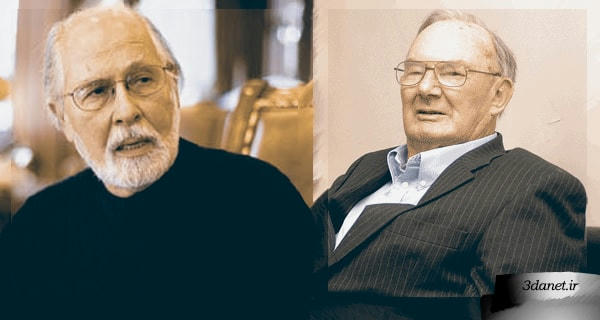
This article is a conversation with Dr. Nasr and John Hick, conducted by Adnan Aslan, which addresses pluralism and interfaith dialogue. Its translation was carried out by Ahmadreza Jalili.
Introduction
Pluralism and interfaith dialogue are among the sensitive and highly contentious topics in our Islamic society today. What you have before you is a conversation between Mr. John Hick and Seyyed Hossein Nasr concerning religions and the concept of ultimate reality. Since this dialogue contains many noteworthy and thought-provoking points, the journal Ma'rifat presents it to those interested in such discussions, so that while contributing to the growth and enrichment of society's culture, the grounds for its critique and examination may also be provided. Ma'rifat
There is abundant evidence in favor of those who imagine that in the coming century, religion will be one of the forces dominating world affairs. This claim comes closer to the truth when we realize that we have yet to find an ideology that fundamentally validates socialism. In this case, the great traditions of humankind, such as Islam, Christianity, and Judaism, will inevitably have to undertake another effort to offer a new vision and a fresh set of value systems to future generations. However, for the exchange of ideas and values among religions, interfaith dialogue will be an unavoidable and necessary tool through which individuals can derive the principles of peace and reconciliation for the global community. This interview between John Hick,(1) the proponent of religious pluralism, and Seyyed Hossein Nasr, the Muslim sage, is an example of an exchange of views that can demonstrate the fruits of dialogue in its precise sense. Although the interview itself was conducted in connection with a doctoral dissertation on religious pluralism, the topics discussed are highly relevant to the general readership.
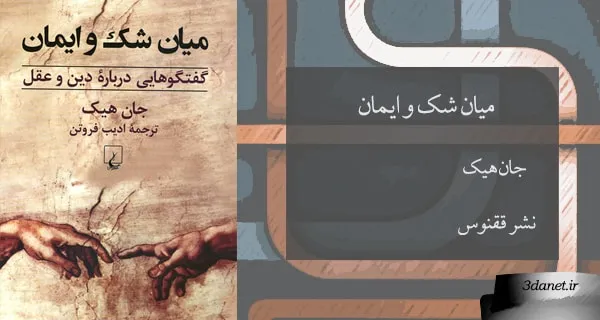
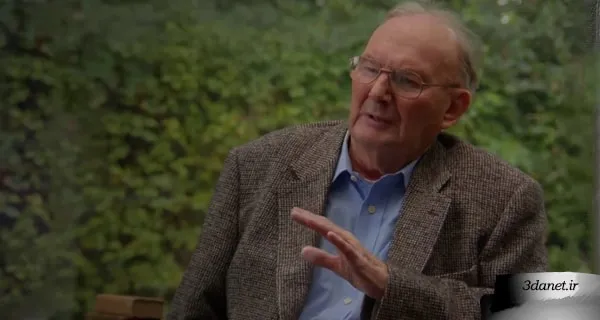
Professor John Hick, who has devoted nearly three decades of his life to teaching philosophy of religion and theology in Britain and the United States, is a fitting figure to reorganize the Christian perspective in a way that can open the door to dialogue with other religions. He is the author of numerous books, the most important of which include: An Interpretation of Religion: Human Responses to the Transcendent(2) (1989), God and the Universe of Faiths(3) (1973), Death and Eternal Life(4) (1976), Evil and the God of Love(5) (1966), and The Metaphor of God Incarnate(6) (1993). Seyyed Hossein Nasr, a representative of traditional Islam and, here, a representative of Islamic pluralism, is one of the few Muslim thinkers who can answer the questions John Hick raises from an Islamic perspective. Nasr, who began his intellectual journey as a science student at the Massachusetts Institute of Technology(7) and attained a university professorship in Islamic studies at George Washington University, is a leading Muslim philosopher who is aware of the appeal and effects of religion up to the present and into the future. Moreover, he is an individual who can guide and lead to the summit where all paths converge. His book Knowledge and the Sacred(8) (1981) can be considered one of the classic works in the quest for the traditional perspective in religious studies. The Need for a Sacred Science(9) (1993), Man and Nature: The Spiritual Crisis of Modern Man(10) (1968), Ideals and Realities of Islam(11) (1966), Sufi Essays(12) (1971), and Islamic Art and Spirituality(13) (1987) are some of his books that reveal the diversity and richness of his thought.
When Nasr was delivering the Cadbury Lectures(14) at the University of Birmingham during October 1994, I seized the opportunity to interview him and John Hick, and to inquire about their views and opinions on the concept of ultimate reality and religions. This conversation took place at John Hick's home in Birmingham on the twenty-fifth of October 1994. Hick began the dialogue by explaining his differences of opinion with Nasr.
Hick: I think I basically agree with your position, although I differ with you on one rather important point. Our difference lies in our approaches. What you say originates from a particular tradition, the perennial philosophy, whereas what I say arises from an inductive approach. At the outset, I should state that within the framework of the Christian tradition I am committed to the belief that Christian religious experience is not a purely imaginative projection (15), but a response to the transcendent Real (16). Since the other great religions of the world report forms of experience of the transcendent Real, and exhibit the same kind of moral and spiritual fruits in human life, I am compelled to believe that they too are responses to the transcendent Reality. And so I acknowledge an ultimate divine Reality that is beyond the network of human concepts, is conceived differently, and hence is experienced differently, and therefore responded to differently in life within the framework of the great religious traditions. Religions are totalities that are multi-dimensional complexes of religious experience, beliefs, scriptures, rituals, (17) ways of life, (18) and so on. But they are all shaped according to the impact of the ultimate Reality upon human life. Purely as a matter of terminological preference, I like to use the term "the Real" which roughly corresponds to "al-Haqq".
Nasr: I myself sometimes use this same word with a capital "R".
Hick: Yes, with a capital "R" this term roughly corresponds to the Sanskrit term "sat" and the Chinese term "zhen", but in the context of discussion and debate with Christians I felt it necessary to avoid using the word "God", as this word carries very strong theistic (19) and Trinitarian connotations. Hence, I prefer to use the term "the Real". Human beings have responded to this Real in various ways. Such differences, which arise largely from human and historical factors, give religions their distinct and unique characteristics. I do not agree with your statement that we should not (so to speak) compromise with the specific teachings of a particular religion. If we all lived in separate religious worlds and did not interact with one another, I would concur with you on this point. But today, we are all mixed together and listen to each other's distinct religious language. Choosing this overall picture (which is essentially the same as your overall picture) has no consequences for my own type of Christian faith, for every mystically orthodox (20) Christian holds that Jesus is God, and the Son of God, that is, the second person of the Holy Trinity. From this statement it follows that Christianity alone among the world's religions was founded by God in a person who descended from the Kingdom to earth to save humanity. Mystically orthodox Christians believe that this is true not only within the confines of the Christian religious world, but for everyone. If others do not believe it, they are in error. It is at this point, I think, that the absolute claims of religion must be qualified. While I know you will respond negatively, we must avoid dwelling on them.
Nasr: Two points become clear in this discussion. One point on which you and I disagree, and one point on which we are of the same opinion. In my view, one of the points on which we disagree is that you regard the various "crystallizations" of religious truth in each world more as a human reaction to the divine presence, whereas I consider them divine utterances (21) in light of various human circumstances. There are disagreements between us, although there is undoubtedly an intermediate area where we reach agreement. Just as you said about Christian theology, I do not say that every statement of Islamic theology is divine revelation. So on that point I agree with you. But I believe that the sacred rites, sacred texts, and also certain fundamental theological statements within the framework of each religion are ordained by divine decree. I do not hold that these statements are merely human reactions to the Ultimate Reality. But this divine decree (22) always occurs in proportion to human capacities. This, I think, is a source of difference between our views. But in fact, I agree with you on one point, and that is that the sense of absoluteness that each religion feels within itself, which has historically led each religion to claim that it is the only true religion, or the best of all truths, must be modified in light of the doctrine that you have expressed from one perspective and I from another. That is, the Absolute Essence (23) is always absolute, the Truth is absolutely true and nothing else, and every other matter is a manifestation (24) within a particular spiritual world. In my belief, such a modification of attitudes can be achieved by the theologians, sages, and saints of various religions. Living in more than one religious world is humanly impossible for ordinary people, even out of caution (25). An ordinary Christian cannot hold that "since Christianity is a relative religion, therefore, out of caution I accept the truth of Buddhism." This can only be done by someone who has reached the end of the path. Otherwise, such an approach is, in fact, the destruction of the statements pertaining to truth in that particular religious world (in which these statements themselves are, in my terms, "relatively absolute") and ultimately leads to the destruction of religion itself, and this is the point I emphasize greatly.
Hick: I also see that danger there, and in my opinion it is a real danger. I accept that it is very difficult to live as a Christian with the self-awareness that Christianity is not the only truth. But I think another matter comes into play. I do not consider any religion to be unchanging in terms of actual historical reality. Undoubtedly, in the case of Christianity, as you know, there has been immense growth and evolution, expansion and diversity. Therefore, in reality, one cannot easily say that Christian belief is such and such.
Adnan Aslan: This brings us into the discussion of the problem of religious language. Well... what is your understanding of traditional religious language that speaks of the One God, the Creator, the Omnipotent (26) and the Omniscient (27)?
Hick: It seems to me the circumstances are such that we intend to speak about the Ultimate Reality, but we can only speak about the Ultimate Reality as it is manifested to us in a particular form, and not about the Ultimate Reality in itself. Language in any form is specific to that form. Some elements of religious language are, of course, applicable to the Ultimate Reality. For example, I hold that the Ultimate Reality is infinite, whereas the form is not. Therefore, it cannot be said that the particular form of Christianity, which is a limited form of awareness of the Ultimate Reality, is itself infinite, ultimate, eternal (28) and the like. So, we have an amalgam and we are speaking about one thing in terms of another.
Adnan Aslan: Do you hold that such language is not applicable to the Ultimate Reality?
Hick: Well, I hold that part of the language is applicable and part of it is not. Regarding infinity, I hold that it is applicable.
Adnan Aslan: But omnipotence and omniscience are not applicable.
Hick: These concepts, and a concept such as power, as well as the moral concept of goodness and love, and providence, are human concepts. More precisely, they are not applicable to the Ultimate Reality in itself.
Adnan Aslan: Professor Nasr, what is your view regarding traditional religious language about God?
Nasr: I hold that although the Real in itself is of course beyond all language and all categories, those attributes that the Real has bestowed upon itself in order to manifest and reveal itself in each religion are paths towards Him. And therefore, they always remain meaningful, even though they may come into conflict with other attributes and manifestations in other religious worlds. For example, in the Quran, God is called al-Qadīr/al-Qādir, that is, the All-Powerful. Now, I believe we cannot abrogate this attribute because of the fact that we live in a period of history in which we do not like to think of God as a powerful being, and because human civilizations have waves of different thoughts that arise and pass away. In my view, such attributes pertaining to the Ultimate Reality cannot be changed merely on the basis of human whims. Our task is to understand what is meant by saying that God is al-Qadīr and what is meant by saying that God is All-Powerful. Therefore, the point is not that my understanding and al-Ghazālī’s understanding are necessarily identical. But the way in which God has manifested Himself (especially the way God manifests Himself to humanity (29) in the Divine Names in Islam and in other ways in Christianity or Judaism or elsewhere), I believe, is part of the sacred universe of that religion and cannot be disrupted and transformed according to human social circumstances. They can always be reinterpreted and re-explained.
This point brings our discussion to another very important issue (on which we disagree), and that is precisely the question of the factors of change, that is, transformation, within religion. I do not deny that every religion changes. But in my view, this change is like the growth of this oak tree. Its outward form and subsequent changes and developments (philosophically speaking) depend on the Platonic archetype (30) of the oak tree, that is, the archetype and reality as it manifests in space, or, according to modern science, it is based on the genetic code (31). But this tree, in order to continue its life as a living being, always remains an oak tree, and it grows to different sizes in different countries and does not look the same under different climatic conditions. Yet, for all that, it is always an oak tree. Therefore, in my view, the changes and transformations within religion, in light of this analogy, are like the changes and transformations of an oak tree. For instance, the oak tree might be afflicted by blight and lose some of its branches, and you can graft other branches onto it; this graft sometimes takes and sometimes does not.
The case of religion is just the same. One religion is forcibly made a part of another religion and is absorbed into the other religion. Sometimes this is not feasible and it gradually disappears. But the living reality of the religion always persists. Therefore, I do not deny that all these religions have undergone some changes within themselves. For example, in Christianity, based on the fact that [the Lord] Christ said, “My kingdom is not of this world,” there is no body of legal opinions or legal subjects that are considered immutable laws. Thus, Christianity contains within itself a combination of Roman law, later English law (from the post-classical period to about 600 AD), Germanic common law (32), American laws, and so forth, whereas in both Judaism and Islam, the law partakes of divine immutability (33). According to the Jews, because God wrote on the tablet that “Thou shalt not kill,” this divine law is immutable. A Christian’s understanding of how human law governs human society is not the same as the understanding of it in the religion of Islam and the religion of Judaism. But even this very matter can be understood in light of the different ways in which the Real has manifested itself in these different (religious) worlds.
Adnan Aslan: Professor Hick, what is your view on this concept of immutability?
Hick: In my view, there is a difference between Islam and Judaism on the one hand and Christianity on the other, for Islam revolves around the Qur’an, which is immutable (is that not so?), although interpretations of the Qur’an are mutable. (Whereas) the historical personal figure, namely Jesus of Nazareth, is the focal point of Christianity. Now, this question arises for you: Suppose it is true, as many New Testament scholars hold (this is almost the result of developments in recent years), that Jesus himself, this historical person, did not consider himself God, or the incarnation of the second person of the Holy Trinity(34). On the other hand, Christianity has come to regard him as the incarnation of the second person of the Holy Trinity. Well, is the immutable truth that he was God even though he himself did not have such a conception of himself, or is this statement perhaps a superfluous accretion that must finally be trimmed away? How can one judge this matter?
Nasr: I do not have the audacity or boldness to judge this theological issue for Christians. Since you ask me as a Muslim scholar, I hold that this recent discovery confirms what the Qur’an explicitly says about Christ, namely that he is in truth a prophet and not the Son of God. But setting that question aside, another question arises: If this matter was merely a confusion and conflation, how does God, despite His infinite wisdom and justice, allow one of the major world religions, in which millions of people have sought their salvation, to have remained in error and misguidance for two thousand years? Is this not simply a confusion? This is a very important theological question that must be considered.
Hick: Yes, indeed.
Nasr: Therefore, in my belief, even if the existing historical documents and evidence do not support this doctrine, God destined this doctrine for Christians, and certainly not for Muslims. But what happens is that the possibility of interpreting that particular revelation, in truth, allows this revelation to flourish, as it did. Based on this infinite possibility, I believe, the emergence of Durham Cathedral(35) as sacred art was related to a truth by which it is manifested. Hence, as a Muslim, I defend the traditional Christian understanding of that doctrine within the context of Christianity, while I do not consider it the absolute understanding of Christ, for Christ is also, in the view of Muslims, a figure who does not belong solely to the Christian religion. If all Christians (God forbid) were to abandon their belief in the traditional doctrines of Christianity, it would still be incumbent upon Muslims to believe in Christ and the Virgin Mary. But the interpretation that considers Christ the Son of God does not do justice to the truth of his being the Christ. That interpretation must correspond with an aspect of Divine Providence, an aspect of the manifestations of the Truth, to allow this doctrine to flourish. If one were to say that this matter was merely a gross error over the course of these (two) thousand years, I cannot accept that.
Hick: In practice, the God who is worshipped in almost all churches is God the Father, that is, the Heavenly Father of whom Jesus spoke. The doctrine of the Trinity is a doctrine that theologians later devised. But in terms of the existing religious reality, the vast majority of Christians have always worshipped God the Father.
Nasr: Which in practice means that Christians are very close to Muslims.
Hick: Yes.
Nasr: I always tell my Muslim friends, when they claim that Christians worship three gods: Look (when I was studying in America, I frequently attended church services), as soon as you sit in a church, you feel that you are in the presence of the One God and are worshipping the One God.
Hick: Yes, that is correct. Conceiving of the divine incarnation as a metaphor does no more than bring to light what already exists within the Christian consciousness. In the ancient world, during the time of Jesus, the term “Son of God” was very common and was used in a metaphorical sense. What I have in mind is to clarify the language of Christianity, not to alter a deeply held Christian belief. Nevertheless, the idea that the statement that Christ was God should not be taken literally is unacceptable to many people. There are many individuals, namely religious fundamentalists,(36) who insist that this language is literally true.
Adnan Aslan: This brings us to the discussion of religious language. My question now is: To what extent are descriptions of God in the framework of religious language valid?
Nasr: I must say a word about this. You use the term “religious language” here. As you know, in my writings I distinguish between what I call sacred language, that is, liturgical language,(37) and conventional language. Now, I believe that in sacred languages such as Arabic, Sanskrit, and Hebrew, through which God is claimed to have spoken directly, everything said in those languages as revelation is the language of God; God has said “I” in those languages. Therefore, your question does not even apply to those languages. If you ask, “To what extent is it valid?”, by entertaining doubt about its validity, you are, in fact, doubting divine revelation. However, your question applies to religions where language does not play such a central role, as is the case with language in Christianity or Buddhism. The language Christ spoke was Aramaic, which, although historically very important, was not even considered significant in the Gospels written in Greek. But later Greek and Latin became the two major languages of Western Christendom, even though these languages were not used by the founder of Christianity, and certainly God did not use these languages through Christ. No Christian claims that God spoke in Latin or Greek. I think your question is actually meaningful in the context of those religions where human language is used to speak about divine revelation.
Adnan Aslan: Do you hold that in sacred language, statements and descriptions concerning the Ultimate Reality in itself are valid?
Nasr: Yes, there are many levels of meaning. How you interpret it is another matter. In classical Islamic sources, it is said that a verse in the Quran has several different levels of meaning and is not limited or confined to the literal sense alone. Therefore, again, as far as the language of the Quran is concerned, it is possible to speak of a symbolic meaning (I prefer the use of the term symbolic(38)) without compromising the text. God is called “al-Qadir/al-Qadir” (the All-Powerful) in the Quran. Even questioning the validity and correctness of this statement in the context of Islam is a meaningless question.
Adnan Aslan: From this perspective, what is your view of the Bible?
Nasr: The matter of the Bible is different. Jews believe that the Old Testament was revealed to the prophets over several thousand years, that is, over a very long period of history. The New Testament is, in fact, a collection of the gathered sayings of Christ, compiled approximately forty to fifty years after his passing by the Apostles, who possessed immense spiritual perfections. This does not mean they fabricated these sayings. If you ask how much of the verses of the New Testament is the direct revelation of God, technically speaking, that is a different question. Moreover, I believe that the words that flowed from the tongue of Christ were inspired by God, for he was the manifestation of the Logos(39) (the Word of God). This is why the Quran speaks of “the Gospel” as one of the books of God. Therefore, the four different accounts of the New Testament, that is, the Gospels of Luke, Matthew, and so on, cannot be considered as four “Qurans” or four “Torahs.” These Gospels are four different accounts of this wondrous source of life, that is, the Word of God.
Adnan Aslan: Professor Hick, would you like to comment on the concept of revelation and sacred language?
Hick: That “God reveals divine words that are directed toward and attentive to human circumstances” entails that God is a person with purposes and intentions who is at work at various historical moments. But can this language be properly applied to Ultimate Reality?
Nasr: With what we understand by language, the truth about Ultimate Reality is not fully expressed. At the same time, this language cannot be withheld from Ultimate Reality. For example, Ultimate Reality can be conceived as a sun that shines, as the Tao (40) that manifests, or as the laws and principles that constitute the nature of things and originate from the divine law. But this does not mean that at a certain level of understanding, even in a religion like Taoism, there is no knowledge of the divine law concerning what manifests in the forms of the material, spatio-temporal world.
Hick: But is it precisely correct to say that Ultimate Reality is a personal, anthropomorphic (41) self-revealing (42) being, provident (43) and, historically, an active, omnipotent divine person?
Nasr: No, not always. There are two different issues at stake. I do not believe that the Truth is always manifested in the terms you just mentioned. But I also do not believe that these terms are merely human fabrications that (one could say) mask the face of the Truth. Rather, the Truth is an infinite reality and therefore has the possibility of manifesting in various forms, including those that are not anthropomorphic. But the Truth can also be manifested in the categories you just referred to.
Hick: These categories apply to the manifestations of the Truth, rather than to the Truth in itself.
Nasr: You are right. The absolutely Ultimate Reality is beyond all these categories.
Hick: That is precisely what I want to say as well. But there may be a major difference here. I am not sure. One could say that every different manifestation of the Truth is to some extent indebted to human thought and circumstances.
Nasr: Yes, that is precisely where our major disagreement lies! ... I believe that this manifestation is only indebted (to human thought and circumstances) to the extent that the Divine Essence itself designates different vessels for revelation, vessels in various forms, into which it pours the divine nectar.
Hick: The phrase “designates” brings to my mind not Ultimate Reality in itself, but the self-revealing, anthropomorphic God.
Nasr: Even if this Ultimate Reality is not anthropomorphic in some other contexts, such as Buddhism, there exists a lower level of the manifestation of the Transcendent Reality (44). It is at the level of manifestation that these elements come into being.
Hick: Can anthropomorphic, intentional language be elevated to the level of the dignity of the Truth? Is the Truth anthropomorphic? If that is the case, this statement means that you apply anthropomorphic, intentional language not to Ultimate Reality in itself, but only to some of its manifestations.
Nasr: Not always. I will explain. When I use the terms “Divine Word” (45) and “Divine Will” (46) and so on, I mean them always only in certain worlds, in specific types of languages, and in particular parts of the globe where this kind of expression has meaning, not because we humans have fabricated and invented it, but because the divine order, that is, the Truth, has manifested in that world in such a way that these categories have meaning.
Adnan Aslan: One of the important topics in contemporary religious thought is the conflict of truth claims among religions. How can you reconcile such conflicting claims, for example, that Muslims believe Christ is not the Son of God, while Christians believe that he is?
Nasr: The discussion we have had so far partly answers your question. Every religion makes a truth claim that is based on the way in which the Truth manifests itself in that religious universe, a mode of manifestation that is not identical with the way God manifests in other factors. There is no reason whatsoever why truth claims should be identical. The problem arises, however, when two different universes refer to the same divine reality. For instance, such a problem never exists between Buddhism and Judaism. Problems arise when Islam and Judaism, or Islam and Christianity, claim to refer to the same reality. How did Moses descend from Mount Sinai? Or the question of the person of Christ, which is a very important issue! ... In my view, understanding this matter from a rationalist perspective is very difficult. It is of great importance to understand that the reality of Christ (the historical, not the meta-historical (47) Christ) cannot be expressed in a single, atomically complete description. And therefore, both the Christian and the Islamic descriptions of that reality are correct descriptions.
Adnan Aslan: Even if they appear contradictory?
Nasr: Yes, that is correct, even if they are contradictory descriptions. This can be understood even at a simpler human level. In modern thought, it is said that, for example, you have object (48) 'A' at the table and subject (49) 'B', who is also at the table. The line connecting 'A' and 'B' is only a single line. Or there is only one kind of knowledge (cognition) that subject 'B' can have of 'A'. But this cognition is not necessarily true. By applying this same principle to certain aspects of human experience, such as music, one can grasp this point. If someone comes here and plays, say, a Bach suite (50), although we hear a single phenomenon, that is, a sound system, (51) our understanding of this piece of music may differ. Therefore, it is possible that a historical reality or a series of historical realities with such a vast scope as the life of Christ can be described in two different revelations and in different ways, and both descriptions be correct.
Adnan Aslan: Are you proposing another epistemology in which the teachings of two different revelations can be meaningful?
Nasr: Certainly, both another epistemology and another metaphysics. For example, in my view, an object, say a tree, is not only a material (physical) tree described in botany and physics, but it also has a presence at higher levels of reality. And the knowing subject (52) also has levels of knowledge (cognition), or modes of knowing. Thus, there are correspondences between several modes of knowing in the (knowing) subject and the multiple levels of existence of the entity in question. This does not manifest itself in everyday life, but sometimes it does. For instance, your mode of knowing your spouse differs from your neighbor's mode of knowing your spouse. This is not a matter of more knowledge on a horizontal level, but a knowledge on a vertical level, or a deeper cognition, which is not simply an extension of your neighbor's lack of knowledge about your spouse's age, where she studied, or knowing her uncle's name. I mean another kind of deep (complete) cognition. Such cognition does not occur in everyday life. But when we come to an important event like divine revelation, especially when accompanied by figures like Christ, who is the manifestation of God and the Word of God, that is, a very special manifestation of the Truth in the world (to use Hick's term), it is entirely possible that this phenomenon is seen differently in two different religious universes. Therefore, I have no problem of any kind, whether rational or even logical, in accepting the Christian interpretation of the event of the crucifixion and the Islamic interpretation that rejects the crucifixion.
Adnan Aslan: But if such an understanding is possible, access to it must be very limited. Only a few people go beyond the understanding of everyday matters.
Nasr: Yes, that is precisely my claim. The serious movement of interreligious rapprochement and authentic esoteric path holds meaning only for a handful of people. In fact, this holds true for the lower levels of reality as well. For example, at a simple level of astronomy, each of us who rises in the morning and walks down the street is less consciously and tangibly aware that we are moving at a speed of thousands of miles per second (in space). Only a handful of astronomers can truly live in the atmosphere of such a world, work on astronomical problems during the day, and sit in contemplation and reflection upon them at night. Hence, what you say is correct; only a few can grasp the esoteric movement of interreligious rapprochement. But those same few can illuminate this matter for the multitudes.
Adnan Aslan: On the other hand, there appears to be another problem at hand. One might ask: Why does God, for instance, unveil the person of Christ in two different and even contradictory ways, such that Christians and Muslims believe in him differently?
Hick: They have even gone to war over it.
Nasr: This issue explains the reason for the existence of more than one religion. Yes, precisely because we have a plurality of religions, such plurality can only have come into being as a result of differences and distinctions. If everything were to be the same, there would of course be no plurality either. There must be some kind of difference at play that distinguishes one religion from another and leads to plurality. When we apply this to Christianity and Islam, one of the points that becomes clear is that the role Christianity created was very different from the role of Islam. Christianity had to save a world that was heading toward ruin through rationalism and naturalism. Hence, it needed to present itself as the path of love and sacrifice, providing an answer to the centuries-old sophistic and skeptical philosophy that had developed into an extreme rational hypertrophy and had become completely cut off from the powerful presence of God, as was the situation in the Greek and Roman religions. But both of these fell away and left people in a spiritual wasteland. As for Islam, however, Islam stepped into a very different world and did not have to confront the sophists, skeptics, and rationalists of Mecca. In truth, Islam came into being to reconsolidate the perspective on the Abrahamic revelation in which Christ (Hazrat-e Masih) also played a significant role. This statement means that Christ played two roles in these different religious worlds. One role is his role in Islam, where he appears as the last figure in the lineage of Abrahamic prophets before the Prophet of Islam, and the other role is that of the sole savior of human beings who are not saved through another path.
Hick: Do you not think that if we have such a picture of the Ultimate Reality that manifests in these various different ways, these manifestations, as absolute truths, would not contain factors that cause people to go to war with one another? In your view, could they?
Nasr: They could. And this is what sages and wise men try to prevent from happening through their own understanding of other religions. But this reality of going to war has not been so much the result of religions as it has been the result of the divisive nature of the human disposition, in which religion has been a powerful factor up to the present day, and it is for this reason that it has taken on a religious hue. This same cause has led us to witness the complex wars of the twentieth century without religious content. For example, Hitler did not bomb Birmingham because of the Christian religion. And the Russians likewise did not go to war with the Chinese for religious reasons. We have had a great many non-religious wars throughout these centuries. The war in Ireland and the war between the West Bank and the Palestinians are exceptions. And again, President Bush (of America) did not issue the order for a war that would lead to the deaths of hundreds of thousands of Iraqis for religious reasons. All of this war and strife originates from the rebellious and divisive element latent in human nature.
Hick: I agree with you. But this divisiveness has often been endorsed by the absolute claims of religions. Is that not so?
Nasr: The fundamental reality is that the idea of the salvation of human beings has been a major concern of various religions. If there were only one human community (humanity), there would be no need for more than one religion. Religions convey their purposes and views using different languages. The very existence of these diverse languages, in fact, confirms the reality that there must be different human communities. There are Chinese, Indian, and Icelandic nations and peoples who differ from the Mediterranean nations and peoples. I accept that you might ask why God's power did not decree the creation of only a single human community, and this question contains its own answer, which I can presently enter into. In my belief, different religions must affirm the separate existence of diverse human populations. Hence, some Hindus think, by relying on Hinduism, they are undertaking such a task. The attempt to create a Hindu dominion,(53) the destruction of the possibility of Muslim settlement, and the annihilation of Muslim lives are the catastrophic result of the discord and incompatibility of the nature of human beings belonging to different human populations, not of Hinduism or the religion of Islam. These differences, despite the perennial presence of the message of world peace, have also been affirmed by different religions. In any case, this very fact has made it vitally important in the contemporary world to build bridges by those who are capable of doing so.
Adnan Aslan: Professor Hick, do you hold that religions should abandon their claims to absolute truth?
Hick: Not their claims to absolute truth, but rather the claim that they alone are the sole truth.
Nasr: Yes, I agree with your view on this point one hundred percent.
Hick: You see in the Fourth Gospel that Jesus says: "No one comes to the Father except through me," and in the Acts of the Apostles (it is stated that) Saint Peter says: "There is no other name under heaven given to mankind by which we must be saved." Now, modern scholarship has shown (you could say proven, although nothing in this domain can be precisely proven) that it is highly probable that Jesus, the historical Jesus, did not utter such a statement. This is the work of an author some sixty or seventy years later (after the advent of Jesus), near the end of the first century, expressing the theology of the Christian ecclesiastical establishment of that era. Well, if we insist that what is reported as spoken by Jesus was actually spoken by him, and if we hold that this is a direct manifestation of the Truth, then Christianity is the only complete religion.
Nasr: No. We also say that the Prophet, peace and blessings be upon him and his family, said: "Man ra'ānī faqad ra'ā al-ḥaqq" (Whoever has seen me has indeed seen the Truth). Well, what do you do with such truth claims? In reality, both statements are addressed to a specific human community, the human community belonging to that particular religion. My understanding of this matter is as follows. That this is a saying of Jesus is so in the view of Christians. This means that within the Christian world, it prevents an individual who seeks to approach God by bypassing Christ, exactly like those who nowadays concoct religions for themselves and try to approach God without seeking the aid of Jesus. The same applies to Islam. No one in Islam approaches God except through the Holy Prophet, peace and blessings be upon him and his family.
Adnan Aslan: What is your understanding of religious pluralism in today's "global village"?
Nasr: In the global village! ... I do not believe in this metaphorical statement, but in any case, I hold that each of these manifestations of the Absolute Essence came into being within a human collectivity whose members considered humanity to consist solely of that collectivity. For the followers of Confucius, China was the (entire) world, and was humanity itself. When the great rishis (supreme sages) of India spoke, in their view India was the (entire) world. I, as a Muslim, accept that no Christian can find a way to God except through the Son, that is, through Christ—it does not matter who wrote this sentence. I do not intend to enter into a dispute over the authenticity of this proposition or similar ones, as I am not a New Testament scholar, but I hope that Christians will also accept the hadith I quoted a short while ago from the Prophet (of Islam) concerning Muslims. In the world of Islam, one cannot say that I have no need of the Prophet and can establish a direct connection with God myself, as some modernist Muslims speak of. Such blasphemy does not work.
Hick: But when I speak of change or modification in theology, I, as a Christian, am only responsible for Christian thought. The modification I wish to make is to say that "no one comes to the Father except through me" is true (only) for Christians, not that its truth is universal.
Nasr: I do exactly the same thing regarding Islam.
Hick: Yes, but this is considered a kind of modification in the eyes of many Muslims, is it not?
Nasr: Regarding Islam, this matter is interesting. Throughout history (similar to those verses I read from Jalal al-Din Rumi in yesterday's lesson) there have been those who have expressed it! ... This is why Islam has had a less complicated situation compared to Christianity.
Hick: Yes, the Sufi element in Islam has always been pluralistic.
Nasr: Islam accepts all the prophets before it. I mean, the issue of salvation among Muslims is a universal matter. It is true that if I go to the Birmingham mosque and say that Jews and Christians are saved just like Muslims, this statement would be displeasing to some of them. But throughout history, many theologians and Sufis have expressed the same view that I affirm. Some people are fanatical and have a narrow perspective. They cannot comprehend this matter. But regarding Christianity, as I understand it, there is a bigger step that needs to be taken.
Adnan Aslan: Professor Hick, what is your conception of religious salvation?
Hick: In a word, I consider it to be free from self and receptive to God, the Ultimate Reality.
Adnan Aslan: Is this salvation not an earthly (worldly) salvation?
Hick: This salvation begins on earth, but it is not limited to earth. This salvation leads to the afterlife.
Adnan Aslan: Professor Nasr, what is your understanding of religious salvation?
Nasr: From the perspective of the traditional understanding of Islam, it is said that we have a spirit, meaning there is a substance within us that is eternal and does not perish with the death of the body. The states in this worldly life are very important for the spirit, but they are not accidental or incidental matters. Also, they affect its final destiny. Salvation means living in such a way—both towards God and for the sake of humanity and towards the natural world—that at the moment of death, the soul, instead of being afflicted with torment in the depths of hell, finds its way to the station of felicity, that is, to the paradisal state. My conception of salvation is the same, not only for Muslims but also for the followers of other religions.
Adnan Aslan: In that case, which religious account and description of salvation is more acceptable?
Nasr: That is a very good question. In my belief, what happens to the soul after death is an integral part of the religious universe of that particular religion we are discussing, and all traditions concerning eschatology (54) (the study of the end times) find their meaning within the framework of that universe. For example, in the case of the Christian and Muslim paradise, once you attain paradise, you are saved. In Hinduism, when one's meritorious karma comes to an end, one is expelled from paradise. I am not saying that our eschatology is correct and theirs incorrect, or theirs is correct and ours incorrect. Moreover, it is interesting that in that sublime station of union with God, which they rightly call "moksha," liberation, all pious adherents are gathered together. But regarding what happens in between, in this intermediate world, in my opinion, all religions,
depending on their religious rites, burial ceremonies, acts of worship, and sacred practices—some of which are extremely arduous—are correct. Therefore, I do not say that some of these traditional descriptions of eschatological stages are correct and some are not. I hold that all of them are correct within their own spiritual universe.
Adnan Aslan: Do you accept such a narrative and interpretation of salvation?
Hick: Basically, yes. I think what we await will occur in the intermediate stage (barzakh), but beyond that, it is beyond the reach of our conceptions.
Adnan Aslan: Let me pose this question quite bluntly: Do you believe in heaven and hell?
Hick: Well, let us see what you mean by heaven and hell. I think the ultimate state may be entirely beyond individual personality. I do not believe that eternal torment exists, but there is possibly non-existence.
Adnan Aslan: Do you believe in heaven and hell?
Nasr: Yes. I believe in heaven and hell. But all descriptions of heaven and hell must be regarded as symbolic, without undermining their true interpretation and the powerful effect they have on the human soul, by which a vast multitude of people refrain from committing many sins. This tremendous effect in the depiction of heaven and hell is described magnificently in the Quran. Many other Muslim theologians who collaborate with John Hick wish to diminish the tremendous effect of the fire of hell. For my part, I believe that this kind of suffering and torment is not eternal suffering and torment, but rather unceasing suffering and torment. These sufferings are very different from one another and may only be forgiven through God's mercy and by Him alone. As far as heaven is concerned, heaven also has many levels. The highest level is called the station of Jannat al-Dhat, that is, the paradise of the Absolute Divine Essence, which is beyond any conceptualization and even imagination. But I take the descriptions of heaven and hell in the Quran and other sacred texts very seriously.
Adnan Aslan: In your view, in what sense can science be a guide for theology?
Nasr: In my opinion, science teaches nothing about the Essence of God and the Essence of Truth. Over the past several centuries, modern science has made remarkable progress and development, and the matter is certainly thus. In a debate held a short while ago in the United States for a gathering of great scientists and theologians, this issue was raised. But no one left that meeting with a definitive answer to the question of how any discovery of modern science could tell us something about the Essence of God and the Essence of Truth. However, modern science has raised very important objections to theology, in the sense that it has called into question our view of the cosmos, the world, and humanity. Secondly, modern science sets the agenda for a large part of theological thought, just as it has done not only in the modern era, but throughout the ages. Both Islamic theology and Christian theology have often been elaborated in response to the agenda set for them by the science and philosophy of their times—Aristotelian cosmology, the Pythagorean school, and various other kinds of natural, cosmological, and mathematical sciences. But I do not believe that science can be a guide for theology.
Hick: I agree with you on this matter as well.
Endnotes:
(*) Dr. Adnan Aslan is a research fellow at the Centre for Islamic Studies in Istanbul.
N 1. John Hick N
N 2. An Interpretation of Religion, Human Response to the Transcendent N
N 3. God and the Universe of Faiths N
N 4. Death and Eternal Life N
N 5. Evil and the God of Love N
N 6. The Metaphor of God Incarnate N
Massachusetts Institute of Technology N (MIT) . N 7
N 8. Knowledge and the Sacred N
N 9. The Need for Sacred Science N
Spiritual Crises of Modern Man N : N 10. Man and nature
N 11. Ideals and Realities of Islam N
N 12. Sufi Essays N
N 13. Islamic Art and Spirituality N
N 14. Cadbury Lectures N
N 15. projection N
N 16. Transcendent Reality N
N 17. rituals N
styles N N 18. life
N 19. associations N
N 20. orthodox N
N 21. Divine formulation N
N 22. ordaining N
N 23. the Absolute N
N 24. manifestation N
N 25. anticipatory N
N 26. omnipotent N
N 27. omniscient N
N 28. eternal N
N 29. theophany N
N 30. Platonic idea N
N 31. genetic code N
N 32. common law N
N 33. immutability N
N 34. Divine Trinity N
N 35. Durham Cathedral N
N 36. doctrinal fundamentalists N
N 37. liturgical N
N 38. symbolic N
N 39. the Logos N
N 40. Tao N
N 41. personal N
revealing N N 42. self
N 43. intentional N
N 44. the Supreme Reality N
N 45. Word of God N
N 46. Divine Will N
historical N N 47. trans
N 48. object N
N 49. subject N
N 50. Bach Partita N
N 51. Sound system N
N 52. Knowing subject N
N 53. Hindu raj N
N 54. eschatology N
Discussion0 comments
No comments yet; let yours be the first voice.