Religion
Faith
In Western thought, faith has two meanings: trust in God or knowledge of Him. Thomas Aquinas regarded it as belief in revealed truths and the submission of reason to the will; Martin Luther, by contrast, defined faith not as assent to church doctrine but as heartfelt trust in divine grace and the love of Christ.

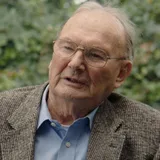
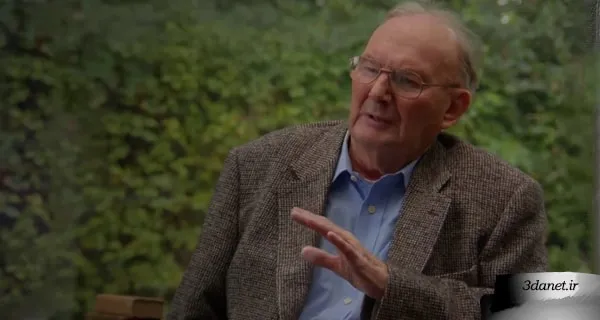
John Hick
AuthorIn discussions of religion, faith has almost two different meanings. As a state of belief in and trust of God, faith can be compared to a person's trust in a friend. As a state or act of perception by which a person becomes aware of God or knows Him, faith is comparable to our sensory perceptions of our material environment or to our awareness of the existence of other people. This article will examine the concept of faith with that same non-certain knowledge that emerged in Western thought.
Faith in Classical/Old Catholic and Protestant Thought
Thomas Aquinas is a preeminent thinker in the discussion of faith in the Roman Catholic school. He wrote about the nature of faith in his Summa Theologiae. Thomas's main positions can be summarized as follows:
(1) Faith is belief in revealed truths. But ultimately the object of faith is God Himself, whose simplicity human reason knows only through reasoning and with [logical] propositions. These revealed truths are dogmatically expressed in the Christian faith. Therefore, to be a believer means to believe in the articles of faith, which are summarized in the creedal statements of the Church.
(2) The status of faith, with regard to its degree of certainty, is lower than science, between science and opinion. For although the external cause of faith—that is, divine truth—is in itself more certain than any product of human reason, the clarity of this matter in faith-knowledge—due to its obscurity—is not as great as that of rational science. On the other hand, faith is superior to opinion. For opinion, as long as it exists, is based on doubt and on the risk that the opposing opinion might be correct, [whereas] faith is certain and free from all such conjectures.
(3) On the other hand, the subjects of religion and science and [the ways of] proving them are different: that is, the subject of science, unlike the subject of religion, is visible. Therefore, faith cannot be related to the subjects of rational science, because science is other than religion. Nevertheless, some truths may be objects of faith for one person and science for another. In particular, certain preliminary conditions for religion—such as the existence, unity, and immateriality of God—can be proven by philosophy, and these are revealed as subjects of religion only for those individuals who cannot follow abstract reason. Subjects that are specific to faith are entirely beyond reason—that is, these subjects are about something that human reason, despite its skill, cannot access. According to Thomas, the relationship between faith and reason is that they know different kinds of truths, meaning the truths of religion are superior to reason. However, it is necessary to qualify this statement by adding that there is an area where faith and reason overlap. For it is assumed that the fundamental subjects/issues pertaining to theology—that is, the subjects of natural theology—are both demonstrable and revealed by God.
(4) Faith is "an act of the intellect assenting to the divine truth by the command of the will, which is moved by the grace of God." That is, in faith, the act of the will compels the intellect to accept, an intellect that, by itself, desires to incline only to one side. Whereas in science, the subject itself, whether known directly or through reasoning, motivates the intellect to accept. Nevertheless, faith does not express an unmotivated or arbitrary decision; [rather,] under the influence of divine grace, it is a response to certain external works, especially miracles. Thus, the rationality of faith is partly known and at the same time partly obscure, and this does not affect its rationality in terms of reward and punishment.
The Catholic School in the Modern Era
The principle of faith in this school is fundamentally Thomistic, although it took on a thoroughly defensive posture toward the dogmas of the medieval period. The First Vatican Council (1870) defined faith as “a supernatural act, guided by divine grace, by which we accept God’s revelation as truth, not because reason perceives the intrinsic truth of these revelations, but on the basis of trust in God, who can neither deceive nor be deceived” (Dogmatic Constitution on the Catholic Faith, Chapter III). Since faith entails both knowledge of God’s existence and knowledge that divine revelation consists of the propositions/subjects in question, such a definition of faith—specific to faith as belief in various truths based on the authority of God—raises a question: how can this prior knowledge be obtained? The principle of the preambles of faith answers this question. According to these preambles, which philosophical proofs establish, we must accept the existence of God, the authenticity of biblical revelation, and the authority of the Catholic Church as the divinely appointed guardian of revelation. Various sensible signs, such as miracles, the truths of divine revelation/the Word, lives consecrated to God’s service, and the origin and steadfastness of the Church, provide grounds for trusting the latter two categories of the preambles of faith. The believer’s grasp of the value of this evidence is not an exercise of faith but of reason: “that is, the use of reason precedes faith and must lead us to it” (Denzinger, cf. the treatise, pp. 1626–1651). Thus the entire structure of faith rests, in principle, on various kinds of historical evidence concerning miracles and other manifestations of divine action, which do not themselves create the conditions for faith, but rather God’s absolute knowledge has inspired these preambles. Although Catholic apologists reject this, it seems directly connected to John Locke’s view in his Essay Concerning Human Understanding: “Though faith be founded on the testimony of God (who cannot lie) revealing any proposition to us, yet we cannot have an assurance of the truth of its being a divine revelation greater than our own knowledge (gained by reason); since the whole strength of the certainty depends upon our knowledge that God revealed it.”
It should be noted that in some very recent Catholic discussions, such as Eugène Joly’s article “Faith” in the Twentieth Century Encyclopedia of Catholicism (Paris, 1956), there is a tendency to shift the meaning of faith toward a less rationalistic concept, more suited to the sense of an encounter with God attained through religious experience.
The Protestant School and Doctrines
For Martin Luther (1483–1546), the influential and towering figure of the Reformation, faith was fundamentally not belief in the doctrines of the Church but a wholehearted trust in divine grace and confidence in the love revealed in Jesus Christ. Hence, Luther’s concern was with faith as a state of right trust, not a faith that implicitly included all the essential beliefs of Christianity. He emphasized, however, faith primarily as complete trust in God’s absolute goodness. He did not address the question of God’s existence from the standpoint of a priori, rational knowledge. In this he concurred with the biblical writers, who felt the reality and existence of God so vividly that their writings took God’s existence for granted. In the Bible, as in Luther’s view, faith is not belief in the existence of God and the Trinity, but a state of trust and self-surrender to God. The distinction Luther draws is that faith is not belief but belief in.
John Calvin (1509–1564), the first and greatest systematizer of Reformed theology, defines faith in his Institutes of the Christian Religion as a firm and unwavering awareness of God’s goodness toward us, and he accorded greater priority to the cognitive aspect of Christian faith. This faith rests on trust in the salvation fully accomplished in Christ, which is both revealed to our minds and confirmed in our souls by the Holy Spirit. “Faith is the response to Scripture as the revealed Word of God.” Calvin says, “There is a perpetual relationship between faith and the Word of God.” Thus, in Reformed theology, acceptance of the authority of Scripture takes the place of the Thomistic preambles of faith.
This conception of faith raises a philosophical question similar to the one posed by the Roman Catholic view: What is the nature of our knowledge that God exists and asks us to trust Him? And how do we know that God's writings, which He acknowledges as revealed, are divinely inspired?
The contributions of the two Protestants below in answering this question are to some extent self-defining. In the early nineteenth century, Jakob Friedrich Fries, influenced by Friedrich Heinrich Jacobi of the previous century, defined faith as insight in the sense of an inconceivable sense, an inner sense, or a heartfelt conviction of the reality of the supernatural existent. Friedrich Schleiermacher also considered faith a type of feeling, namely the feeling of absolute trust in a higher reality. Søren Kierkegaard, the father of modern existentialism, in a completely different way, emphasized that the religious sphere, whose only entry point is the leap of faith, is not objectively certain, and stressed that faith involves the immense risk of "being in a chasm" covered by water over seventy thousand meters deep.
Modern Theories of Faith
The Thomistic doctrine on various subjects includes most of the components that characterize later theories of faith. Thomistic analyses present faith as (a) a form of intellectual belief, (b) but based on evidence weaker than that of scientific knowledge, and (c) requiring an act of will.
Voluntarist Theories
Almost all subsequent epistemological discussions of faith accept that faith is a state of awareness oriented toward religious subjects. The rationalist definition of faith (to offer a formulation) as "a very firm belief that is either not supported by evidence or not sufficiently supported by it" is a dominant definition in modern discussions (C. J. Ducasse, A Philosophical Scrutiny of Religion, New York, p. 74). Most philosophers of religion, in addition to the number of philosophers who reject religious faith, employ some such definitions.
By hypothesis, from the believer's standpoint, how should this evidential gap be filled? It is here that the voluntarist view, first emphasized by Thomas, reappears.
Pascal. Blaise Pascal (1623–1662), in the famous wager passage in his book Pensées (no. 233), while accepting that the existence of God cannot be known through rational reasons, recommends a purely volitional path regarding religious faith. We must decide to believe or not to believe; and considering this decision as a wager, the decision to believe is prudent. In this case, if God exists, the person's gain will be eternal life and happiness, and if not, they will lose nothing; whereas if a person chooses not to believe and God does not exist, they will gain nothing, but if God exists, they will lose the afterlife.
William James. The faith that Pascal alluded to showed itself fully in William James's famous work "The Will to Believe" (1895). William James holds that under certain conditions, truth can be found only by an act of will, prior to any sufficient reasoning, as if it exists. In these conditions, faith in a truth brings that truth into existence. For example, in the realm of personal relations, faith in a person's good intentions and honesty can bring about these qualities on other occasions when they will it. Such an anticipatory faith is justified based on an examination of its outcome, not on prior reasoning.
James then examines religious faith. Here we are faced with something that, for most people, is a vital, urgent, and—as James emphasizes—forced action. For saying "no" to a religious claim is in effect saying "yes" to its negation, and this is the loss of the benefit that would arise from believing in religious teachings, should they be true, and is just as certain as if one lost it in another situation. We therefore have the right to choose for ourselves between the risk of error in accepting a faith that might turn out to be false, and the risk of losing the greatest good by not accepting a faith that might turn out to be true.
Moreover, James adds that the Judeo-Christian religious hypothesis refers in particular to a personal God, and also says that in our relations with the cosmic God, just as in our relations with our fellow human beings, if we are to establish a satisfactory relationship, it is essential that we risk faith. Responding as one person responds to another requires that we show complete trust [in that person] and be willing to set aside the benefit of doubt “and consequently of prior reason and investigation.” It is possible that God will or would reveal Himself only to one who shows such an initial faith and risks trusting in something beyond what scientific or philosophical reason has proven. In other words, in order to attain the religious knowledge upon which our personal benefit depends, it may be necessary to surrender the reins of our “passional” desire entirely to the will to believe. Thus, James concludes that we cannot be rationally obligated to adopt a method that prevents us from attaining this benefit: for an intellectual rule that absolutely forbids me from acquiescing in certain kinds of truth, should they in fact exist, is an irrational rule.
James’s argument has been criticized from several standpoints, the main criticisms being:
(1) His central claim is that there is no basis of reason or proof that can cause the acceptance or rejection of the “religious hypothesis.” There is nothing to make the existence or non-existence of God overwhelmingly probable, and in such a situation, James says, we have the right to follow our inclinations. But most people, both theists and atheists, believe that there are various kinds of strong evidence or reasons in support of (or against) the existence of God, and they also claim that these should be examined, not one’s personal inclinations. Moreover, which of our desired conclusions has ever been accepted on the basis of mere satisfaction, warranted by proof?
(2) This “precursive faith” that helps to create something, “though a real phenomenon” on the basis of which precursive faith is believed, is not suitable for faith in the existence of God or for faith in the reality of eternal values; because if these exist, they exist independently of whether human beings believe in them or not. James says that in social situations, if we wish to trust someone, before we offer a reason to prove their worthiness of this trust, it can help to make them worthy of trust, but it does not cause their existence. Here too, faith in the existence of the holy creator of the worlds cannot cause the existence of such a being.
(3) James’s reason should not be applied only to actual living options. For a “living option” is a psychological category that has no necessary connection with the truth or falsity of hypotheses. We must consider every forced and momentous option equally. But we cannot act on all of them, because they demand different satisfactions. So we must act only on the basis of what we most wish to be true. In other words, the “tenacity of faith” based on reason has revealed an invitation to wishful thinking.
(4) From a religious perspective, the comparison between the kind of faith James recommends and the faith previously held by the religious believer is not a valid one. James assumes there is no basis for faith and, in this state, recommends a cautious risk. But the religious believer—as we encounter them, for example, in the texts of the Bible—believes that they are aware of God’s action toward them on the basis of the events of the world around them and through this means. So that they are at all times in contact with God, and God with them. Their concern is to draw others to this immediate awareness of theirs of God, not to mislead them into accepting James’s risk.
F. R. Tennant (1866–1956) has provided the most recent voluntarist theory in support of theistic faith. Faith in general, in Tennant's terms, is the volitional component in the acquisition of knowledge. In every advance from sensory data to the understanding of an ordered world, or from the formulation of a scientific hypothesis to its objective examination, as we see in every successful voyage of discovery or in the invention of a new type of vehicle, in addition to the work of theorizing or insight, the persistent effort of the will to bring the action fully to completion is also necessary. In both of these domains, religious consciousness shares in the [presentation of the] general scheme, along with knowledge of the sciences and of individual life. First, a hypothesis comes into being: that is, scientific hypotheses based on quantitative laws satisfy the desire to explain the structure and order of the world, whereas religious and moral hypotheses satisfy the desire for teleological explanation. Second, from the venture in faith, there is a benefit for the will that can ultimately equal the proven utility of science. The risk-taking faith in non-religious concepts in natural inclination was always accompanied by the risk-taking faith in religious prophets and messengers. Hence, faith is the inevitable volitional component in the process of acquiring knowledge and plays an essentially similar role in both religion and religious life.
But the types of inquiry possible in science and religion are different, although Tennant falters in emphasizing their similarity and dissimilarity. Scientific inquiry means examining the predictions resulting from a hypothesis, which are verified based on the observations of the investigator. Religious inquiry, on the other hand, concerns the beneficial effects of faith in the life of the believer—that is, it strengthens him as a moral agent and in attaining a venturesome life. Therefore, religious inquiry leads only to certitude in the mind, whereas scientific inquiry results in certainty in the object, or at least a greater probability in the object." Nevertheless, Tennant says, an inquiry such as the alleged religious inquiry, because of its connection to faith, satisfies most people.
It is noteworthy that the essential features of the classical Thomistic analyses of faith reappear, in a completely different expression, in Tennant's theory: (1) Faith, as the acceptance of a religious hypothesis, is rational. (2) Faith possesses the same level of consciousness as scientific knowledge but is based on less evidence. (3) Faith deals not with the material world itself, which is the object of science, but with its teleological aspect. (4) Faith is distinguished from ordinary trust and conventional knowledge by its underlying volitional component. Faith in Tennant's philosophy, in support of the existence of God, appeals to the universal teleological argument. Whereas the act of will, in Thomism, appeals to various types of external evidence such as miracles and forms of fulfilled revelation for rational justification.
This voluntarist and rationalist tradition, which has thoroughly occupied the stage since the time of Thomas, has been criticized on the following grounds: (1) Actual religious faith, from the perspective of a believer, is comparable to a scientific hypothesis only by a very superficial examination. The immediate awareness of God, along with trust in that awareness itself, is not dependent on philosophical reasoning. (2) Faith (by hypothesis) as an immediate awareness of God is not fundamentally a state of subjective belief; rather, it is a form of religious experience, and religious beliefs naturally arise from that experience, without being primarily and essentially the objects or subjects of faith.
Faith and Freedom
From early times a very important relationship has been posited between faith and what may be called the capacity of the human mind's awareness in its relation to God. The first writer to attend to this relationship was the second-century Christian writer Irenaeus. He said, “God not only in works but also in faith preserves the human will from sin and keeps it under his control” (Against Heresies, 5.37.6). The same point appeared in the theories of Augustine and Thomas in the form that the act of faith is to some extent removed from merit for punishment and reward. Pascal said that the condescension of God himself in the body of Christ presents a state of mediated awareness, such that no one can be compelled to seek God in Jesus Christ, but all who wish to find God there can do so: “God willed to appear and reveal himself to those who seek him with all their soul, and to be hidden from those who flee from him with all their soul. God thus regulates the knowledge of himself by providing clear signs only for those who seek him” (Pensées, no. 430). Søren Kierkegaard also speaks of the incognito God in the body of Christ. The twentieth-century Protestant theologian Emil Brunner and many other writers have pursued the same point.
The fundamental meaning [implicit] behind these emphases, in whatever form in the [works of] modern writers, is that God, who created the human being as a person, always acts in a way that preserves human action and freedom in relation to them. For this reason, God did not reveal himself to humanity in his manifest glory, because the unlimited moral autonomy of the human being would be destroyed by an immediate and direct awareness of infinite perfection. Therefore, the divine presence throughout the events and circumstances of the world, which God created as a relatively free space for mutual interaction with humanity, is always mediated. The individual autonomy of the human being is affirmed by the fact that one can become aware of God's agency only through the voluntary act of faith. Hence, human beings are not only free to obey or disobey God, but from the beginning and a priori they were free to be aware of God or to refuse awareness of him. The human mind has a natural tendency to interpret its religious experience, but this tendency is in practice merely an inclination that can be resisted and suppressed. Thus, human freedom in relation to God is conscious. Faith and will are necessary correlates, and faith is related to awareness, just as free will is related to natural inclination.
Faith as Interpretation
The new theory that treats faith in religious experience as an interpretive component is precisely linked to the emphasis on the capacity of human consciousness—a view that, in distinction from any non-religious experience of a set of facts, gives faith the title of religious experience. Here, "interpretation" does not mean its rational sense or the exposition of a theory, but something very similar to the interpretive set that occurs on the basis of sensory perception. Thus, from an epistemological standpoint, faith resembles the event of "seeing-as," to which Ludwig Wittgenstein drew philosophers' attention through his philosophical investigations (2, 11). We may sometimes see an ambiguous picture as disordered, meaningless lines, and sometimes as the outline of a human face. This example shows interpretation as something entirely perceptible. But the concept of "seeing-as" can also be extended to mean "experiencing-as," and this refers to a state where a situation understood through our sensory means is experienced in its totality as an object possessing a particular meaning. That is, an appropriate natural reaction is deemed to have occurred on our part. Instances of religious experience can be cited: when the prophets of the Old Testament felt the events of their contemporary Jewish history as the presence or direct act of God and as a divine command to them, they were experiencing a state of religious "experiencing-as." Furthermore, the prophets whose testimony constitutes the message of the New Testament saw Jesus as the Messiah, without being compelled to do so. Indeed, it is always true of the form of religious "feeling" that the facts in question are themselves ambiguous and can pertain to a being that is responded to either religiously or naturally. To be more precise, these two kinds of interpretation are not equivalent alternatives but different degrees of a single meaning found in relation to a set of facts. The religious conception of events includes their natural meaning and surpasses it. The events that the prophets observed as the act of God can also be conceived as occurrences having proximate human or natural causes, and the person of Christ, whom Christian faith perceives as God, is at the same time embodied in the New Testament as a being fundamentally human. From the theologian's position, this systematic ambiguity, which is a precondition of faith, upholds the independence and freedom of the human being as a finite personal entity in relation to the infinite God.
.
Source: Published in issue 145 of the Scientific-Specialized Quarterly of Hekmat va Marefat Information
.



Discussion0 comments
No comments yet; let yours be the first voice.