Art
The Nexus of Art and Islamic Spirituality by Seyyed Hossein Nasr
“Islamic art is a profound human need for the manifestation of God” and crystallises the inner truths of revelation in the world of forms; Seyyed Hossein Nasr sees this art as guiding humanity toward the inner sanctuary of divine revelation.
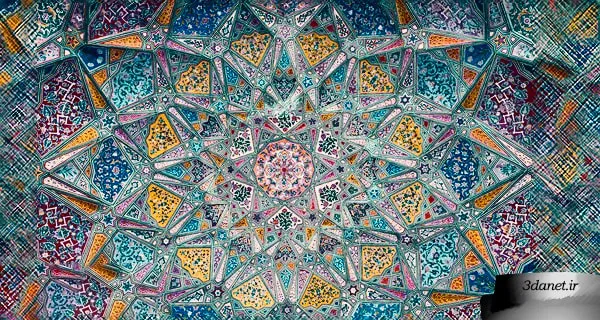
If we look with the eye of insight upon the diverse manifestations of Islamic art across the vast expanse of time and space, the question that presents itself is where the source of the unifying principles of this art should be sought. This article by Professor Nasr is translated by Rahim Ghasemian.
“Traditionalism,” “Perennial Philosophy,” and “Illuminationist Philosophy” are terms that, in the minds of those interested in thought in the Iranian world, evoke the name of “Seyyed Hossein Nasr.” But fewer people in the public sphere, upon hearing the term “Islamic art,” can visualize Dr. Nasr’s thought in their minds. This is despite the fact that Nasr has conducted serious examinations and research into Islamic art, or what Traditionalists call “sacred art,” of which there is less trace or mention in the Persian language. Consider this statement carefully: “Islam introduced calligraphy as an art. The first person to originate script, according to both Shiite and Sunni testimony, was Ali ibn Abi Talib. Calligraphy is the Muslim soul’s response to transformations rooted in the Quran and its spirituality.” This statement by Seyyed Hossein Nasr, made during a lecture at the University of Toronto, demonstrates his attention to the Islamic heritage. In the same lecture, referring to the status of art among Christians and Muslims, he notes that “after the advent of Christ, it took 400 or 500 years for Christianity to manifest in art. But in Islam, this happened very quickly. Islamic art is a profound human need for the manifestation of God.” Nasr holds that Islamic art crystallizes the inner truths of revelation in the world of forms, and because it originates from the esoteric dimension of Islam, it guides humanity to the inner sanctuary of divine revelation.
Discussion0 comments
No comments yet; let yours be the first voice.