Sociology
Report on the Panel “Women’s Sex Work: Confronting the Issue of Prostitution in Iran”
Prostitution in Iran is not a career choice but a consequence of macroeconomic and social policies: a report from a meeting with Saeed Madani and Hossein Asadbeigi on the victimhood of vulnerable women and the services of the Welfare Organization's social emergency unit.

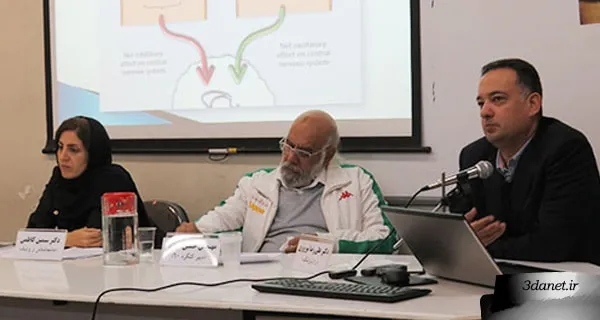
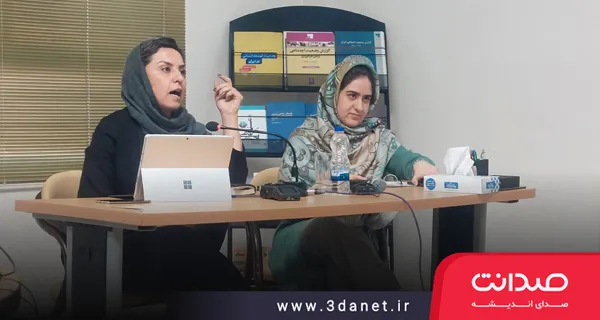
On Monday, 14 November 2016, the topic “Women’s Sex Work: Confronting the Issue of Prostitution in Iran” was explored at a meeting of the scientific-specialist group on Social Issues and Pathologies, with two speakers, Dr. Hossein Asadbeigi (clinical psychologist and head of the State Welfare Organization’s Social Emergency Center, or Social Emergency) and Payam Roshanfekr (researcher and PhD candidate in Social Determinants of Health), and a Skype video with Dr. Saeed Madani (sociologist and author).
First, a Skype video featuring a conversation between Dr. Ahmad Bokharaei (head of the Social Issues and Pathologies group) and Dr. Saeed Madani, author of the book Prostitution in Iran (published 2016), was screened for 40 minutes (links to the audio and video files of this Skype session, as well as the link to the audio file of the speakers after the video screening, are provided at the end of this report).
In the conversation with Dr. Saeed Madani, Dr. Ahmad Bokharaei introduced the discussion with this preamble, stating: According to the Welfare Organization, the age of social pathologies has dropped to 16, and the age of affected girls has fallen below this. According to experts at a conference examining social pathologies in Tehran, there are 8,000 vice rings involving affected women. According to statistics from the Welfare Organization’s rehabilitation center, 12 percent of affected street women are married, and their average age is 25. Also, according to research from the Beheshti University Research Center, 40 percent of male clients are married.
After that, Saeed Madani (sociologist and author), who was present at the session via a recorded Skype call, remarked regarding the term sex worker: Every word carries a specific semantic weight. From the standpoint of a social observer, I oppose the use of any term that carries a negative connotation toward affected women, because these women, more than deserving reproach, are victims of a society that creates the conditions forcing them into illicit acts.
Saeed Madani added: The term sex worker is mostly used in societies where these acts are considered a profession, whereas in our country this situation does not exist, and most importantly, any move to formalize this comprehensive violence against women is, in a way, an endorsement of the status quo, and I am completely opposed to this stance.
He pointed out: Studies on a global scale have shown that over 90 percent of affected women in prostitution, when asked if they feel satisfied with their actions, emphasize that not only are they not satisfied with their work, but they also hate it. This hatred indicates there is no satisfaction in this relationship. Studies show that the basis and motivation for this action is securing an income.
Madani stressed: Therefore, coercion is an inseparable part of every affected woman’s life, and it is for this reason that I believe they are victims; victims of circumstances and societies that have pushed them toward this coercion.
In analyzing this social pathology in Iran, the sociologist also said: I must emphasize that the social situation is so unfavorable that few among social observers and official authorities can be found who deny the severity of this situation. Fortunately, it is now accepted in society that one cannot solve a problem through denial. Although we have reached this conclusion very late.
Madani added: Iran’s social problems have structural roots. In fact, the role of macroeconomic and social factors in their emergence is very significant. For this reason, the cure for an issue like addiction can rarely be found within addiction itself, because incorrect macroeconomic and social policies and a lack of attention to social issues have led us to a point where we are facing a series of successive crises in this domain today.
This social researcher emphasized: Apart from the 8 years, from 84 to 92 [2005–2013], when social issues were essentially silenced, in the recent period as well, the government’s prevailing approach has not been a conciliatory one toward social issues.In fact, the economists who hold the helm of the government’s economic policies follow classical perspectives, and just as they have relegated the economy and the resolution of issues such as employment, poverty, and inequality to the invisible hand of the market, they have also entrusted social issues to these same invisible hands. Whereas a low-quality growth resulting from investment in the oil, petrochemical, and to some extent automobile sectors cannot solve social or even economic problems.
Dr. Madani stated: The dominance of economic perspectives over all development programs presents a far worse situation for us; for this reason, in my opinion, the existing set of trends, despite the concerns that are declared, despite the tears that are shed, despite the worries that are expressed, etc., cannot solve the problem of social harms in Iran unless the government pays specific attention to social policies.
Regarding social policies, Madani also said: By social policies, I mean policies that accord social affairs the same status and level of attention as economic affairs.
Concerning the existence of corruption rings, this sociologist stated: Vulnerable women are considered part of the hidden population of society. Therefore, assessing and estimating their numbers is very difficult, although methods exist for doing so. In my book, using these methods, I tried to make estimates based on the number of prisoners and the number of detainees. But in any case, we do not need numbers and figures, because the intellectual and value system of Iranian society shows that even the existence of a single vulnerable woman should be a subject of protest and criticism.
This researcher added with regret: This is while not only has no intervention been made to control and improve this situation, but on the contrary, society has been exposed to adverse economic shocks and tensions, which have increased poverty and inequality.
He also commented on the term sex worker, stating: Perhaps using the term sex worker is somewhat controversial. Perhaps those who use this term are seeking to destigmatize it. This name is used in countries where it has been accepted as a profession.
After this Skype video was played, the first speaker was Dr. Hossein Asadbeygi, a clinical psychologist and head of the Social Emergency Center (Social Emergency) of the State Welfare Organization, who began by referring to the services of the Social Emergency, saying: We have Social Emergency centers in 192 counties. The history of its establishment dates back to 1367 [1988/1989], when these women were housed in centers in Tehran and Mashhad. In 1377 [1998/1999], the Crisis Intervention Office and the Health House were launched to reduce divorce, and in the second half of 1378 [1999/2000], this center began operating in 9 provinces. In 1381 [2002/2003], we established a 7-digit telephone line for Tehran. In 1383 [2004/2005], we also created the number 123 for the Welfare Organization’s crisis line. In 1387 [2008/2009], 100 vehicles were allocated to these centers, and its name was changed to the Social Emergency. Currently, we are seeking to establish centers for remote counties as well.
The head of the country’s Social Emergency also spoke about the features of the Social Emergency, saying: Being round-the-clock and free of charge are among its features. Priority is given to women and children, and being specialized, timely, and accessible is our motto. Our target groups are broad: domestic violence, spousal abuse, socially vulnerable women, street and working children, and all individuals in crisis situations.In the area of vulnerable women, we absorb them and place them under control in health centers, and we try to return those who are not at home to their families.
The second speaker was Payam Roshanfekr, a PhD research student at the Social Determinants of Health Research Center, University of Social Welfare and Rehabilitation Sciences. He began by giving a brief history of his research activities on this topic over a decade, adding that it started in 2005 as a methodology collaborator on Dr. Saeed Madani's project and culminates in a current project, on which he is a co-principal investigator with Dr. Vameghi, being carried out in 21 provinces across the country. He then referred to one of his recent studies in Tehran's Darvazeh Ghar neighborhood, conducted with a community-based and participatory approach with women sex workers alongside a team of colleagues at the university's research center, which began in 2013 and continued until the summer of this year.
Roshanfekr enumerated four main approaches to confronting the issue: the prohibitionist approach (Prohibition), the control approach (control), the permissive or tolerant approach (tolerate), and the regulatory approach (regulation), which, at the intersection of various perspectives such as criminalization (criminalization), abolitionism (abolitionism), and legalization (legalization), take on different forms. Showing a map of the status of women's sex work globally, the speaker noted that only in limited regions of the world is this work both legal and regulated.
Continuing the discussion, the speaker briefly reviewed the problematics of various disciplines regarding the issue of women's sex work, stating: In different disciplines, researchers have addressed the topic from diverse perspectives. For example, in development studies, discussions arise from the perspective of those left behind by development, the costs of development, or human-centered development versus growth-oriented development. In economics, too, there are various discussions, including on market failure (market failure); the economic logic of the sex trade and industry, the overlapping markets of marriage and sex, and supportive marriage, and similar issues surrounding this topic. The concern of health sciences is mainly controlling the transmission of AIDS, abortion, sexually transmitted diseases, and the like. In law and criminology, issues such as criminalizing the demand for prostitution, combating organized crime, and similar matters have been discussed. Family studies have addressed the topic from the angle of changes or crises in the nuclear family, the consequences of divorce, the rising age of marriage, alternative lifestyles, etc. Psychologists have discussed the issue in relation to women's mental disorders; the psychological consequences of sex work; the experience of sexual violence in childhood, weak life skills, and similar cases, and the disciplines of social policy deal with social support; the social services needed by this group, and such matters.
This brief review by Roshanfekr served as an introduction to the discussion of sociologists' confrontation with the topic. In this regard, while pointing to the existing weakness in the sociological understanding of this phenomenon, which stems from the limitations researchers in this field have faced over the past decades and which has been considered part of the research black lists (research black lists), he stated that this has led to limitations for interventions, although slight changes in policymakers' views are observable, which may lead to improved understanding and actions in this field.
In another part of his speech, he referred to Michael Burawoy's discussion on types of sociological activities and, citing the article "Crisis in the Academy," used his categorization of the four types of sociology as the basis for his discussion. Accordingly, he divided sociological perspectives on the topic into an analytical classification of four types: professional, policy, critical, and public sociology.
In explaining these approaches to the subject, and noting that a combination of them may be observed in the work of sociologists, the speaker described the work of professional sociologists as possessing a specialized language and an inward-looking dialogue, mostly influenced by a positivist outlook and the problematization of women’s sex work, with concerns distanced from the target group—although reference was also made to the classical functionalist perspective, which might consider this phenomenon to have certain benefits. The speaker considered the concern of policy-oriented sociologists, crystallized mainly in fields such as welfare and social services, to be generally afflicted by the flaw of taking shape in response to issues commissioned by policymakers for intervention in the subject. Although a reformist role can be envisioned here as well, the distance between this outlook and the world of the target group is even greater than that of the first group.
The speaker gave examples of two major tendencies within the critical perspective and added: one analyzes the issue in relation to the critique of the capitalist system, the commodification of sexual relations, and matters such as the sex trade, alienation, and forms of modern slavery; the other is pursued in the critique of patriarchy within feminist viewpoints across three different currents: proponents (liberal or socialist feminists, or even prostitute feminists), opponents, and a third current. However, the speaker’s focus was on the people-centered sociological perspective, which he explained with a quotation from Paulo Freire, who believed:
The truth is that the oppressed are not on the margins, nor are they people living outside society. They have always been inside—inside the structure which made them beings for others. The solution is not to integrate them into the structure of oppression, but to transform that structure so that they can become beings for themselves...
Freire, P. (1970). Pedagogy of the Oppressed. New York, Continuum
The speaker continued: With this perspective, those subordinate and oppressed women engaged in sex work who, in the absence of effective social institutions, have inevitably resorted to a kind of solution, are themselves considered part of those who explain the issue and also part of the solution. The speaker considered sociological work with this approach to be inevitably reliant on using a language different from specialized language and connected to the target group. A task which, according to him, if a portion of the audience at this session were from this group itself, they should be able to relate to. The methodology of such work is predominantly participatory and qualitative, and examples of it can be found in action research, of which the speaker cited his own referenced research in the Darvazeh Ghar neighborhood as influenced by this perspective. An experience in which a group of women sex workers came together and, with the help of facilitators, parts of civil society organizations, and a group of local women volunteers, mobilized to prevent high-risk sexual behaviors in their community and achieved astonishing initiatives over two and a half years, whose effectiveness has been confirmed by participatory and scientific evaluations of the research team.
..
Links related to the video and audio files of this session
۱- Link to the Skype "video" file (visual) of Dr. Ahmad Bokharaei with Dr. Saeed Madani on prostitution (Aban 95):
۲- Link to the Skype "audio" file of Dr. Ahmad Bokharaei with Dr. Saeed Madani on prostitution (Aban 95):
۳- Link to the "audio" file of the two speakers, Dr. Hossein Asadbeigi and Payam Roshanfekr, at the "Women’s Sex Work" session (Aban 95)
..
Report on the Panel “Women’s Sex Work: Confronting the Issue of Prostitution in Iran”
Source: Iranian Sociological Association website
.
.

Discussion2 comments
فقط جهت اطلاع: بجای تن فروش، معادل دیگری هم پیشنهاد شده: کام فروش (البته فارغ از معانی و تعاریف ضمنی ای که این اسم-تعبیر حامل آن هاست)
تشکر فراوان از صدانت که باز هم ما را در جریان این نوع بحث های ارزشمند بیرون از حوزه ی معمول فلسفه، فلسفه اخلاق، و دین شناسی و امثالهم گذاشتند. بحث مهمی بود. برای اولین بار بود که نام نامی پاءولو فریره را در جمعی آکادمیک -حرفه ای می شنیدم که در موارد دیگر معمولا کاری به او ندارند، و اسم اش و رسم اش و همفکرانش را در محاق می گذارند.(همفکرانی چون مجید رهنما، ایوان ایلیچ، ولفگانگ زاکس... در: goo.gl/SQDKOw و در «نگاهی نو به مفاهیم توسعه» ، نشر مرکز) درود به معلم و بویژه محقق خوب و زحمتکش برای کوته دستان و ستمدیدگان و بخصوص برای ما، محققی که در زندگی و کارش «همخوانی» و یکپارچگی لبریز است: سعید مدنی. درود بر آقای روشنفکر که «پروژه بازی» و «فولدر سازی برای کتابخانه ها» را رها کردند، کار را با راه حل عینی ترکیب کردند و نشانه ای شدند راهنما برای پژوهش و عمل دلسوزانه (و نه پرستیژی و نه فرمایشی و دستوری)ی اجتماعی در آینده.(برای نمونه ی مشابه دیگر: اورول : جاده ای به اسکله ویگان، آس و پاس در پاریس و لندن (نشر ماهی): goo.gl/3k4aEx ) و با آرزوی توفیق خدمت موثر و با معنی برای نیازمندان، برای جناب آقای اسدبیگی که در پست غبطه برانگیزی بخت خدمت یافته اند. با احترام کمترین