Philosophy
Sartre and Religion: Logos Magazine Interviews Hedayat Alavitabar
Sartre regarded his atheism as psychological in nature, viewing God as a contradictory concept antithetical to human freedom. By taking the death of God as his starting point, he arrived at an existentialist humanism in which humanity replaces God as the creator of meaning and values.

Sartre and Religion
Interview with "Logos" Magazine (2018) with an Addition
Interviewer: Mohammad Mehdi Fallah
Sartre is a philosopher who has explicitly rejected the existence of God. What is the origin of his atheism?
Sartre is a philosopher, but the origin of his atheism is not philosophical. In principle, he believes that faith and atheism do not have philosophical origins. A person first becomes a believer or an atheist for psychological or sociological reasons, and then, if they are a person of thought and reflection, they find theoretical and philosophical justifications for their faith or atheism. He himself, in adolescence, when he was eleven or twelve years old, "intuited" the non-existence of God, in his own words. He did not have philosophical reasons for his atheism; rather, issues within his family and living environment led to this intuition. Of course, later, when he engaged with philosophy, he put forward arguments for rejecting the existence of God.
What concept of God does Sartre have in mind when he rejects it, and what definition does he offer?
Sartre does not offer a new concept of God; rather, he accepts the concept of God in the Western theological tradition, that is, the Judeo-Christian concept. This is the concept of God that was official in the society where Sartre lived and with which he grew up. Of course, in his philosophy, he casts this concept in a philosophical term and defines God as a being-in-itself-for-itself. The in-itself is a being lacking consciousness, that is, all beings in the universe except humans, and the for-itself is a conscious and free being, that is, the human. Therefore, God is a being who possesses all perfections because, like a being-in-itself, He is self-subsistent, independent, pure actuality, eternal, immutable, and necessitated, and like a being-for-itself, He is conscious and free.
Why does he not accept this concept of God, and what, in fact, is his argument for rejecting God?
In none of his works does Sartre dedicate an independent chapter to rejecting the existence of God. The discussion of God in his works is always secondary to and on the margins of the discussion of the human being. Therefore, in his philosophy, we are not faced with a systematic exposition of the reasons for rejecting the existence of God. Nevertheless, arguments for rejecting the existence of God can be found in his works, two of which I will mention here:
1- The contradictory nature of the concept of God: As I said, Sartre defines God as a being-in-itself-for-itself, but he believes that this concept is contradictory and, consequently, impossible. Because no being can possess the attributes of a being-in-itself and a being-for-itself simultaneously. The synthesis of these attributes in one being ultimately means the synthesis of being and nothingness, which is impossible. Thus, Sartre not only does not accept the existence of God but also considers the concept of God to be contradictory.
2- The conflict between the existence of God and human freedom: Sartre's philosophy is a rebellion against any deterministic and limiting view of the human being. The goal of this philosophy is nothing but to prove human freedom, and it is for this reason that Sartre has been called the "philosopher of freedom." He does not consider human action to be the result of the activity of external forces. If we look at the human being in this way, we have, in fact, considered them an object. In Sartre's view, this freedom is incompatible with the existence of God. In this respect, he is a follower of Nietzsche, because Nietzsche also considers God to be the enemy of human freedom and goes to war against God in the name of humanity. The relationship between God and the human being is like the relationship between a despotic king and his subjects. The king commands, and the subjects have no choice but to obey. A God-worshipping person does not make decisions for their own life but strives to fulfill God's expectations and please Him. The human being, before God, is a mere object and, like other objects, lacks any freedom. In Sartre's words, God is a great eye that looks upon everything. He is an infinite and absolute subject who turns humans into His objects. Such a human being becomes alienated from their true self, which is subjectivity. In his discussion of the "Other," Sartre is influenced by Hegel's theory of the master-slave relationship, and it is for this reason that he considers God's gaze, which is the "absolute Other," to be a commanding and petrifying gaze.
What is the relationship between the idea of the "death of God" in Nietzsche and what you call "Sartre's axiomatic atheism"?
We first encounter the phrase “God is dead” in Nietzsche’s works in The Gay Science (1882). Of course, Nietzsche does not mean that God once existed and now does not! The phrase became very widespread after Nietzsche, and many people, including Sartre, used it. It is recounted that on a trip to Switzerland, as he descended the airplane steps, Sartre turned to the reporters waiting for him and said without preamble: “Gentlemen, God is dead.” Regarding atheist philosophers, the question arises whether the death of God is a premise or a conclusion in their philosophy. Nietzsche and Sartre begin their philosophy with the death of God and treat it as a “postulate.” They want to draw out all the consequences of God’s absence and commit to them. Sartre explicitly states: “Existentialism is nothing else but an attempt to draw all the consequences of a coherent atheistic position.” These two philosophers derive numerous consequences from their fundamental atheism, two of which I will mention here.
1- Nietzsche and Sartre start from atheism and arrive at humanism. In the words of William Luijpen, “Nietzsche rejects God to make room for the affirmation of man as the creator of culture.” In Nietzsche’s view, when God does not exist, man strives to become God himself. Sartre also says that with the death of God, man is born. In his philosophy, there is no place for the God of religions, nor for the God of the philosophers. Yet this philosophy cannot be considered godless, because although Sartre pronounces the death sentence on God, he keeps His attributes alive, ascribes them to another being, and elevates that being to the status of divinity. The name of this new God is man. Now man lays down the laws and creates values. If God were alive, man would not be free to make himself as he wishes. Sartre calls man’s taking the place of God “existentialist humanism.”
2- The rejection of God’s existence means that the world and human life within it have no pre-given meaning, because there is no God to give it meaning. Here, in the philosophies of Nietzsche and Sartre, we encounter nihilism. Of course, Nietzsche, unlike Schopenhauer, does not recommend withdrawal from the world; rather, through saying yes to life and striving to create meaning, he arrives at an active nihilism, which we also see in Sartre’s philosophy.
Do we witness a change in Sartre’s atheistic position over the course of his life?
Throughout his life, he repeatedly emphasized his atheism in his books, articles, interviews, and lectures. For example, after the performance of his play The Devil and the Good Lord in 1951, he stated in an interview that he was certain God does not exist, and in an interview with Simone de Beauvoir in 1974, six years before his death, he reaffirmed this certainty. Sartre did not want others to think he had changed his mind on this matter. For this reason, he long refused permission to publish the play Bariona, or the Son of Thunder. He wrote this play in late 1940 while in a detention camp held by German forces, and he even acted in one of its roles. In this play, Sartre extols the divinity of Christ and displays a religious inclination. Because of this, some people thought he had changed his mind and turned to religion. Therefore, when he finally agreed to the play’s publication in 1962, he appended a note to dispel any illusion, writing: “The fact that I took the subject of my play from Christian mythology does not mean that the direction of my thought changed for even a moment during my captivity. It was simply that, with the imprisoned priests, I agreed to find a subject for that Christmas Eve that would be of interest to the majority of Christians and non-believers alike.”
Sartre’s philosophical texts on the one hand, and such statements on the other, have led many of Sartre’s interpreters to present a thoroughly atheistic reading of his philosophy. Among this group of interpreters are both Sartre’s believing critics and his non-believing supporters. For example, in his article on Sartre in the Encyclopedia of Religion, edited by Mircea Eliade, Maurice Natanson describes Sartre’s philosophy as an atheistic philosophy and his works as “religiously distasteful.” Along the same lines, Frederick Copleston states: “Unlike what we saw with Heidegger, in his [Sartre’s] case there is no ambiguity; there is no doubt about his atheism.”
Has the inclination toward an atheistic interpretation of Sartre's philosophy also had non-philosophical motivations?
Many of those who turned to Sartre's atheistic existentialism wanted to liberate themselves from the shackles of traditional religion through it. Their goal was not theoretical understanding but practical freedom. Hence, they easily overlooked the religious aspects of his philosophy and understood Sartre as they wished. On the other hand, in the second period of his intellectual life, Sartre gravitated toward Marxism. Critique of Dialectical Reason is his most important work in this period, in which he tried to reconcile existentialism and Marxism. In this period, the inclination toward an atheistic interpretation intensified because the leftists, who had now become his disciples, were enemies of religion and could not tolerate a religious interpretation of his philosophy.
Has there even been a religious interpretation of Sartre's philosophy?
Yes, although this interpretation has had its gradations. Some have gone so far as to consider him a theologian who made a valuable contribution to reforming the concept of God in the contemporary world, and have called his philosophy a "theology of hope." Others believe that his philosophy, despite its atheistic appearance, contains religious themes and elements and includes various references to religious concepts, symbols, and traditions. In Sartre's philosophy, the same subjects are raised that preoccupied the minds of saints and mystics. Sartre emphasizes the importance of the question of God and does not consider His existence and non-existence to be the same. Eliminating God from life is a significant event because, in that case, the values He established collapse. In "Existentialism Is a Humanism," Sartre, following Dostoevsky, says: "If God does not exist, everything is permitted." These show that Sartre was preoccupied with religious subjects and that religion was a problem for him.
One of those who has offered a religious interpretation of Sartre's philosophy is Maurice Cranston. He says Sartre frequently uses the word "conversion." This word has a religious root and has been used extensively by Protestant writers. Throughout his life, Sartre spoke of his numerous conversions. Nausea is the story of a man who converts to the religion of art, and Sartre speaks of his own conversion to Marxism. Turning to art as a means of salvation is tantamount to considering art a kind of religion, and undoubtedly Sartre's turning from art as a means of redemption to socialism and Marxism was like turning from one religion to another. Cranston also points to Sartre's many similarities with certain Christian writers like Pascal and his extensive use of Christian writers like Dostoevsky and Kierkegaard. He draws on one of Tillich's terms and says Sartre's God is the "God above God." This title is an attribute of the God whose existence man doubts, but this very doubt signifies an affirmation of His existence. This God is absent because man does nothing for His sake, yet He is present because He is the source of the fundamental question man asks about the meaning of his own existence. Cranston considers all of these as evidence of Sartre's religious feeling or disposition and the religious hue of his mind.
Stuart Charmé believes that if we broaden the definition of religion and do not confine ourselves to the traditional definition, we can, in a sense, consider Sartre a religious philosopher. In the general sense of religion, a thinker might say non-religious or even anti-religious things but still be religious. The mistake some thinkers have made is equating religion with its traditional concept and, as a result, presenting an atheistic interpretation of Sartre's philosophy. In Charmé's view, if we consider religiosity as having faith commitments to a specific religious tradition, Sartre was not religious, but in that he considered religious subjects an interesting realm for intellectual endeavor, he can be regarded as a religious thinker. It is true that Sartre rejects Christianity, but he still thinks within the framework of Christian categories and tradition. He uses theological language to express non-theological claims. Thus, Charmé considers Sartre an atheist with religious beliefs. Unlike Natanson, he describes Sartre as "religiously musical" because there is a religious tone in his discourse. In Charmé's view, those who consider Sartre a thoroughgoing atheist "have a deaf ear for the religious resonance of his thought."
Those who have accepted the religious interpretation believe that in Sartre’s antagonism toward the sacred there is a kind of desire for reconciliation. According to Thomas King, Sartre’s struggle against the sacred is a way of establishing a relationship with the sacred. He says that Sartre, more than any other philosopher, emphasized the intense human need for an absolute being, a need that is never fulfilled and leaves the human being forever halfway to reaching the absolute. It seems that while Sartre says God does not exist, he is striving to find Him and feels the need for Him. In an eloquent passage, he expresses his need for God as follows: “God is silent, and I cannot deny this. Everything inside me calls out for God, and I cannot forget this.”
How have those who have presented an atheistic interpretation of Sartre’s philosophy reacted to the religious interpretation?
They have certainly not accepted this interpretation and have accused its proponents of misunderstanding Sartre’s philosophy and even of bad faith. For example, Simone de Beauvoir does not tolerate any religious interpretation of Sartre’s philosophy and resists any attempt to dilute his atheism. It is for this reason that she reacted harshly to the interviews of Benny Lévy, Sartre’s secretary, and stated that she was shocked by Sartre’s remarks in these interviews. Benny Lévy, who was Jewish, conducted interviews with Sartre in the last months of his life in which Sartre appears to have shown an inclination toward certain teachings of Judaism. De Beauvoir questioned the accuracy of the statements Sartre made in these interviews and accused Benny Lévy of putting his own words into the mouth of the aging and dying Sartre.
Anthony Manser believes that a being with the attributes of God cannot have a place in Sartre’s philosophy. He rejects Cranston’s religious interpretation of Sartre’s philosophy and says that religion deals with something that is transcendent in relation to the human being and infinite in comparison with human finitude. But a being with these attributes does not exist in Sartre’s philosophy. In Manser’s view, if we stretch the word “religious” so far as to include Sartre, the word will no longer have a definite meaning.
Hazel Barnes, the translator of Being and Nothingness into English, expresses astonishment at the presentation of a religious interpretation of Sartre’s philosophy and considers it a misunderstanding of this philosophy. She does not accept the presentation of multiple definitions of religion such that any atheist individual could be considered religious according to one of those definitions. In Barnes’s view, the things Sartre said about religion fall into two categories: the first category consists of passages in which he explicitly criticizes the traditional concept of God and tries to prove its falsity. The second category consists of passages in which Sartre uses terminology common in traditional religion. In these parts, Sartre’s philosophy apparently has a religious tone and flavor, but it should be noted that he empties religious concepts of their content and places them within a human framework. Therefore, the presence of religious terminology in Sartre’s works cannot be a reason for presenting a religious interpretation of his philosophy.
It should be noted that although the religious interpretation has had its proponents, the dominant interpretation of Sartre’s philosophy has been the atheistic one. It was the predominance of this atheistic interpretation that led the Church to place all of Sartre’s works on the Index of Forbidden Books on October 30, 1948.
It was said that Sartre defines God as the synthesis of the in-itself and the for-itself. But if this synthesis is contradictory, why does the human being strive to realize it and become God?
Sartre says that human beings want to possess the characteristics of both the being-in-itself and the being-for-itself, which I explained earlier, simultaneously. In other words, human beings want to become God. Of course, becoming God is not a conscious process, and if we ask someone whether they intend to become God, they will answer negatively. This desire exists unconsciously within us and explains all our endeavors in life. For example, we have a desire for appropriation and possession, and this desire indicates the desire to become God. For Sartre, a human being is the sum of their possessions. To be is to have. In his words, "I am these things that I have." Hence, human beings strive to increase their possessions. Every human being strives to have more knowledge, power, wealth, pleasure, and so on, and certainly would not mind possessing all perfections absolutely. They would like to be omniscient, omnipotent, and so on. God is also a being who possesses all perfections absolutely. Therefore, one must conclude that every human being, in every action they perform, is moving toward becoming God. Explaining this desire is the aim of Sartre's "existential psychoanalysis."
Does the phrase "useless passion," which Sartre uses to describe the human effort to become God, also apply to other activities that humans undertake to give meaning to life?
The problem that exists in the path of human beings becoming God is that the concept of God, as mentioned earlier, is contradictory and impossible. The human effort to become God means striving to realize a contradiction. Human beings inevitably move toward becoming God, but this is a useless passion for realizing an impossible wish. Sartre likens the human condition, in pursuit of becoming God, to that of a donkey with a carrot placed on a stick before its eyes in front of a cart. The donkey moves quickly to reach the carrot and pulls the cart forward, but never reaches the carrot. The human inability to become God plunges them into despair and hopelessness. Of course, human beings can give meaning to their lives in various ways, but because they cannot become God, a kind of meaninglessness exists at the depth of all their actions, and this makes every action equally meaningless. It is for this reason that Sartre says in Being and Nothingness: "All human activities are equivalent... Getting drunk alone and leading nations are no different from each other."
In our country, when existentialism is discussed, Heidegger comes to mind first, not Sartre. Has the era of Sartre ended for us?
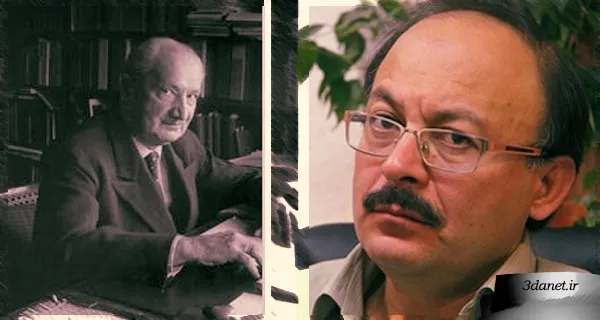
Interestingly, Heidegger did not consider himself an existentialist. In fact, the only major philosopher who accepted the title "existentialist" was Sartre. In our country, Sartre was introduced before Heidegger. Before the revolution, numerous works by or about Sartre were translated, but no works by Heidegger were translated. After the revolution, the situation reversed, and Heidegger gained more importance, and today, at least in philosophy departments, he is more prominent than Sartre. In the philosophy department of Allameh Tabataba'i University itself, the number of theses defended on Heidegger is not comparable to those on Sartre.
One of the reasons for this could be Sartre's explicit atheism. In a country governed by Islamic ideology, engaging with atheist philosophers can entail costs. The subject of my own doctoral dissertation was on Sartre, and the first time it was proposed in the philosophy department of the University of Tehran, it faced opposition from some professors and was rejected, because they believed that in this country, a student engaging with an atheist like Sartre would have no good outcome! I remember one of the professors told me: "Don't you want to have an academic job in this country in the future?" Of course, Heidegger is not a religious person either, and God is absent from his philosophy. But there is a difference between someone who explicitly rejects God and someone who remains silent about God. Moreover, Fardid and his followers, with their mystical interpretation of Heidegger, covered up his irreligiosity and paved the way for the acceptance of his philosophy in post-revolutionary Islamic society. Dariush Ashouri says: "In his later years, Fardid would say, 'I interpret Heidegger with Islam.'"
Another reason for this could be following fashion. Today, for whatever reason, Heidegger has become fashionable in our philosophy groups, and some students, without sufficient knowledge of Heidegger and merely because they want to keep up with the trend, have gravitated toward him. Some professors also steer students toward Heidegger. For example, when a student approaches them for a thesis, they ask them to choose a topic on Heidegger's philosophy. In any case, it should be noted that the era of no thinker ends forever. Temporal and spatial conditions may marginalize a philosopher, but the possibility of their resurgence always exists.
Now that the relationship between Heidegger and Sartre has come up, it is necessary to mention two points. First, Heidegger, for whatever reason, did not have a positive view of Sartre's philosophy. In Iran, one of the Heideggerians who criticized Sartre and even heaped abuse and insults upon him was Fardid. I do not know to what extent Fardid was familiar with Sartre's philosophy and whether he had independent reasons for his criticism or was merely imitating Heidegger. Ashouri believes that Fardid's cursing and badmouthing of Sartre "came after Heidegger dismissed Sartre and said his existentialism had nothing to do with his fundamental ontology." Whether this is the case or not, today we encounter Heideggerians who have not read Sartre's works and, without sufficient information, portray Sartre's philosophy as insignificant. These individuals think that if they want to show themselves as close to Heidegger, they must distance themselves from Sartre as much as possible. Of course, there is nothing wrong with preferring one philosopher over another, provided it is based on sufficient study and research, not merely on imitating Heidegger and Fardid.
The second point is that some people claim Sartre did not say anything particularly new and largely repeated Heidegger's ideas. It should be noted that no philosopher thinks in a vacuum and is, to a greater or lesser extent, an heir to the legacy of their predecessors. Sartre is no exception to this rule. It is well known that the three H's—Hegel, Husserl, and Heidegger—had the greatest influence on Sartre, and Sartre himself acknowledges this influence. But those who are sufficiently familiar with the philosophies of Heidegger and Sartre know that the spirit governing these two philosophies is completely different. For example, in Heidegger's philosophy, mystery plays an important role, and he considers Being mysterious, whereas Sartre demystifies Being and finds it nauseating. Furthermore, Sartre's philosophy is, on the one hand, humanistic and, on the other, nihilistic, while Heidegger rejects humanistic and nihilistic interpretations of his own philosophy.
Unfortunately, in our country, some individuals who are experts and famous in one field allow themselves to comment on areas in which they have no expertise, and some magazines also provide a platform for their opinions. Some time ago, one magazine published a special issue on Sartre that included several interviews with people who, although they have works on Heidegger, have not written even a single article on Sartre and essentially have little knowledge of his philosophy. In one of these interviews, one of the colleagues said: "Sartre is not the philosopher of our future." It would have been better if this esteemed colleague had said: "Sartre is not the philosopher of my future" and left the judgment about the philosopher of others' future to themselves.
In accordance with Iran's intellectual climate, which components of Sartre's thought are more important than the rest?
There is no thinker whose every word is correct, just as there is no thinker whose every word is incorrect. In the words of Rumi:
Know this truth: not all of this is right, nor is this flock wholly astray.
...
He who says all is right is a fool, and he who says all is false, he is wretched.
Therefore, we can make use of the correct statements of any thinker, including Sartre. Sartre emphasizes freedom above all else. An individual or a society that considers itself free can strive to achieve its goals, but an individual or a society that considers itself captive to psychological, sociological, biological, economic, theological, and other determinisms becomes paralyzed and loses the motivation for change. Given that our discussion is about


Discussion0 comments
No comments yet; let yours be the first voice.