Philosophy
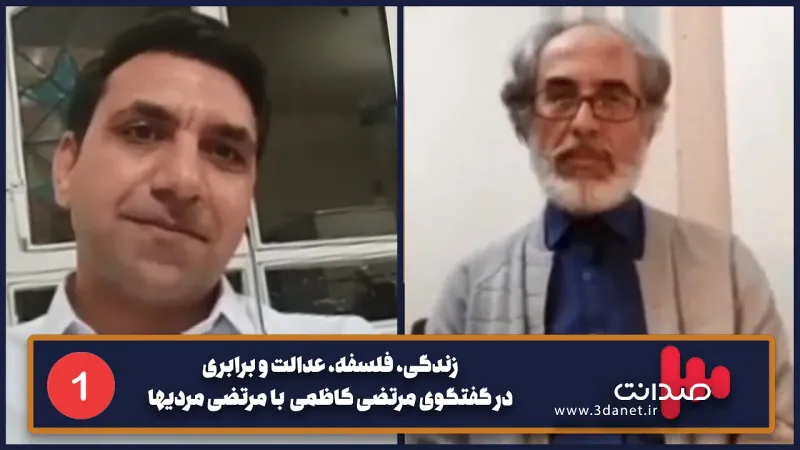
Self-Knowledge: A Collection of Conversations between Hesam Shoushtari and Mostafa Malekian over Several Years
Life can improve day by day, freeing us from immaturity and suffering; this collection of conversations between Hesam Shoushtari and Mostafa Malekian addresses questions on self-knowledge and four types of human relationship largely absent from his formal lectures.
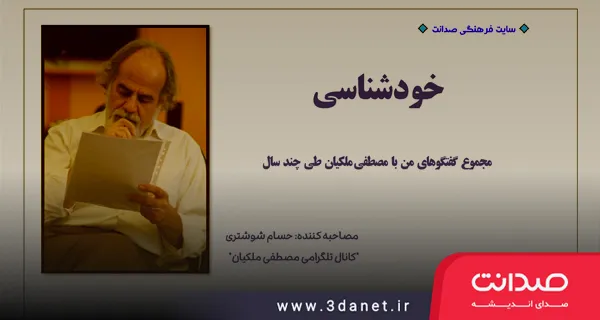
The following collection of conversations, which is the result of my questions and answers with Professor Mostafa Malekian, has mostly revolved around self-knowledge and has been completed over the course of 5 years. Life can get better day by day, and each of us can, day by day, be liberated from immaturity, pain, and suffering; self-knowledge is a valuable thing because, in Nietzsche's words, "(Self-knowledge) delivers man from being a child of chance." A human being whose personality and character are merely the product of the blind chances of genetics, upbringing, environment, psychological type, and age is a child of chance; they have never tried to transcend themselves and expand their subjective and objective experiences. Perhaps a life based on fortune and luck is happier than the lives of those who are concerned with virtue, but not everything is summed up in being happy. If we are merely pure consumers who have had no other benefit than taking from existence, it is as if we have not fulfilled our duty to existence; as if the improvement of the world has been entirely unimportant to us. I praise Professor Malekian for his excellent teaching and hope, with the help of this collection of conversations, to add some knowledge or passion to those enamored with the path of rationality and spirituality. Cyberspace was the best and, at the same time, the worst way to publish this treatise; because I know with certainty that the contents of this collection will generally not be read by users, but at the same time, cyberspace allows this collection to reach a larger number of people. In this collection, questions have been asked of Professor Malekian that relate to all four types of human relationships: with God, with oneself, with others, and with non-human beings, and of course, questions whose answers have largely been absent from his important lectures.
.
.
Self-Knowledge: A Collection of Conversations between Hesam Shoushtari and Mostafa Malekian over Several Years
PDF file of this interview in 57 pages
Mostafa Malekian's Telegram channel
.
.

.webp)
.webp)
Discussion0 comments
No comments yet; let yours be the first voice.