Philosophy
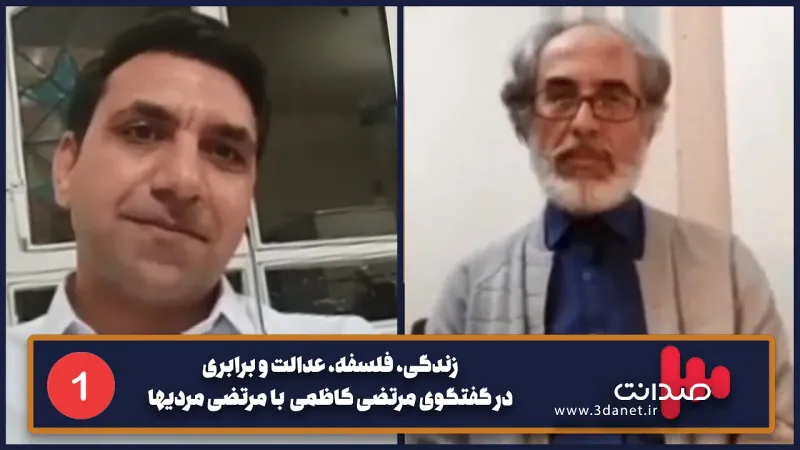
Intellectuals and Power: A Conversation with Mostafa Malekian
Mostafa Malekian sees the intellectual as an arbiter for the people and a simplifier of knowledge. Dividing activities into profession, passion, and pro-bono work, he does not consider politics a profession for the intellectual; rather, he defines it as a passion or a moral duty in relation to power.
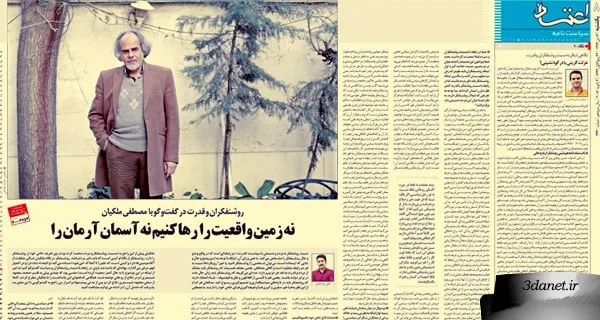
"...I had previously spoken with Mostafa Malekian about the relationship between the intellectual and the people. He has his own specific definition of the intellectual. From his perspective, an intellectual is someone who must be the arbiter of the people. In Malekian's view, the intellectual has a status distinct from that of academics and is someone who simplifies knowledge as much as 'possible' (and of course, no more than that) and makes it available to common understanding. The pretext that led me to converse with him about the relationship between intellectuals and politics (apart from the fact that he has rarely spoken on this subject until now) was a text written some time ago by 'Mohammad Mojtahed Shabestari' in defense of Rouhani. When I raised the gist of this note with Malekian, he fully defended Mojtahed Shabestari's words...
Let us abandon neither the ground of reality nor the sky of the ideal
You have spoken before about the relationship between intellectuals and the people. Your discussion of this relationship can perhaps be summarized in two main axes: first, that intellectuals must express the sciences in the language of the common people, and second, that the intellectual must be the arbiter of the people. However, you have expressed your opinion less on the relationship between the intellectual and power. Given your definition of the intellectual, what do you think the relationship between these two should be? In my opinion, political activity and involving oneself in political issues, with the powerful, statesmen, and the sources of political power in society, is not done in one way. Rather, it is done in three different ways. To clarify these three ways, I will first explain a point. I believe that all the activities a human being performs throughout their life, from birth to death, can be divided into three general categories. The first category of activities are those a person performs and through which they earn an income. The totality of all these activities is called a job or profession. A job or profession is the sum total of all the activities, comings and goings, and speech and actions through which we earn an income and obtain a means of livelihood, which is very, very important in its own right. Because, firstly, it provides for the necessities of our life. In the sense that without a job or profession, the continuation of life, even in a quantitative sense, would not be possible for the vast majority of people. Secondly, to live an ethical life, one needs independence. A subjugated, dependent, and reliant person cannot live ethically. A necessary condition for living ethically is having independence, and one of the most important types of independence is financial and material independence. To have material independence, we must have an income, and to have an income, we must have a job or profession. Therefore, a job or profession is important in that it provides an inescapable prerequisite for living ethically. The second category of activity is the sum total of all activities that we enjoy from the depths of our heart and soul and love, that we live in order to engage in those activities. I refer to these activities of the second type as pursuits of passion. None of these pursuits of passion are income-generating in the slightest; rather, they consume most of the income we earn through our job or profession. But we have no alternative because our inner voice cries out for us to have these activities. These activities might be composing poetry, playing chess, going to the cinema or theater, reading novels, and so on. If we do not engage in these passions, the void and rift that arises within us will subject us to regret, remorse, and sorrow for the rest of our lives. There is also a set of activities in life that I refer to as giving freely. That is, without the slightest expectation of reward or even gratitude, I engage, more or less and to the extent of my ability, in helping my fellow human beings. Helping the citizens of society, the citizens of the global community, and so on. This giving freely is, in other words, living ethically. In living ethically, we are engaged in giving freely. This is the set of activities that every person performs throughout their life. Any work we are occupied with is either of the first type, the second type, or the third type. On this basis, I say that political activity is done in three ways. For some, political activity is a job or profession. For some, it is a matter of pursuit of passion, and for some, it is presented as an ethical duty. These are three types of political activity, and three types of people enter into this political activity. They require three types of planning. There are three types of goals, objectives, and purposes in these three types of political activity, and everything from top to bottom is different from one another. There are those who consider political activity to be their job or profession. That is, they actually enter political activity so that their daily job is to be a member of a party, to advance through the party ranks, and to rise higher and higher until they gradually become one of the leaders and figureheads of that political party or faction, or a deputy, minister, member of parliament, and so on. This political activity is like the activity of someone who prepares themselves to become an engineer, a doctor, and so on. Naturally, this person must acquire the necessary knowledge and abilities to be able to undertake such a job or profession. In my opinion, the intellectual, insofar as they are an intellectual, does not engage in political activity of this kind. That is, they do not have political activity that they make their means of livelihood or a way of earning income. That is, the intellectual, insofar as they are an intellectual, never wants to become a minister, a deputy, a prime minister, and so on.
یعنی شغل و حرفه اش این بود، باید دست از روشنفکری برمی داشت و باید در دانشگاه ها علم سیاست، فلسفه سیاست و… می خواند و مدارک و مدارجی را طی می کرد و به بینش یا اندیشه یا گرایش سیاسی خاصی در او متمرکز می شد. در این صورت همه چیز متفاوت با آن چیزی می شد که انتظار می رود یک روشنفکر در جامعه انجام دهد. کسانی هستند که از دسته دوم هستند و اصلانمی خواهند شغل و حرفه شان و وجه کسب درآمدشان کارهای سیاسی باشد. اما به مسائل سیاسی علقه دارند. اینها از فعالیت سیاسی لذت می برند. ولی هرگز نمی خواهند از طریق آن درآمد کسب کنند. کمااینکه شما هرگز نمی توانید از طریق رمان خواندن کسب درآمد کنید. اما همان طور که من با رمان خواندن و موسیقی شنیدن و فیلم دیدن و در طبیعت گردش کردن لذت می برم، آنها هم از فعالیت سیاسی و خواندن نوشته های سیاسی و از سروکار داشتن با رجال سیاست و قدرتمندان جامعه و بگوبگو کردن با آنها و سرک کشیدن با آنها در همه اطراف و جوانب و امور سیاسی و… لذت می برند. خیلی از دانشجویانی که در دوران دانشگاه خود به فعالیت سیاسی می پردازند از سنخ دوم هستند. نمی خواهند وکیل و وزیر شوند اما به عنوان فعالیتی که علقه های آنها را برآورده می کند به این فعالیت نگاه می کنند و آن را دوست دارند. اگر روشنفکری واقعا به مسائل سیاسی به همین معنایی که اشاره کردم یعنی از مسائل سیاسی لذت ببرد و فریاد کودک درونش این باشد که فعالیت سیاسی کن، بیندیش به فعالیت سیاسی و عمل کن به مقتضای اقتضائات سیاسی و…، در این صورت مشکلی نیست. روشنفکر می تواند این کار را انجام دهد کمااینکه ممکن است روشنفکران دیگری اصلاعلقه نداشته باشند و از صرف فعالیت سیاسی لذت نبرد. اما یک نوع فعالیت سیاسی هم داریم و آن این است که انسان از سر اخلاقی زیستن و رایگان بخشی که برای همنوعان خود قایل است، به فعالیت سیاسی روی می آورد. یعنی قایل به این است که من باید از درد و رنج همنوعان خود بکاهم و چون بخشی از درد و رنج هایی که دیگران هم می برند درد و رنجی است که از ناحیه نظام های سیاسی حاکم بر جامعه شان احیانا و کمابیش به وجود می آید و وظیفه اخلاقی خود را کاستن از درد و رنج همنوعان از قبل فعالیت های سیاسی این نوع نظام ها بداند در این صورت چاره ای جز این ندارم که خود را درگیر مسائل سیاسی بکنم. به نظر من یک روشنفکر می تواند چنین دیدگاهی داشته باشد. یعنی وظیفه سیاسی خود می داند. طبعا برای روشنفکری که می خواهد چنین کاری انجام دهد دو پیشفرض مهم وجود دارد: یکی این است که لااقل بخشی از مسائل و دردهایی که عاید انسان ها می شود، از قبل نظام سیاسی حاکم بر جامعه است و من اگر می خواهم درد و رنج ها را بکاهم چاره ای جز این ندارم که نوعی مقابله و مبارزه با این نظام سیاسی حاکم بر جامعه داشته باشم. مبارزه به صور مختلف و شدت و حدت متفاوت انجام می شود. پیشفرض دوم هم این است که مسائل سیاسی نسبت به مسائل اقتصادی و فرهنگی اولویت دارند. چون اگر اولویت نداشته باشند روشنفکر به آن امری که اولویت بیشتری دارد خواهد پرداخت نه به امری که در درجه دوم و سوم اهمیت قرار دارند. پس اگر روشنفکری به مسائل سیاسی پرداخت و این پرداخت هم از نوع سوم بود یعنی به خاطر شغل و حرفه و علقه پردازی باشد بلکه از سر اخلاقی زیستی و اخلاقی اندیشی باشد، چاره ای جز این ندارد که پیشفرض دوم را هم داشته باشد. یعنی معتقد باشد بزرگ ترین مشکل مردم از ناحیه نظام سیاسی حاکم بر جامعه بر مردم عارض می شود. اگر چنین دیدگاهی در یک روشنفکر وجود داشته باشد، شکی نیست که آن روشنفکر وظیفه اخلاقی خود می داند که مسائل سیاسی بپردازد و با نظام قدرت حاکم بر جامعه خود مواجهه داشتن امری طبیعی است و باید این کار را انجام دهد. ماحصل سخنم این است که روشنفکر از آن رو که فعالیت سیاسی را شغل و حرفه تلقی کند، به گمان من هرگز وارد مسائل سیاسی نخواهد شد. اما از آنکه یا علاقه دارد به مسائل سیاسی یا از آن رو که اقتضای اخلاقی بودن خود را یا اقتضای کاستن از درد و رنج همنوعان خود را، ورود به عرصه سیاسی می داند، وارد این عرصه می شود و باید هم همین کار را انجام دهد. این مساله در مورد همه روشنفکران به طور عام وجود دارد. اما در رابطه با خود من ثانیه ای در عمرم نه می خواستم شغل و حرفه ام را در عالم سیاست جست وجو کنم و نه علقه ای به مسائل سیاسی داشته ام. من هرگز از سروکار داشتن با رجال سیاسی و صاحبان قدرت لذت نبرده ام. برای من عالم سیاست یک عالم آزارنده است. به تعبیری که شمس در مورد سخن گفتن به کار می برد، نوعی جان کندن و نزع روح است زمانی که وارد یک بحث سیاسی می شوم یا با یک رجل سیاسی نشست و برخاست می کنم. ممکن است رجل سیاسی یک حیثیت دیگری هم داشته باشد، مثلااستاد دانشگاه باشد و از حیث استاد بودنش دوست دارم با او نشست و برخاست کنم اما از حیث فعالیت سیاسی دوری می کنم. البته من این علقه را تقبیح نمی کنم. این علقه به امور مختلفی برمی گردد که شخصیت و منش هر فردی را می سازند. این قسم دوم در من هرگز وجود نداشته است. اما قسم سوم در من بوده ولو نه چندان وسیع و دامنه دار و نه چندان عمیق و در ژرفا. من گاهی مسائل اخلاقی را از باب اینکه وظیفه اخلاقی خودم می دانستم که درد و رنجی از انسان ها بکاهم و می دیدم که بخشی از این درد و رنج ها بی ارتباط با مناسبات سیاسی نیست، گاهی به قدر و حد ضرورت به مسائل سیاسی پرداخته ام. قصدم به معنای عمیق ترین و وسیع ترین معنای کلمه هیچ وقت بر این نیست که وارد مسائل سیاسی شوم ولی به هر حال اگر هم وارد شوم از باب سوم است و نه از باب اول و دوم.Two questions came to mind during your remarks. First, it seems that, unlike some other thinkers, you do not consider the political sphere so broad as to subsume other affairs under it, and second, you do not regard having political activity or action as a necessary condition for being an intellectual. Is that correct? If I believe that an intellectual must reduce suffering and articulate truth—if a truth, in their own view, has been revealed to them, they should share it with the people. Or if their perception is that people are enduring pain and suffering, they should alleviate the people's pain and suffering. From these two avenues, yes, but to the extent that it relates to their conception of the prevailing political system. Or their conception is that they have grasped a political reality that they must share with all people. If an intellectual says they consider the exigencies of political issues to be of secondary or tertiary importance, I do not say such a person is not an intellectual. Because I say the exigency of being an intellectual is not necessarily engaging with political issues, but if the intellectual's moral duty is this, or their personal inclinations are this, it is still unproblematic for the intellectual to engage with political issues, regardless of where their work may lead. Therefore, political activity neither contradicts being an intellectual, nor does being an intellectual necessitate political activity. An individual can be an intellectual but, for example, attach greater importance to culture than to politics, and from this perspective, essentially never engage with political issues for the rest of their life and confine their activities solely to cultural activities aimed at awakening the minds and consciences of their audience. Because, for instance, their belief is that the failure to awaken the minds and consciences of citizens is the root cause of the issues, problems, and hardships that have arisen in society.
With your specific reasons, you reject nationalism, especially its extreme form. Given your anti-nationalist view and your belief that a human being has value qua human being, and this is not confined to any particular domain, where, in your view, lies the geography of political activity for an intellectual who has political concerns within this intellectual framework? I think if an intellectual honestly finds in themselves this capability and knowledge to solve problems and resolve issues on a global level, they should never confine themselves to regional, local, ethnic, racial, religious, sectarian, political, and other such constraints. If they see that they truly possess the mental ability and psychological capacity to address human issues, I believe they should not limit themselves to temporary, situational, and local issues. Because I have always believed that, ethically, we must deliver the greatest possible good we can. If I can deliver the greatest good on a global level, I must deliver that greatest possible good and should not confine myself to the domain of a particular nation, ethnicity, skin color, religion, or race. But with certain conditions. The first condition is that the individual sees this knowledge and capability in themselves. Sees that they truly have something to say that humanity today needs to contemplate, hear, or read. Such an intellectual must plan on a macro level. But if someone is like me, who does not see this capability and knowledge in themselves, I still believe that if they address the issues of their own society and make manifest and articulate the pain and suffering of the citizens and fellow human beings of their own society, it is better than going to a country with the intention of global activity but realizing after a while that they lack the necessary knowledge and capability.
The pretext for this conversation was a text by Mojtahed Shabestari in which he recently stated that, for certain reasons, ethics demands support for Mr. Rouhani’s government. You, too, had previously endorsed this position. Could you elaborate a little on the reasons for this view of yours, explaining how such a thing can be defined within ethics? I think Mr. Shabestari’s remarks are correct when he says we must support Mr. Rouhani’s government. I say this for two reasons. One is that the activities we have seen from this government so far have, on the whole, had a positive direction. Of course, not everyone holds a fixed opinion on the extent of that positive direction, and I am not in a position to say how many steps have been taken, but on the whole it is perceived as a positive direction. Both in terms of the institution of the economy, the institution of politics, the institution of international relations and dealings, and in terms of creating a kind of positive feelings and emotions in the minds and hearts of Iranian citizens. That is, they revived a kind of hope in the hearts of many people. They created a kind of optimism, however slight, among the people. Both from these perspectives—that the activities undertaken have, on the whole, a positive direction—and from the perspective that we must compare this government with its rivals and opponents and see what advantage it gains and what score it receives against its rivals, competitors, and adversaries. That is, we must in fact examine the potential and actual record of this government against its rivals. Therefore, both because of the actions whose direction I see as positive, even if we have not made much progress in that direction, and because of the relative and comparative value that this government and this political group hold in comparison to their opponents, they must be supported and endorsed. Of course, no ethical person offers unconditional support to any individual, government, or group. For instance, one does not say, ‘I support a government no matter what action it takes.’ This is something that, in the Qur’anic expression, originates from the ignorance of human beings. That is, in pre-Islamic Arabia, if you harmed or injured a member of my tribe, the members of that tribe paid no attention whatsoever to whether that injury was inflicted justly or unjustly, or whether you had the right to inflict that injury or not. In any case, because the person who was harmed and injured belonged to and was affiliated with my tribe, they would come and support him and destroy their opponents as much as they could. This kind of partisanship is a type of ignorant partisanship, for me to say I support unconditionally. The condition that an ethical person, including an intellectual, sets for supporting a government is that they see the direction of its activities as positive and grant an ethical preference to this organization, this institution, and this government over other organizations, other institutions, and other governments. Otherwise, to say ‘I am a supporter of a certain government and I support whatever policy it implements or whatever stance it takes’—we cannot have such a commitment, not only to this government but to any individual or government. Depending on the nature of the action that any individual or government performs, we can be supporters or stand in the opposing ranks. But for these two reasons, I completely agree with Mr. Shabestari’s remarks that we must support Mr. Rouhani’s government, and I have no doubt about this.
How can we act when it comes to drawing a clear boundary between those who wish to offer compassionate or effective criticism and those whose criticism is destructive and aimed at specific goals? In my view, whether a criticism is constructive or not, destructive or not, is determined solely by whether that criticism is true or false. I do not, in principle, attach importance to dividing criticism into constructive and destructive. These are all words whose true essence we must reach. If a criticism is true, it is constructive and sound; if it is not true, to the extent that it is not true, it is destructive and unsound. We cannot characterize criticism as constructive or destructive on any other basis. If the criticism you direct at me is a true criticism, then it is constructive, and if it is untrue, then it is a destructive and unsound criticism. Therefore, how good it would be if, instead of constructive and destructive, sound and unsound, and any other vague description, we came and used this specific description: whether this criticism is true or false. When I am examining the strengths and weaknesses of a government's record, in considering certain activities as strengths or weaknesses, am I right or not? To the extent that I am right, my criticism is sound and constructive, and to the extent that I am not right, it is unsound and unconstructive. Therefore, we must not act as we do elsewhere, substituting vague words for clear ones. The point is that every criticism that is valid is constructive and sound, and every criticism that is not valid is destructive and unsound. Since one cannot know whether a criticism is true or false until it is made, we must therefore allow criticism to take place. Afterwards, those whose criticism turns out to be unsound and destructive, if they are ethical, should not insist on their criticism. In other words, if I am criticizing you in terms of how close or far you are from the ideals, then this criticism can truly be a true criticism. But if I want to dispossess you of a position, to topple you from your chair and seat myself upon it, and in general, I want you not to be on this chair, in this position and rank, these will be unconstructive and destructive criticisms. The issue is that there should be no oppression, not that you should not be the oppressor and I want to come and oppress in your place. The issue is not why you are committing embezzlement and it should be my turn; rather, the issue is that embezzlement should not exist. Those who say, 'You should not be there, I want to come and take your place,' have no concern at all for values and ideals. Their only issue is why you are sitting there and I am here. Their issue is that we should swap places. The issue is that prison, oppression, torture, and torment should not exist, not that why am I the prisoner and you the prison guard, and we should swap places. The issue is that prison, oppression, and the negation of freedom should not exist. Unfortunately, what is absent among political circles is this type of criticism for which truth and falsehood matter. For which values and ideals matter. Most criticisms are of the kind that say, 'Why are you the minister?' or they say, 'I should be the minister.' They say, 'Why are you the prime minister and president? I should be...' The issue is not whether the things you do are just or unjust. The issue is that I want you not to be there at all; rather, I want me and my party and my faction to take the place of you and your party and your front. These criticisms are unsound and destructive. But I do not accept that one should not criticize. I say that the Quran, which emphatically asks not only us Muslims but also Jews and Christians to follow Abraham, this same Quran says that Abraham argued with Me, 'God,' concerning the people of Lot. That is, Abraham, who is a role model and whom we Muslims, Jews, and Christians have been asked to emulate and follow as our common father and ancestor, this same Quran recounts that this leader argued and debated with Us (God) about why We wanted to destroy the people of Lot. Therefore, when such a thing is said about Abraham in the Holy Book, then a fortiori, today too, one can criticize power. But one must offer true criticism, not false criticism, or in your terms, constructive criticism and not unsound and destructive criticism. That is, I want to say that Abraham (peace be upon him), too, when he saw something contradicting the dictates of his reason, at least sought clarification from God and asked, 'Why did You do this, or why do You intend to do this?' {God}—and not even the founder of a religion and creed, with whom Abraham argued concerning the people of Lot. Therefore, I both believe that if someone in a position of power is taking steps for the good and benefit of the people, they should be supported, and I also believe that the very same person we support must, when necessary and when required, be criticized.
Criticism does not mean fault-finding, reproach, or blame. It means that we point out the strengths of a work and we also point out its weaknesses. Therefore, neither support without criticism nor criticism without support makes any sense; rather, these two go together and accompany one another. This is the same thing that Ali ibn Abi Talib (peace be upon him), in the words of Nahj al-Balagha, said to Ibn Abbas. He said, when I do something, support me, but also share your opinions with me. I believe not only regarding Mr. Rouhani but with respect to any political figure, if it is found that he is taking steps for the good and welfare of the people, we support him; but since no argument has been put forward that someone who takes steps for the good and welfare of the people commits no errors, we are also fully prepared to criticize if we see an error. I am your critic because you are never infallible, and I also support you because to the extent that you take steps in the direction of truth, that is, for the good and welfare of the people, you need support; otherwise, your enemies will tear you to pieces and devour you. “… And We have made for every prophet an enemy…” Even every prophet had enemies. One cannot make exceptions for some and say that because they are exceptional, they have no enemies. It is not so; rather, the enemy always exists, and one must stand against his enemies, especially when we see the vast distance between his enemies and living ethically, behaving ethically, and acting ethically, there is no doubt, and we must support that person. Even if we are Muslims, we have been told on the authority of the Prophet of Islam: “Whoever hears a man calling out, ‘O Muslims, help me!’ and does not answer him is not a Muslim.” If someone hears a human being saying, “Muslims, come to my aid, someone is oppressing me,” and no one pays attention to him, the one who did not pay attention is not a Muslim. The oppressed is not only someone who has been slapped in an alley. The oppressed is also someone who is pursuing programs related to the good and welfare of the people and some do not want him to pursue these programs.The political matter, due to its complexities of which you are well aware—for instance, in this very discussion about enemies, in some cases criticism allows enemies to exploit it. Here, ethically, should we look at the outcome, or carry out our criticism as a matter of duty, or define a professional ethics for politics? I will offer two points in response to your question. The first point is that in the vast majority of cases I have heard throughout my life where someone says “do not criticize because the enemies will exploit it,” this statement has been made so that criticism does not take place. They imagine a hypothetical enemy, and they portray this enemy, as far as possible, with the utmost grandeur, dominance, power, pomp, cunning, deceit, and guile, and then they tell anyone who wants to criticize that both sides have a common enemy, and so that this common enemy does not profit, you should not criticize us. Therefore, I have a kind of hermeneutics of suspicion and mistrust toward all those who say that criticism should not be made because of a common enemy. I believe that generally, and in the vast majority of cases, this statement is a pretext to keep myself safe and secure from your criticism and its danger. In fact, the greatest profit the enemy gains is when neither of us criticizes the other and we both join hands and ruin our country. Because if I am not criticized by you, I may go down a thousand wrong paths, and if you are not criticized by me, you may go down a thousand wrong paths. The greatest profit the enemy gains is when we do not criticize one another. For the reason that when I do not criticize you, the possibility of your going astray becomes abundant, and when you do not criticize me, the possibility of my going astray becomes abundant, and the sum of all these errors destroys the country. This is to the enemy’s benefit, not when I criticize you and bring you to the path of good and righteousness, or conversely, you criticize me and bring me to the path of good and righteousness. What kind of enemy is it that profits from our taking the path of good and righteousness? Therefore, I have a kind of hermeneutics of suspicion and mistrustful interpretation toward anyone who says “do not criticize me because of the common enemy.” That is, in most cases this enemy is imaginary, and secondly, even if we assume an enemy exists, which enemy profits from our criticizing one another and seeking each other’s good and righteousness? Any enemy loses from our criticizing one another. The second point is that, in general, in ethics and in living ethically, if we are caught between wrong and more wrong, there is no doubt that practical reason and ethics demand that we do the wrong so that we do not fall into the trap of the more wrong. This issue is called “repelling the greater corruption with the lesser corruption.” That is, repel the more corrupt by turning, out of necessity and compulsion, to the corrupt. If a person is caught at this crossroads, they must not do what is more wrong, even at the cost of doing what is wrong. And this means that ethically we are always obliged, even among the corrupt, not to do that which is more corrupt. On this basis, I say that if a criticism is truly made in a place where its harm is greater than its benefit, it is not at all acceptable. Of course, no ethical person carries out this kind of criticism. Because it is also important that the cost and benefit of any criticism have a logical relationship with one another. That I carry out a criticism that has 100 quanta of harm and only two quanta of benefit is not acceptable. But in terms of concrete instances, such a situation rarely arises. The benefit of criticism is always greater than its harm, and its cost is less than its benefit.
As far as we are aware, your thinking is idealistic. That is, you envision a utopia for yourself and you also defend this way of thinking. I even recall you once gave the example of Kant and said that at one time Kant's thoughts were also a utopia, but today his thoughts have been influential in the seven institutions that exist. But on the other hand, in political action or in the role of an intellectual, you do not refrain from even the smallest step that you think might lead to the well-being of the people. For example, during the eleventh presidential election, you stated that despite your despair, you would go and vote. How do you connect these two? That is, on one hand you have a utopia, and on the other hand, in the practical world and in the direction of improving people's conditions, you take even the smallest steps in this direction? Another question: is a person who is fully familiar with the frameworks of a desirable world, but in order to achieve this goal, clings to and resorts to anything, ethical? Before I address your question, since you quoted me, and you quoted me correctly, that I had given the example of Kant, let me clear up a potential misunderstanding right here, and that is that I never, ever compare myself to Kant. Where am I, and where is that lofty peak of philosophizing, wisdom, power of thought, and depth of thought? I only wanted to say that just because a plan seems idealistic to you, you should not be afraid of confronting it. The great plans that have existed in history also seemed idealistic in the early days, early years, and sometimes early centuries, but they gradually showed that they are feasible, albeit slowly, with difficulty, or with great hardship. Therefore, it never crosses my mind to compare myself to Kant. Kant is one of the lofty peaks of humanity, and I truly have a galactic distance from him in every respect, even purely morally. But if you believe that idealism means disregard for and indifference to realities, then I never accept that my words are idealistic. My words are never idealistic. Rather, my point is only that we should fully feel reality under our feet, but stretch our hands further and further upwards as much as we can. I absolutely do not believe that one can walk on clouds or on water. I believe our feet must be firmly and solidly on the ground of realities. In the beautiful expression of the Quran, we must not cling tightly and rigidly to the earth. Falling tightly and rigidly to the earth, clinging to it, and not letting go, is something I strongly oppose. If someone can prove that I do not pay attention to realities in some direction, I must immediately correct my statement. Because I truly believe a human being must have their feet on the ground of realities. I say the feet must be on the ground, but the hands must also be towards the sky. And by sky, I mean the sky of ideals. Therefore, if by idealism you mean that I pay no attention to realities at all and walk on clouds, in that case, I cannot accept it. If you can point out an instance, I must certainly correct that instance because I have not paid attention to a reality among the realities of the human world. But I want to say that just as forgetting realities is a very unforgivable sin, forgetting moral ideals, spiritual ideals, psychological ideals, and social ideals is also unforgivable. Therefore, I say let us forget neither the ground of realities nor the sky of ideals. If someone pays attention to both, they are never averse to social engineering activities or step-by-step reformist activities. Because, in the words of that thinker, all very long roads have been traversed with short, short steps. Therefore, I completely agree with you and say we must never forget step-by-step and gradual reforms, and even though we know a certain government is not ideal, we compare it with its alternative governments. The third point is that even if you were not satisfied with anything less than the ideal—which, of course, no realistic human being is—the journey towards ideals is only possible by relying on the laws governing existence and nature and the laws governing human relations. In other words, even the most idealistic of idealists, who in my opinion settle for nothing but ideals, when they want to journey towards their ideals, have no choice but to take steps with attention to all the laws that govern existence as a whole, the natural world in particular, and human relations most specifically. It is the ideal that is beyond reality.
اما راه رسیدن به آرمان دقیقا از میان واقعیت ها می گذرد. بنابراین اگر روزی در میان سخنان من چیزی شبیه یا از سنخ بی توجهی به واقعیت ها پیدا شود، این از اشتباه من است ولی نمی توانیم یک انسان را حتی گامی تکان دهیم مگر آنکه قوانین مربوط به آن قدم برداشتن را کاملابشناسیم.Given all your remarks that we must support the government while also criticizing it, and that the alternative governments that exist are dangerous and unethical, we have two elections ahead of us. In your view, what should our stance be? Should we act ethically in a way that allows for the emergence of governments that have been far from ethics, especially in elections like the Assembly of Experts, with which our intellectuals have not been very engaged? Personally, I believe that in history, no election has ever been entirely desirable. But here, too, I must pay attention to two points. One is that undesirability is a relative matter. It is not a binary between negation and affirmation, zero and one. It is a matter of degrees; we cannot abandon elections on the pretext that they are not desirable. If we abandon them, what will happen? If we abandon even these elections, will it be to the people's benefit or not? I say that if we participate in these very elections, which may not be one hundred percent desirable to us, it will be to the people's benefit. The second point is that some say that when we gather at polling stations, the exploiters use our crowds, our throngs, and our gatherings for their own purposes and motivations. I say there is no doubt about this, but the world is a world of conflicts. Who can perform an act from which no exploitation is made? There is no act in the world except that when I perform it, someone can also exploit that act I perform. But when we pay attention, we see that this exploitation we imagine to be great and significant will not be so great after all. Because while the very fact of our gathering is exploited for their own benefit, the people benefit more from the vote that emerges from the ballot boxes as a result of our gathering. In all elections, you have seen that whenever we have not gathered, the exploitation we speak of from our gathering has lessened, but in return, the vote that emerged from the ballot boxes has certainly been to the people's detriment. In simpler terms, the very act of gathering is exploited by those who are not well-wishers of the nation, but the vote that comes out of the ballot boxes, as it happens, cannot be exploited by them because usually, in such cases, without exception, the person who wins the vote is someone those exploiters did not want to win. Therefore, let us leave a fleeting, emotional joy of a few days for the exploiters, so that at least a somewhat more competent person becomes a member of parliament, or president, or any other official, which is in the people's interest. The final point is this: suppose we do not want to create political change through elections, which is the most democratic method of social change. That is, suppose we boycott elections. In that case, there are only two alternatives. One is that we do not want any change or reform to take place at all, which, as a rule, should not be the case. The second alternative is that we want change and reform, but we do not want it through the democratic method of reform, namely elections. For example, we want a coup, or a revolution, or foreign interventions, or internal insurrections. None of these are preferable to democratic elections. In other words, we either seek reform or we do not. If we do not, then nothing. But if we seek reform, there are only a few paths. It is either revolution, or internal insurrection, or foreign intervention, or a coup, or the path of parliamentary reform and elections. If someone has not turned away from reform entirely and wants to create reform, among these five paths, is not the best way to carry out reform through elections? Are elections better, or revolution, or a coup, or foreign interventions, or internal insurrections and centrifugal movements? One must especially pay attention to one point. All those alternative paths other than elections, because they radicalize the environment, mean that the person who comes to power after destroying a political system also becomes radicalized themselves. Because they have grown up in a radicalized environment full of violence. Someone who grows up in an environment full of violence means they have been more violent and fiercer than all the violent ones. But, as it happens, when you want to create change through elections, because the environment is not radicalized, usually those who come to power will not be radicalized, radical, and violent individuals. I hope everything proceeds according to the good and the welfare of the people of our country. Because in today's world, falling one year behind the caravan of global culture and civilization means falling fifty years behind. The reason is that the transformations occurring on a global scale not only have speed but also acceleration.

.webp)
.webp)
Discussion0 comments
No comments yet; let yours be the first voice.