Philosophy
Suicide, the End of Meaning: Reflections on the Phenomenon of Suicide
Psychological and sociological analyses limit suicide to ordinary cases, yet four other phenomena also qualify as suicide. A critique of these perspectives sheds light on the hidden dimensions of this complex act.
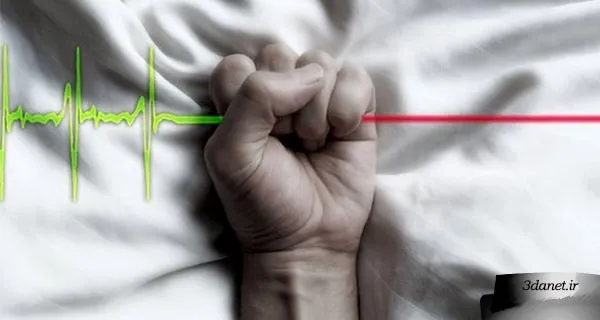
Those who have worked in the field of suicide analysis have mostly approached this phenomenon from two entry points: psychology and sociology. Psychologists, in their analyses, have generally emphasized neurotic and psychotic illnesses, while sociologists, on the other hand, have analyzed the social actions and societal ills that are recognized as leading to suicide. The major criticism I have of these analyses (whether psychological or sociological) is that they limit the phenomenon of suicide solely to conventional suicides, and in this article, I will also present four other phenomena that are also considered suicide.
Introduction
Phenomena that occur in human societies, or generally phenomena in which one side is the human being, with all the dimensions of their existence, are among the most difficult phenomena in this world from the standpoint of analysis. For human beings, according to their circumstances, each present various reactions to a single stimulus, and sometimes even a single individual, in the face of a stimulus (be it a sentence, the occurrence of an event, or anything else), exhibits different behaviors at two different times (or places). Now, when this issue reaches human society, or more precisely, the analysis of social actions, it causes many complexities and involves numerous parameters that generally do not fit into analyses and are considered unknown parameters. Among all these phenomena, suicide can be considered the most affecting and the most complex. Because human beings, by virtue of animal instinct, are always seeking their own survival, and this is a principle in typology and zoology; from this perspective, the human being can be considered the only creature that can have the desire to destroy itself and also sometimes acts upon this desire, whether successful in this endeavor or not.
In this article, I have tried to examine the issue of suicide from a perspective that has received less attention. Those who have worked on the analysis of suicide have generally approached this phenomenon (or perhaps I should say behavior) from two entry points: psychology and sociology. Psychologists, in their analyses, have generally emphasized neurotic and psychotic illnesses, and within the statistical population of those who have committed suicide or are vulnerable to it, they have searched for signs of mental and psychological illnesses such as depression. Sociologists, on the other hand, have analyzed the social actions and societal ills that are recognized as leading to suicide. Social frustration, poverty, corruption, social despair, and societal pressures can be counted among these. The important critique I have of these analyses (whether psychological or sociological) is that they limit the phenomenon of suicide solely to conventional suicides, and in this article, I will also bring up four other phenomena that are also considered suicide, and in my opinion, must be taken into account for a comprehensive analysis of this phenomenon.
Before entering the main discussion regarding the three aforementioned phenomena, I will also address the emergence of this phenomenon in history and literature. At the end of the introduction, I want to state my reason for addressing this subject. One can hardly find a person who has not thought about suicide, whether for analysis or for action. For years, I have dealt with this issue in a corner of my mind, and every so often, I have dusted off the thought upon this phenomenon, but what finally overwhelmed me and compelled me to write was the news of suicides being reported from all corners of Iran, and of course, the surge of this news with the beginning of the summer season1. The interesting point is that this volume of suicide, and of course the manner of their execution in Iran, can be considered unprecedented. Such that we have witnessed collective suicides in Iran2. As I mentioned earlier, in the analyses applied to these events, emphasis was placed on psycho-social factors, and I consider these factors insufficient, and I have two reasons for this claim. First, many individuals are in much worse conditions than the person committing suicide (whether economic, social, or psychological) but do not resort to this act, and second, some individuals who commit suicide not only have an acceptable financial and social standing but also have not exhibited abnormal behaviors psychologically. The final point I deem necessary to mention is that this article does not claim to cure the social action of suicide, nor does it claim to offer a way to eliminate the phenomenon of suicide. Rather, in this article, I have merely tried (as I have said before) to look at this phenomenon from a new perspective, to shed light on the dark and neglected points, and to narrow the circle of "unknown factors" and make this phenomenon more apparent. It is for this reason that I have not addressed the methods of suicide or the various academic classifications of suicide, and I do not consider them effective in the conclusion I will reach; therefore, I deemed their examination a waste of time and misleading.
Before addressing the manifestation of suicide in history and literature, I feel it necessary to offer a definition of suicide. Among all the definitions of suicide that have been proposed here and there around the world, I have found Durkheim's definition to be the most suitable (the most comprehensive and exclusive). Durkheim considers suicide to be a positive or negative act that an individual performs to destroy themselves, with full knowledge of the outcome of that act.
Suicide in the Sphere of History and Literature
Suicide has always existed in history and has also manifested in literature. Among the significant suicides in contemporary Iran, one can mention the suicides of Sadegh Hedayat (writer) and Gholamreza Takhti (wrestling champion). The suicide of Gholamreza Takhti was so unbelievable and unacceptable to Iranian society that the finger of accusation was quickly pointed at the security apparatus of the then-government and the Shah's brother. Among political figures, one can also cite the suicides of Ali-Akbar Davar, Leila and Alireza Pahlavi, and Saeed Eslami. In other parts of the world, in terms of impact, one can mention the mass suicide of Jim Jones's followers, the suicide of Bobby Sands (through a hunger strike in Belfast prison), and Adolf Hitler. Great literary, artistic, and scientific figures have also had their share in these statistics. Ludwig Boltzmann (physicist), Ernest Hemingway (writer), Vincent van Gogh (painter), and (according to Durkheim's definition) Socrates (philosopher) and also Sigmund Freud (psychologist) have been among the greats of literature and science who have resorted to suicide.
In literature as well, both domestic and international, it is replete with stories based on suicide. Sometimes suicide is the centerpiece of the story, and sometimes its conclusion. At the end of the tragedy "Romeo and Juliet," both commit suicide. The story of "Shirin and Farhad" also ends with Farhad's suicide. But the story "Kiss God on the Moon" begins with a suicide. Sometimes suicide is placed within the body of the story, such as in "When Nietzsche Wept" by Irvin Yalom. Of course, sometimes these suicides are successful and sometimes unsuccessful. The seventh art is no exception. The film "The Others," with Nicole Kidman's superb performance, is based on a suicide that the audience becomes aware of at the end of the film. The late Kiarostami's film "Taste of Cherry" is also built upon suicide. In the film "The Shawshank Redemption," one of the most impactful sequences concerns the suicide of an old man who, after years, is released from prison and confronts a city with which he has nothing in common. In the famous film "Seven," the terrifying killer, practically knowing he will be killed, commits a horrific crime, which might also be considered a form of suicide. Of course, one can object to considering these types of deaths as suicide. But I believe these types of deaths are also considered suicide. For example, if a person causes their own death by ordering another individual (or by ordering or programming a robot), in my opinion, they have committed an act of suicide. Like the story of the master who envied his neighbor and, to get his neighbor into trouble, ordered his slave to kill him and throw his body onto the neighbor's roof. This envious master practically committed suicide.
The mention of historical and literary instances of the phenomenon of suicide has been to demonstrate the importance and the spectral diversity of those who have committed this act, as well as the effect they have had on the culture of nations. The suicide of those who had no social or financial problems whatsoever, and psychologically showed no signs of depression or abnormal behavior, at least in the long term. To this list, four other categories of suicide must also be added, which will be examined in the following.
1- Good Death (Euthanasia) Euthanasia, or good death, is a phenomenon in which a patient who has despaired of treatment and knows they must endure suffering and agony until the final moments of their life voluntarily requests death, and physicians, by injecting an anesthetic and then a certain dose of poison, take their life in peace and without pain. One of the first individuals to have done this, as I have previously mentioned, is Sigmund Freud. The practice of euthanasia has sparked many debates among ethicists and religious scholars. Debates that have yet to reach a conclusion. Although religious scholars (from almost all Abrahamic religions) have come out in opposition to this practice, ethicists have not yet reached a definitive opinion on the matter and still debate whether this act is ethical or not, and I do not intend to enter this debate in this article. Whatever the fate of the implementation of this practice may be, it is certainly considered suicide and corresponds with Durkheim's definition of suicide. Nevertheless, this phenomenon is generally not considered in psychological and sociological analyses of suicide. (I have used the word 'generally' because it is very difficult to speak with absolute certainty about any issue; as far as I have examined the sources, I can claim that I have not found the four phenomena discussed in the article in the analysis of the act of suicide.) Finding the reason why an individual with a severe and incurable illness concludes to destroy themselves is not very difficult. The individual wants to reduce their own suffering and pain, and of course that of those around them, and is, quite certainly, completely hopeless about their treatment and regaining health. For such an individual, life no longer has 'meaning.' They can do nothing and must only wait for death, and enduring the wait for death is so much harder than death itself that they eagerly embrace death. Another type of good death that can be considered similar to this phenomenon involves those who have suffered brain death and, with the consent of their relatives, life-support devices are disconnected from their bodies so that their biological death is completed. Now, the state of someone who has lost hope of treatment is like the state of relatives who, with the brain death of their loved one, lose hope of regaining their health and resign themselves to their death. But in euthanasia, the individual themselves chooses their death.
2- The Harakiri-Kamikaze Duality Harakiri4 is a type of suicide rooted in the Land of the Rising Sun. In this form of suicide, which, although legally prohibited in Japan, is still recognized as a symbol of honor, the samurai (warrior or knight in Japanese culture) thrusts his sword into his abdomen and moves it left and right to die from severe bleeding. The most famous harakiri scene is depicted in the film "The Last Samurai." A samurai commits harakiri when he considers continued life a disgrace, or when he is condemned to death for an act he has committed but deems execution by hanging beneath his dignity. Another situation in which samurai commit harakiri is when they lose their honor. For instance, when the Emperor of Japan announced the country's surrender in World War II, many around the Imperial Palace committed harakiri in protest and out of grief over this surrender. The late Avini writes in the article "The Secret of the Land of the Sun": "In this path, suicide—in the specific manner called harakiri—is the epitome of honor and liberality, and the braver warrior is the one who hesitates less in plunging the dagger into his chest to compensate for defeat or to prove his loyalty. The brave samurai always carried two swords; a long sword for fighting the enemy and a short sword for suicide.5" He also writes about the mass suicide of the Japanese: "On August 15, 1945, nine days after the atomic bombing of Hiroshima and six days after the atomic bombing of Nagasaki, the people of Japan heard the Emperor's voice on the radio for the first time, saying that the Emperor was no longer a god but a human being like others. The mass suicide of groups of people in front of the Imperial Palace after hearing his words shows how deeply rooted the belief in the divinity of the Emperor and the eternal and everlasting reign of the Mikados over the Land of the Rising Sun and the heavy-laden clusters of rice was in the hearts and souls of the people.6" Of course, some have considered this mass suicide to be in protest of (or out of grief over) Japan's surrender. A surrender that, in the shame-oriented Eastern culture, which has found a particular crystallization in Japan, is a disgrace and unacceptable; therefore, the individual no longer considers life valuable afterward, and life will have no "meaning" for him after it occurs, so he preemptively releases himself from this life. In Japanese culture, there has been another type of suicide called kamikaze.7 Japanese pilots who crashed their planes into American warships to prevent America's victory and the occupation of their country in World War II. From a historical perspective, the term kamikaze refers to two sea storms that saved Japan from two Mongol invasions and carries a valuable semantic weight in Japanese culture. The kamikazes can be considered the first to carry out suicide operations. Suicide operations, which will be the subject of the next section.
3- Suicide Operations As noted, the first to carry out suicide operations8 were the Japanese pilots in World War II, known as kamikaze. Suicide operations are operations in which an individual destroys themselves in a military operation to eliminate enemy forces. Today, suicide operations are confined to Islamic groups that honor and exalt the suicide operative. But why would an individual be willing to undertake this type of operation when they could, like their comrades, participate in conventional military operations? The psychological analysis of suicide operatives is very important for target countries, which are generally Western countries as well as countries such as Afghanistan, Iraq, and Iran. Behind suicide operations lies an ideological foundation that prepares the suicide operative to embrace death. The suicide operative may have a calm and secure life in a developed country yet still carry out such an operation. The analysis of suicide operations is generally absent from analyses of suicide, whether psychological or sociological, and is examined separately in another category, whereas this behavior should be studied alongside other types of suicide. One of the largest and most impactful suicide operations was the attack on the Twin Towers and other sites in America by hijackers who carried out this operation on September 11, 2011. The Al-Qaeda organization claimed responsibility for this operation, which ignited war in the Middle East, led to the emergence of terrorist organizations such as the "Islamic State of Iraq and the Levant" (ISIS), and intensified radicalism in the Middle East. The most important question in analyzing suicide operations is: what goes on in the mind of the suicide operative? Or, in other words, for what reason does the suicide operative manifest such an action? According to reports and interviews published with failed suicide operatives, the individual becomes determined to do this with the notion that they have, so to speak, divorced the world thrice, and the value of this world has become insignificant compared to the world after death. Many satirical stories have also been published about the beliefs of failed Salafi suicide operatives. However, in some cases, the beliefs of the suicide operative are highly thought-provoking, and it is not necessarily the case that they undertake such an action out of superficiality.
Nevertheless, if we wish to have a comprehensive analysis of suicide operations that encompasses both operations related to religious ideology and those related to the Japanese, we must rely on a concept present in both types of operations and which can be considered their commonality; in my view, here too the concept of "meaning" can be regarded as the common factor. In the eyes of a kamikaze, life after defeat by the enemy is "meaningless," and the individual cannot accept such disgrace, hence they are willing to sacrifice themselves to prevent the enemy's victory. Among today's suicide bombers, material life in this world also becomes "meaningless," and the individual ends this meaningless life with a suicide operation. The question of through what process the meaninglessness of worldly life is reached, and the degree of validity of the reasoning formed in the mind of the suicide operative, lies outside the scope of this article, for this article does not discuss the rightness or wrongness of such operations but rather analyzes the perpetrators of such operations to arrive at a comprehensive analysis of suicide.
4- Death, Better than Captivity Another type of suicide that is less examined involves cases where, in critical conditions such as war, an individual prefers suicide to captivity. Whether the individual is a military personnel or an ordinary citizen. In cases where a military individual holds a high security rank, like Adolf Hitler, they do not find captivity acceptable (also considering the manner of Mussolini's death) and resort to suicide. Similarly, other ordinary individuals who, during Hitler's rise to power, preferred suicide to being sent to forced labor camps, such as Dora Breuer, one of the daughters of Dr. Josef Breuer9, who chose death over going to the Nazi forced labor camps. In Iran, this act was also customary, particularly among members of the Monafeqin group, which can be noted by their carrying cyanide pills to escape captivity before the revolution, as well as the suicides after the disgraceful Forough-e Javidan military operation (which was truly the most treacherous operation a group could orchestrate against its own country) to avoid capture. In these cases too, the individual considers their world to have ended. Whether this perception is correct or incorrect, the individual concludes that life after captivity will no longer have "meaning" and deems suffering through life after that event to be futile. Likewise, those who commit suicide out of grief over losing a beloved also fall into this category, viewing this loss as the end of their life's meaning, for they have defined the purpose and meaning of their life in that person.
Supplement Whatever analysis we may have of the act of suicide, this analysis must include the four phenomena mentioned in this article. I myself base the analysis of suicide on the "meaning of life," and I have borrowed this from Albert Camus. Albert Camus, who considers the meaning of life to be the greatest problem of philosophy, links it to the phenomenon of suicide and regards solving this problem as the greatest service to humanity. What I have arrived at in my studies and reflections on suicide (and which has also been emphasized by others such as Professor Mostafa Malekian) is that the primary factor in suicide is a crisis in finding meaning in life, and other factors such as depression, poverty, social factors, etc., are factors that drag the individual into the abyss of life's meaninglessness, and the meaninglessness of life drives the individual toward suicide. In this sense, from the perspective of validity based on better explanation in philosophy, an analysis based on the "crisis of meaning" can better and more completely explain and describe the phenomena leading to suicide. By accepting this view, one can consider a more comprehensive analysis for various types of suicide, and with this view, one can analyze certain suicides that pertain to individuals who are successful in terms of personality and social standing. But assuming the acceptance of the conclusions of this article and the acceptance that suicide is based on finding life meaningless, important questions arise: How can one make a life meaningful? In what should one seek the meaning of life? What is the concept of the meaning of life, anyway?
Answering these questions has no place in this article and requires another time; but whatever the answer may be, it can untie the knot of many problems. My suggestion is that psychologists and sociologists, by drawing closer to philosophy and ethics, also open an entry point from the perspective of the meaning of life into their reflections on suicide, so that this phenomenon can be analyzed and examined more deeply and precisely.
I must also point out one note to conclude this article. That note is that the cause of suicide and arriving at the meaninglessness of life is not merely problems such as poverty, injustice, and the like; rather, sometimes excessive affluence and having no goal to achieve in the world also drags a person into meaninglessness in life. Society is at risk from this issue: young people who, in wealthy families, have no personal goal for living and no need for suffering and striving to obtain something. Therefore, they derive no pleasure from obtaining something through their own suffering and effort, and thus worldly life becomes aimless and meaningless for them. In the words of the venerable Rumi:
If a man has a pain, it is good for him The cure for painlessness is fire
.
.
Notes
1- The connection between hot weather and increased violence and suicide is debatable, but what is effective is the three-month unemployment of school and university students who, during these three months, have no purpose in life and can do nothing but pass the time, and it is this very matter that drives them toward the meaninglessness of life and suicide. 2- Some time ago, two teenage girls in the Jannatabad area threw themselves from the top of a building, and before that, in the west of the country, two young male university students had hanged themselves from a tree outside the city. 3- Euthanasia 4- Harakiri 5- "Another Tomorrow" - Seyyed Morteza Avini - Vaheh Publications - Second Edition - Page 19 6- Ibid - Page 17 7- Kamikaze 8- Suicide Attack 9- Josef Breuer, colleague and teacher of Sigmund Freud, with whom he co-authored a book on hysteria.
.
.
Suicide, the End of Meaning: "Reflections on the Phenomenon of Suicide"
Author: Hamed Farnaghizad
.
.






Discussion0 comments
No comments yet; let yours be the first voice.