Philosophy
Teaching Children the Art of Living
Iran's education system, with its narrow focus on job preparation, distances children from the art of living; so much so that even highly educated graduates often don't know how to live. Integrating philosophy and psychology into education, along with parents' attention to their children's innate talents, offers a way out.

The discussion on teaching children the art of living encompasses vast and profound dimensions.
Education in Iran seems to have a single goal in mind, and therefore, when it receives children and toddlers in nursery school or kindergarten, its aim is to educate them in such a way that they will have a job and a profession in the future. As if earning an income is the most important thing in life, and earning an income is impossible without a job and a profession. As if their view is that a human being is compelled to have a profession in one of the categories of science, technology, or art, and since a profession without specialization is impossible, each of these toddlers must be trained for a specialty. Upon reflection on education in Iran, what emerges are the presuppositions that were stated.
The reason the word "as if" is used is that education is not yet organized in such a way as to even articulate this purpose of its own properly.
There are two points here:
First, throughout the history of human culture, the thinkers who have worked in the field of education are not all of the opinion that the goal of education is to provide children with a specialty and prepare them for entering the job market. Confucius of ancient China, Plato and Aristotle of ancient Greece, Kant and John Dewey, and contemporary thinkers such as Paulo Freire and Ivan Illich are among the great thinkers of education throughout history, and they do not all have a consensus that the goal of education is to prepare individuals to take up jobs.
Five major goals for education have been presented by five schools of thought, and only one of them is that the duty of education is to raise toddlers to become specialists. But there are four rival perspectives, which are very serious, as well.
In Western countries today, there is a kind of educational liberalism, and each school has its own perspective, and parents, too, entrust their child to whichever of these perspectives they deem correct for their education. In developed countries, there are schools that operate according to the different methods of Rudolf Steiner, Paulo Freire, and Ivan Illich, which are also called deschooling schools. There are schools that operate according to the method of Rabindranath Tagore—late 19th and first half of the 20th century.
The question that arises is why education in Iran has chosen this goal?
Furthermore, educational liberalism does not exist in Iran, and all existing schools operate with the same system dictated to them from the center, and if parents do not want their child to be raised with this educational system, there is no other school with a different educational system that matches their wishes.
The second point is that graduates of Iranian universities are in need of family counselors, psychologists, psychoanalysts, and social relationship advisors.
In Iran, when a person receives their doctorate in their early twenties, looking at themselves honestly, they realize that they do not know how to live! In an ideal state, this individual, for example, can do everything in the physics laboratory, but when they step out of that laboratory, it is as if they know nothing! They do not know how to live.
Therefore, education can be critiqued from two approaches:
First, how do you prove your legitimacy among the five major schools of education?
Second, the output of this education is not desirable. Because the graduates of this educational system have numerous problems in facing life.
It is these deficiencies that create the need for philosophy and psychology to be considered for teaching children, whereas these categories should have been incorporated into the education of children so that there would not be an extraordinary need to fill these gaps in the educational system. As long as there is a deficiency in education, students are in need of peripheral and ancillary training.
Fathers and mothers who themselves grew up with such a flawed educational system cannot help their children much, and it is only after thirty years that their child realizes what the most well-meaning people (his parents) have done to him.
Therefore, when a person enters philosophy classes at a relatively young age, he comes into conflict with his parents. Because his parents grew up under this same flawed system and expect their child to abandon philosophy and psychology and focus on the main thing (in their opinion), namely algebra, geometry, and physics! Thus, sometimes fathers and mothers are the first obstacles to this kind of supplementary education and may consider such education a barrier to their child's success in the university entrance exam. Hence, fathers and mothers themselves also need education.
Parents should consider their child's passion and talent together, not draw up a plan to make him an engineer as soon as they learn he is intelligent. Interest and talent must be considered alongside one another. One must know that a high IQ or a low IQ does not determine one's field of study.
In philosophy, Aristotle first raises the issue of comparison. When can a comparison be made? How can two things be compared with each other? Comparison in life is inevitable. Comparison is an unavoidable phenomenon in life; whenever we face a dilemma, we make a comparison. For a comparison to be rational, what must be done? How can a rational comparison be made? One must note that only things of the same name can be compared. For example, two biscuits or two cars can be compared with each other; we cannot compare a book with a chair.
Aristotle addressed the issue that if a person must choose one from among n objects of the same name, which one should he choose? On what basis is the rationality of this choice founded?
Aristotle says that until the function of an object for a human being is known, comparison between objects of the same name is impossible. When a person wants to choose one from between two knives, he must first specify the specific function (function) of a knife. For example, for a knife, sharpness can be considered its function. The better knife is the one that has a more desirable sharpness. Therefore, as long as the function or specific function is not specified, comparison lacks rationality.
In artificial objects (objects made by human hands), the specific function is clear. For example, a chair is a human artifact, so its function is also clear. Throughout history, humans realized that if they sit at a height relative to the ground and their body forms two right angles, their body is more comfortable. Therefore, they searched in nature for something to satisfy this desire but did not find it.
Now the issue is how to compare beings such as cats with one another? A being that is not artificial but natural. Aristotle says that to understand the function of natural beings, we must look for an ability or knowledge that nature has given to one being and not to others.
According to Aristotle's diagnosis, rationality is that which is given exclusively to humans. Aristotle, as a biologist, said that rationality belongs only to humans. Now, having identified the function of a human being, one can compare two persons with each other. One of the results of this discussion is that good and bad must be used with an adjunct. For example, he is a better human being than his brother. Better and worse are meaningless without the thing described. Therefore, in the language of grammarians, according to Aristotle, the adjectives good and bad and the comparative and superlative forms of these two adjectives are not predicative adjectives but are only attributive adjectives. The thing they describe must be specified. That is, one must attribute a described thing to good and bad, and it is then based on that described thing that the comparison takes place.
In summary, according to Aristotle, when we are to compare two things, we must first know in what respect these two things are being compared, and then we must understand what the specific function of the chosen respect of comparison is. Aristotle also believed that the function of artificial and natural objects must be discerned in two ways. The making of carriages, knives, and other artifacts are all preceded by human needs, and the function of these artifacts is to satisfy those needs. Artificial creations can themselves be divided into two groups: material (chairs and tables) and immaterial (government). However, regarding natural objects, since they are not made by humans, their function cannot be discovered in the same way as material objects. Aristotle suggested that the function of natural objects can be discerned through their unique capacity and knowledge, which for humans is rationality. This criterion is not a matter of consensus among thinkers, and today another criterion has been substituted for it.
Today it is said that a specific knowledge and capacity cannot be determined for humans, and it cannot be called rationality. The method should not be to measure knowledge and capacity at all. We must see when a human being is pleased with their existence; it is under these conditions that their specific function is realized, and whenever a human being is displeased with their existence, it means their specific function is not realized.
This new criterion was first proposed by Spinoza and developed by Kant, stating that a human being is better the more thoroughly pleased they are with their condition. In fact, the depth of contentment has replaced the knowledge and capacity proposed by Aristotle.
With these explanations, the purpose of education is to nurture individuals in such a way that they attain deep contentment. Therefore, educational systems can be compared with one another in terms of which one can create the deepest contentment in individuals.
By this standard, Iran's educational system is by no means efficient, because it merely and solely trains students to be specialists in a profession and does nothing else.
In education, deep contentment in life must be the focus, and one must know when this deep contentment will be achieved. This deep contentment is attained through the teaching of a set of components. The question of through learning which components this deep contentment is achieved is itself an issue. There are two components upon which there is consensus, as follows:
First component:
That the least pain and suffering exist in a person's life.
The presupposition of this statement is that a life without pain and suffering is not possible, and the goal is to turn down the wick of this pain and suffering as much as possible. Buddha was the first to show that human pain and suffering do not reach zero, and Schopenhauer is the first Western philosopher to be deeply influenced by Buddha, and it is after Schopenhauer that the West became acquainted with Buddha. Schopenhauer, at the beginning of his book "The Wisdom of Life," says I still believe that there are unavoidable pains and sufferings in human life, and humans are compelled to taste them. But the aim of this book is for humans to be able to live with less pain and suffering.
Second component:
To cause the least pain and suffering to others.
The contentment of each individual's life is when they cause the least pain and suffering to their fellow human beings. The first component, which is a psychological component, is interpreted as the pleasantness of life, and the second component, which is an ethical component, is interpreted as the goodness of life. Today it is quite obvious that through an ethical life, a person causes the least pain and suffering to others, and this is the result of thousands of years of human experience. In fact, the institution of ethics is a human artifact for reducing the pain and suffering inflicted on other human beings.
Thus far, enduring the least pain and suffering, and inflicting the least pain and suffering have been discussed.
These two components may not always be compatible with one another. If they were always compatible, that would be the best thing. But at times, these two become incompatible. The pleasantness of life and the goodness of life are not always in harmony. There are occasions when one of the two components of pleasantness and goodness must be sacrificed, and one is forced to choose between them. The question is, in the case of conflict, what should be done? Which one should be sacrificed?
The general opinion among thinkers on education is that we must raise our children in such a way that, in the case of conflict, they side with goodness and abandon pleasantness. That is, whenever goodness and pleasantness become incompatible, we should endure pain and suffering and not inflict pain and suffering.
Laboratory experiences show that pleasantness and goodness are not sufficient for deep satisfaction, and one must look for other components.
One of the parameters that is a suitable candidate to form the third component in creating deep satisfaction is a worthwhile life. That is, a life worth living. Meaning that if we consume things in our life, we should also have productions so that our life becomes worthwhile.
Some others have also said that we must have a worthwhile life, meaning that our life should be meaningful (not functional).
Another point is whether the deep satisfaction resulting from a pleasant and good (and possibly worthwhile) life is more in the hands of the individual themselves or in the hands of other people? In fact, is the attainment of the components of a life with deep satisfaction voluntary or involuntary? If the attainment of these components is involuntary, then education becomes meaningless. Of course, it is possible that part of it is voluntary and part involuntary.
Throughout history, some have believed in theological determinism. This group considered God to be the prime mover of all affairs and regarded deep satisfaction in human life as completely dependent on God and involuntary for humans. From the perspective of these groups, what befalls a human being results from the will of God, destiny, divine decree, fate, and so on.
Also, a group has proposed philosophical determinism. Every phenomenon in the world has a cause, and if its cause is present, that phenomenon also appears. This cause itself has a cause. In fact, a system exists in which humans are also a node in this causal system. In this system, the degree of each individual's satisfaction depends on their position in the system in which they live.
Sometimes a psychological determinism is proposed that is more specific than philosophical determinism. More specific in the sense that it points a finger at the factors. These determinists say that every human being has a physical-mental-psychological structure and cannot act contrary to this structure, and since there is no action without a reaction, existence also reacts to them, and this reaction manifests either as deep satisfaction or in another form. Some Ash'arites, resorting to the verse "Everyone acts according to his own disposition," proposed a psychological determinism. In other words, a human's action is dictated by their physical-mental-psychological structure, and this action of the human causes a reaction from existence towards them that is proportionate to their action. In fact, it is the nature of the structure that determines the reaction of existence, whether it be satisfaction or dissatisfaction.
There is also a determinism referred to as sociological determinism, and some, like Marx and Hegel, call it historical determinism. Although Gurvitch himself had Marxist leanings, he did not much favor the term historical determinism and used the term social determinism.
Social determinism says that every human being is born into a natural environment, and the requirements of that natural environment inevitably manifest in the human. That is, just as a human is influenced by the geographical climate, they are also influenced by the social climate. A human is nurtured in the social climate and is therefore under its influence.
If these determinisms are truly deterministic, it means that education is a futile and pointless endeavor. But if the argument is that these do not reach the level of determinism and, in philosophical terms, reach the level of exigency, then education is meaningful. Exigency limits conditions and the paths ahead, and unlike determinism, it does not present a single path forward. Exigency means that the number of paths ahead is reduced, not that it is restricted to a single path. The more human theories move away from determinism and closer to exigency, the greater the importance of education becomes.
Today, although determinism cannot be philosophically refuted, no human being's common-sense understanding is one of absolute determinism; therefore, no one considers education unimportant. That is, the modern human mentality, to a greater or lesser extent, grants freedom to the human being. The more the influence of various determinisms diminishes and the effect of exigencies also lessens, the freer the human being becomes, and this means that the human being's own influence upon themselves is far greater than that of other creatures. Thus, when freedom and determinism are discussed in education, the subject is how much the human being's own effectiveness, in relation to other causes, matters for their own cultivation, and how much human contentment with life depends on the individual themselves and how much on others. Therefore, the limitations and scope of children's abilities must be taught to them.
In the realm of beliefs, the human being must seek the greatest number of true beliefs and the fewest false beliefs. Likewise, in the realm of feelings, emotions, and passions, they must seek appropriate feelings, and in the realm of desires, strive to increase reasonable desires. The increase of true beliefs, appropriate feelings, and reasonable desires depends on the extent of human abilities. For example, skeptics in epistemology say that the human being does not have the ability to distinguish true propositions. Hence, in the education of children, one must not inject them with excessive self-confidence, making them think they can conquer every peak. A human being is capable to the extent that they show resistance against external pressures (society and nature) and do not surrender to them. Thus, in education, children must be taught how much of their destiny is in their own hands and how much is in the hands of society and nature. It must be noted that unrealistic forms of education can abound. Education specialists critique American methods, for it is as if they tell the child,
Third question: What rational reasons and empirical support exist to reassure us that possessing ability in the three domains of beliefs, feelings and emotions, and desires will improve our well-being? And this question arises because we are pursuing forms of education beyond those codified in the country's educational system—what if these forms of education prove harmful?
Answer to the first question: Yes, there is a preference. In earlier times, the term 'ideal life' was used more frequently. But today, this term carries a kind of negative connotation and brings with it an unrealistic utopianism. Hence, the use of the term 'ideal' or 'utopian' life has diminished. Therefore, the expression 'goodness and happiness' is more common today.
Answer to the second question: Yes. These components are themselves decomposable. When we speak of the goodness of life, many equivalent things can be said. For me, the goodness of life means honesty, humility, and benevolence. Other individuals may propose other components. Likewise, these three components themselves may be decomposable. For example, benevolence has three subsets, and until all of them are present, a person does not become a beneficent human being (muḥsin).
Answer to the third question: Yes. Some of the supplementary education we give children may make them unsuccessful in certain social settings. In most cases in Iran, selections, jobs, and appointments are based on factors for which children who have learned life skills are not prepared. For example, a child knows the plants around them or has been educated in the manner of Ivan Illich and is capable, if alone on an island, of managing life, meeting their needs, and building the tools of life with minimal equipment. Robinson Crusoes possess the ability to provide the means and conditions of their own lives. Similarly, a peasant may not know whether the Ptolemaic or Copernican system is correct, but from the color of the sunrise, they can discern things useful for their practical life. Yet knowing none of these aforementioned things helps a high school student pass the medical university entrance exam. The point is that the education system must be fundamentally transformed and revolutionized. Suppose someone says, 'I have managed to treat my body in such a way that its health is preserved, its beauty does not diminish, but its strength increases.' This skill is of absolutely no use in our country. For we are all hunched over and our eyesight is poor, but in return, we are professors! Whereas in an education system modeled on Ferre's approach, this individual would be honored and hold a high status. So, as long as the educational system remains as it is, the life skills we have mentioned may even play a negative role in individuals' success.
A point that must be given great attention is that academic degrees and formal education are by no means everything! That is, it is not the case that if someone lacks an academic degree and has not benefited from formal education, they cannot live. On the contrary, there are many who have had no taste of academic life, yet live very good lives.
Question: During one's short life, alongside educating and cultivating oneself (a virtuous life), does one find the opportunity to educate and cultivate another (one's own child)?
Answer: If education and cultivation are effective in the true sense of the word, yes. If a person practically lives well, through this they teach their child the art of living well. Very often, there is no time for lecturing in order to educate the child. In the words of the Prophet of Islam: "Kūnū duʿāt al-nās bi-ghayri alsinatikum" (Call people [to the faith] by means other than your tongues). The best prescription for teaching a good, happy, and valuable life is the practical prescription, and through this, every individual, in all their speech and actions, is constantly educating their child. Otherwise, if education were to be based on lecturing the child, the opportunity for such a task would not arise.
Question: Can the purpose of a being's birth be considered their education and cultivation in this world? If not, what is and what should be the purpose of their life?
Answer: No. The purpose of a being's birth is to experience profound contentment in its life. But for this profound contentment to be experienced, there is no alternative but to have an education and upbringing suited to this goal. Therefore, the aim is for the best possible life to occur. What life is, is these ordinary and everyday things: striving for wealth, power, social status, popularity, knowledge, and so on. We must know that wealth, power, popularity, etc., none of them guarantee a good and happy life.
Question: Is the fear of loneliness a flaw in the education system that encourages a person to bring about another birth?
Answer: One of the motivations that encourages humans to have children is to escape loneliness. There are many motivations for this.
Question: What is your view on the function of the human being?
Answer: I believe that when a human being possesses complete rationality and spirituality, they are content. But this is not an interpretation of function. I think that finding the function of natural beings is an impossible task.
Question: What is your image of life?
Answer: The best image I have of life is theater. Of course, I do not intend to argue in its favor, and it should be noted that very often, these images are not argumentative either.
Question: How can dreamy students, who believe that nothing is impossible and this belief has greatly aided their growth, be admonished without harm?
Answer: One must present them with counterexamples that apply to their belief. This belief belongs to American education (especially before 1929). America before 1929 was very optimistic about human beings and believed that through effort, one could reach any desired point. Of course, after the Depression of 1929, Americans became somewhat more realistic. Even today, Americans hold ambitious beliefs. Suppose a student says to their teacher, "Sir or Madam, we have been told that nothing is impossible." The teacher here must seek to refute this proposition using the student's intuition. The teacher should say, "Does it mean it is possible for you to be absent from my class all year long, yet receive a passing grade from me at the end of the year? Or is it possible for you to slap your father and he shows no reaction?"
.
.
Audio of the lecture "Teaching Children the Art of Living"
Text of the lecture "Teaching Children the Art of Living"
.
.
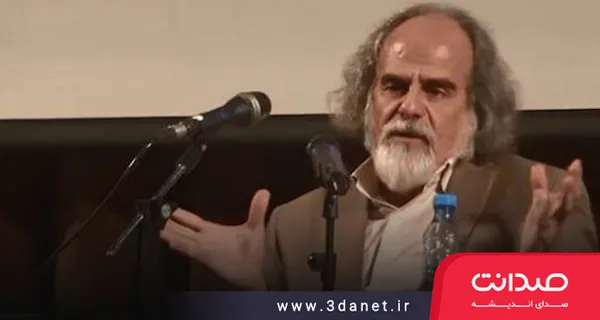
Teaching Children the Art of Living
Speaker: Mostafa Malekian
Organized by Aseman-e Khial Publications
10 Esfand 1395
.
.



Discussion0 comments
No comments yet; let yours be the first voice.